Temple of Montu (El-Tod Temple)
Rising quietly from the east bank of the Nile just 20 km south of Luxor, the Temple of Montu at Al-Tod is one of Egypt's oldest continuously sacred sites — and one of its least-crowded. Here you can press your palm to granite carved for pharaohs spanning four millennia, with no tour-bus queue in sight.

A Temple Four Millennia in the Making
The site's roots reach to the Fifth Dynasty pharaoh Userkaf, around 2494–2487 BCE, making the oldest granite pillar here older than most of the monuments tourists flock to in Luxor. Montu, the falcon-headed god of war, was the supreme deity of the Theban region long before Amun-Ra claimed that title — and Al-Tod was his domain.
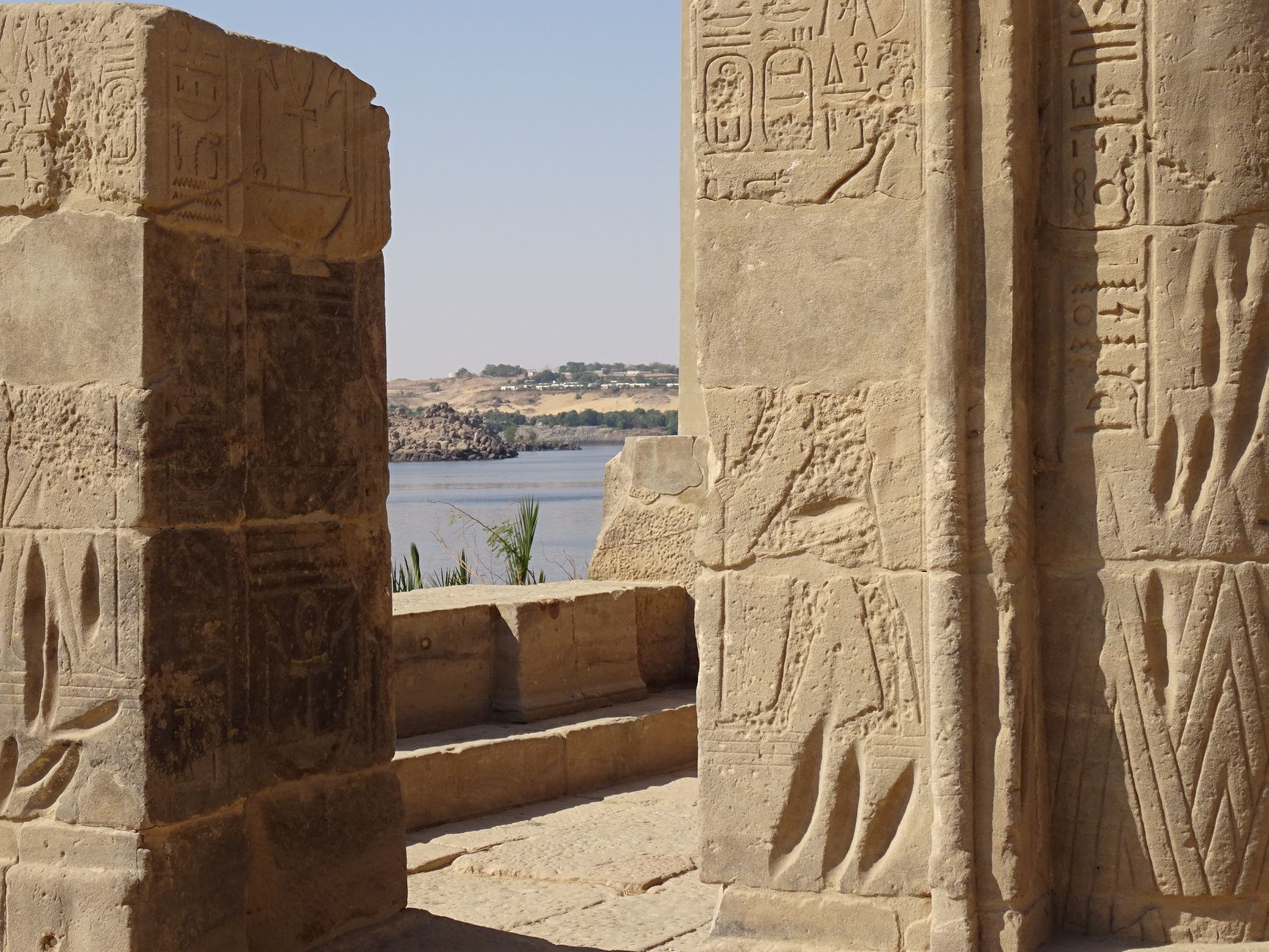
The surviving structure visible today was largely built during the Ptolemaic and Roman periods, begun by Ptolemy VIII Euergetes II around 145 BCE, with a columned court, hall, and a hidden treasury room tucked above the chapel. Blocks bearing the cartouches of Thutmose III, Seti I, and Ramesses III are embedded throughout, turning the walls into a compressed timeline of Egyptian power.
Scholars often compare Al-Tod to the Montu precinct at Karnak, but its intimate scale and quiet village setting make it feel far more personal — a place designed to be experienced slowly, not photographed in a hurry.
The Astonishing Tod Treasure
In 1936, French archaeologist Fernand Bisson de la Roque excavated beneath the Ptolemaic hall floors and made a discovery that rewrote understanding of Middle Kingdom trade: the Tod Treasure, a cache of silver ingots, gold, and lapis lazuli alongside foreign artifacts pointing to contacts with Mesopotamia, the Aegean, and Iran.
The treasure was split between the Egyptian Museum in Cairo and the Musée du Louvre in Paris, but standing in the very room where it lay hidden for over three thousand years gives the site an almost electric charge. The temple's treasury chamber is still visible above the south chapel.
Unlike the grand set-pieces of Luxor and Karnak, Al-Tod rewards visitors who slow down and read the walls. The inscriptions and reliefs here document Egypt's shifting religious politics across centuries — a rare, uninterrupted timeline from the Old Kingdom to the Roman era.
Getting There & Practical Advice
Al-Tod sits approximately 20 kilometres (12 miles) south of Luxor on the east bank of the Nile, reachable in around 30–40 minutes by taxi or private car. Adventurous travellers can also cycle the flat Nile-side road, passing date palms and sugarcane fields along the way.
Crucially, tickets for El-Tod Temple must be purchased at the Luxor Temple ticket office in Luxor city before you travel south — you cannot buy them on site. Factor this into your morning planning to avoid a wasted trip.
The drive through the riverside villages en route is itself part of the experience: narrow lanes, buffalo-drawn carts, and children heading to school paint a vivid picture of Upper Egyptian rural life that most tourists never see.
Temple of Montu (El-Tod Temple) on video
More of Al-Tod
Discover where to stay, what to do and the best deals for your trip.
Explore Al-Tod →