
Westerkerk
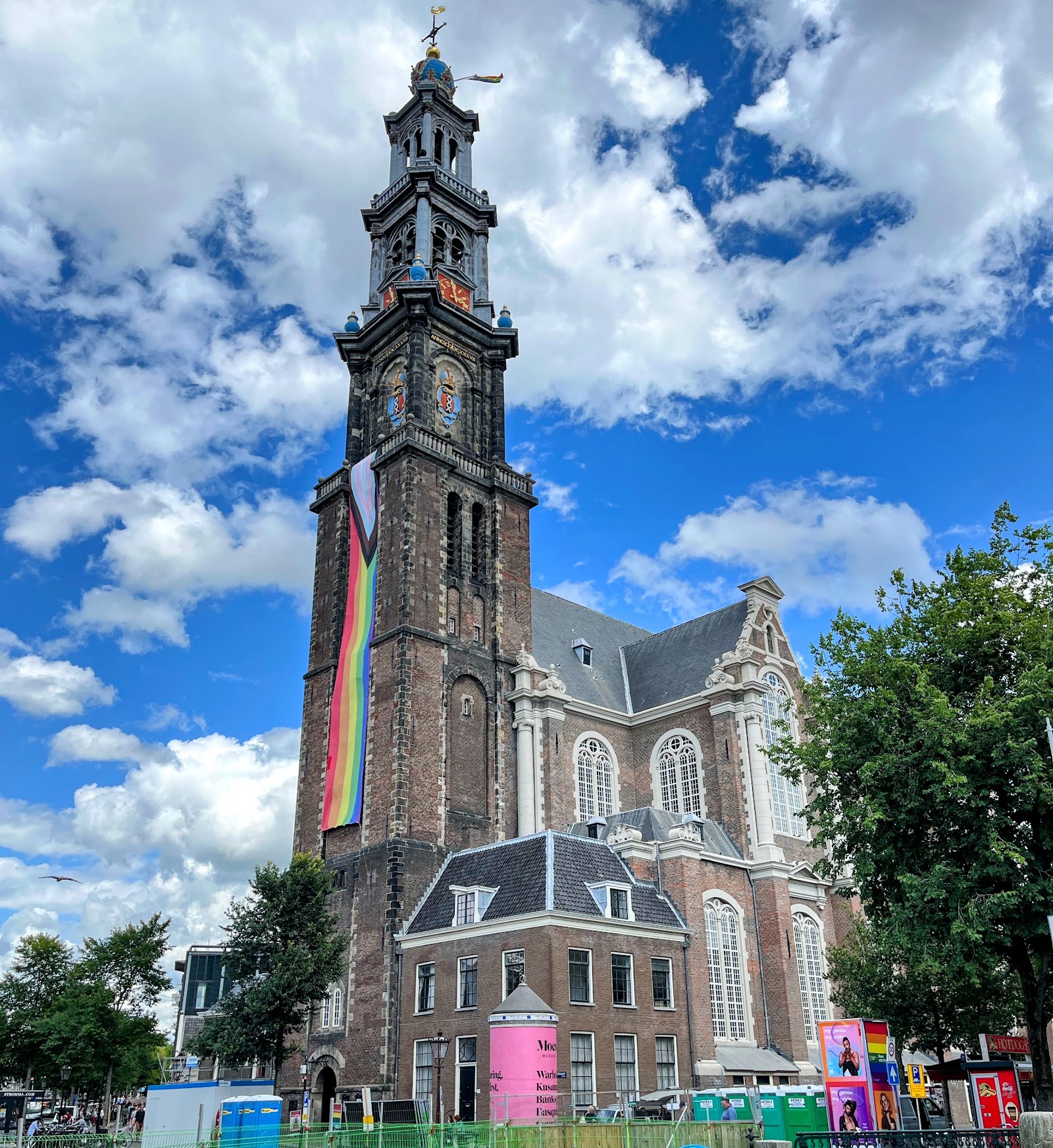
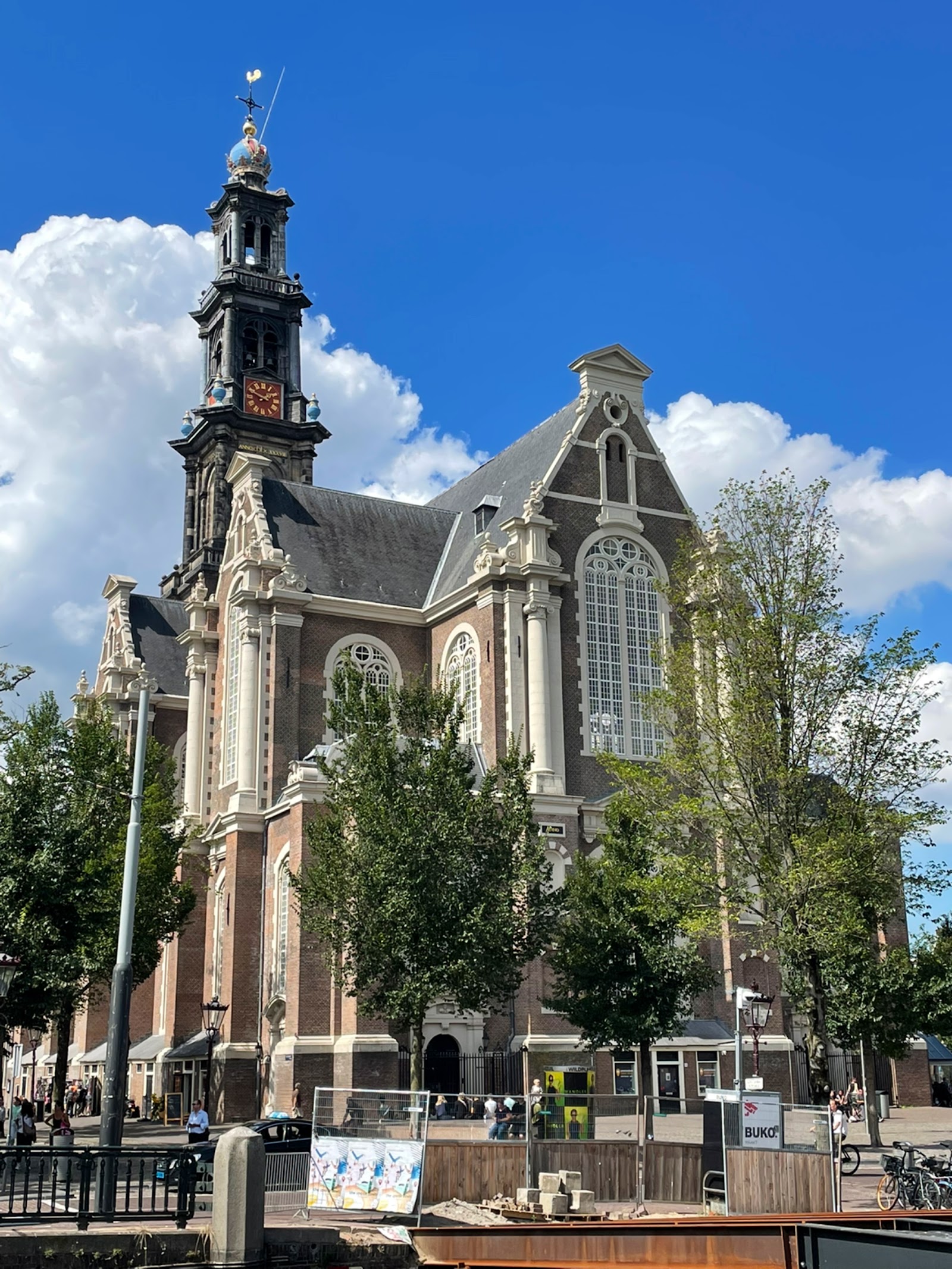
The Westertoren's lean is the first thing to notice — 85 centimetres out of plumb, the tallest church tower in Amsterdam tilts almost imperceptibly against the canal-house skyline. At its peak sits a gilded crown, the Austrian Imperial crown that Maximilian I granted to Amsterdam's coat of arms in 1489. Below it, the church itself has stood since 1631, a Renaissance structure of brick and stone that Hendrick de Keyser designed and his son Pieter completed after his father died.
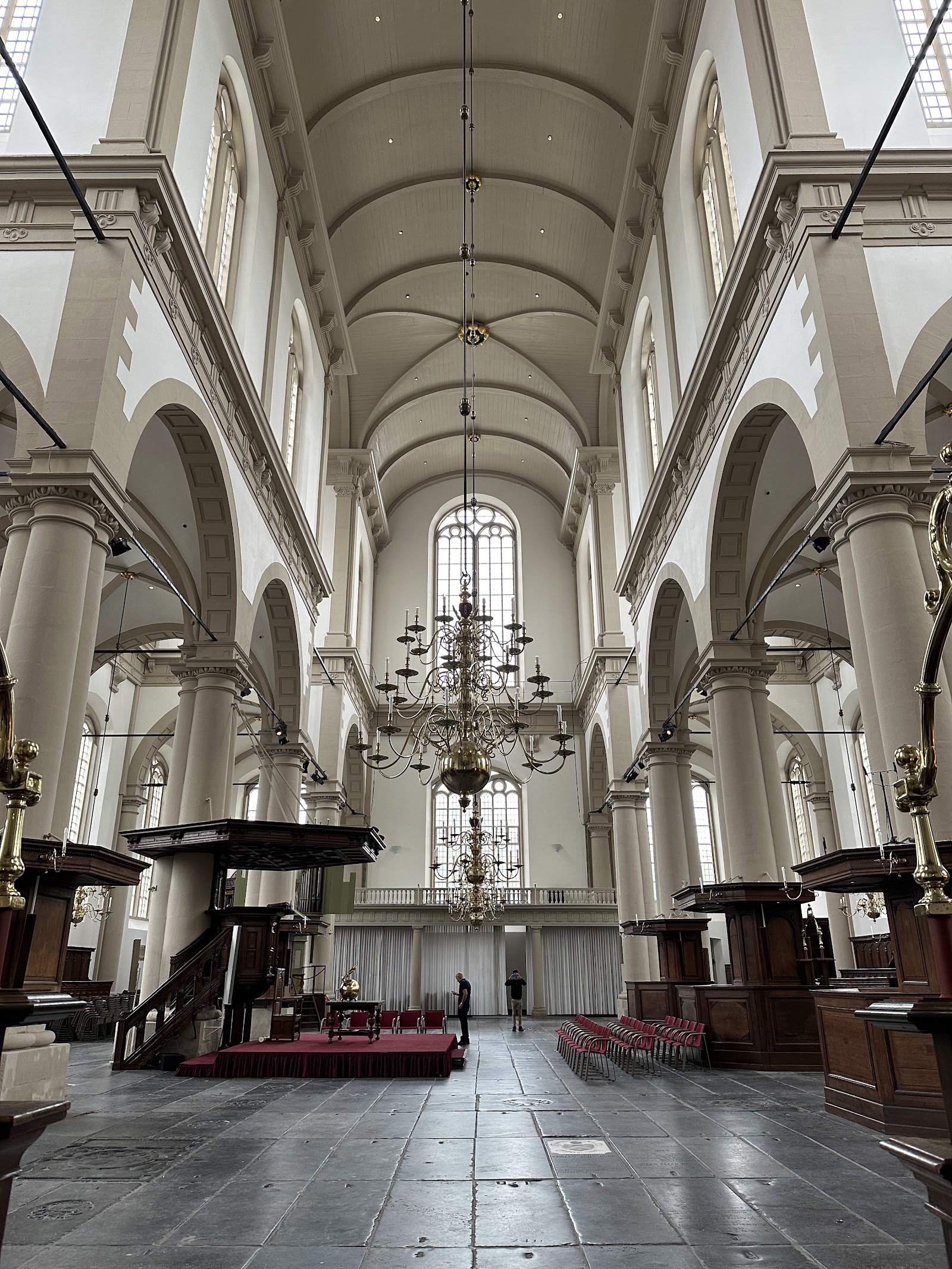
Inside, the scale surprises. Two Greek crosses merged into a single plan give the interior unusual breadth, and the organ shutters — painted by Gerard de Lairesse — draw the eye before the pipes do. Somewhere under the floor, in a numbered grave whose record was lost, Rembrandt van Rijn is buried.
💛 What travellers fall for
People who come back tend to time a visit for Tuesday at noon, when the city carillonneur plays a full hour on the 51-bell carillon — the same bells Anne Frank wrote about hearing from her hiding place nearby. Sit in the nave with the sound coming down through the tower and the church is a different place entirely.
The story behind Westerkerk
Hendrick de Keyser drew the plans for Westerkerk around 1620, making it one of the first churches purpose-built for Protestant worship in the Netherlands — and still the largest of its kind in the country. De Keyser died in 1621 before the work was done; his son Pieter saw it through to the inauguration on 8 June 1631. The tower, at 85 metres, wasn't finished until 1638.
The church accumulated its own history quietly after that. Rembrandt, his lover Hendrickje Stoffels, and his son Titus were all buried here. The organ, commissioned in 1681 from Roelof Barentszon Duyschot and finished by his son, played its first notes on Christmas Day 1686. Princess Beatrix married Prince Claus here on 10 March 1966. By the 1980s the building had deteriorated enough to require closure; a full restoration ran from 1984 to 1991.
Good to know
Trams 13 and 17 stop at Westermarkt, right outside. The church is open Monday to Friday, 11:00–15:00, with free entry. Tower climbs are suspended until further notice. Sunday visitors will find the doors closed to tourists, though a Sunday service runs 10:30–11:30.
Where is Westerkerk?
Location
- In Amsterdam Centrum
- 52.3746, 4.8843
- Open in Google Maps
Rating
4.4 ★ · 1,614 Google reviews
More tickets & tours for Westerkerk
Book directly at the provider
What travellers say about Westerkerk
Located between the Prinsengracht and Keizersgracht, footsteps from the Anne Frank House, the Westerkerk (Western Church) is a Reformed church within Dutch Protestant Calvinism in central Amsterdam, Netherlands. The Westerkerk was built over 11 years from 1620 in Renaissance style according to designs by architect Hendrick de Keyser and was the first biggest Protestant church in the world . The church has a rectangular shape, is 58 metres (190 feet) long and 29 metres (95 feet) wide. Since first opening to parishioners in 1631, the Westerkerk has borne witness to countless historical moments over the centuries. Rembrandt van Rijn is buried in the Westerkerk, as are several other famous Dutch artists. Anne Frank mentioned the church and its tower several times in her famous diary. Former Queen Beatrix was also married there back in 1966... Open: Monday to Friday 11.00 a.m. – 3 p.m. Closed for visitors: 25 December until 2 January No entrance fee needed
Westerkerk Church or West Church is at central Amsterdam near Anne Frank house,a protestant church.It's mentioned at Anne's diary.Famous for 85 meter high tower featuring Austria's kings crown.
A nice little church located closely to the Anne Frank house yet many people skip. Rembrands burial place which makes it all the more interesting.
The church is open daily only for a limited time. It is quite beautiful outside and the bell rings every half an hour. It's right next door to the Anne Frank house and on a lovely plaza commemorating victims of gender orientation prejudice. Being the church where royal weddings take place and the initial resting place of Rembrand, we were eager to visit, pleasantly surprised by the opportunity for an organ concert, plus the instrument was restored a few years back. We went for the Wednesday lunch organ concert, but were a bit late and found the door was locked for the entire concert duration. Once it opened, I observed the faces of all attendees - none appeared touched by the performance, perhaps the divine emotion was replaced by the profane donations that followed it. Donations are compulsory and the House of God feels so commercialised with the souvenir stand inside the church and the hot drinks machine facing the altar - right in the middle of the presumably quiet area for private conversations with God and for contemplating. The church is renting commercial space outside and has enough room in its lobby for a shop at the entrance. So sad and disappointing.
… history coming alive by visiting this more that 400 years old protestant church. Built through 1620-1631 on the heart of the beauty Amsterdam. Hearing the bells is going back hiding on the secret room of Anna Frank whose house is just near by.
More of Amsterdam Centrum
Discover where to stay, what to do and the best deals for your trip.
Explore Amsterdam Centrum →More attractions in Amsterdam Centrum
All of Amsterdam Centrum →
Background adapted from Wikipedia (CC BY-SA) · map data © OpenStreetMap contributors · ratings & place photos via Google · other photos with per-image credit. Ticket links may earn us a commission at no extra cost to you.