
Vondelpark
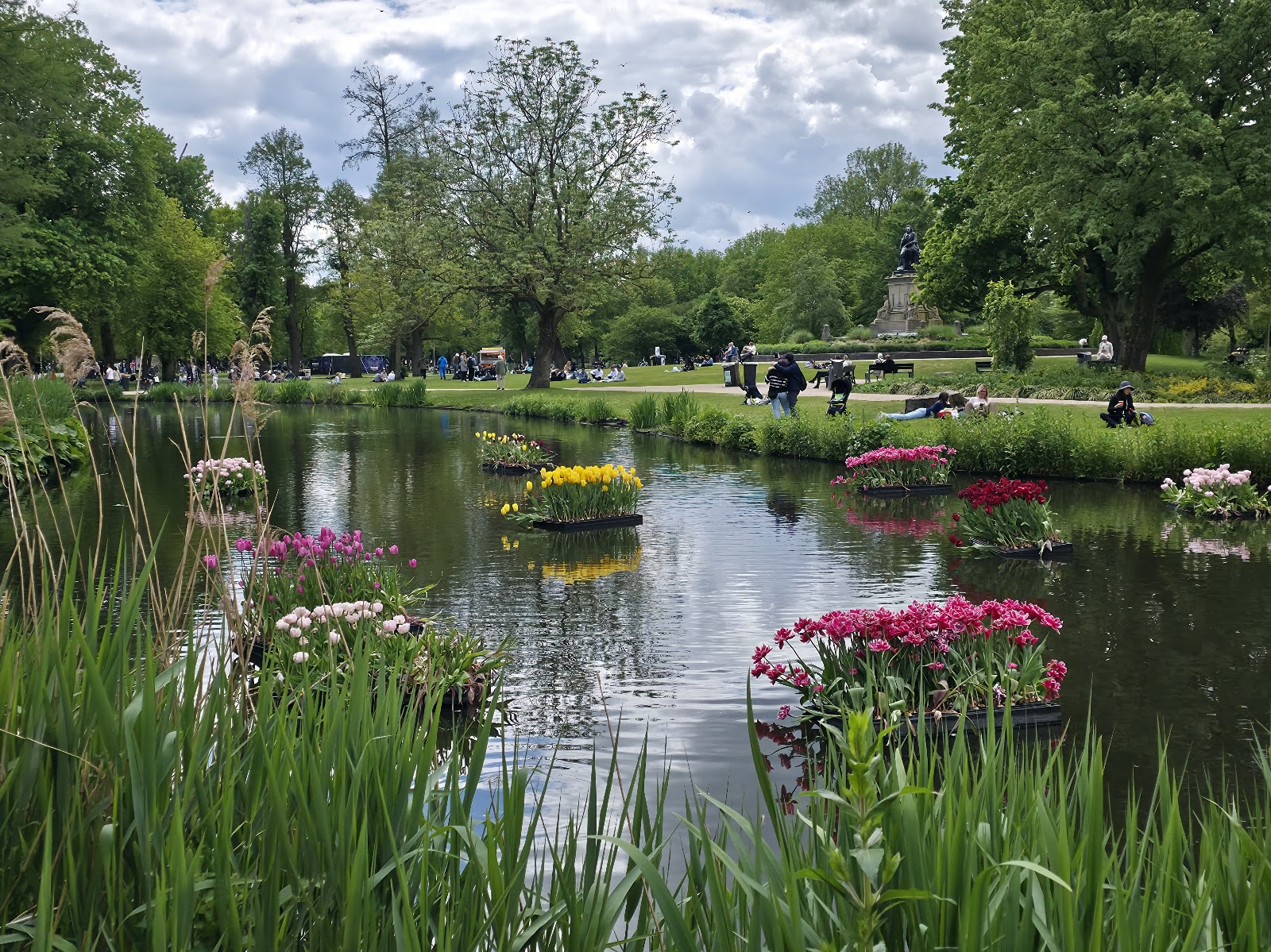
Somewhere between the cast-iron bandstand and the rose garden, Vondelpark stops feeling like a city park and starts feeling like a city. Skaters pass cyclists pass a parent with a stroller pass a man reading on the grass — all of it unhurried, all of it free. The 47 hectares run long and loose through Oud-West, threaded with water and shaded by 4,500 trees from 150 species, and somewhere in the canopy above you, a feral rose-ringed parakeet — descendant of a colony that took root in the 1970s — is making itself heard.
The park sits close to Leidseplein and within easy reach of De Hallen Amsterdam, so it fits naturally into a longer afternoon. But it also rewards just arriving with no plan.
💛 What travellers fall for
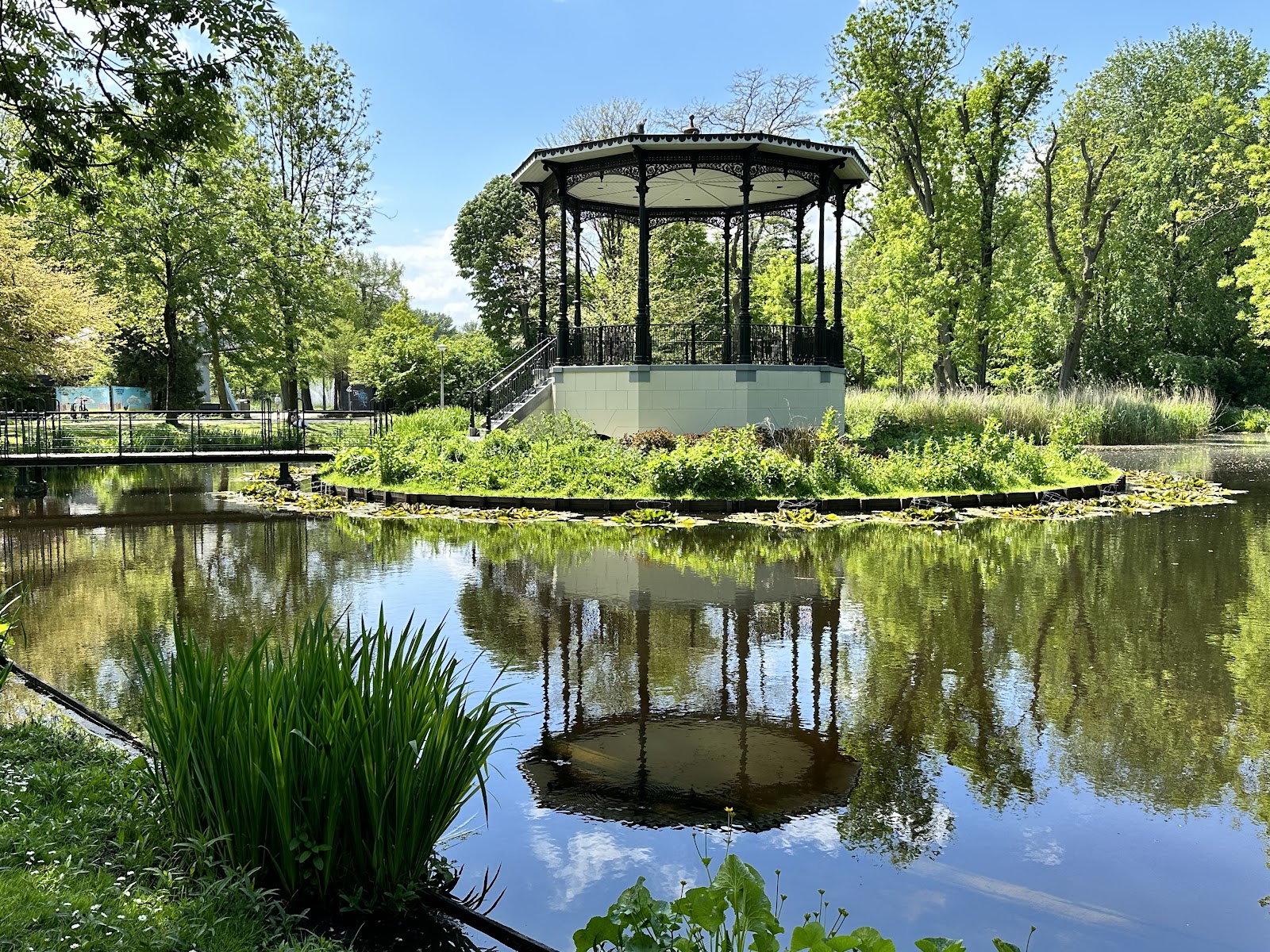
People who come back tend to time it around the open-air theatre — free shows run June through August, and the popular ones fill up fast enough that an online reservation is worth the two minutes. Friday evenings draw a different crowd: the Fridaynightskate sets off from near the Filmmuseum, and even watching it pass is its own small spectacle. The Blauwe Theehuis, that round 1937 modernist saucer of a building, is the reliable coffee stop.
The story behind Vondelpark
In 1864, Amsterdam merchant Christiaan Pieter van Eeghen led a group of citizens in forming an association specifically to build a park for riding and walking. It opened the following year as Het Nieuwe Park — free to association members, ticketed for everyone else — and was designed by landscape architect Jan David Zocher in the English landscape style. The final section, expanding the park to its current size, was completed by Jan David's son Louis Paul Zocher between 1876 and 1877.
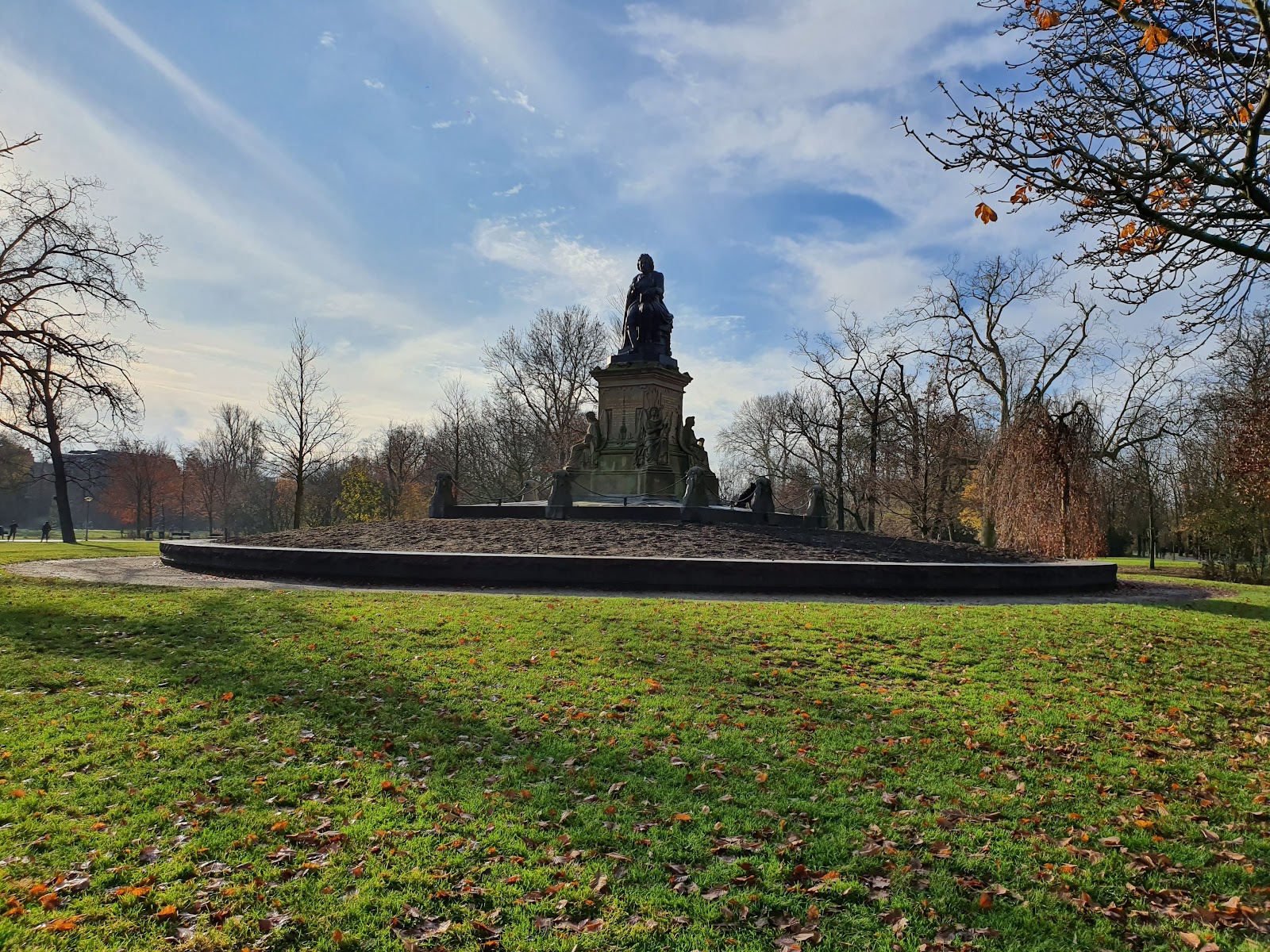
The park was renamed Vondelpark in 1880, after the 17th-century playwright Joost van den Vondel — whose three-metre bronze statue, sculpted by Louis Royer in 1867 with a pedestal by Pierre Cuypers, still stands here. Maintenance costs eventually outpaced the association's means, and in 1953 they handed the park to the city. Landscape architect Egbert Mos carried out a renovation in the 1950s. In 1996, the park was designated a rijksmonument — a state-protected monument. One structural fact colours all of this: the park was built on reclaimed muddy ground that continues to slowly sink, requiring full renovation roughly every thirty years.
Good to know
Trams 1 and 2 stop at several points along the park's edge. It's open around the clock, year-round, and free. Bike rental is available near the main entrance through MacBike from €5 an hour. For the open-air theatre, check the programme and book ahead for anything with a name attached.
April through September is when the park is at its most inhabited — the rose garden peaks in late spring, the open-air theatre runs through summer, and the grass fills with people on any afternoon that isn't raining. Winter is quieter and genuinely cold, but the park stays open and the paths stay walkable.
Where is Vondelpark?
More tickets & tours for Vondelpark
Book directly at the provider
What travellers say about Vondelpark
Extremely beautiful big park in the heart of the city. Great for walks, barbecue and some relaxation. On a good day, grab your picnic basket and a good book and you can enjoy the whole day in the park. There are some good cafes and restaurants also for breakfast/lunch/dinner. Lots of activities, workshops and open concerts take place throughout the year. During tulip season this is the only place where you get to see the floating tulips. Must visit in Amsterdam!
Absolutely stunning scenic park. It is so clean and tidy. Even on an extremely busy, warm day, there was more than enough space for everyone. I'd recommend a family visit, or with the one you love. It was so peaceful and very beautiful.
This was a lovely slice of nature in a big city. Exactly what this mountain girl mama needed to reconnect. Nice walkways. Lots of bicyclists - it is Amsterdam after all.
In my opinion, one of the best parks in Amsterdam. Lots of paths to walk, ponds, big trees and a great place to cycle around in. It also has cafes that offer many menu choices.
Great park and it’s so beautiful for a picnic with friends and family or just a nice little walk. I imagine running here would be also a pleasant experience.
More of Oud-West
Discover where to stay, what to do and the best deals for your trip.
Explore Oud-West →More attractions in Oud-West
All of Oud-West →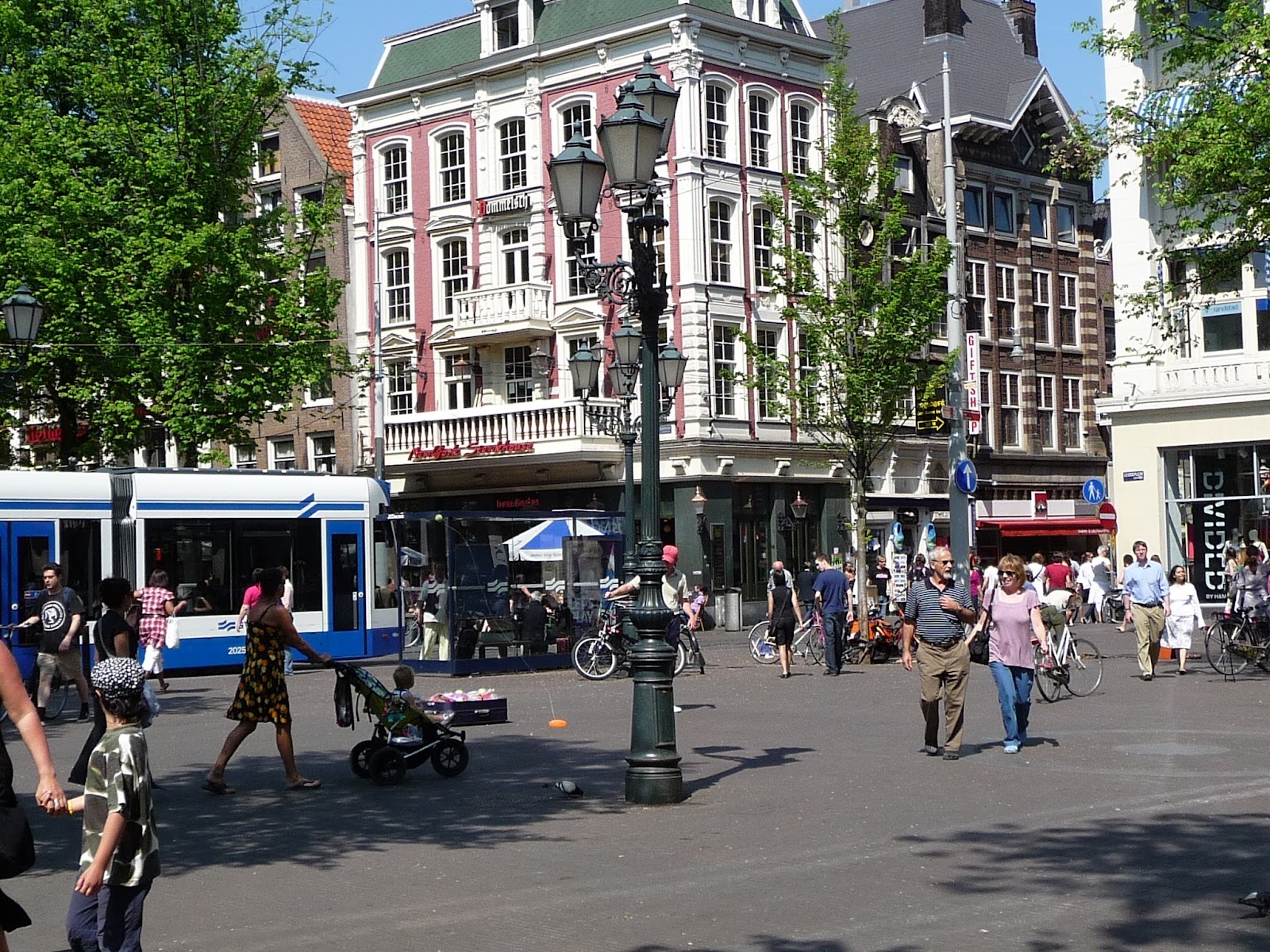

Background adapted from Wikipedia (CC BY-SA) · map data © OpenStreetMap contributors · ratings & place photos via Google · other photos with per-image credit. Ticket links may earn us a commission at no extra cost to you.