
Vieille Ville de Menton (Old Town)

The first thing you notice climbing into Menton's old town is the colour — ochre, terracotta, pale yellow, all stacked tight against the hillside above the Ligurian coast. Rue Longue cuts through the medieval core on ancient cobblestones, shuttered windows overhead, the smell of stone and shade. A few minutes further up, the pebble-paved parvis of the basilica opens out, its 250,000 hand-laid beach stones forming geometric patterns underfoot.
This is a compact place, walkable end to end in under an hour, but it rewards the detour upward. The hilltop cemetery looks out across rooftops to Italy and the sea simultaneously — a view that stopped Maupassant, who called it the world's most aristocratic burial ground.

💛 What travellers fall for
People who come back tend to time the covered market first — Marché des Halles closes at 1pm and the morning produce stalls are the right introduction to the town's Italian-inflected character. The free electric shuttle, La Navette, is worth knowing about for the return leg when the stairs have done their work on your legs.
The story behind Vieille Ville de Menton (Old Town)
The settlement appears in records as Podium Pini as early as 1146, and Menton itself was established by Genoese founders in the 13th century. Charles Grimaldi of Monaco acquired the town in 1346, beginning a long entanglement with the principality — Menton was drawn into both the Spanish protectorate of 1524 and the French protectorate formalised at Péronne in 1641. In January 1793 the principality was annexed to France.
In March 1848, Menton and neighbouring Roquebrune broke away and declared themselves free cities under Sardinian protection — an independent status that lasted until the Treaty of Paris in 1861 formally attached Menton to France. The decades that followed brought a different kind of attention: the mild winters drew writers and ailing aristocrats from across Europe, and the old town acquired the layered, well-worn quality it still carries.

Good to know
Nice airport is 35 minutes by car; trains from Nice, Monaco and Cannes stop at Menton station, a 15-minute walk from the old town. The free La Navette shuttle runs daily 9am–6pm. Entrance to the old town is free. Serious staircases throughout — not reliably stroller-friendly.
Summer runs warm rather than hot — July and August average around 23°C with very little rain and an August sea temperature of 24°C. September stays pleasantly warm and the crowds thin. The old town's steep lanes offer shade in the heat of the day, but the hilltop cemetery and the staircases are exposed.
Where is Vieille Ville de Menton (Old Town)?
More tickets & tours for Vieille Ville de Menton (Old Town)
Book directly at the provider
What travellers say about Vieille Ville de Menton (Old Town)
Excelent parking located right in the city center and just few steps to the beach
I had an issue with the renewal of my membership. I called but it's a Saturday. The main office is closed. I went to the parking attendant's office to figure out what to do. The attendant in office was Fred: was very friendly, very helpful and considering it's a weekend, he called his supervisor Haitem on his personal number. Haitem was very courteous and helpful. They both helped me out on the spot with my membership and moving my car that day. I usually don't write reviews much but their professionalism was so great that I really felt that it needed to be mentioned.
Big and easy to access parking. Quite big praking spaces. Unfortunately, I was not able to charge a car. No internet in the parking lot, chargers only on application which I was not able to configure. After wasted 30 min gave up. Chargers in such places should be operated on card authorization and much more easy to use.
Really good place to park, and ok prices also. Short walking to old town too.But will fillup, so be early.
Super clean and convenient for touring Menton couldn’t be better
More of Menton
Discover where to stay, what to do and the best deals for your trip.
Explore Menton →More attractions in Menton
All of Menton →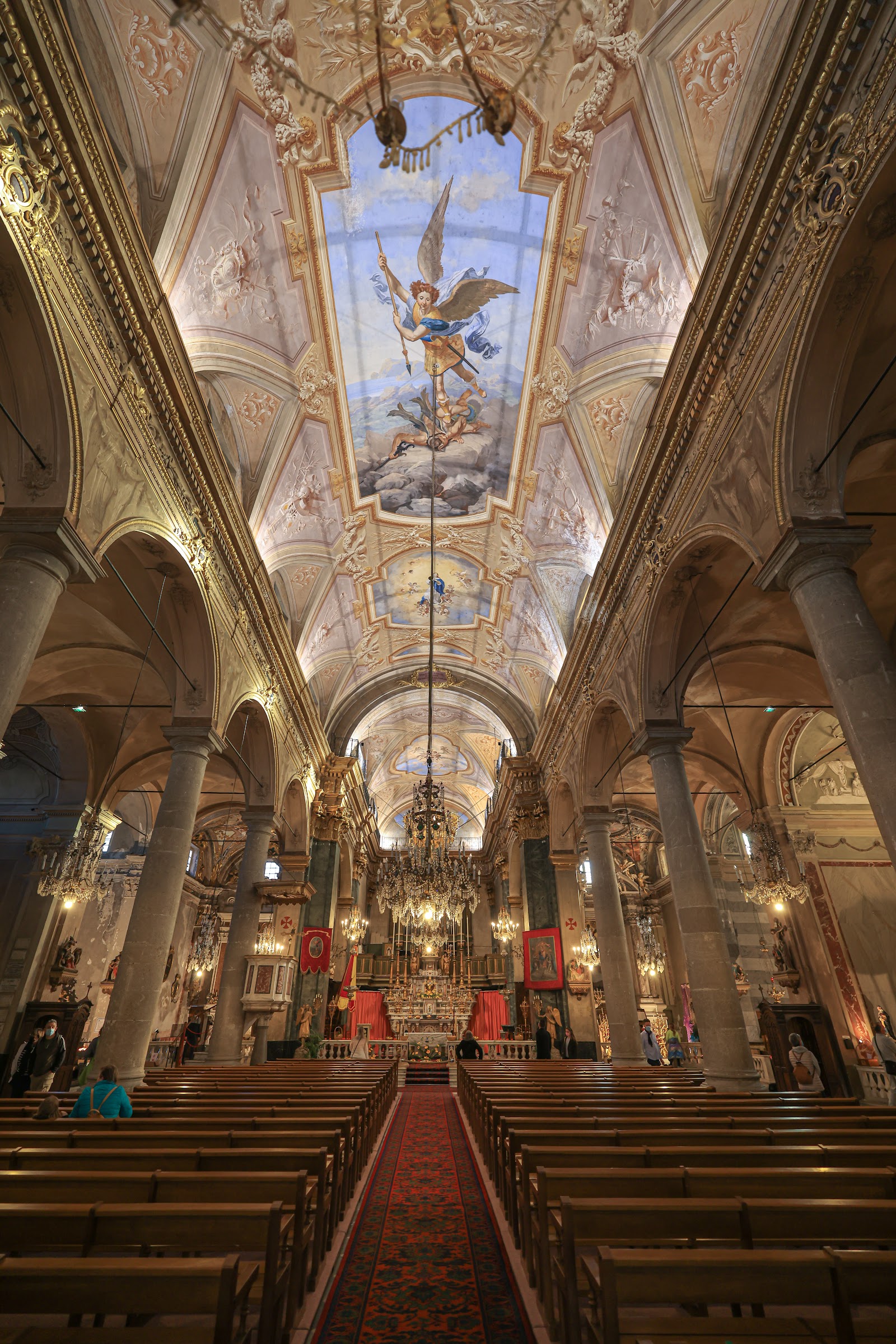

Background adapted from Wikipedia (CC BY-SA) · map data © OpenStreetMap contributors · ratings & place photos via Google · other photos with per-image credit. Ticket links may earn us a commission at no extra cost to you.