
Upper Gallery / Mezzanine Level
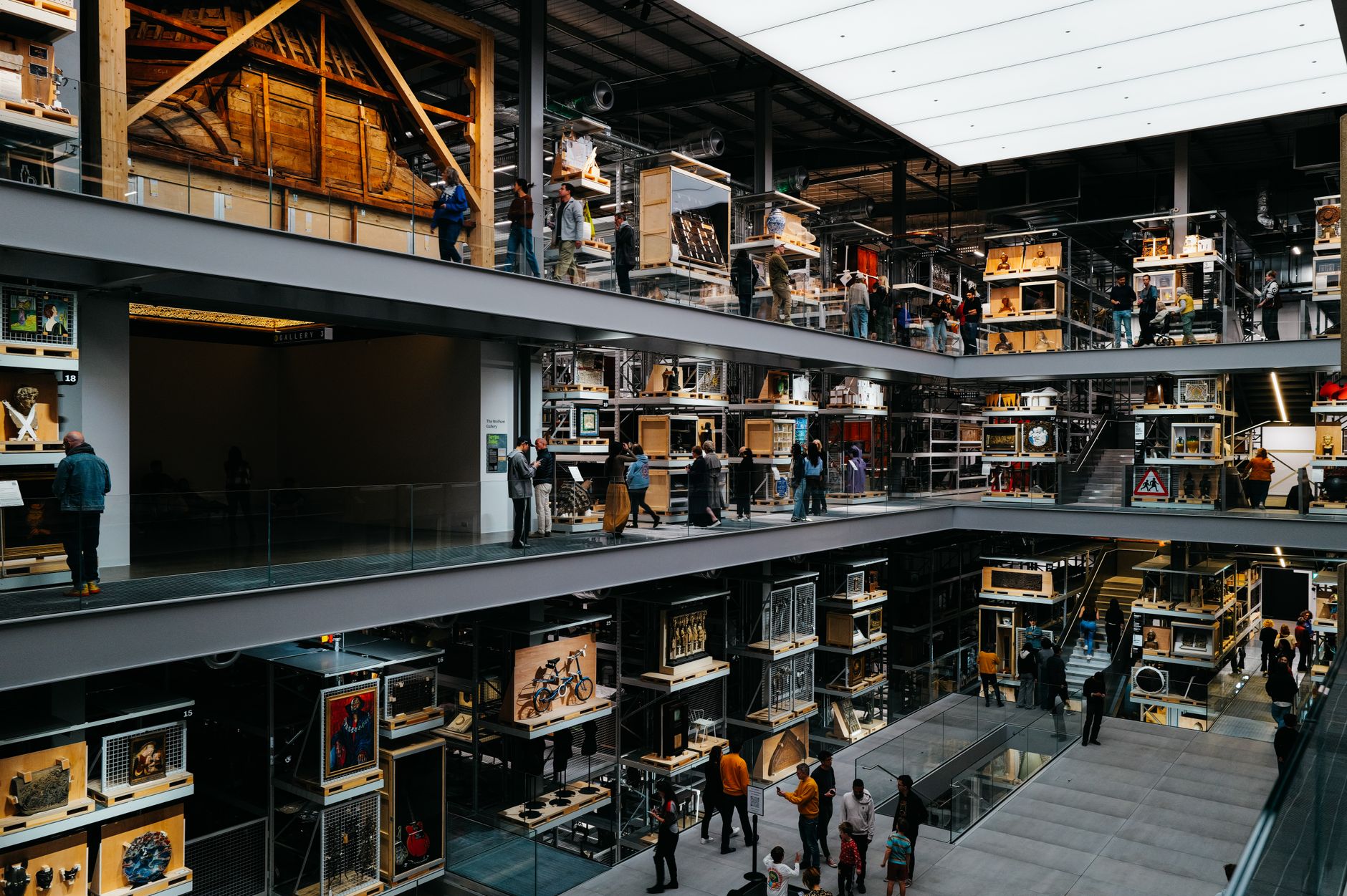
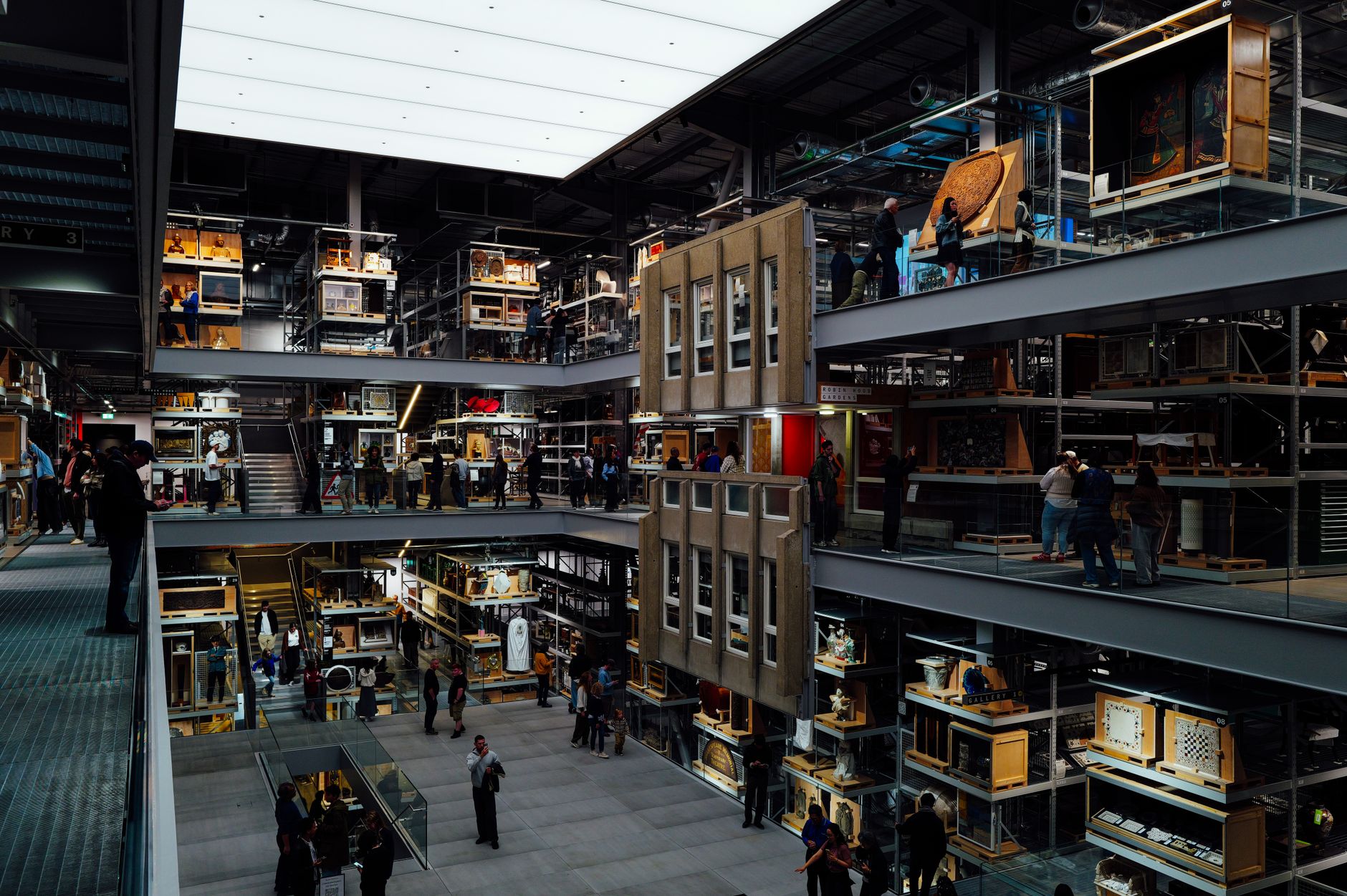
The mezzanine wraps around the central courtyard of Dar Mnebhi Palace like a second thought that turns out to be the whole point. Up here, away from the zellige and the carved cedar below, the Marrakech Museum has hung nearly 130 works by 65 Moroccan artists — paintings, photographs, mixed-media pieces — tracing what modern and contemporary Moroccan art has looked like from the 1960s to now. The show is called "From Marocco with Love."
Since 2025, a quieter corner of the level has been given over to Jnane Elisabeth, a collection assembled by art collector Elisabeth Bauchet-Bouhlal — personal favorites rather than a curated argument, which gives it a different texture from the main exhibition.
💛 What travellers fall for
People who come back tend to do the courtyard first, then climb up before the tour groups arrive. The information panels are in French only, so if that's not your language, go slowly with the works themselves rather than the labels — several visitors say that's actually the better way to spend the time.
How Upper Gallery / Mezzanine Level came to be
Dar Mnebhi Palace was built in the late 19th or very early 20th century — sources place construction somewhere between 1894 and the early 1900s — for Mehdi al-Mnebhi, vizier of war under Sultan Moulay Abdelaziz. Al-Mnebhi held that post from 1900 to 1908, and the palace reflects the ambitions of that moment: a courtyard ringed with roofed galleries, walls faced in colorful zellige, ceilings of painted and carved cedar, and a brass chandelier cut into geometric and arabesque forms.
After Moroccan independence in 1956 the state took the building, and by 1965 it had become a girls' school. The Omar Benjelloun Foundation renovated it and opened it as a museum in 1997. The upper gallery's life as an art space is, by that measure, still relatively young.
Who and what shaped it
People who shaped it
Landmark buildings
Plan your visit
On the map
When to go
Right now
Background & history adapted from Wikipedia (CC BY-SA) · specs from Wikidata (CC0) · weather from Open-Meteo · map data © OpenStreetMap contributors · photos from Wikimedia Commons / Unsplash with per-image credit. No third-party reviews or social posts reproduced.