
Torre del Mangia
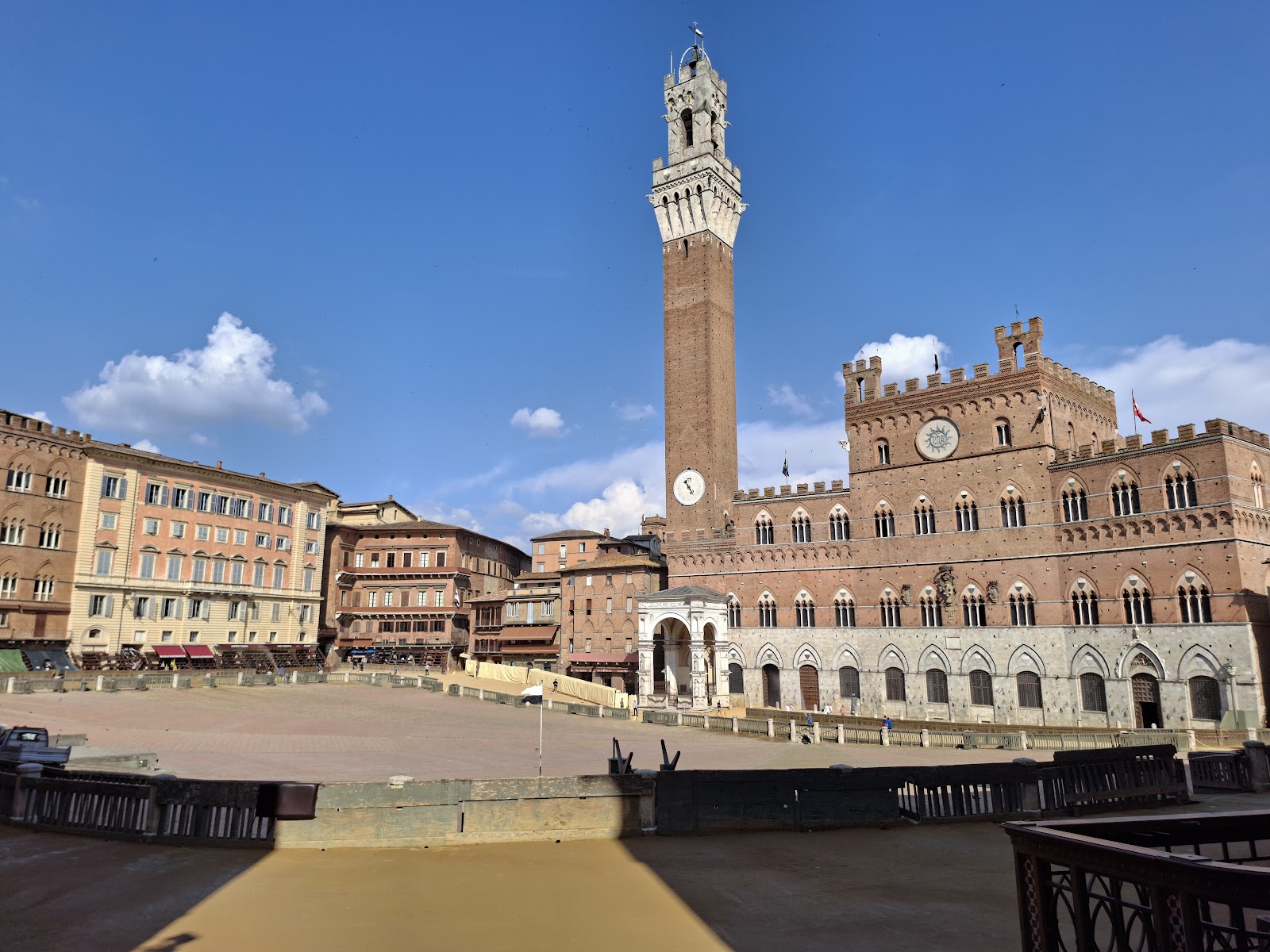
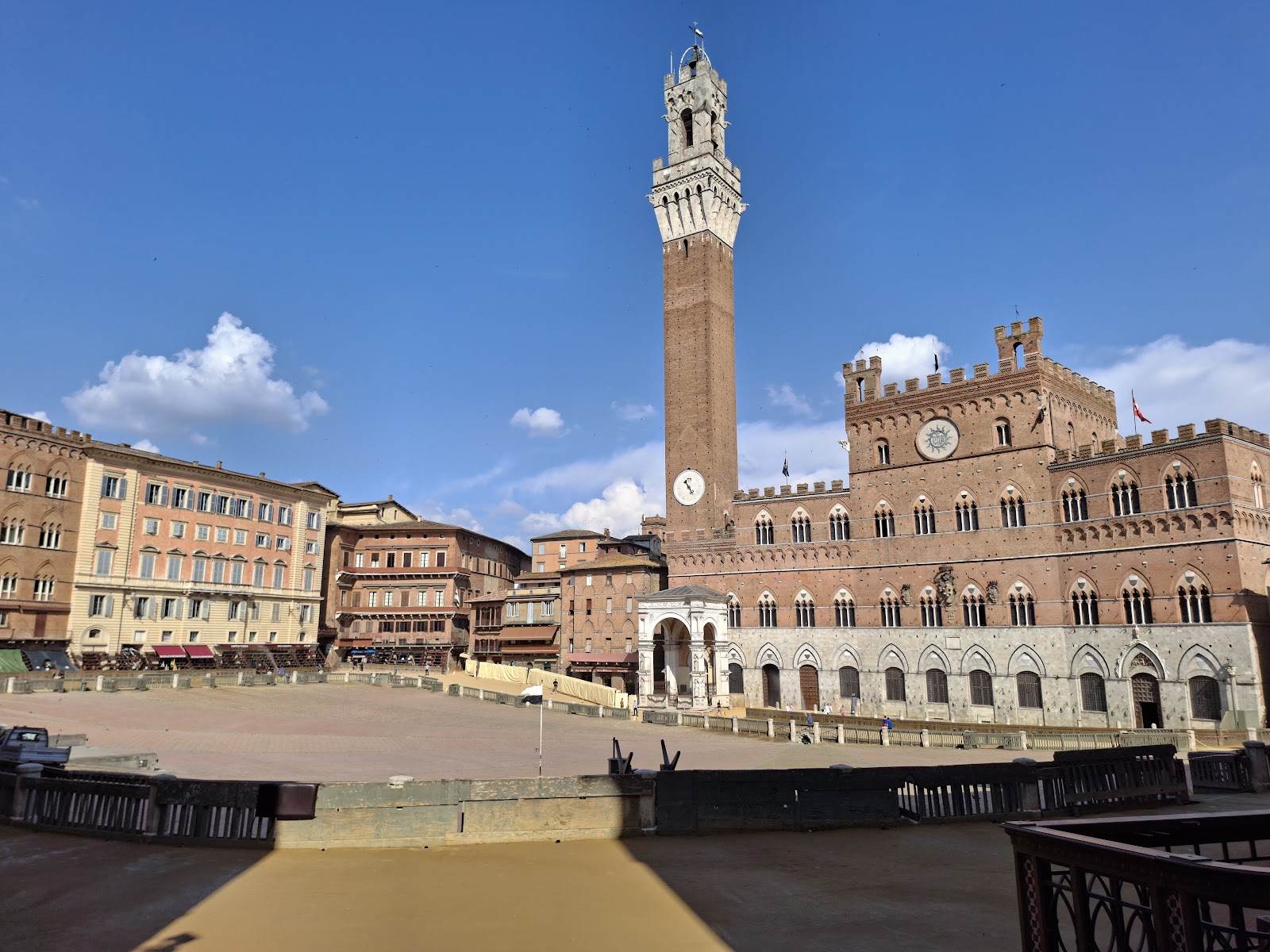
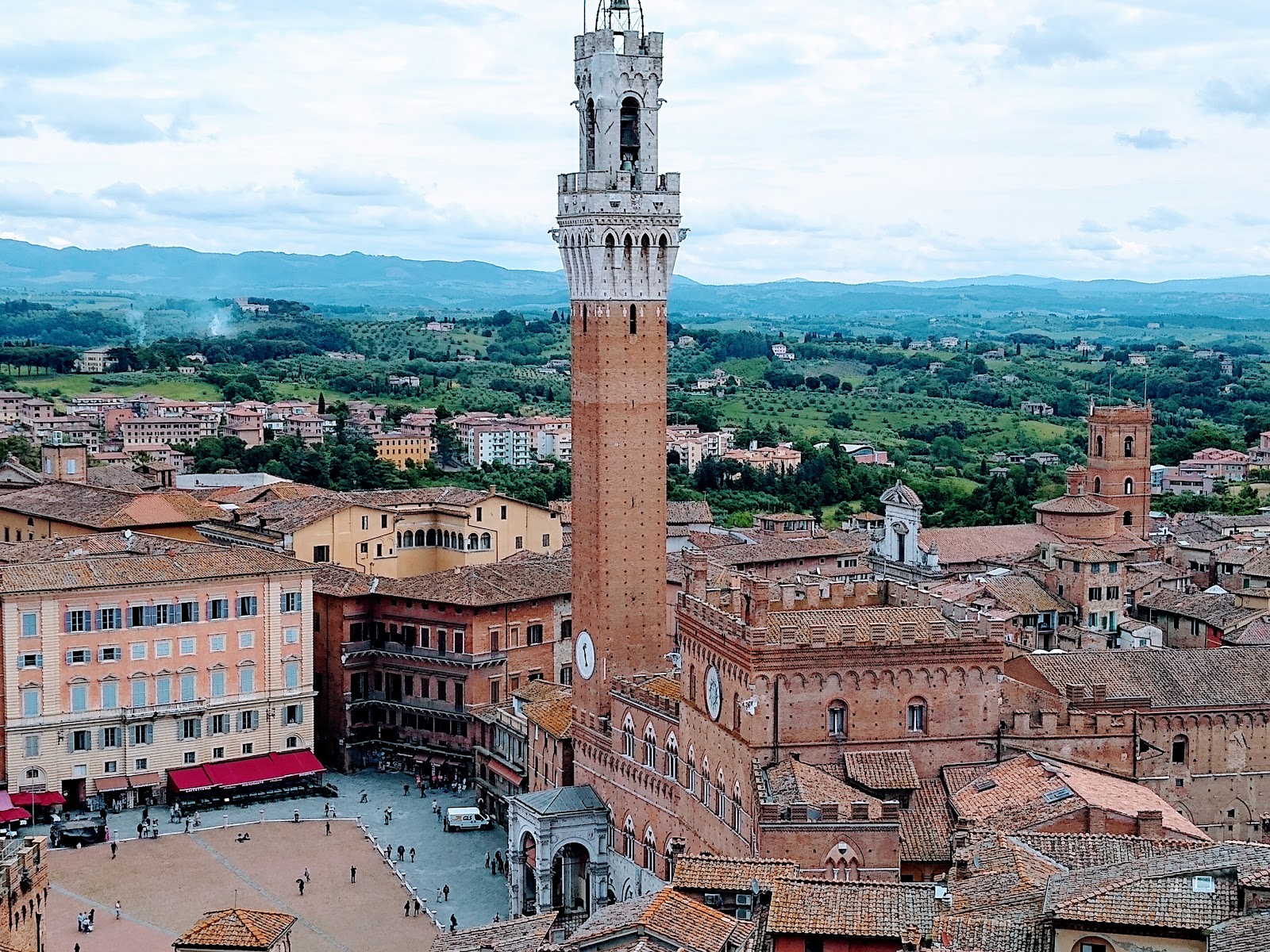
At 87 metres of red brick rising from the south flank of Palazzo Pubblico, Torre del Mangia was built to a precise political argument: it stands exactly as tall as Siena Cathedral, a statement in masonry that civic power and sacred power were equals. The name comes from the tower's first bellringer, Giovanni di Balduccio, whose nickname Mangiaguadagni — roughly, 'profit eater' — stuck to the tower long after a mechanical clock replaced him in 1360.
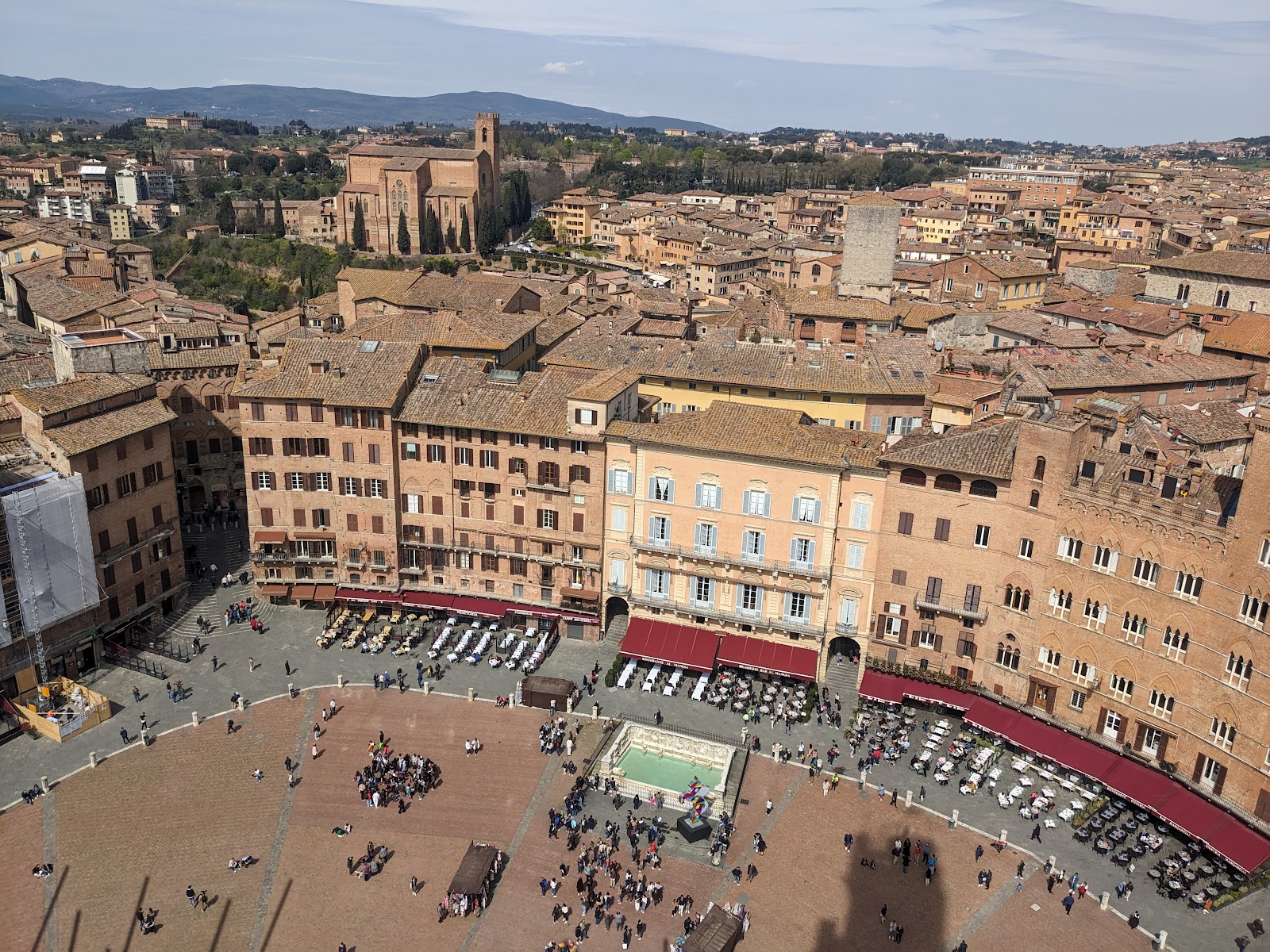
The climb is 400 steps through a stairway that narrows and shifts as it rises, with small window openings that give you the Campo in fragments before you reach the top and see it whole.
💛 What travellers fall for
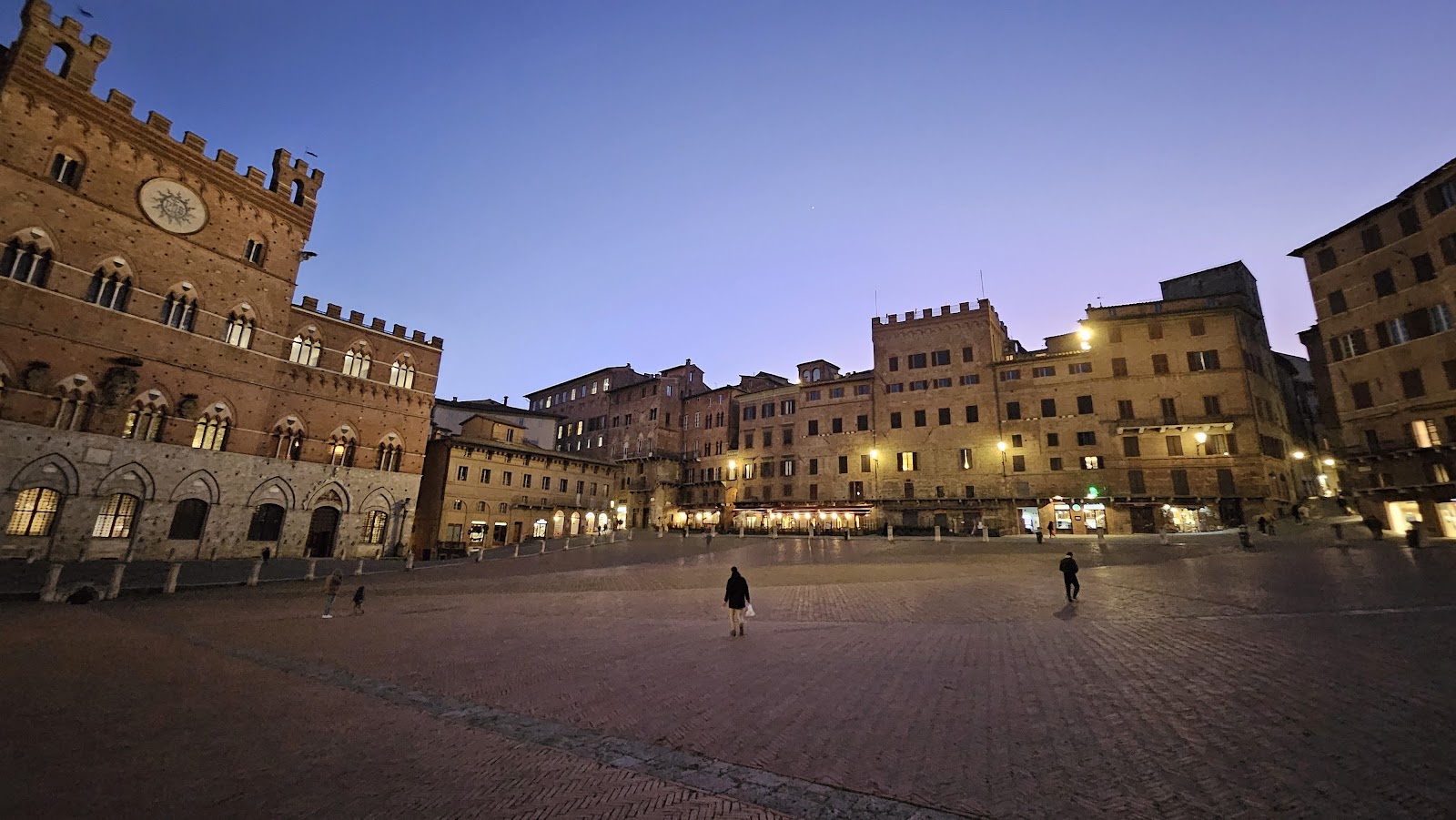
People who've done it more than once tend to go in the first slot of the day, when the light is still low and the Campo below is quiet. Tickets are cash-and-card, same-day only — no online booking — so arriving at opening avoids the midday queue. The 30-minute limit is enforced, but it's enough.
The story behind Torre del Mangia
Construction ran from 1338 to roughly 1344, with documented payments to Agostino di Giovanni — a Sienese sculptor-architect — and the Perugian brothers Minuccio and Francesco di Rinaldo through 1345. The tower was built under the Council of Nine, the merchant oligarchy that governed Siena during its most prosperous decades, and its height was calibrated to match the Cathedral's: neither church nor state would stand taller.
The Black Death arrived in Siena in 1348, killing perhaps half the population. Survivors fulfilled a vow to the Virgin by adding the Cappella di Piazza loggia at the tower's base in 1352. The great bell — the Campanone, also called Sunto, dedicated to Our Lady of the Assumption — was installed in 1666 and weighs 6,764 kilograms. It still rings for the Palio.
Good to know
No elevator, no advance tickets online. Buy at the Palazzo Pubblico ticket office on the day. Tower-only entry is €10; a €20 combo adds Museo Civico and Santa Maria della Scala. Hours shorten significantly November through February, and the tower closes during Palio week preparations in late June and mid-August.
Summer afternoons at the top are exposed and hot; the brick holds heat and the stairwell offers little air. Spring and autumn are the easier seasons for the climb, with mild temperatures and good visibility across the Val d'Arcia. Winter hours are sharply reduced, and strong winds can prompt temporary closure.
Where is Torre del Mangia?
More tickets & tours for Torre del Mangia
Book directly at the provider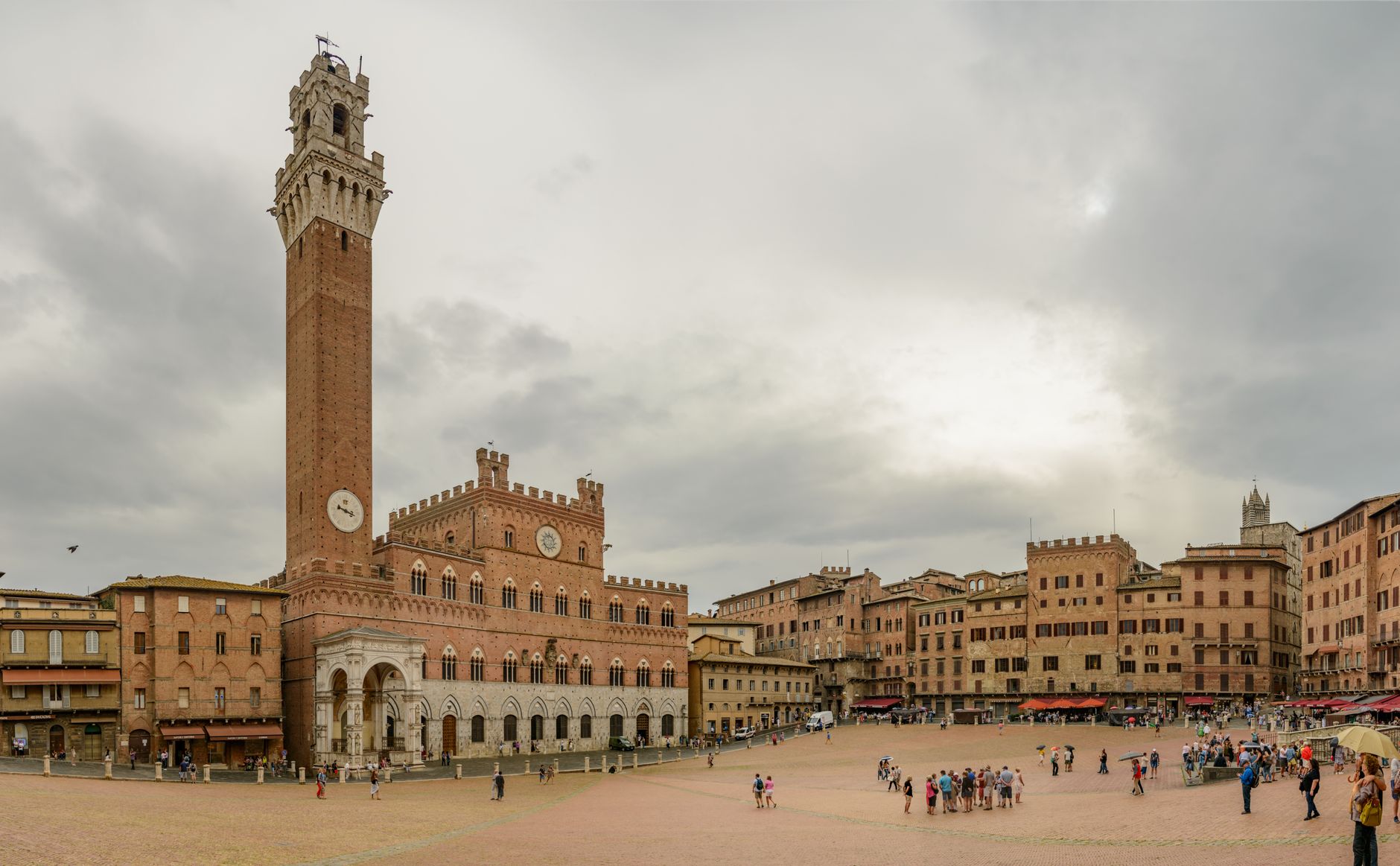
What travellers say about Torre del Mangia
Piazza del Campo is the historic heart of Siena and one of Europe’s most famous medieval squares. Known for its unique shell shaped design and beautiful brick paving, it is surrounded by elegant palaces, cafés, and the impressive Palazzo Pubblico with its iconic Torre del Mangia. During our visit, a graduation ceremony at the University of Siena was taking place, adding an even more colorful and festive atmosphere to the square.
The shell-shaped Piazza del Campo is considered to be one of the greatest medieval squares in Europe. Established before the 13th century on sloping ground where the city's three original hilltop communities met, it was paved in red brick 1349. To honour the highly successful civic group that ruled the Republic of Siena during its golden age, consisting nine people, the square was deliberately divided by white travertine stone into nine distinct, symmetric wedges that funnel downward toward the city hall. Dominating the bottom of the square is the Palazzo Pubblico, the impressive Gothic town hall constructed between 1297 and 1310. It served as the central headquarters for the city's governors, and still serves as the active city hall today, including for weddings, one of which was taking place whilst I was there. The square's concave slope was a brilliant piece of medieval engineering designed to naturally channel rainwater away from the local businesses and down into the city's massive underground drainage system. A beautiful and busy place to stop for a bit of lunch and enjoy the views and atmosphere!
Piazza del Campo is the heart of Siena, famous for its unique shell shape and lively atmosphere. Surrounded by historic buildings, it’s the perfect place to sit, relax, and people-watch. The square truly comes alive during the Palio di Siena, but even on a normal day, it feels vibrant and full of character — a must-visit spot that captures the spirit of the city.
Piazza del Campo was one of the highlights of our day trip to Siena in May. Seeing this famous shell-shaped square in person was truly impressive and gave us a real sense of the city’s history and character. Our tour guide explained how the piazza has been the heart of Siena’s civic life since the medieval period and is renowned for hosting the historic Palio horse race twice each year. Learning about its history while standing in the square made the experience much more meaningful. The weather was pleasant, and although the piazza was comfortably busy with visitors and locals, it never felt overcrowded. There was a wonderful atmosphere, with people relaxing, taking photos, and enjoying the surrounding cafés and architecture. Visiting as part of a guided group was a great way to appreciate the significance of this iconic landmark.
Piazza del Campo is one of the most beautiful and unique squares in Italy, famous for its distinctive shell shape and warm, earthy tones. Located in the heart of Siena, the piazza has a special charm that immediately draws you in. I understood that the piazza is best known for hosting the famous Palio di Siena, a centuries-old horse race that transforms the square into a vibrant and intense spectacole.
More of Siena
Discover where to stay, what to do and the best deals for your trip.
Explore Siena →More attractions in Siena
All of Siena →
Background adapted from Wikipedia (CC BY-SA) · map data © OpenStreetMap contributors · ratings & place photos via Google · other photos with per-image credit. Ticket links may earn us a commission at no extra cost to you.