
Tolhuistuin

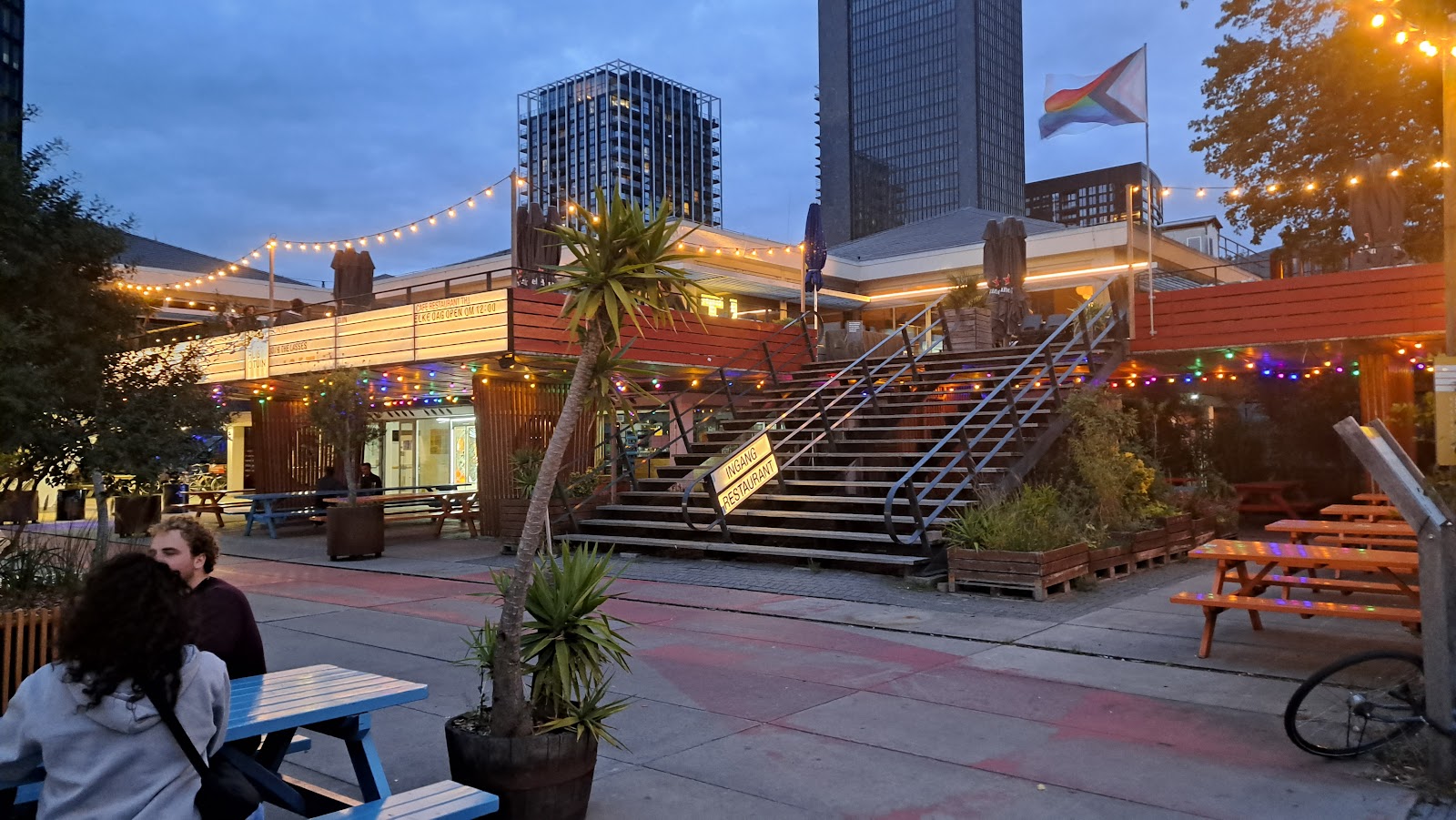
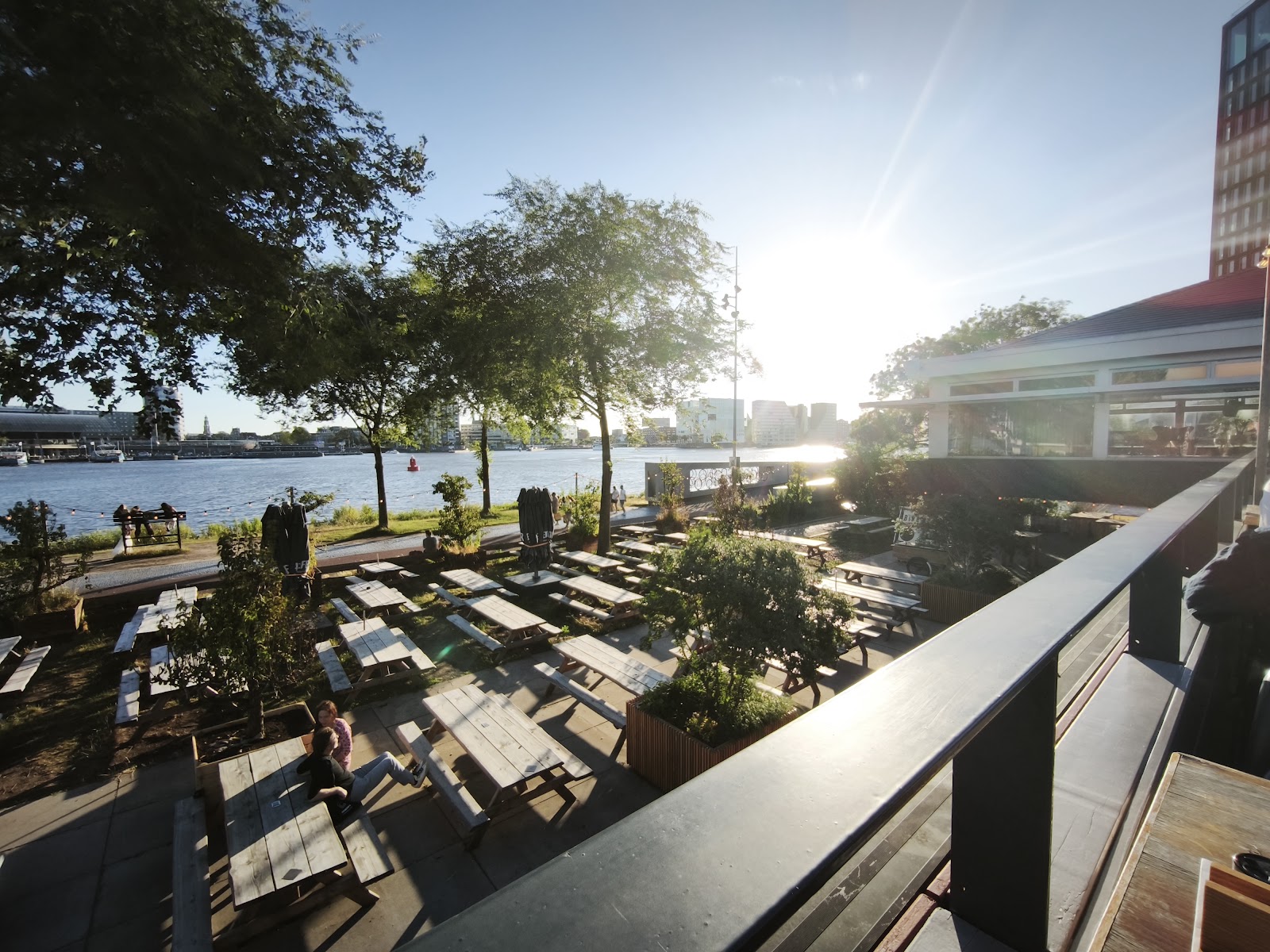
The free ferry from Amsterdam Centraal takes about five minutes, and by the time you step off at Buiksloterweg, Tolhuistuin is already in front of you — 18,000 square metres of garden, concert halls, and mid-century Shell-era architecture that the city quietly converted into a cultural campus. The anchor is the Pavilion, a municipal monument designed by Arthur Staal between 1971 and 1974, its 4,500 square metres now split between a music hall, exhibition rooms, two dance studios, and a restaurant with terraces facing the IJ.
Around it, smaller Shell-period buildings — a porter's house, a personnel canteen, a company medical service villa — house creative workspaces for around thirty organisations. A communal vegetable garden runs for neighbourhood residents; local artists' sculptures sit among the beds.
💛 What travellers fall for
Regulars tend to arrive early enough to claim a terrace table at THT before the post-ferry crowd fills in. The restaurant runs small, shareable plates from a deliberately broad range of cuisines. One thing worth knowing: the venue holds no license for amplified music outdoors, so live bands play acoustically — which changes the atmosphere considerably from what you might expect.
The story behind Tolhuistuin
The site began in 1770 as a tea garden and waiting place — travellers crossing the IJ by boat to reach Amsterdam's city centre would stop here until the gates opened. By 1870 it had a dance floor, bowling alley, shooting range, and a programme of open-air concerts. Swimming competitions were organised on the water.
In the late 1930s the grounds passed to Bataafse Petroleum Maatschappij, eventually becoming part of Shell's Amsterdam research complex. Arthur Staal's Pavilion followed in 1971–1974. Shell sold the site to the City of Amsterdam in 2009; writer and cultural organiser Chris Keulemans won the subsequent competition to reimagine it through his foundation Stichting Tolhuistuin. The full site opened to the public in 2014 after the Pavilion's renovation was completed.
Good to know
Open Thursday through Sunday, noon to 11:30 pm; closed Monday to Wednesday. Entry to the grounds is free. Take the free Buiksloterweg ferry from the IJ-side of Amsterdam Centraal — the walk to the gate is 75 metres. Cards accepted everywhere; American Express is not. Bring a €2 coin for the lockers.
The garden and outdoor terraces are genuinely pleasant from late spring through early autumn — the summer programme runs June to October. Noord's waterfront position means wind off the IJ can arrive without warning, so a layer is rarely wasted even in July.
Where is Tolhuistuin?
More tickets & tours for Tolhuistuin
Book directly at the provider
What travellers say about Tolhuistuin
By far one of the best concert experiences I have ever had the pleasure of going to. Probably greatly helped by an amazing artist that is a fantastic entertainer, and a crowd that was vibing just right. :-) The venue is high quality, smallish and intimate, split in a bar area that is sound insulated from the main concert area, while concert area had its own bar and all the things a concert venue needs. Highly recommend going to this venue if your favourite artist happens to stop by.
The restaurant here is straight fire. Had the Minestrone soup, salmon sandwich on brioche for lunch. Noticed the extensive dessert menu, but the kitchen was closing. Buuut.. Couldn't stop thinking about the Pornstar (passion fruit) Panna Cotta, had to come back. Absolutely delivered, it was sensational. Gorgeous views. Super friendly staff. Could come back here again and again.
The food is novel, tasty and diverse. Ordering two dishes per person satisfies enough. Wine was fine. The Tolhuistuin dish for two was the creative cherry on top. I even took a picture. The ambience is convivial and stimulating, partly because of the nice view. The space is spacious and the light soft. The waitress was helpful, clear and nice. We felt comfortable.
This riverside restaurant offers a relaxing and scenic dining experience with a beautiful direct view of the water. The outdoor seating, with its comfortable benches and tables, creates a laid-back atmosphere perfect for unwinding. Ordering is done through a QR code, making it easy and convenient, and payments can be made by card. The menu features a variety of drinks and finger foods, including a good selection of beers. The food is tasty and pairs well with the chill ambiance. Overall, it’s a great spot for a casual meal or drinks by the river.
Great place for an outdoor drink when the sun is shining! Very large garden area with seats and parasols. Order from your table and the service is very efficient. Great views across the water and plenty of people watching. You can access it very easily from the ferry which runs continuously and is free! Had a very enjoyable evening here.
More of Amsterdam-Noord
Discover where to stay, what to do and the best deals for your trip.
Explore Amsterdam-Noord →More attractions in Amsterdam-Noord
All of Amsterdam-Noord →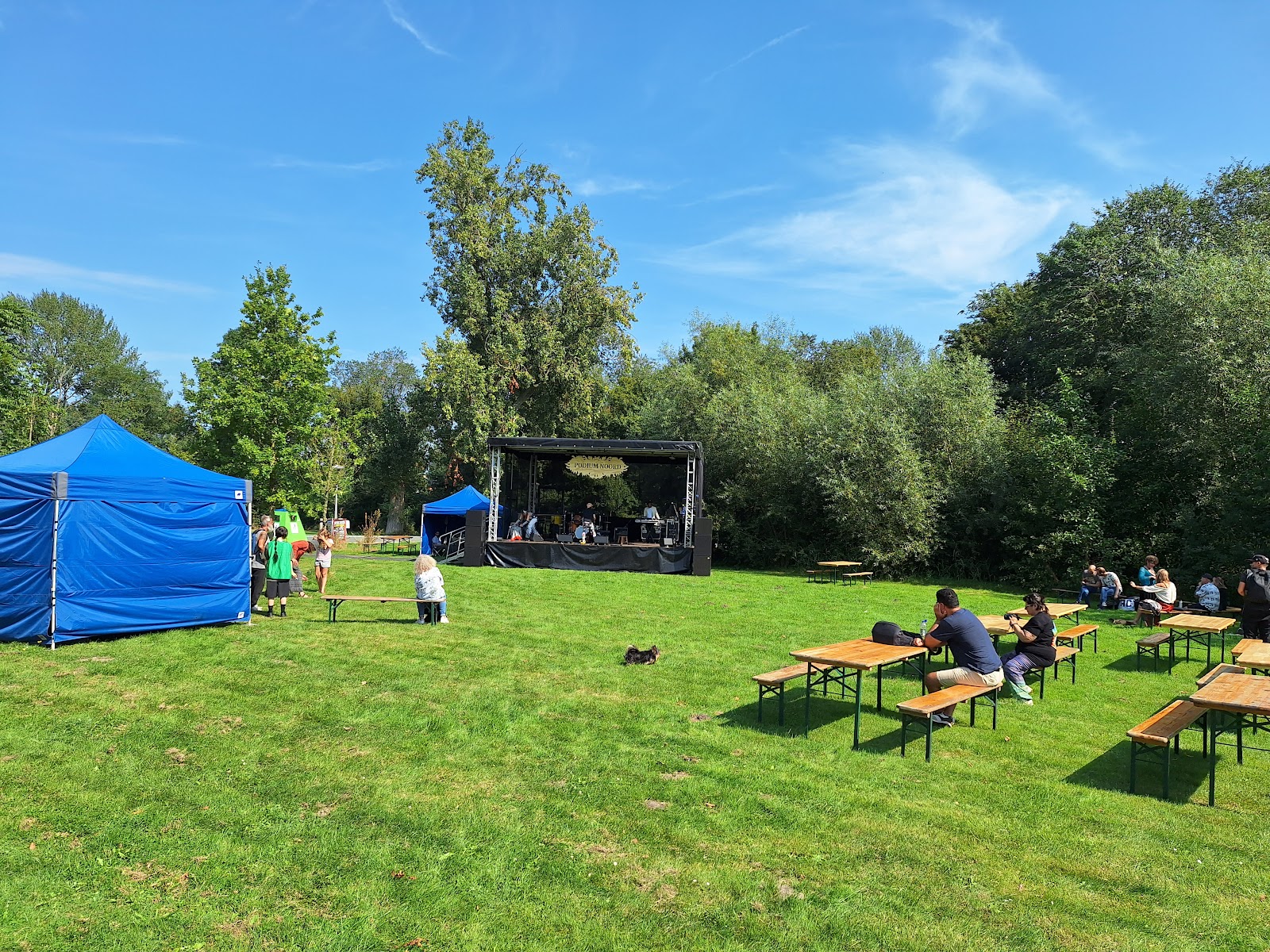

Background adapted from Wikipedia (CC BY-SA) · map data © OpenStreetMap contributors · ratings & place photos via Google · other photos with per-image credit. Ticket links may earn us a commission at no extra cost to you.