
Terrazza Mascagni
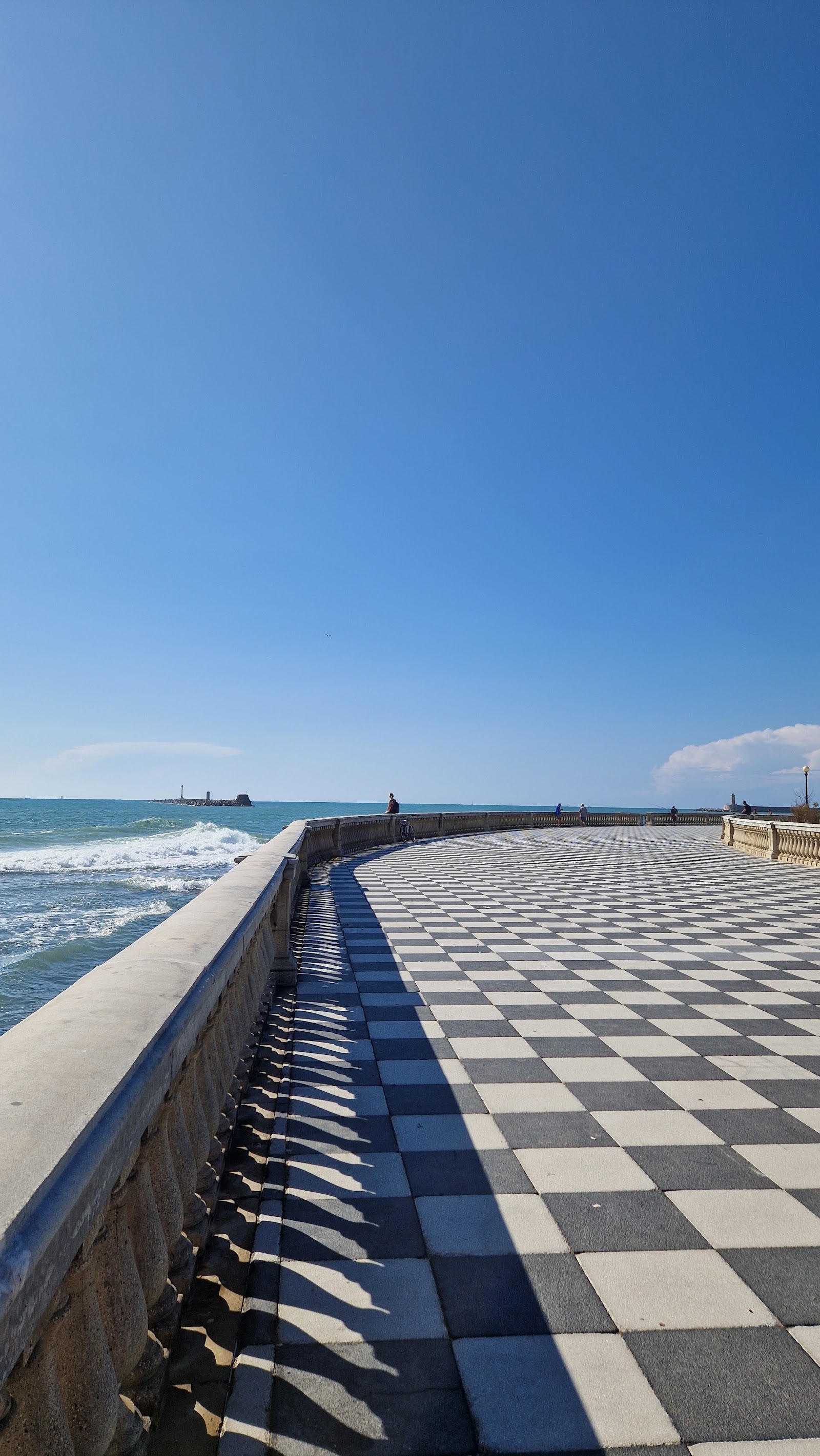
The first thing you notice is the floor — 34,800 black and white tiles laid out in a checkerboard that stretches toward the sea until the pattern seems to dissolve into light. Terrazza Mascagni sits at the edge of Livorno's waterfront on Viale Italia, a vast open-air terrace bounded by a sinuous balustrade of 4,100 slender reinforced-concrete columns.
At 8,700 square metres, it is less a viewpoint than a stage — one where locals walk dogs, couples sit on the balustrade with their legs dangling over the water, and the evening light does something particular to all those white tiles. The Ligurian Sea fills the horizon.
💛 What travellers fall for
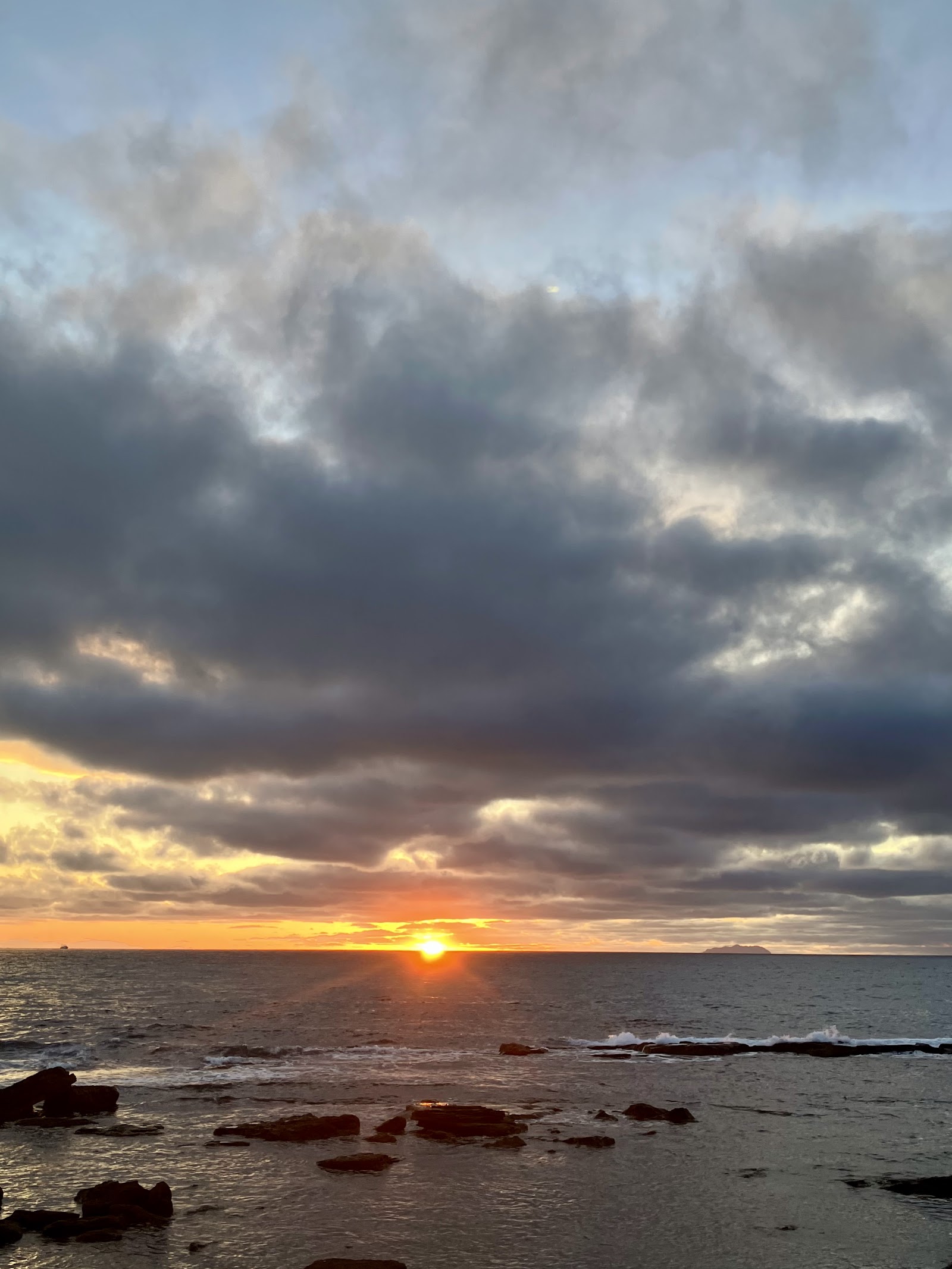
People who come back tend to time it for the hour before sunset, when the checkerboard floor catches the low western light and the music gazebo casts a long shadow. The bus stop is literally called 'Terrazza Mascagni' — no navigation required. Bring something to sit on; the low balustrade columns work fine, but the terrace is wide and the stone gets cold.
The story behind Terrazza Mascagni
The site was occupied for centuries by Forte dei Cavalleggeri, a coastal defensive fortification that was demolished in 1872. The terrace that replaced it was designed in 1925 by engineer Enrico Salvais, assisted by Luigi Pastore, and inaugurated in 1928. It opened under the name Terrazza Ciano, after the leader of Livorno's fascist movement, and was renamed after the city's own opera composer, Pietro Mascagni (1863–1945), once the war ended.
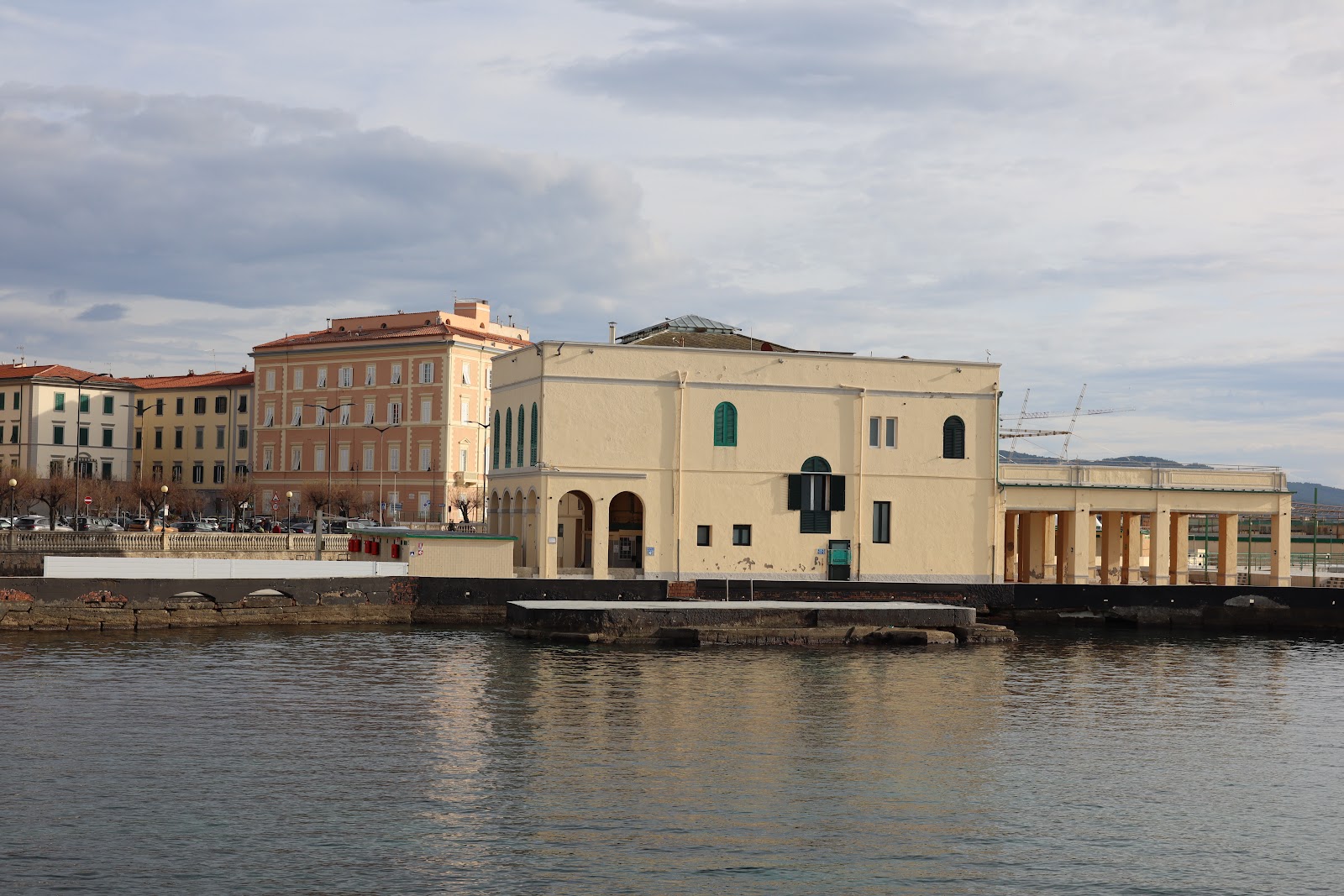
The circular music gazebo — a neoclassical structure designed by Ghino Venturi in the early 1930s — was destroyed during World War II and later rebuilt to Venturi's original plans. A full restoration at the end of the 1990s returned the terrace, columns, and gazebo to their current form.
Good to know
Open around the clock, free, and wheelchair accessible. Bus No. 1 from Livorno Centrale toward Ardenza Mare drops you at the dedicated stop in about 17 minutes. Twenty minutes is enough to cross it end to end; an evening hour is better.
Summer brings warm, dry days and long evenings when the terrace stays lively well after dark. Spring and autumn are mild and often clearer for photography. Winter is cool and occasionally windy off the sea, but the terrace never closes and a quiet January afternoon here has its own appeal.
Where is Terrazza Mascagni?
More tickets & tours for Terrazza Mascagni
Book directly at the provider
What travellers say about Terrazza Mascagni
One of the most beautiful places of Livorno - Venecia Nuovo
Lovely views at sunset from here - very peaceful - no trouble.
Nice place
Gteat views. V quiet at this time of year.
Very nice experience
More of Livorno
Discover where to stay, what to do and the best deals for your trip.
Explore Livorno →More attractions in Livorno
All of Livorno →

Background adapted from Wikipedia (CC BY-SA) · map data © OpenStreetMap contributors · ratings & place photos via Google · other photos with per-image credit. Ticket links may earn us a commission at no extra cost to you.