
Stucco Plasterwork Arcade
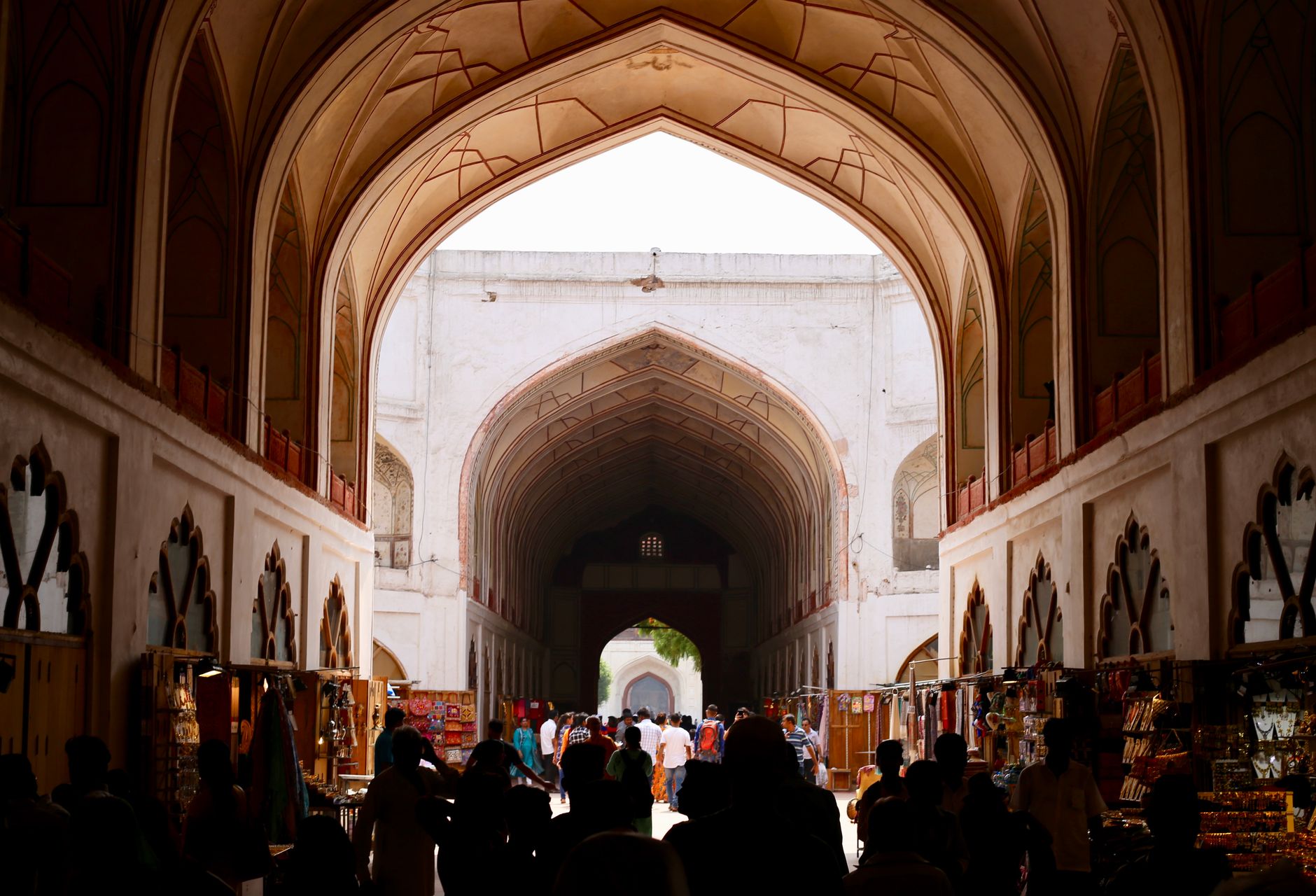
Stand close enough to the arcade walls and the plasterwork stops being decoration and becomes something closer to writing — because it is. The stucco panels here are carved in Iraqi kufic calligraphy, Quranic verses threaded through arabesques and abstracted vegetal forms until script and pattern become indistinguishable. The carving begins above a dado of zellige tilework and climbs toward the cedar ceiling, every centimetre worked by hand.
This arcade frames the central courtyard of the Ben Youssef Madrasa, and it rewards the kind of slow attention that crowds make difficult. The geometric patterns shift as the light changes, which is reason enough to time your visit with some care.
💛 What travellers fall for
People who come back tend to do so in the late afternoon, when the low sun catches the relief carving at an angle that makes the depth of the cuts legible in a way the midday glare flattens out. A phone camera struggles with it — your eyes do better. Give the southwestern arcade wall the most time.
How Stucco Plasterwork Arcade came to be
The madrasa's first incarnation dates to the Marinid dynasty, built under Sultan Abu al-Hasan in the fourteenth century. The structure standing today is entirely the work of the Saadian sultan Abdallah al-Ghalib, completed in 1564–65. On its completion it was the largest madrasa in the Maghreb, housing up to 900 students in 130 cells arranged around this same courtyard.
The building closed in 1960 and reopened as a heritage site in 1982. A second closure came in November 2018 for restoration work entrusted to artisans trained in traditional Moroccan techniques; the madrasa reopened again in April 2022. The stucco you see has been conserved rather than reinvented.
Who and what shaped it
People who shaped it
Landmark buildings
Plan your visit
On the map
When to go
Spring (March to May) and autumn (late September to mid-November) offer the most comfortable temperatures for standing still and looking closely at things. Summer daytime heat regularly exceeds 35°C, which makes the shaded arcade a relief but the walk through the medina to reach it less so.
Right now
Background & history adapted from Wikipedia (CC BY-SA) · specs from Wikidata (CC0) · weather from Open-Meteo · map data © OpenStreetMap contributors · photos from Wikimedia Commons / Unsplash with per-image credit. No third-party reviews or social posts reproduced.