
Siena Cathedral (Duomo di Siena)
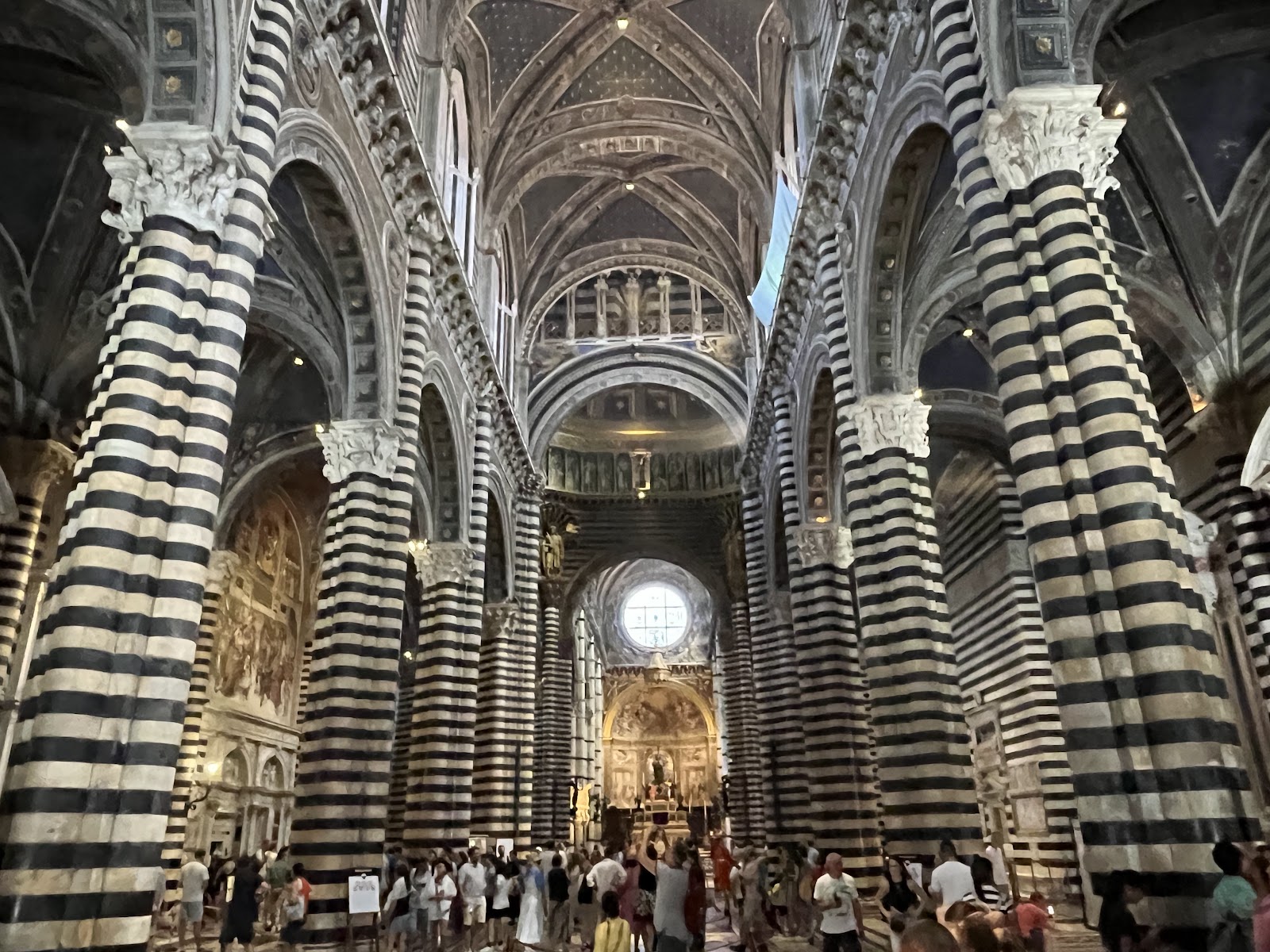
The marble floor stops you before anything else does. Fifty-six panels — the work of roughly forty artists across two centuries — run the length of the nave in intricate greys and whites, depicting sibyls, allegories and scenes from the Old Testament. Most of the year the panels are covered for protection, but from late June through mid-November they're revealed, and the effect is closer to walking across an illuminated manuscript than a floor.
Above you, black-and-white striped columns alternate with gold mosaics and the carved pulpit of Nicola Pisano. The Duomo took shape between 1215 and 1263, and the layers of ambition — some fulfilled, some abruptly stopped — are written into its stones.
💛 What travellers fall for
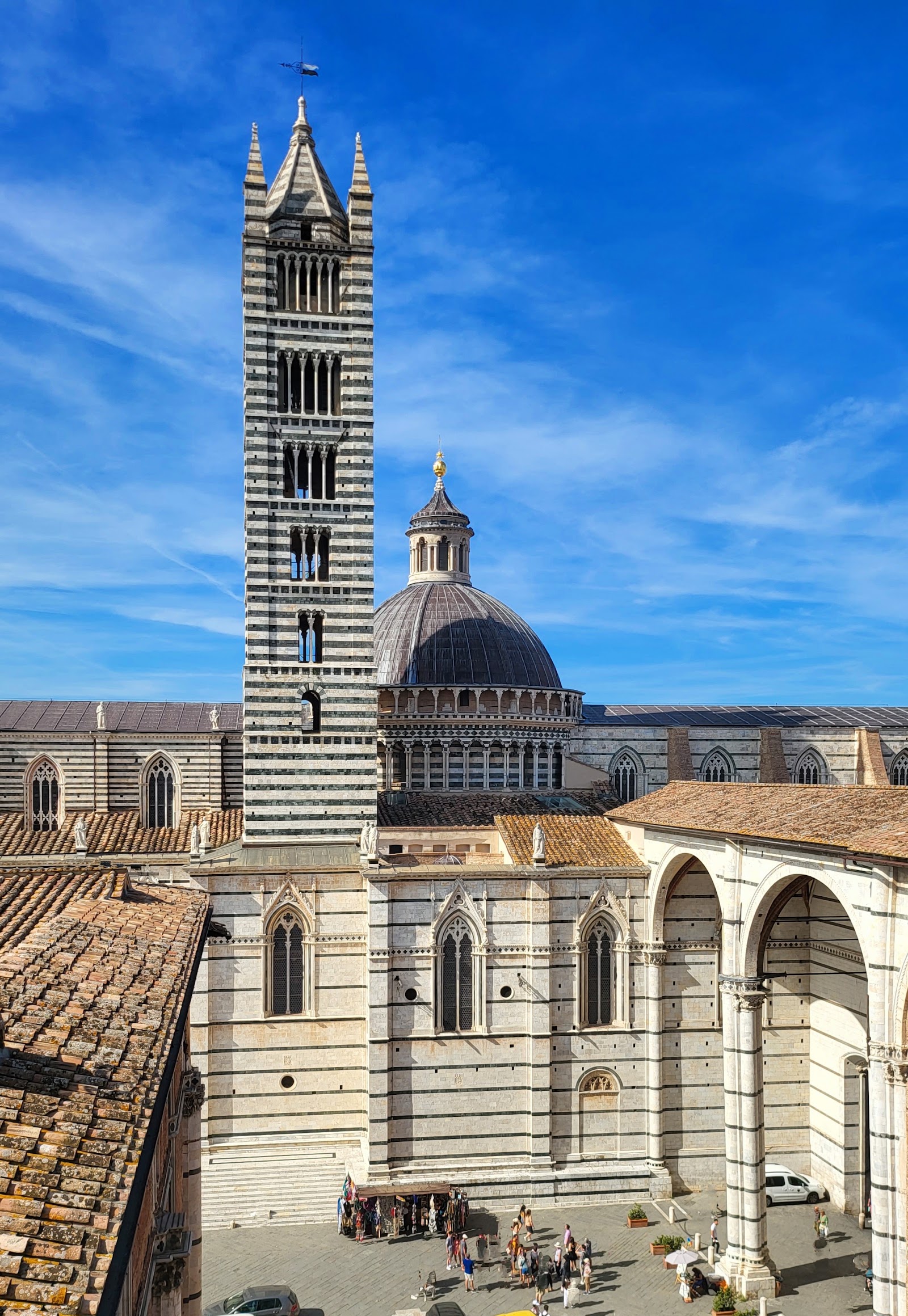
People who come back tend to time it for the floor reveal window (27 June to 31 July, or 18 August to 15 November). They also seek out the Crypt, rediscovered in 1999, where late-13th-century frescoes survive in unexpectedly vivid colour beneath the choir. The Piccolomini Library, off the left nave, is easy to pass — don't.
The story behind Siena Cathedral (Duomo di Siena)
Construction of the cathedral began in earnest around 1226, led initially by Giovanni Pisano, who shaped the lower façade before Camaino di Crescentino and later Giovanni di Cecco adapted and extended his plans upward. The building was consecrated as early as 1179 on the site of an older church, but the structure as it stands today took form over roughly 175 years.
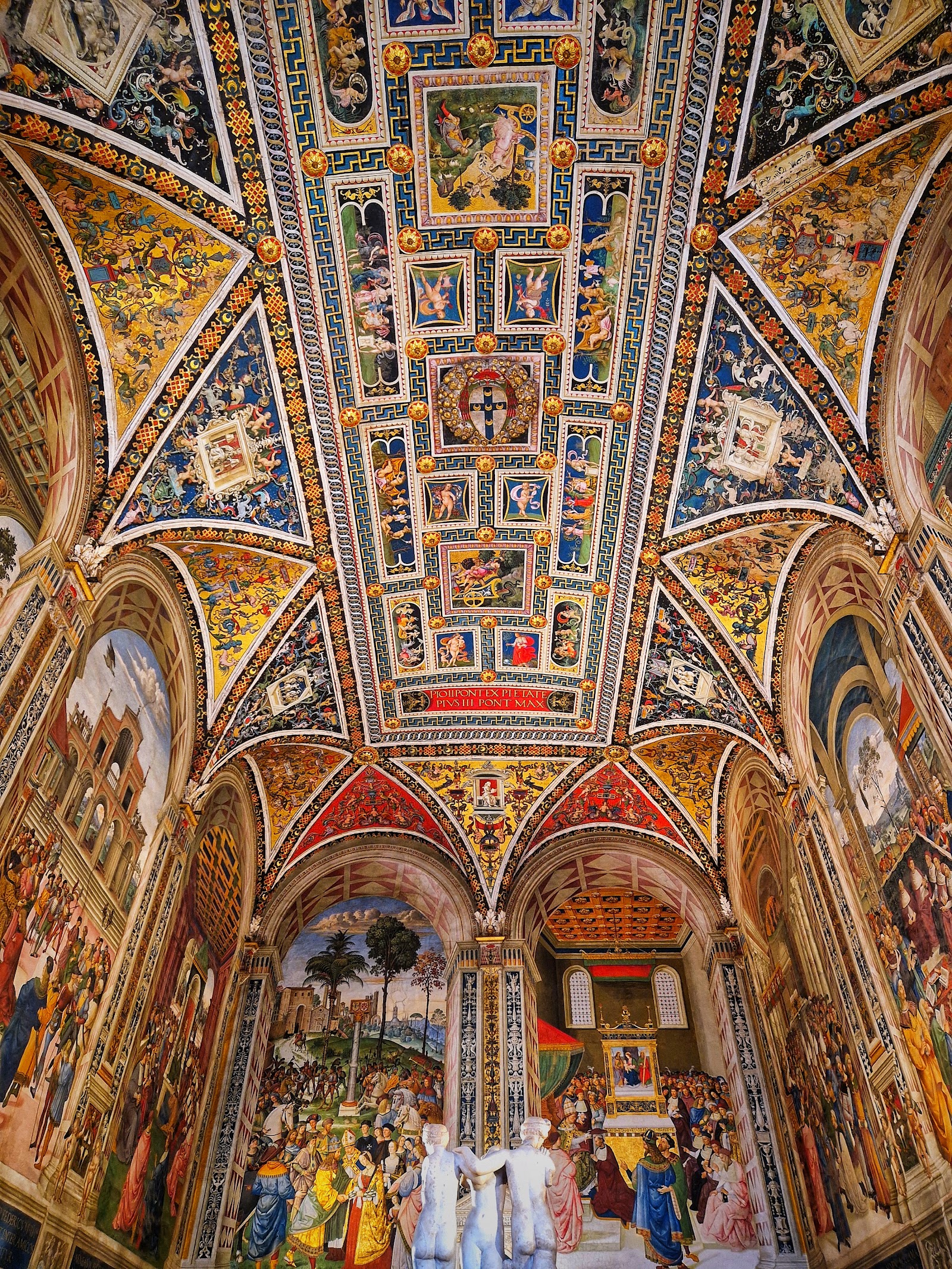
In 1339, the city launched an even grander scheme: a new nave that would have made the existing cathedral merely the transept of a far larger building. Giovanni di Agostino directed the work until the Black Death arrived in 1348 and emptied the construction sites. The project was officially abandoned in 1355. The roofless shell of that expansion — the Facciatone — still stands beside the cathedral, now used as a viewing platform over the city.
Good to know
The OPA Si Pass covers the full complex — cathedral, crypt, baptistry and the Facciatone viewpoint — and is valid for three consecutive days. Plan two to three hours if you're doing all of it. Sundays and holidays mean reduced hours (roughly 1:30–6 pm). Shoulders and knees must be covered; scarves are available at the entrance.
Where is Siena Cathedral (Duomo di Siena)?
More tickets & tours for Siena Cathedral (Duomo di Siena)
Book directly at the provider
What travellers say about Siena Cathedral (Duomo di Siena)
W O W‼️ What a spectacular step back into history. The pictures and videos really can not do justice to what the eye can see. The cost to go in in minimal. If you go I suggest what the call the "brown" tour, well worth the price. We were here during non-peak time so there was absolutely no wait anywhere. I would guess during peak season you might want to pre buy your entry tickets. We drove and had no problem finding parking, but again it was non-peak season, I would recommend researching for the time you might be there. All and all, not disappointed at all. 🇮🇷
In-Credible! This is one of, if not, THE, coolest cathedral we have been in yet! The black and white stone stripes are absolutely gorgeous! It was so unique and everything was so detailed! Absolutely loved it! It did cost a few Euros to get it and had to wait in the ticket line for a bit but was well worth it! Be sure to stop in!
Siena Cathedral, or the Duomo di Siena, is one of the most impressive buildings I visited in Italy. The incredible craftsmanship and intricate details on the cathedral’s façade are truly breathtaking and can keep you admiring it for a long time. Highly recommend visiting it !!!
The Siena Cathedral is absolutely breathtaking. The black‑and‑white striped marble exterior is striking, but the interior is what truly amazes — every corner is filled with detail, from the intricate mosaic floors to the beautifully carved pulpit and the rich colors of the Piccolomini Library. The atmosphere feels both grand and intimate, and the craftsmanship is extraordinary. Climbing the “Panorama” route is highly recommended for its incredible views over Siena’s rooftops. A masterpiece of Gothic architecture and a highlight of Tuscany.
One of the most unique and beautiful cathedrals I have ever seen. Then again, I love black and white stripes period. It was so unique and the floors were out of this world. Also another chance to see Michelangelo’s work. Incredible and well worth it. Note, if you buy an entrance pass that includes the panoramic view, get very specific instructions on where to enter for the view. There are 4 different sites around the city yet tickets are sold in the same location.
More of Siena
Discover where to stay, what to do and the best deals for your trip.
Explore Siena →More attractions in Siena
All of Siena →
Background adapted from Wikipedia (CC BY-SA) · map data © OpenStreetMap contributors · ratings & place photos via Google · other photos with per-image credit. Ticket links may earn us a commission at no extra cost to you.