
Santuario di Montenero
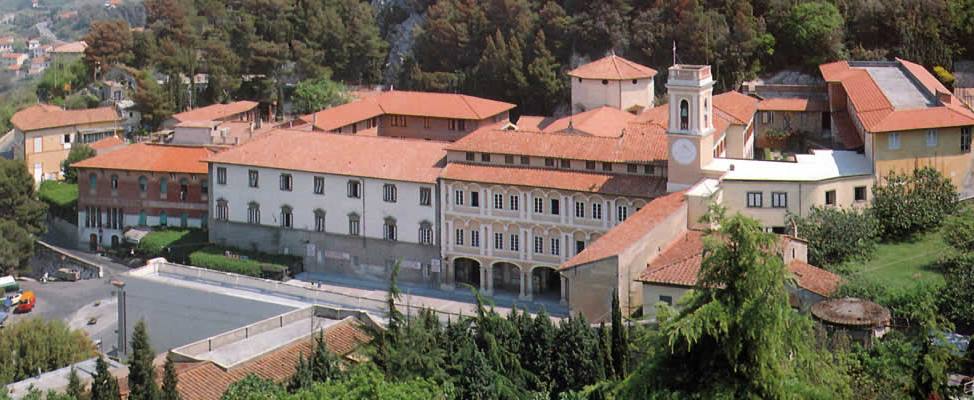
At 300 metres above Livorno, the Santuario di Montenero sits where the city's rooftops give way to open sky. From the panoramic terrace you can trace the coastline south, pick out the islands of the Tuscan Archipelago on a clear day, and locate the waters off Meloria where Genoa broke Pisa's naval power in the thirteenth century.
Inside, the baroque interior holds six altars funded by individual patrons and, at the high altar, the icon of the Madonna di Montenero painted by the Pisan artist Jacopo di Michele. Lining the walls around it: hundreds of ex-votos — painted panels, clothing, objects — left by fishermen, shepherds, and ordinary families over centuries. The greatest number record escapes from storms at sea.

💛 What travellers fall for
People who come back tend to linger in the ex-voto chapel rather than the basilica proper. Giovanni Fattori left a painting of a horse here; Renato Natali left one of a motorcyclist. Together they make an accidental social history of the region. The caves behind the shrine, extended in the early twentieth century and used as shelters during WWII, are easy to miss — worth finding.
The story behind Santuario di Montenero
On Pentecost, 15 May 1345, a shepherd reportedly found a miraculous image of the Virgin on the hill then known as a refuge for outlaws. The icon — attributed to the Pisan painter Jacopo di Michele, known as Gera — was brought to Montenero, and a chapel followed in 1380. A second, small chapel was built at the foot of the road in 1603.
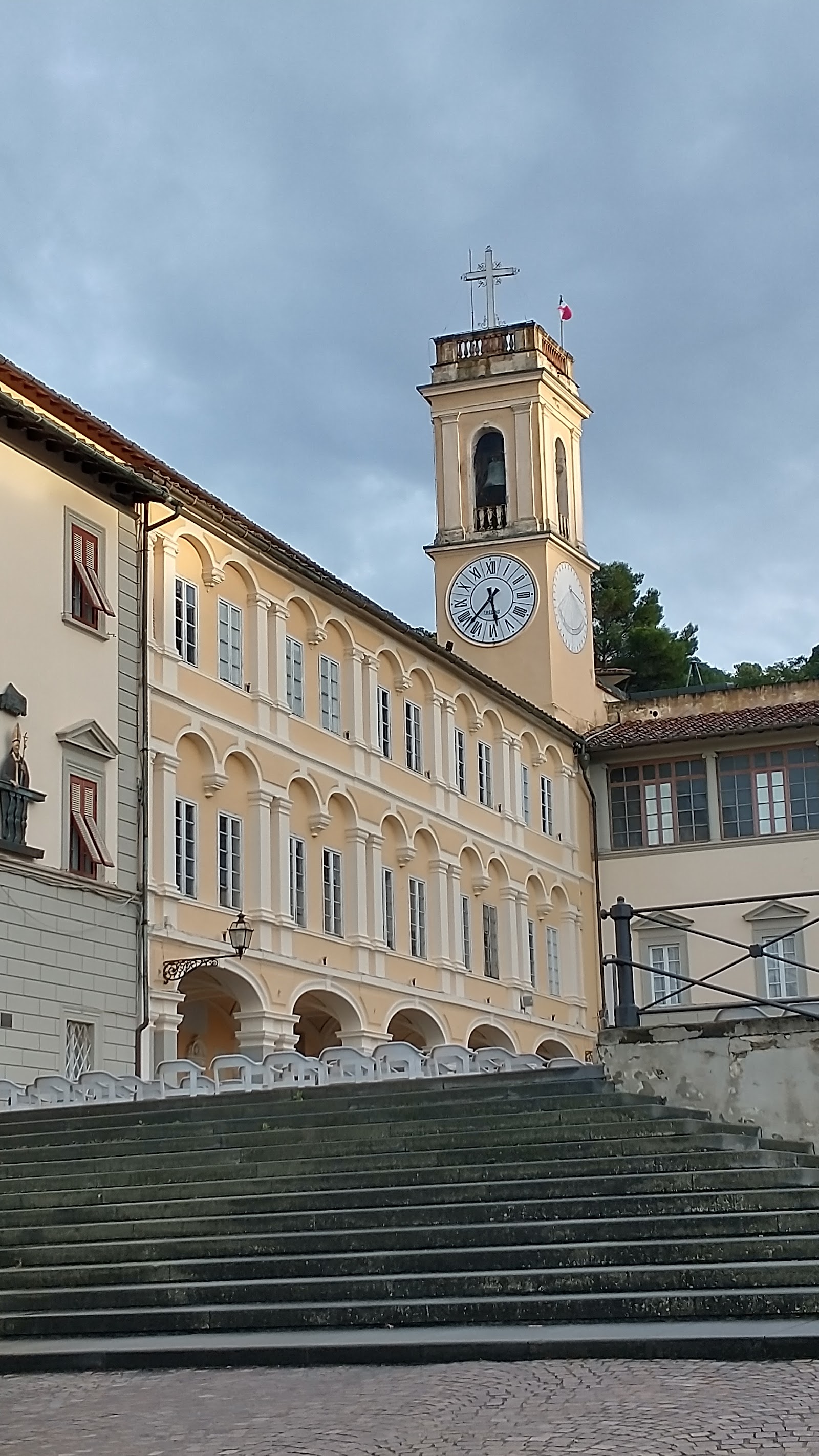
The complex as it stands today took shape between 1720 and 1744, when the Theatines undertook a major expansion. Sculptor Giovanni Baratta from Carrara provided the decorative work; his grandson Giovanni Antonio Cybei completed the Gloria above the main altar. In 1792 the Vallombrosian Benedictines assumed custody and remain there now. Pope Pius XII declared the Madonna patroness of Tuscany in 1947; the sanctuary was elevated to minor basilica in 1818 and to diocesan sanctuary in 2015.
Good to know
Take the LAM Rosso bus to Montenero Basso (Piazza delle Carrozze), then the historic funicular up for €2. Open daily 7:00–12:00 and 15:00–19:00; no entrance fee. Allow ninety minutes. The upper car park fills fast — the lower lot and a short walk is the easier bet. Modest dress required.
Where is Santuario di Montenero?
More tickets & tours for Santuario di Montenero
Book directly at the provider
What travellers say about Santuario di Montenero
have profound memories form here eleven years ago. good view of coast, city and mountains. the church is grand with many pilgrims and devotees in attendance. one can take the train to go up. the sunday train was free.
A must see when you get to Livorno. A peaceful sanctuary and it builds on the faith. Beautiful and splendour in every way.
Most impressive location with great view and many tokens of Catholic devotion. The church is located on top of a hill with a great view and inside you find a huge collection (over 12.000!) of tokens. Even if the religious part is not your thing, it's still worth a visit for the great view and the short trip by cableway.
this is a beautiful monastery located in the hilltops above Livorno. It’s a short bus ride make sure the bus that you take is clearly marked Montenero because initially I took the one that went to the beach and so I had to take the different bus and I lost a half hour of time but no big deal still totally worth it. it’s about 45 minutes from the train station in Livorno. the views are beautiful especially on a clear day. And it has a electrically powered cable car system really it’s a funicular that continuously runs probably until about six PM and so make sure you check the timetables and don’t forget to validate your tickets on all the buses
A fantastic place to pray looking at Leghorn from the top of the hill
More of Livorno
Discover where to stay, what to do and the best deals for your trip.
Explore Livorno →More attractions in Livorno
All of Livorno →

Background adapted from Wikipedia (CC BY-SA) · map data © OpenStreetMap contributors · ratings & place photos via Google · other photos with per-image credit. Ticket links may earn us a commission at no extra cost to you.