
Sacré-Cœur
White domes crowning Montmartre, with all of Paris spread out below.
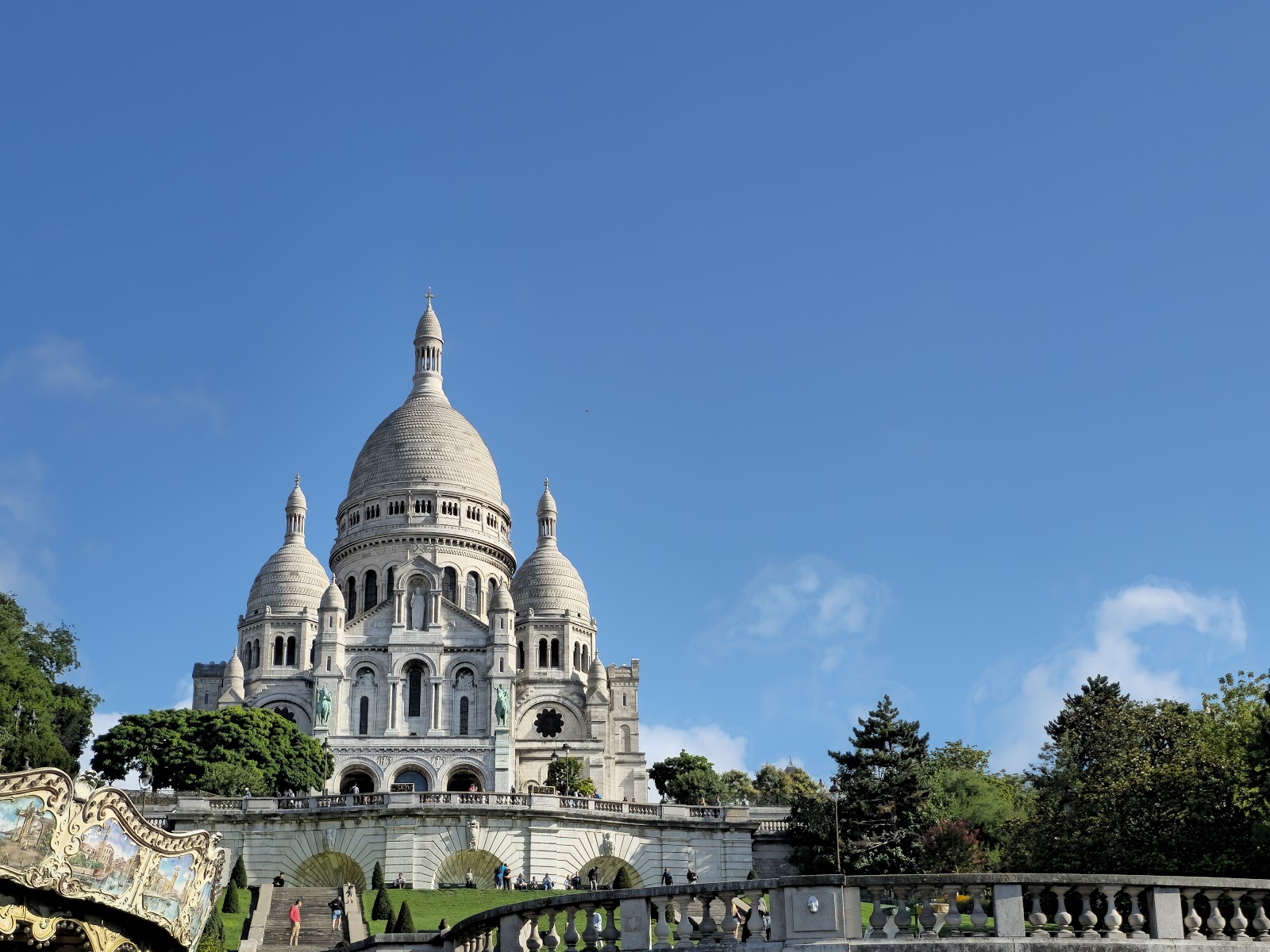
The white stone of Sacré-Cœur does something unusual: it gets whiter over time. The travertine quarried near Souppes-sur-Loing releases calcite when rain hits it, so decades of Paris weather have only brightened the domes rather than greyed them. You see this most clearly in the morning, when the light comes from the east and the whole structure seems to glow against whatever the sky is doing.
From the broad front steps, the city lays itself out below you in a way that no other vantage quite matches — not a postcard angle but a slow, readable panorama that rewards patience. Inside, the near-silence and the vast mosaic of Christ in Glory overhead shift the register entirely.
💛 What travellers fall for
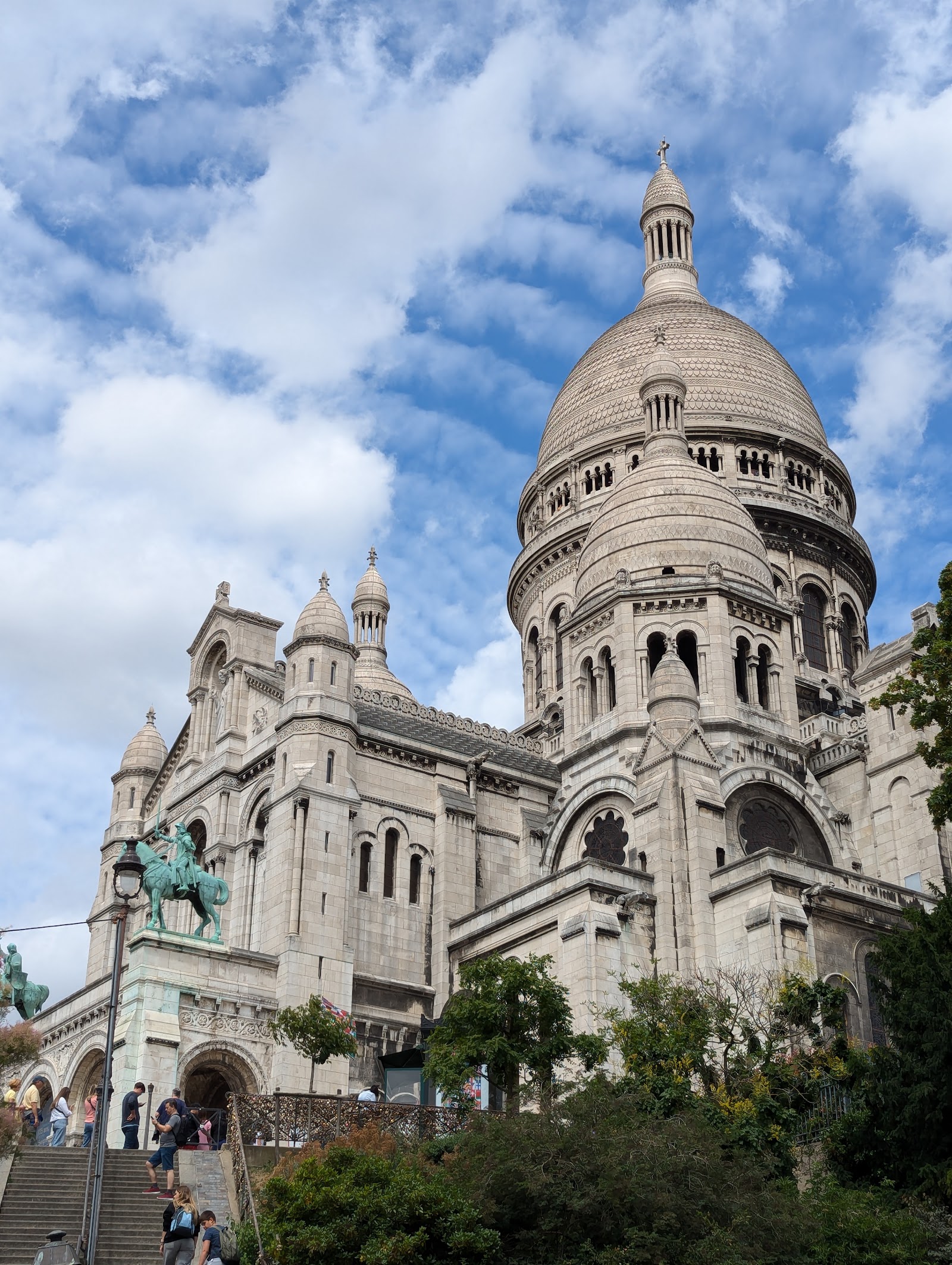
People who return tend to come early, before 8 a.m., when the basilica is open for morning mass and the steps outside are nearly empty. The 300-step climb to the dome is worth doing at least once — the views extend well beyond what you can see from ground level, and the effort keeps the crowds thin.
The story behind Sacré-Cœur
The idea for Sacré-Cœur was born on September 4, 1870 — the day France fell to Prussia and Napoleon III was captured at Sedan. Felix Fournier, Bishop of Nantes, proposed a national votive church as an act of penance and hope. Philanthropist Alexandre Legentil joined the cause in January 1871, and by 1873 the National Assembly had voted to build it as a public good.
Architect Paul Abadie won the commission from 77 proposals with a neo-Byzantine-Romanesque plan, but died in 1884 having barely seen construction begin. Four more architects carried the work over forty years. The cornerstone was laid in 1875; the dome was finished in 1899, the campanile in 1912. The basilica was completed in 1914 and consecrated in 1919, after yet another war had ended. Perpetual adoration of the Eucharist has continued without interruption since 1885.
Good to know
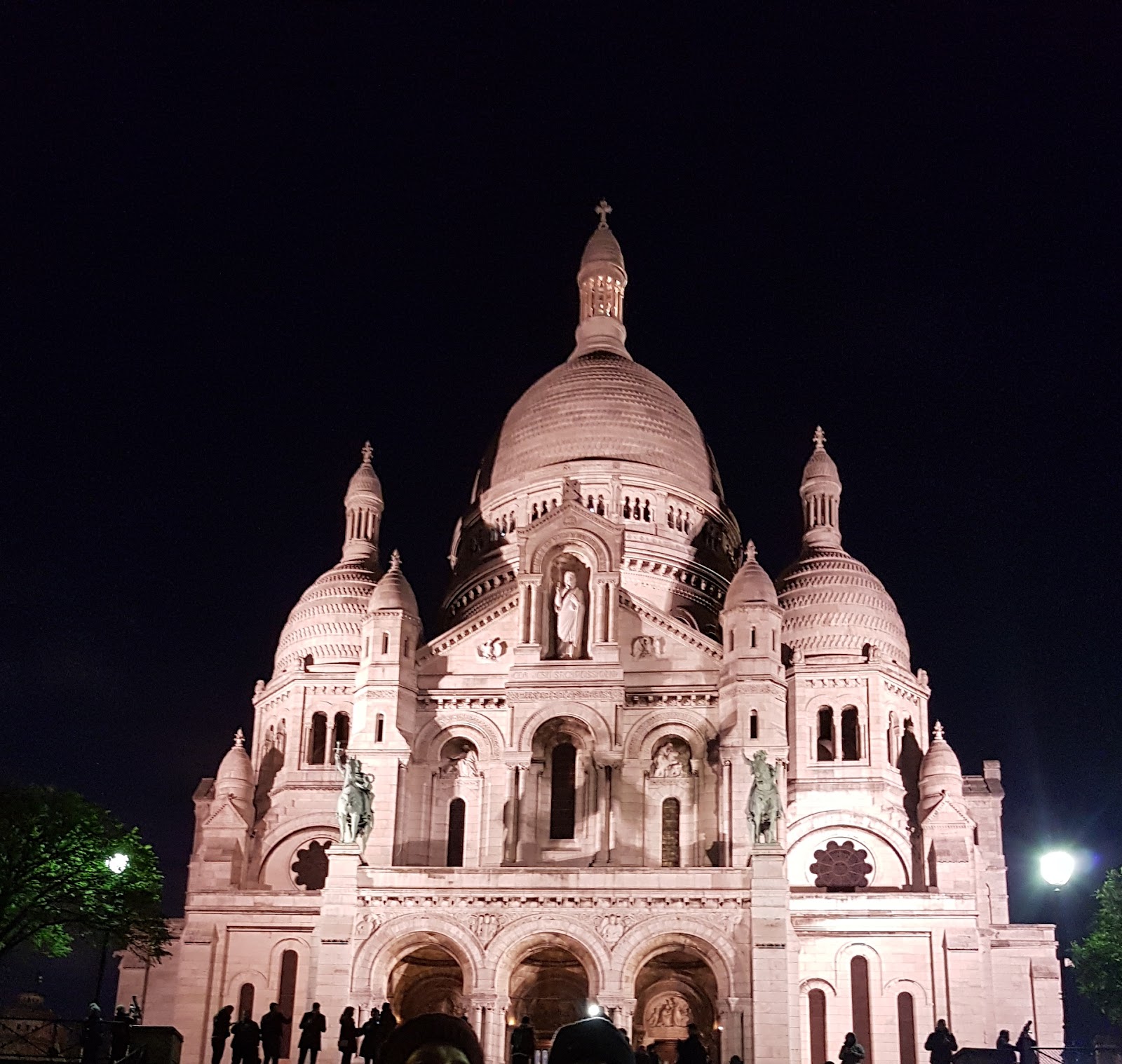
Take metro Line 2 to Anvers or Line 12 to Abbesses; the funiculaire from the bottom of the hill runs on a standard metro ticket. Admission to the basilica is free; dome and crypt access costs €8. Dress modestly and expect to observe silence inside. Budget about 90 minutes total if you climb the dome.
The terrace and steps are fully exposed, so wind cuts through even on sunny days — bring a layer in spring and autumn. Summer mornings before 9 a.m. offer the clearest light for the view south over Paris; midday haze in July and August can flatten the horizon considerably.
Where is Sacré-Cœur?
More tickets & tours for Sacré-Cœur
Book directly at the provider
What travellers say about Sacré-Cœur
Basilique du Sacré-Cœur was one of the most visually impressive places I visited in Paris. The bright white architecture, elegant details, and its position above the city create a truly iconic view. The atmosphere around Montmartre and the panoramic view over Paris make the experience even more memorable. Whether during the day or near sunset, it’s an amazing place for photography and simply enjoying the beauty of the city. Overall, it feels like one of those places that becomes even more beautiful once you see it in person.
The Basilique du Sacré-Cœur de Montmartre is one of the most beautiful and peaceful places to visit in Paris. Located at the top of Montmartre, the basilica has a very special and impressive presence. Its white stone architecture, large domes, and elegant design make it stand out beautifully against the Paris skyline. The area around Sacré-Cœur is amazing. After walking up through Montmartre, reaching the basilica feels very rewarding. From the top, you can enjoy one of the best panoramic views of Paris. It is a perfect place to take photos, relax, and enjoy the atmosphere of the city from above. Inside the basilica, the atmosphere is calm, spiritual, and very beautiful. The interior design, artwork, and quiet environment make it a peaceful place to visit, even when the outside area is busy with tourists, street artists, and musicians. Overall, the Basilique du Sacré-Cœur de Montmartre is a must-visit place in Paris. It combines beautiful architecture, history, peaceful atmosphere, and an unforgettable view of the city. It is definitely one of the most memorable places in Montmartre.
One of the most beautiful cathedrals I've ever seen. Perched at the highest point in Paris, it offers some of the most spectacular views of the city. If you're looking for a panoramic view of Paris, this is definitely the place to come. There can be a wait to enter, but admission is free and well worth a little patience. On hot summer days, consider bringing a small fan, as the crowds and heat can make the wait more challenging. Once inside and around the grounds, you'll be rewarded with stunning architecture, incredible history, and breathtaking views. Absolutely worth exploring!
The best free view in Paris (Sacré-Cœur) Review: Yes, the climb up the hill is tough, but the panoramic view from the top is absolutely worth it! The basilica itself is stunning—the white domes and the massive golden mosaic of Christ are unforgettable. Entry is free, but the real magic is sitting on the steps watching the sunset over the Eiffel Tower. Tip: Take the Montmartre funicular if you don't want to climb the 270+ stairs! It works with a regular metro ticket .
Visiting Basilique du Sacré-Cœur de Montmartre was one of the highlights of my trip to Paris. The basilica is absolutely beautiful both inside and outside, with incredible architecture and a peaceful atmosphere that makes you want to stay and take everything in. The view from the top of Montmartre is stunning, especially at sunset, offering one of the best panoramic views of Paris. The area around the basilica is full of life with artists, cafés, and charming streets that give the neighborhood a unique character. Inside, the atmosphere feels calm and spiritual despite the number of visitors. The details of the artwork, mosaics, and interior design are truly impressive. Whether you visit for the history, architecture, photography, or simply to enjoy the view, it is definitely worth the trip. A must-see landmark in Paris and an unforgettable experience. ⭐⭐⭐⭐⭐
More of Paris
Discover where to stay, what to do and the best deals for your trip.
Explore Paris →More attractions in Paris
All of Paris →
Background adapted from Wikipedia (CC BY-SA) · map data © OpenStreetMap contributors · ratings & place photos via Google · other photos with per-image credit. Ticket links may earn us a commission at no extra cost to you.