
Royal Palace Amsterdam
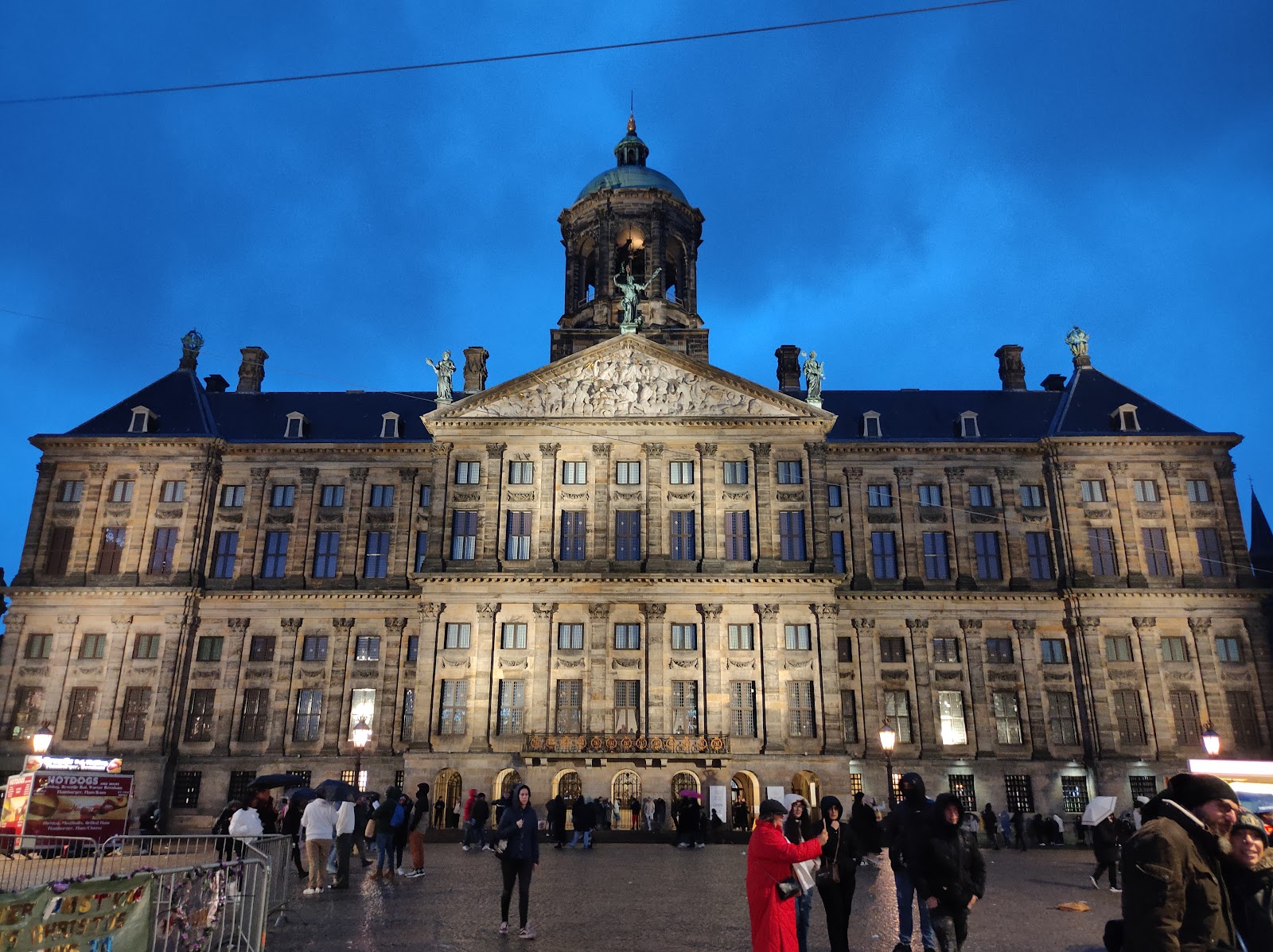
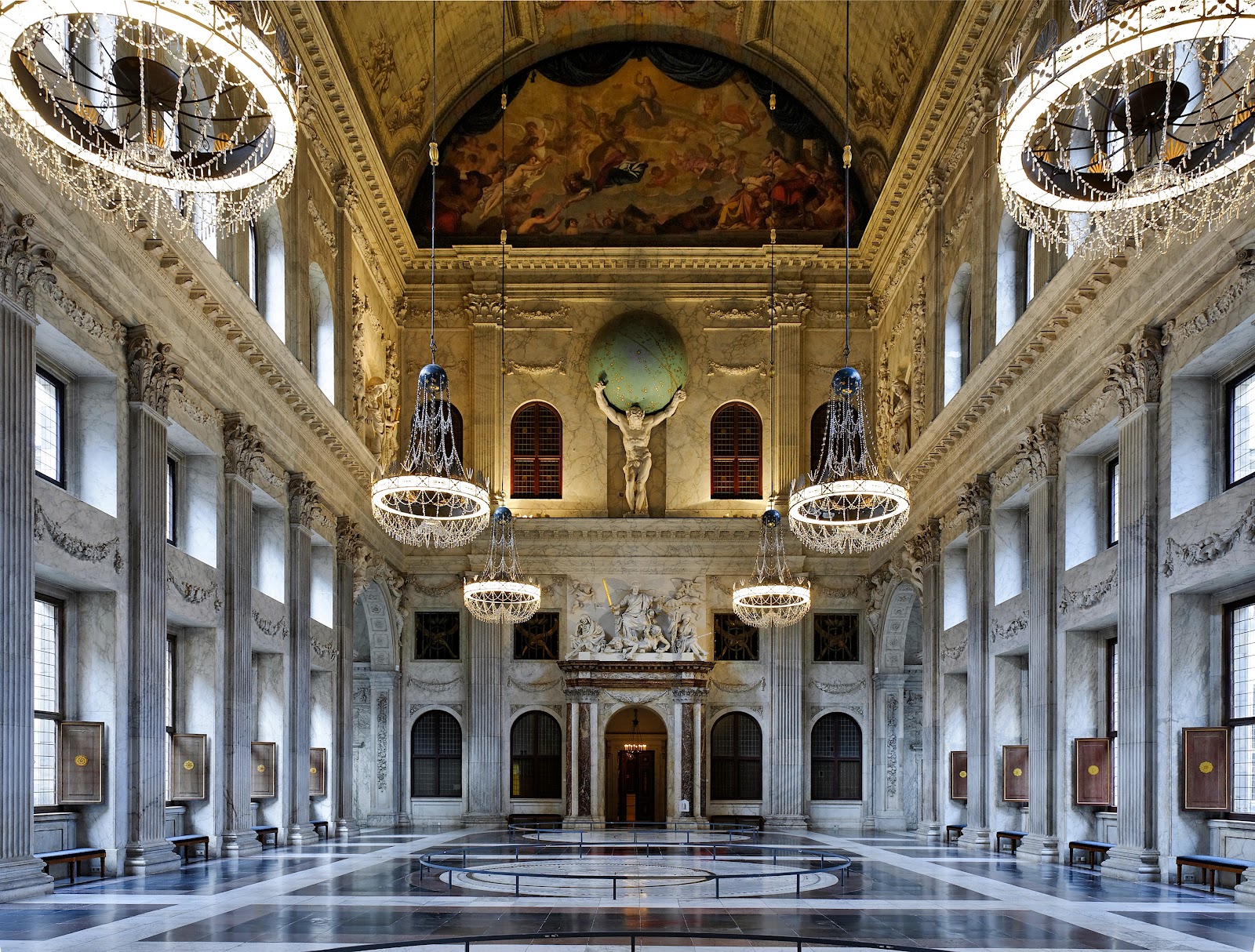
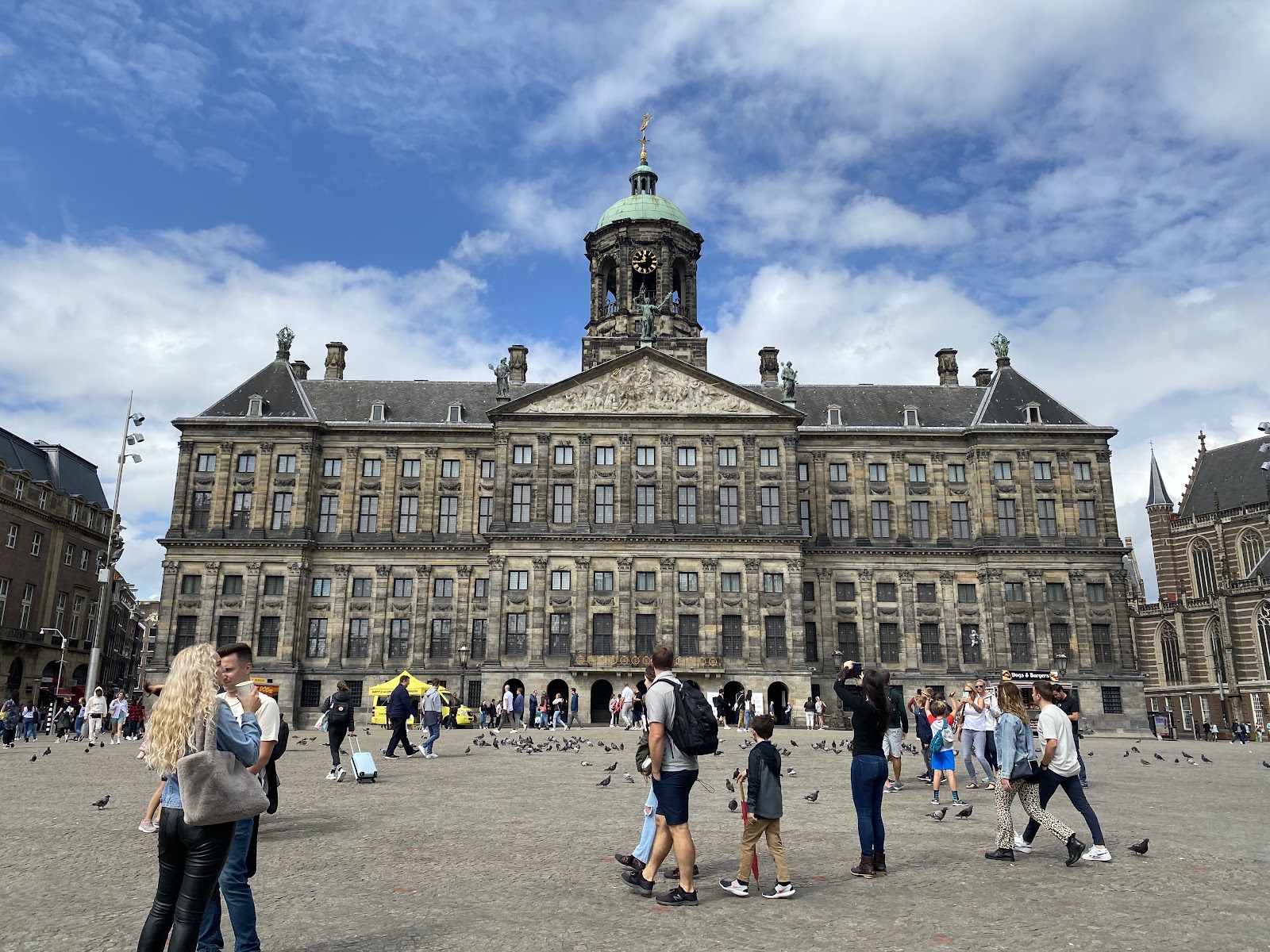
Stand on Dam Square and look west: the Royal Palace fills the whole far side, its Bentheimer sandstone worn from pale cream to a deep grey-brown by three and a half centuries of Amsterdam weather. It is bigger than it looks in photographs. Inside, the Burgerzaal — the Citizens' Hall — runs 34 metres long and nearly as high, its marble floor inlaid with maps of the eastern and western hemispheres, as if the whole world were something you could walk across.
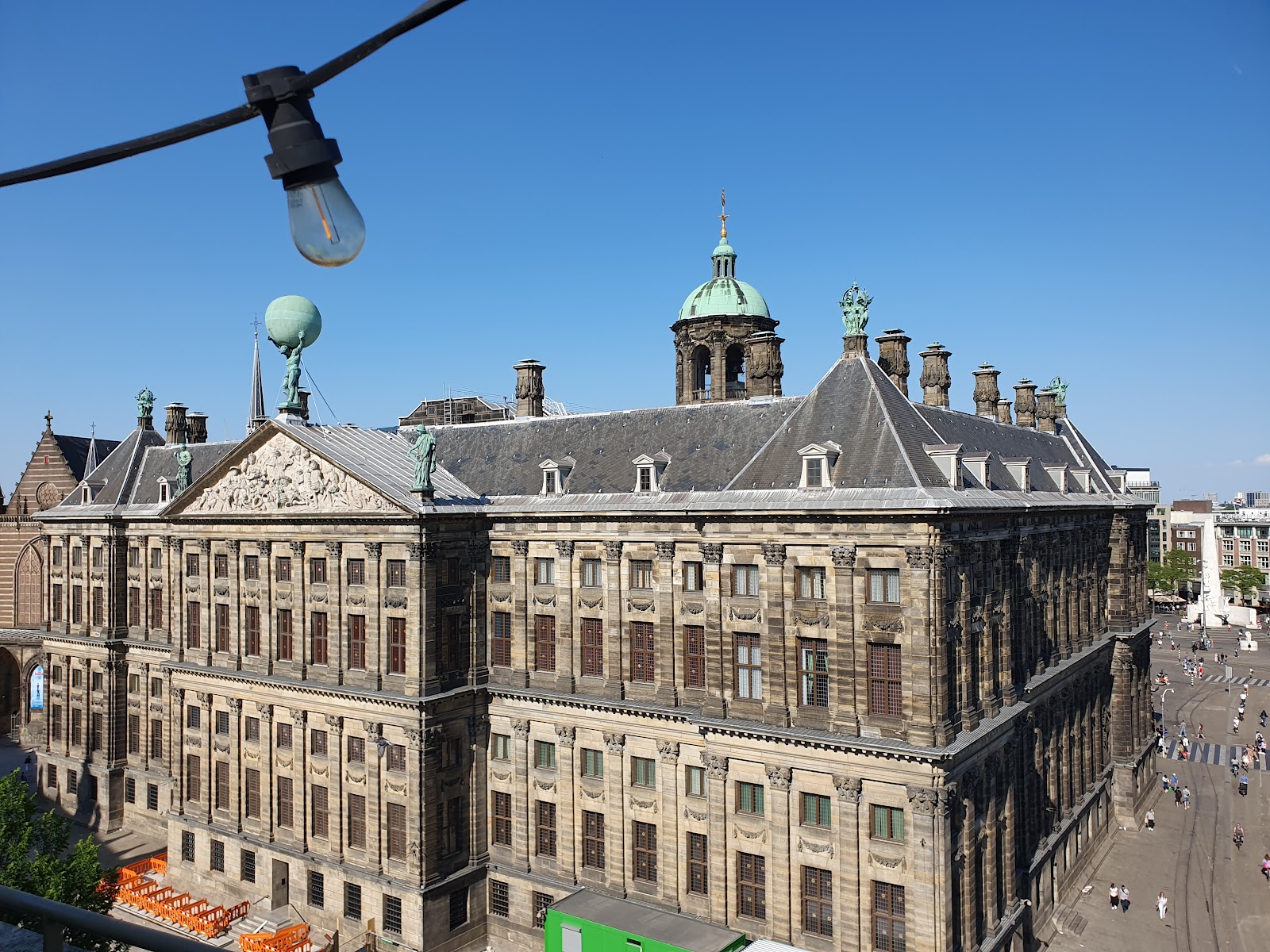
The building started life as a city hall, not a palace, and that civic ambition is still readable in every room. Sculptures by Artus Quellijn cover the walls; a six-metre Atlas shoulders the globe on the rear facade.
💛 What travellers fall for
People who come back tend to linger in the Burgerzaal longer than they planned — the scale of it only registers once you're standing in the middle. Worth timing your visit for a weekday morning, when the crowds are thinner and you can actually hear the audio guide without competing with school groups. The full tour runs 75 minutes; most visitors find an hour is enough.
The story behind Royal Palace Amsterdam
Construction began in 1648, commissioned by Burgemeester Nicolaes Tulp and designed by Jacob van Campen in a Dutch Classicist style — symmetrical, columned, and planted on 13,659 wooden piles driven into the Amsterdam soil. Van Campen withdrew in 1654; city architect Daniël Stalpaert saw the work through to completion in 1665. For 150 years it functioned as city hall, its Tribunal on the ground floor the last place many condemned prisoners ever stood.
The building became a palace almost by accident. Prince William V used it briefly in 1768 for a ceremonial welcome, but the real transformation came in 1808 when Louis Bonaparte, installed as King Louis I by his brother Napoleon, moved in and converted the public rooms into a national museum. The rest he kept for himself. The Dutch royal family has used it for official functions ever since.
Good to know
Trams 2, 4, 12, 13, 14 and 17 stop at Dam, right outside. Amsterdam Centraal is a 10-to-15-minute walk along Damrak. Tickets are date-and-time specific — book online to skip the desk queue. No cash accepted. Bag size is strictly limited to 30×30×15 cm; a free cloakroom handles the rest. The palace closes without notice for royal events, so check the website the day before.
Where is Royal Palace Amsterdam?
Location
- In Amsterdam Centrum
- 52.3732, 4.8912
- Open in Google Maps
Rating
4.6 ★ · 26,544 Google reviews
More tickets & tours for Royal Palace Amsterdam
Book directly at the provider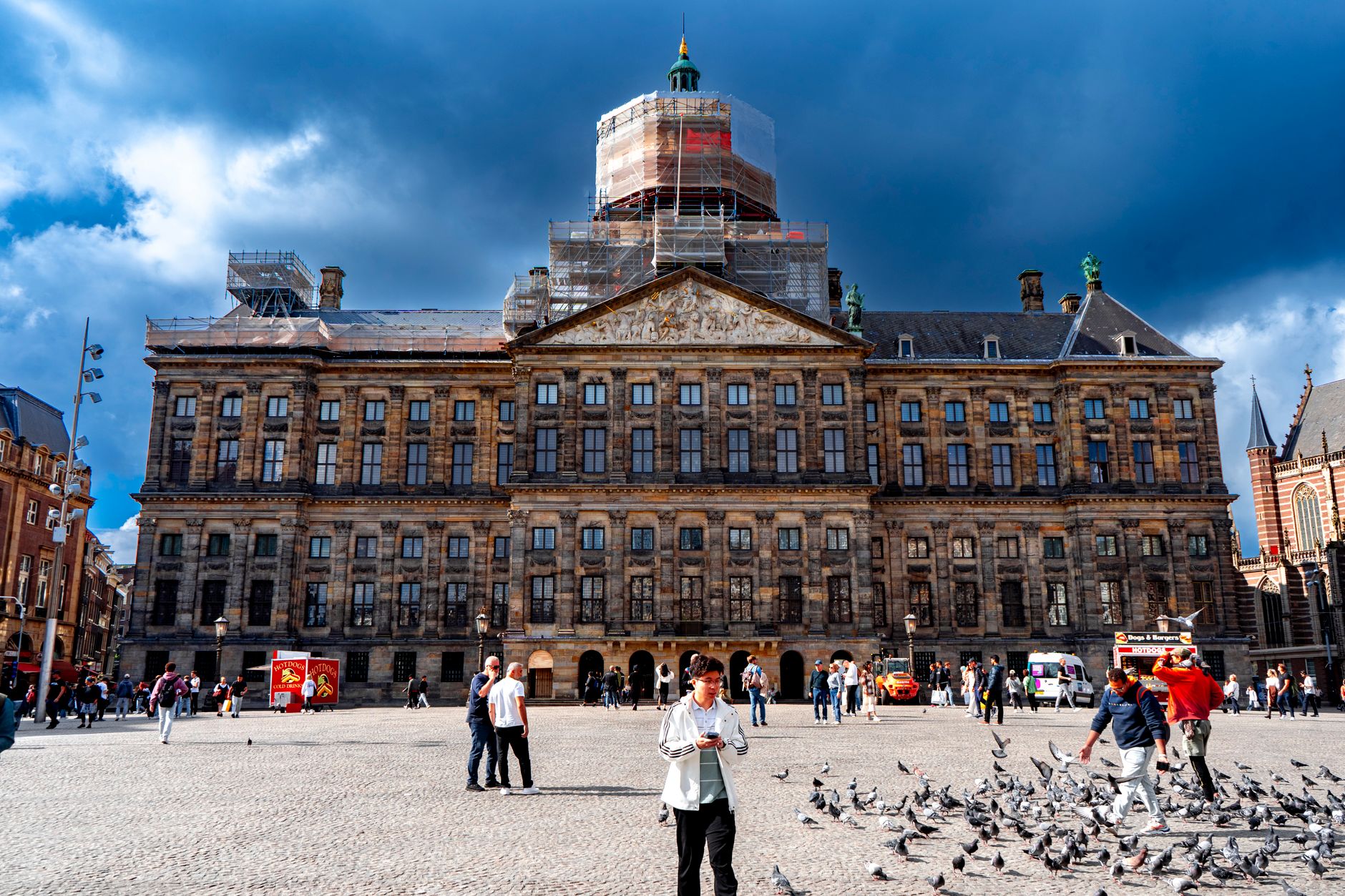
What travellers say about Royal Palace Amsterdam
Royal Palace Amsterdam is an elegant and impressive historic building located in the heart of the city. Its grand architecture and detailed interior reflect the beauty and sophistication of the Dutch Golden Age. Walking through its halls and admiring the artistic details gives a sense of stepping into another era. The combination of history, scale, and refined design makes it a memorable place to visit and a great spot for appreciating architecture and photography.
Amazing self guided audio tour of this centuries old palace. The building and furnishings are fantastic. Its like a tour through time. Period correct furnishings are throughout the building. The headset and reciever are provided as part of the admittance costcand offer greatvinsight to the history of Amsterdam. Staff were very friendly and its situated in the center of town making the walk score a 5 of 5!
Here is a 5-star, enthusiastic review for the Royal Palace (Koninklijk Paleis) in Amsterdam, written with a sophisticated and appreciative tone. ## **Review: A Masterpiece of Golden Age Grandeur!** **Rating: ⭐⭐⭐⭐⭐** Visiting the **Royal Palace Amsterdam** was, without a doubt, the highlight of my trip to the city. Standing in the heart of Dam Square, this architectural marvel is a breathtaking testament to Dutch history and artistry. It is not just a building; it is an experience that leaves you in absolute awe. ### **Why it deserves a standing ovation:** * **The Citizen’s Hall (Burgerzaal):** Words cannot describe the feeling of walking into this room. The scale of the marble work and the intricate maps inlaid on the floor are simply magnificent. It truly feels like standing at the center of the world. * **Artistic Brilliance:** The sculptures and paintings, including works from Rembrandt's circle, are preserved perfectly. Every corner tells a story of the Dutch Golden Age with elegance and power. * **The Atmosphere:** Despite its royal stature, the palace feels incredibly welcoming. The audio guide is one of the best I’ve used—informative, engaging, and perfectly paced. * **Impeccable Upkeep:** The restoration work is flawless. The chandeliers, the furniture, and the grand galleries glow with a regal light that transports you back to the 17th century. ### **Final Verdict** This is more than a museum; it is a profound tribute to human craftsmanship and civic pride. Whether you are a history buff, an architecture lover, or simply a traveler looking for beauty, the Royal Palace is **unmissable**. A true 5-star jewel in the crown of Amsterdam! **Tip:** If you can, try to visit on a sunny day—the way the light hits the marble in the main hall is nothing short of cinematic.
Arrived at 10:30 it was very quiet and easy to walk. After 1 h when we were leaving there was a long queue and many people so I recommend arriving early. Very lovely palace with impressive architecture
The architecture, art, and interior decor alone make the visit worthwhile. Once inside, the scale and grandeur of the building immediately stand out. The rooms are richly detailed with impressive sculptures, paintings, and ornate architectural features that reflect the wealth and ambition of the Dutch Golden Age. One of the most interesting aspects of the visit was learning about Dutch history through the story of the building itself. The audio tour does an excellent job guiding visitors through all 21 rooms, explaining their purpose, historical context, and the symbolism behind many of the artworks and decorative elements. Overall, the palace is truly a grand sight once you step inside and offers a fascinating window into Dutch history and culture. I would highly recommend adding it to any visit to Amsterdam.
More of Amsterdam Centrum
Discover where to stay, what to do and the best deals for your trip.
Explore Amsterdam Centrum →More attractions in Amsterdam Centrum
All of Amsterdam Centrum →
Background adapted from Wikipedia (CC BY-SA) · map data © OpenStreetMap contributors · ratings & place photos via Google · other photos with per-image credit. Ticket links may earn us a commission at no extra cost to you.