
Promenade du Soleil
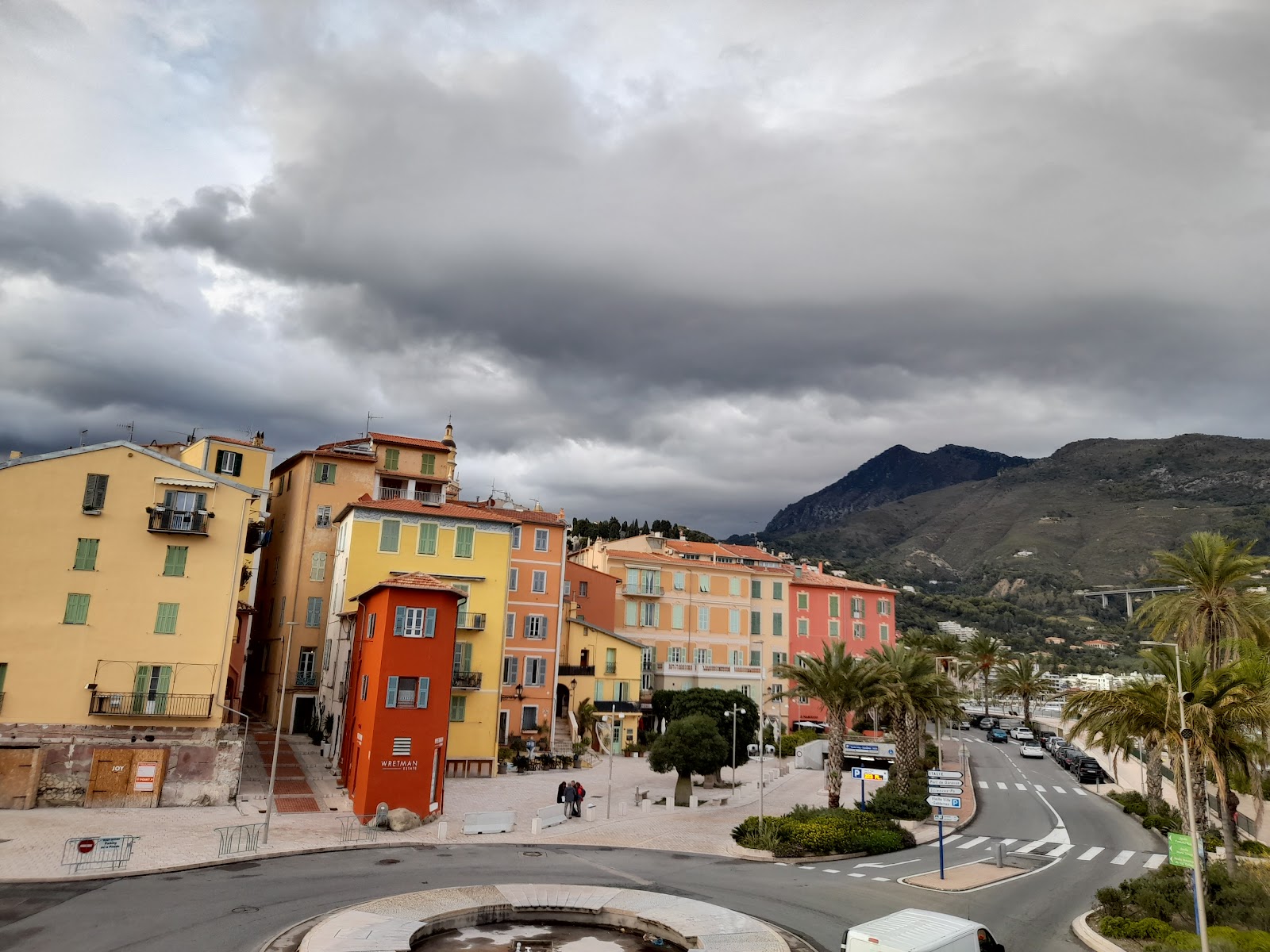
The pebbles here are the first thing you notice — rounded, pale grey, shifting underfoot as you step down from the promenade to the water's edge. The Promenade du Soleil runs roughly two kilometres along Menton's seafront, from the Quartier de la Madone toward the old town, with the Maritime Alps pressing close behind the rooftops and the sea sitting flat and blue in front.
Along the way, the facades of the old palace hotels — Westminster, Vendôme — rise above plantings of yucca, euphorbia and palm, remnants of the era when Menton was a winter destination for Russian and Anglo-Saxon travellers seeking warmth. The promenade connects those two worlds: the working harbour and ochre bell tower of the old town at one end, the quieter residential quarter at the other.
💛 What travellers fall for
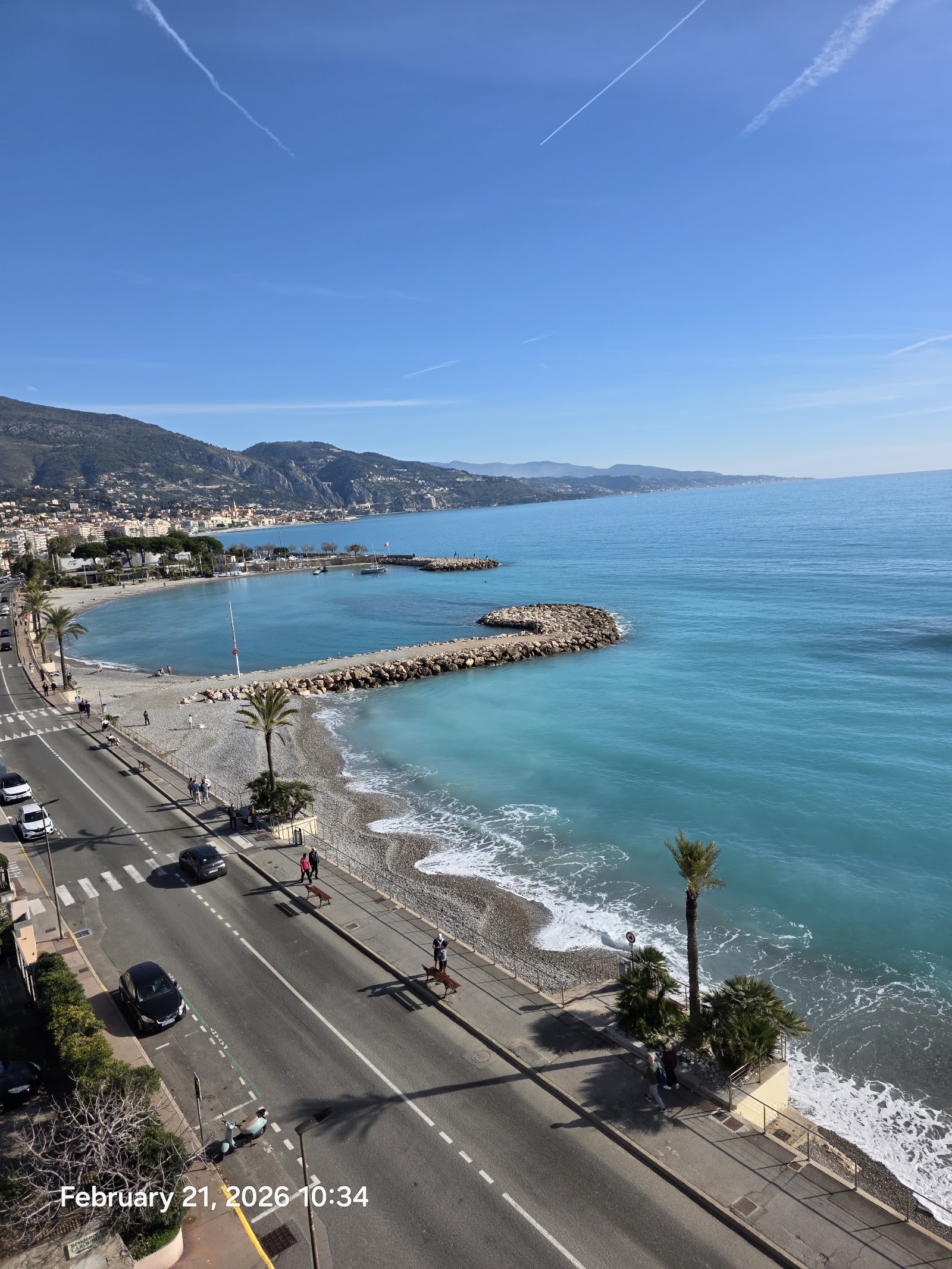
People who come back tend to walk it early, before the sun gets high, when the light on the water is still soft and the benches are mostly empty. The stretch closest to the old town has the best terraces for a coffee with a sea view — sit facing east and you get the full panorama of the Ligurian coastline curving toward Italy.
The story behind Promenade du Soleil
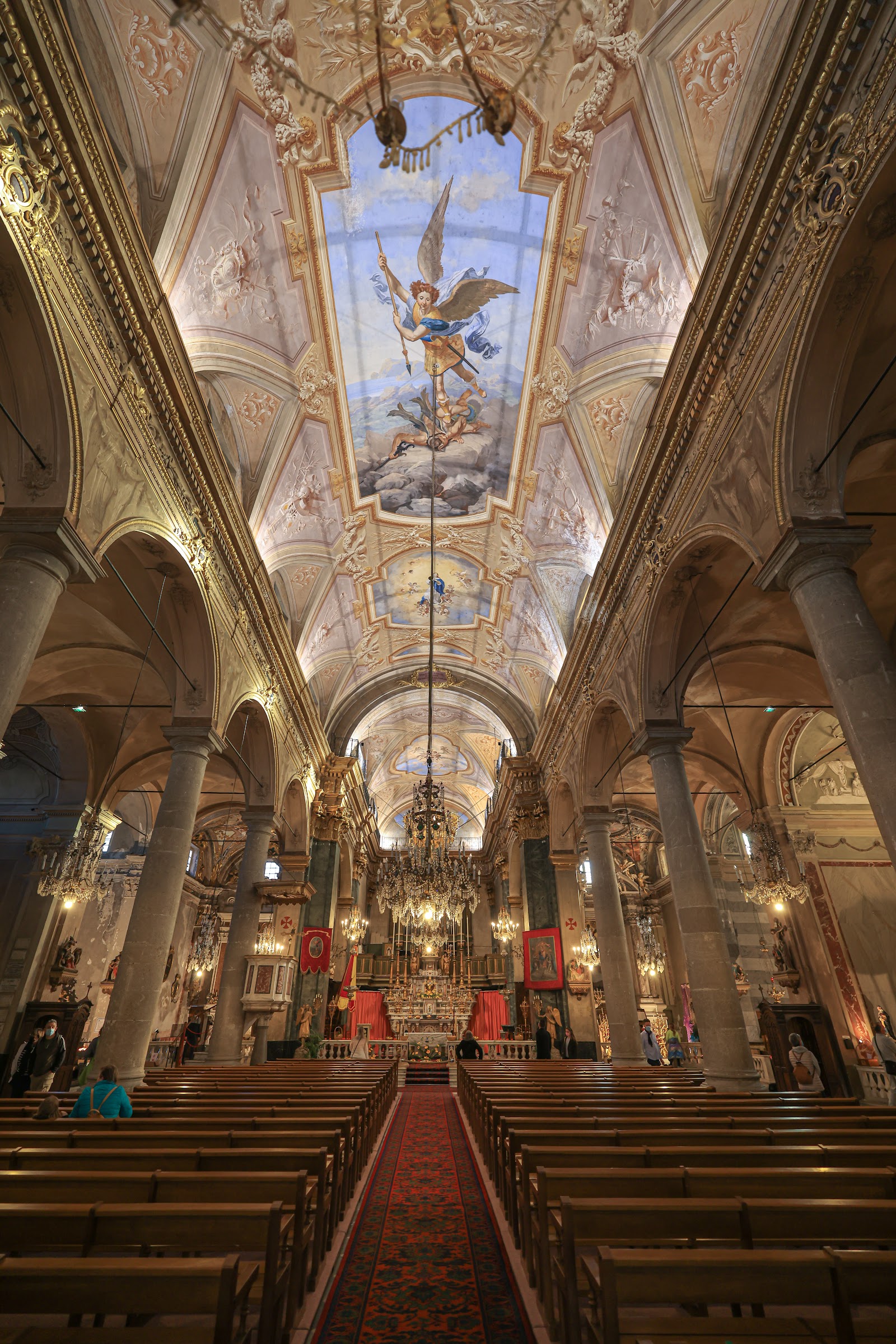
Menton began developing its seafront in the mid-nineteenth century, when the town's mild winters started attracting wealthy travellers from northern Europe and Russia. What started as a simple coastal walkway was gradually extended in the early twentieth century to link the old town with newer residential areas.
Through the 1920s and 1930s the promenade was embellished — ornamental gardens, fountains, sculptures — and the grand palace hotels that still line the route were built or expanded to accommodate an international clientele. That chapter of climate tourism left the promenade its architectural character: ornate facades set against subtropical planting, a combination that feels neither purely French nor entirely Mediterranean.
Good to know
The promenade is free and flat, accessible on foot in about ten minutes from the train station. TER trains connect from Nice in 40–50 minutes. May, June and September offer warm days without the peak-summer crowds. The beach is pebble throughout — bring shoes you can slip off easily.
Summer days reach around 28°C in July with over eleven hours of sunshine, and the sea is warm enough to swim from June through September. Winter is mild by northern European standards — around 11–12°C in January and February — but November brings the most rain, and December offers fewer than five hours of daylight sun.
Where is Promenade du Soleil?
More tickets & tours for Promenade du Soleil
Book directly at the provider
What travellers say about Promenade du Soleil
Wonderful and peaceful
Top
It exudes a special elegance and peace that sets it apart from the busier cities of the Côte d'Azur. A walk along the seafront offers beautiful views of the crystal clear water, pastel facades and mountains rising in the background, creating an almost postcard-perfect scene.
Seen during the Menton Carnival 02/15/2026.
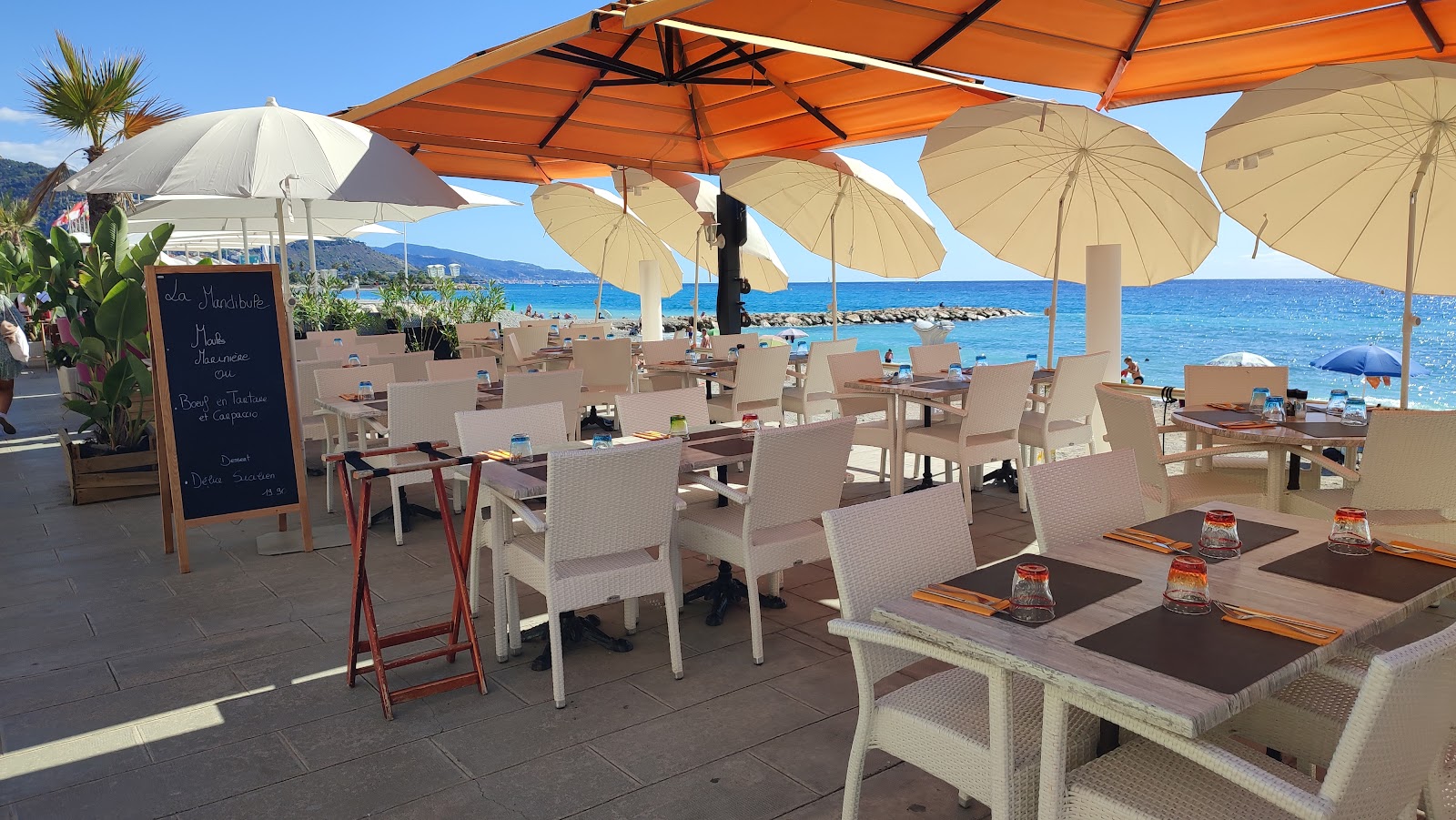
아름다운 해변과 더불어서 야외 테이블을 줄지어 있는 음식점 거리입니다. 멋진 해변을 바라보며, 식사를 하는 행복함을 만끽할 수 있습니다.
More of Menton
Discover where to stay, what to do and the best deals for your trip.
Explore Menton →More attractions in Menton
All of Menton →
Background adapted from Wikipedia (CC BY-SA) · map data © OpenStreetMap contributors · ratings & place photos via Google · other photos with per-image credit. Ticket links may earn us a commission at no extra cost to you.