
Praia da Galé
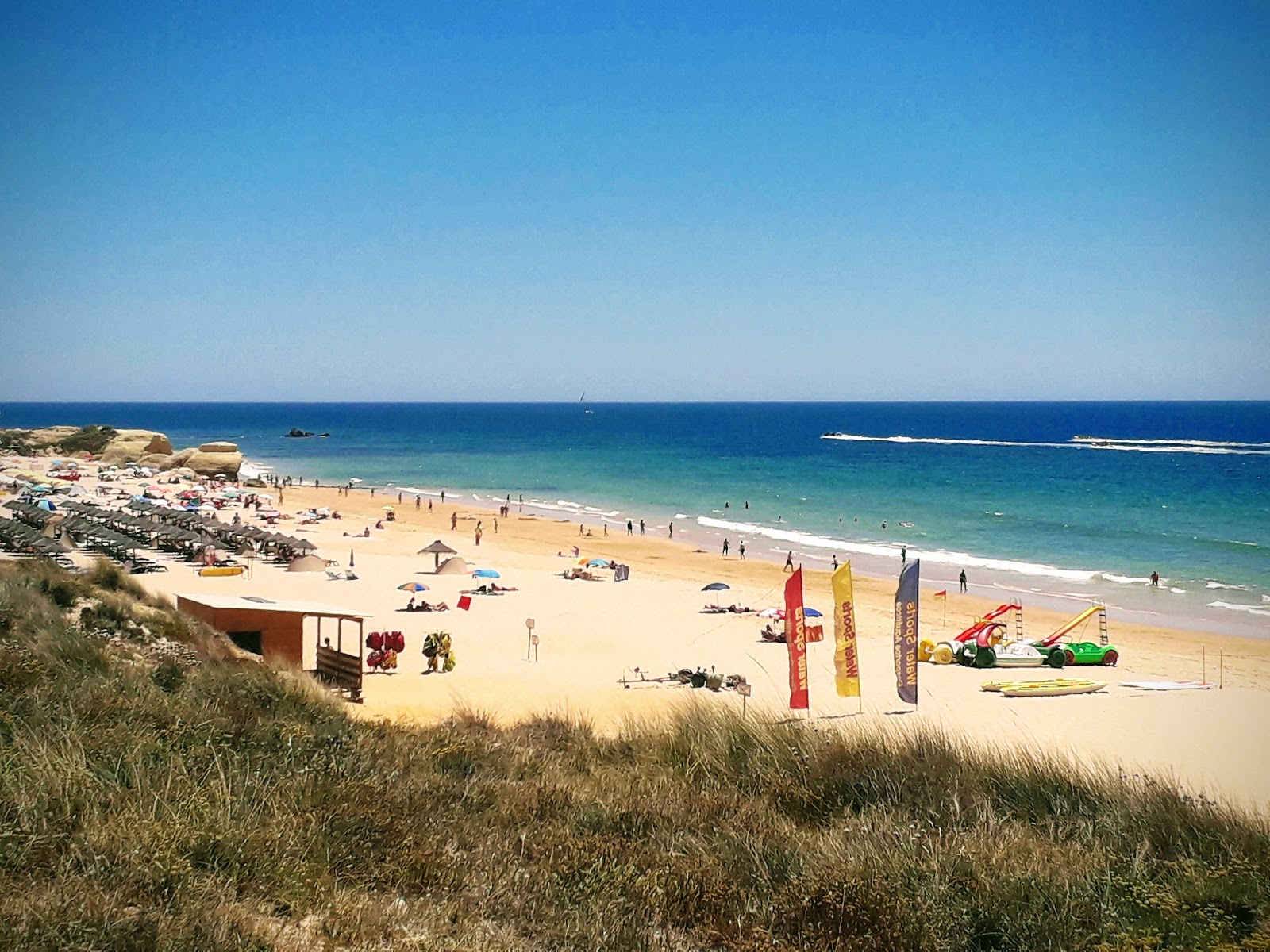
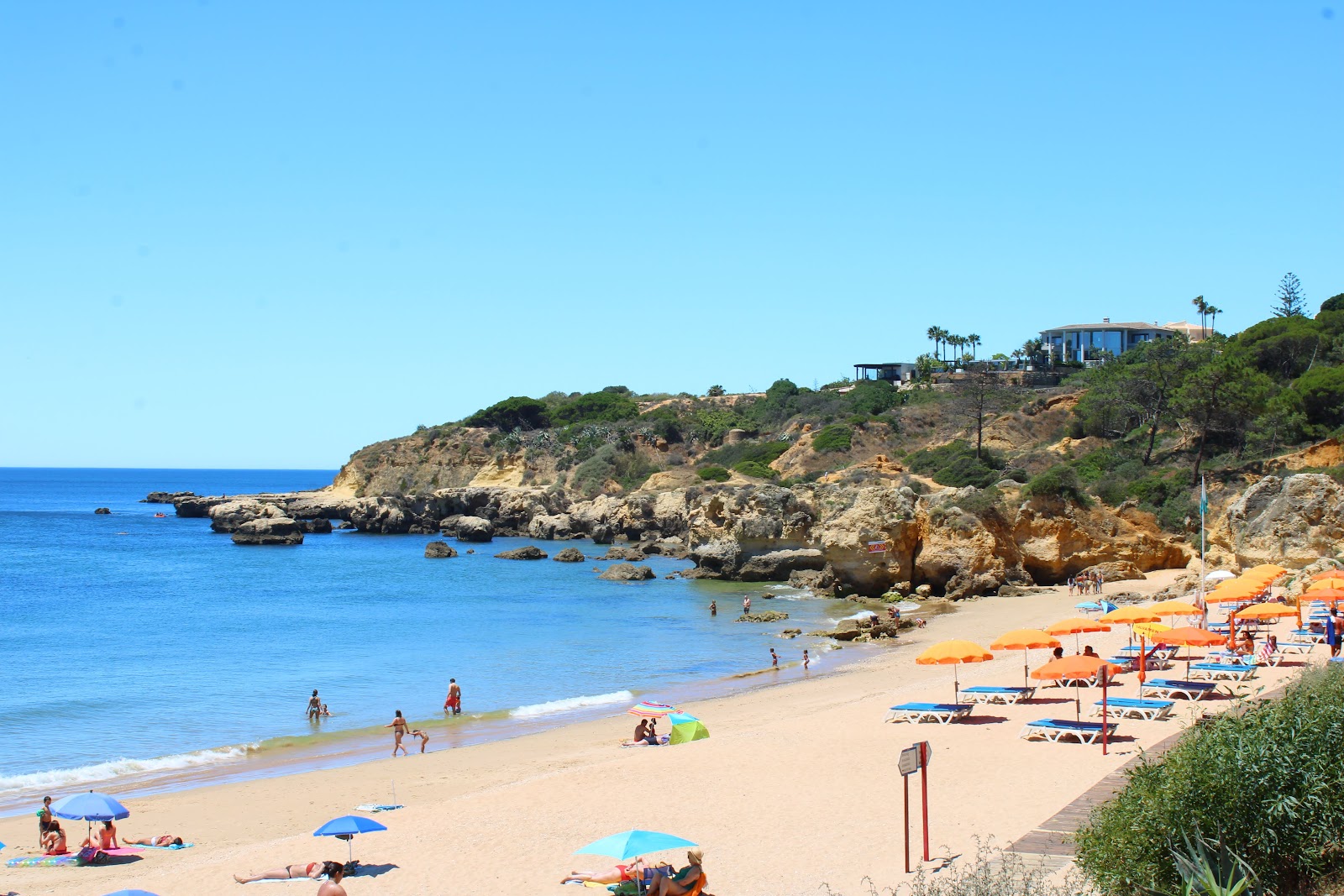
The name, if the old story holds, comes from a galley that went down somewhere along this stretch of coast — galé meaning the ship, the wreck, the ending. What you find now is five kilometres of sand divided by a rocky headland into two distinct beaches: the west side broad and open, the east side tighter, hemmed in by carbonite cliffs that have been slowly folding into fossil and arch for millennia. Somewhere near the entrance, depending on the season, a woman sells fresh fruit from a table.
The cliffs at the eastern end are the visual anchor — amber and ochre, pocked with marine fossils, shaped by water into formations that read differently at different hours of the day.
💛 What travellers fall for
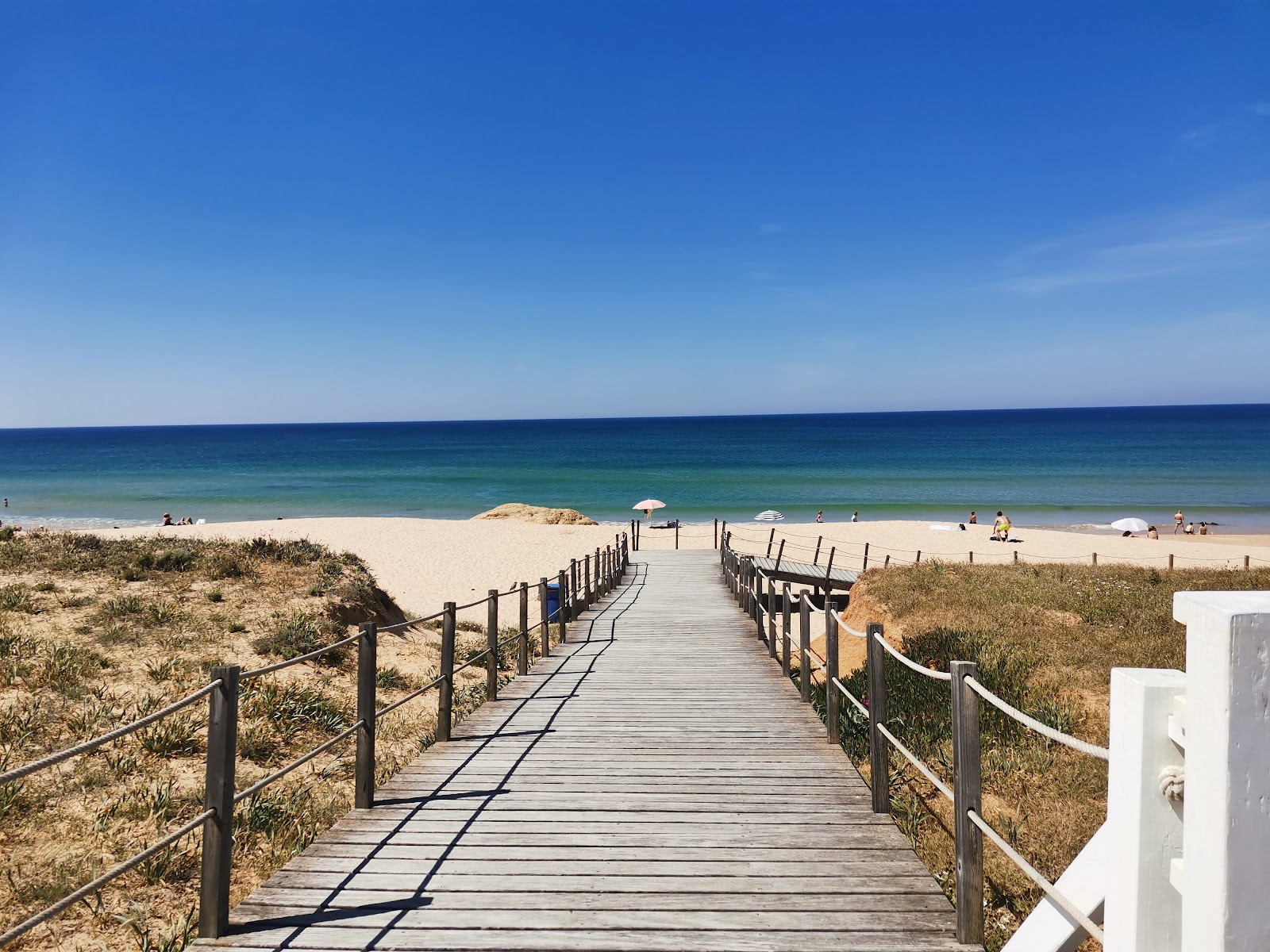
People who come back tend to split their time: mornings on the quieter east side among the rocks, afternoons shifting west to the open sand and O Luis for something cold. Pedras Amarelas at the eastern end is the default for lunch. Bring water shoes for the rocky headland if you plan to explore between the two sections.
The story behind Praia da Galé
Praia da Galé was once the working shore of a small fishing community, its rhythms set by boats rather than sunbeds. The name is thought to derive from a galley that wrecked here, though no documentation pins down when or which vessel — it remains the kind of origin story that travels better than it verifies.
What changed the place was the broader transformation of the Algarve coast across the late twentieth century, as fishing villages gave way to tourism infrastructure. The beach's blue-flag status — renewed for 2026 — marks how far that shift has gone: managed, certified, seasonally staffed, and well-attended from May through October.
Good to know
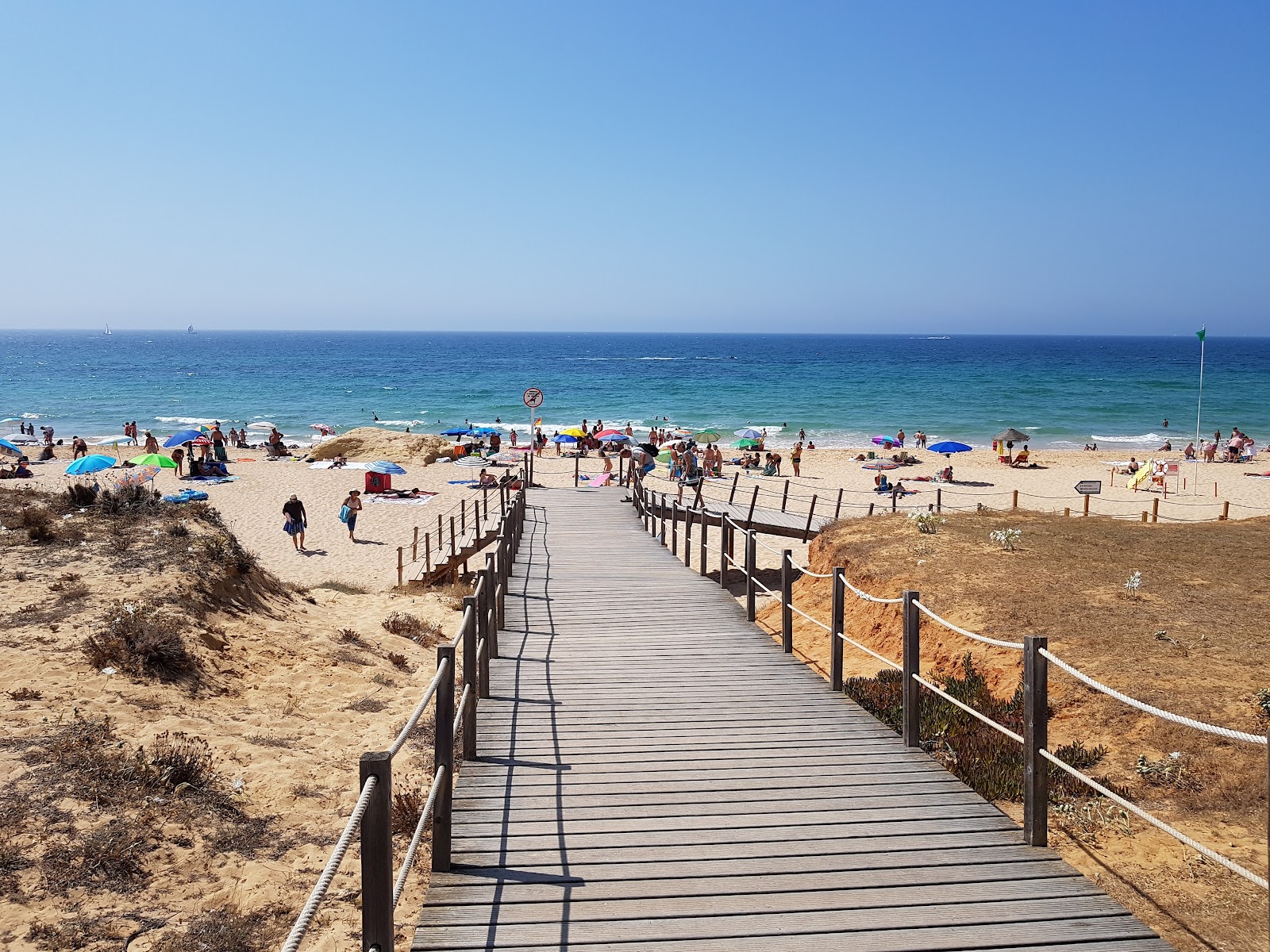
Bus 8 from Albufeira takes about 30 minutes and costs €2.60 each way, with only a handful of departures daily — check times before you go. By car it's 15 minutes west on the M526; free parking across four car parks, but in July and August both fill by mid-morning. The clifftop steps down to the sand — around 50 on each side — aren't manageable with pushchairs or wheelchairs. Lifeguards are on duty 9am–7pm, June through September.
Summer runs hot and dry — July and August bring daytime highs around 29–33°C, up to twelve hours of sunshine, and sea temperatures that reach 23°C. Spring and September are gentler, with highs in the low-to-mid twenties and far fewer people. The official bathing season runs 15 May to 15 October; outside those dates, the beach bars close and the lifeguards stand down.
Where is Praia da Galé?
More tickets & tours for Praia da Galé
Book directly at the provider
What travellers say about Praia da Galé
The ultimate breath of fresh air with a stunning view! The path heading west is perfect for a long trek; you can walk right across the sand or the wooden boardwalks with the Armação de Pêra skyline as a scenic backdrop. Despite the clouds, the vastness of this beach is impressive. Highly recommended for those who love peace, nature, and the raw power of the sea!
Spectacular beach. Some surf damage to the boardwalk but the beach bar is open ! There is a nice restaurant near the carpark.
This is a big and beautiful beach. The water is cold! The waves can get quite strong so it’s something to consider if you have small children. This particular beach also has a lot of seaweed that comes to shore during the evenings. Last thing is there are some parts of this beach that have rocks, so you have to be careful.
This beach is long and the sand is quite granular. In May, there were not a lot of Beach goers when we were there. Parking is quite plentiful, there is a concession stand, and some cabanas for rent at €10 a day on the west side. It is not as exotic as some of the beaches near Benagil for the lack of huge boulders and giant caves. However, this beach offers easier access and amenities. Highly recommended.
Liked it. Easy parking. Nice long sandy beach. Shallow swimming. Sea is cold! Got v busy 10-11am. People in beach bar v nice. Bought a 4 cheese pizza that had blue cheese on it. Kids hated it. Left when it got so windy there was no respite.
More of Albufeira
Discover where to stay, what to do and the best deals for your trip.
Explore Albufeira →More attractions in Albufeira
All of Albufeira →
Background adapted from Wikipedia (CC BY-SA) · map data © OpenStreetMap contributors · ratings & place photos via Google · other photos with per-image credit. Ticket links may earn us a commission at no extra cost to you.