
Ponte Romana de Tavira
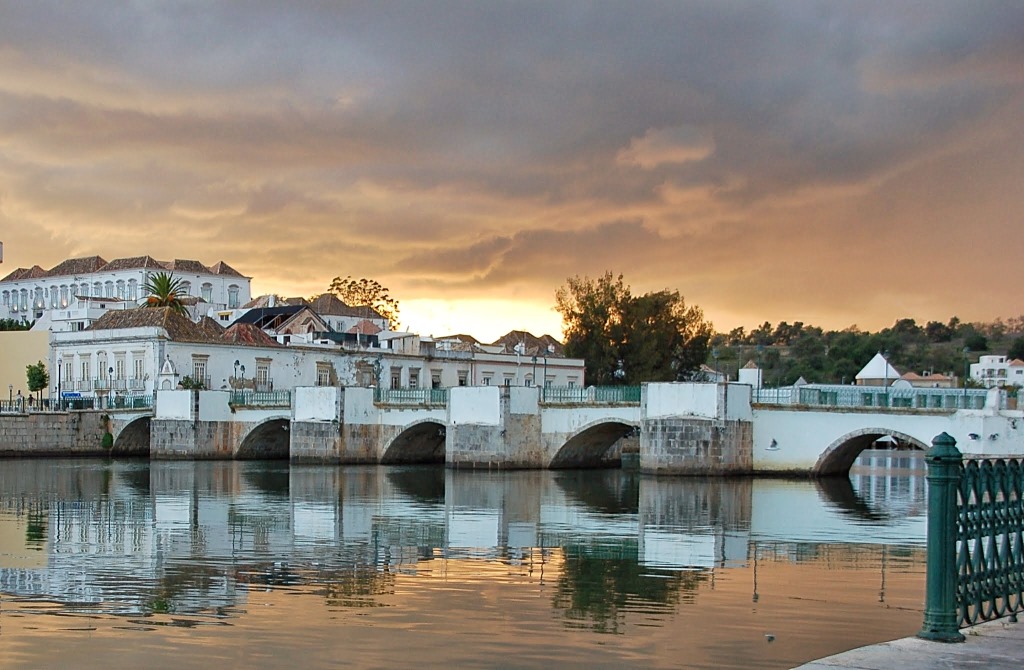
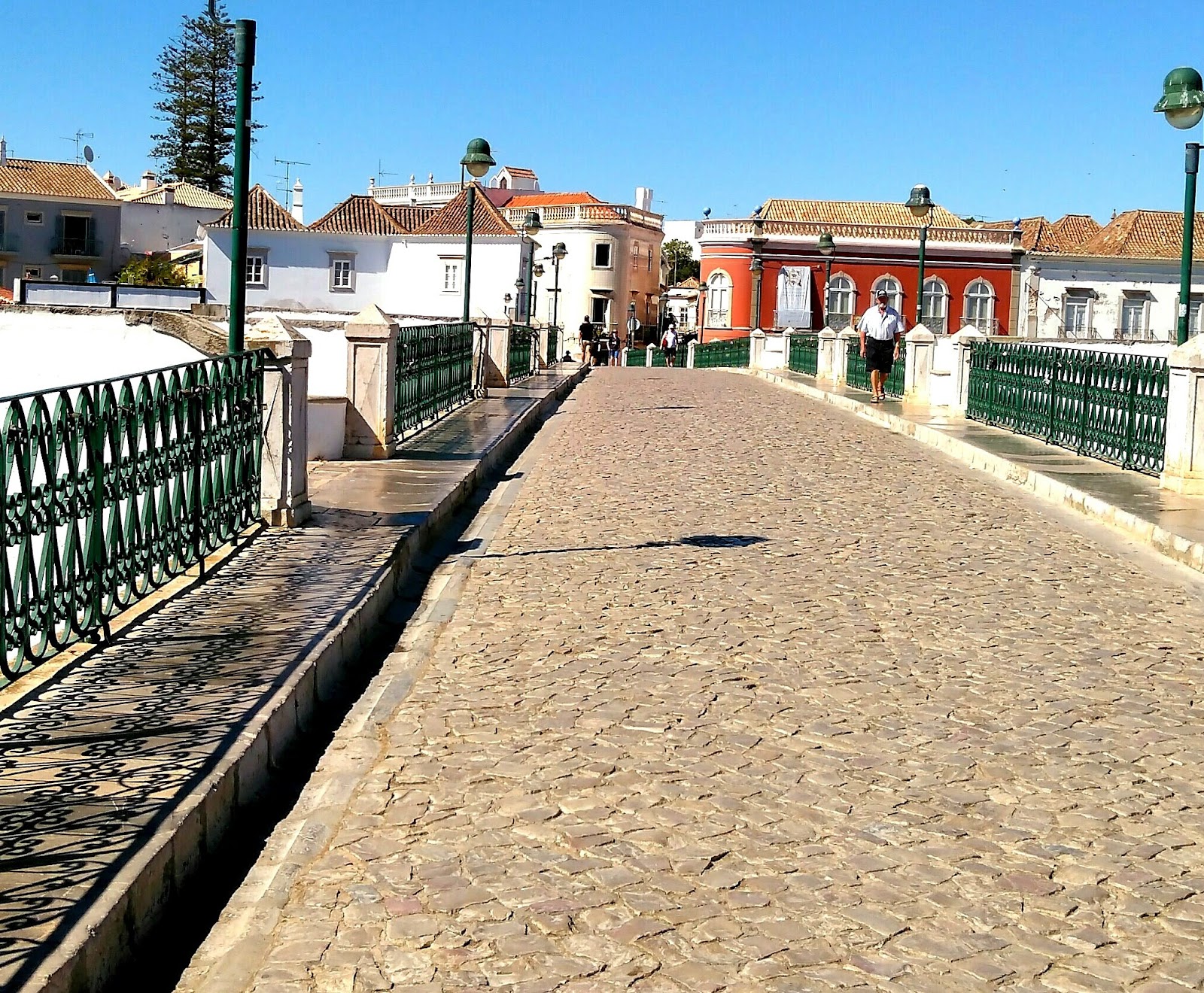
Seven low arches of pale stone step across the Gilão River at the centre of Tavira, connecting the Jardim do Coreto on the west bank to the Praça da República on the east. The cobbled surface is worn smooth in the middle where feet have crossed for centuries, and the wrought-iron rails carry the weight of countless padlocks left by couples who couldn't resist the tradition.
Despite its name, the bridge has no Roman foundations. Archaeologists found the earliest stonework dates to the 12th century — a Moorish crossing that the Portuguese inherited when they took the town in the 1240s.
💛 What travellers fall for
People who come back to Tavira tend to mention the same ritual: morning coffee at one of the café tables in the Praça da República, watching the light shift on the arches before the day gets going. The bridge from that angle, framed by the town's distinctive four-sided rooflines, is the view that stays with you.
The story behind Ponte Romana de Tavira
The bridge that stands today is not the one that stood here for four centuries before it. The original Moorish crossing, probably built in the 12th century, survived the Portuguese conquest of the 1240s and endured into the 17th century — by 1600, houses had even been built on a central pier. Then, in 1655, the structure collapsed.
The timing mattered. Portugal was mid-way through its Restoration War against Spain, and a crossing at Tavira was strategically important. King John IV dispatched Mateus do Couto, architect of the Military Orders, along with a French military engineer named Pedro de Santa Colomba, to oversee the rebuild. Three master masons from Lisbon directed local labour, and by 1657 the seven-arched bridge was complete. It carried road traffic for more than three centuries until a flood in December 1989 damaged it severely enough that it was closed to vehicles and has been pedestrian-only ever since.
Good to know
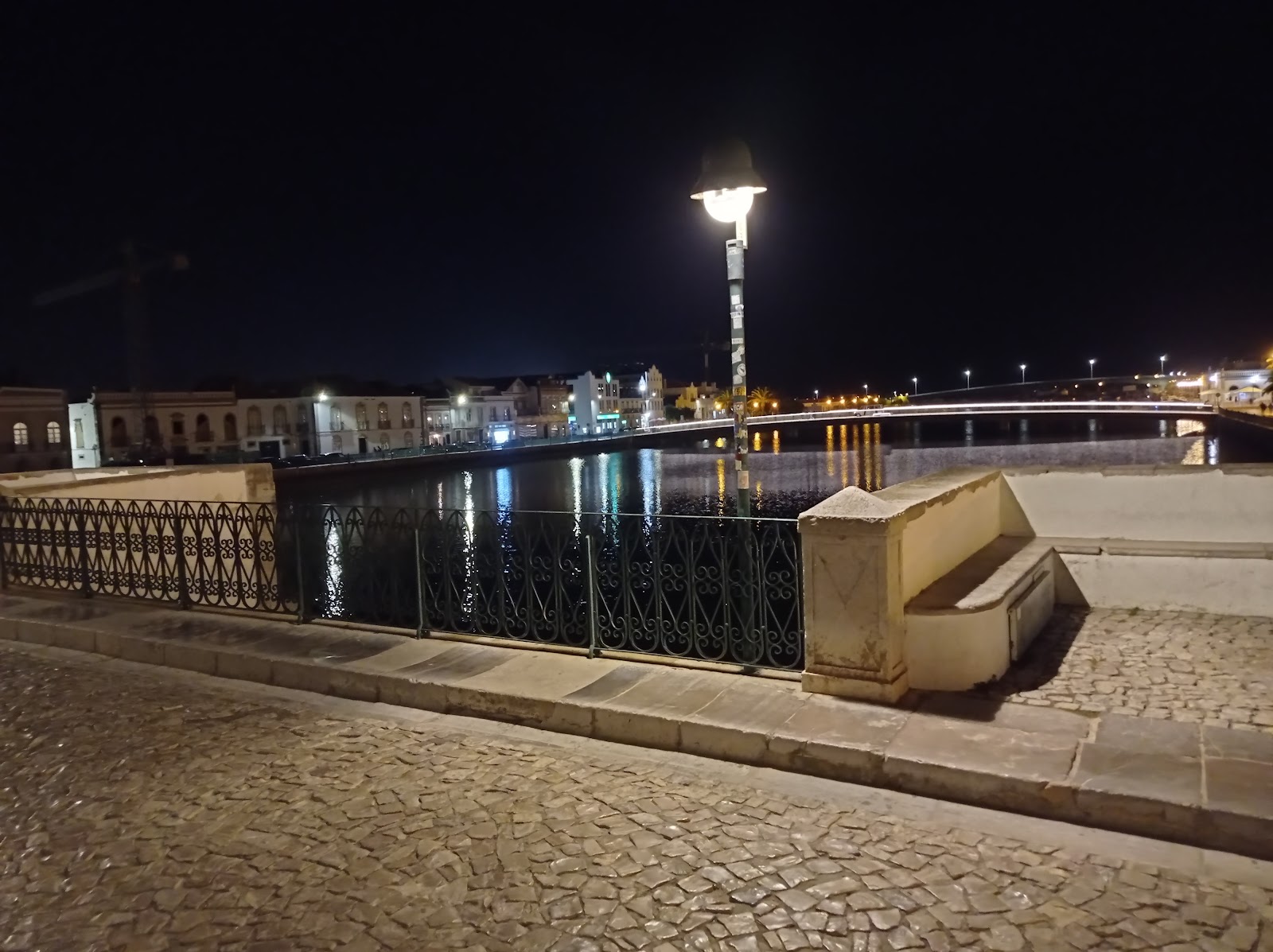
The bridge is open at all hours and free to cross — no tickets, no queues. Spring and early autumn give the most comfortable walking weather. From the bus station on Rua dos Pelames it's roughly a five-minute walk; from the train station, allow ten to fifteen.
April through May and September through October are the easiest months to linger on the bridge — warm without the intensity of summer. August brings the most visitors and the hottest midday sun; if you go then, early morning or evening crossings are worth the small rearrangement of your day.
Where is Ponte Romana de Tavira?
Location
- In Tavira
- 37.1255, -7.6513
- Open in Google Maps
More tickets & tours for Ponte Romana de Tavira
Book directly at the provider
More of Tavira
Discover where to stay, what to do and the best deals for your trip.
Explore Tavira →More attractions in Tavira
All of Tavira →
Background adapted from Wikipedia (CC BY-SA) · map data © OpenStreetMap contributors · ratings & place photos via Google · other photos with per-image credit. Ticket links may earn us a commission at no extra cost to you.