
Playa de Calahonda
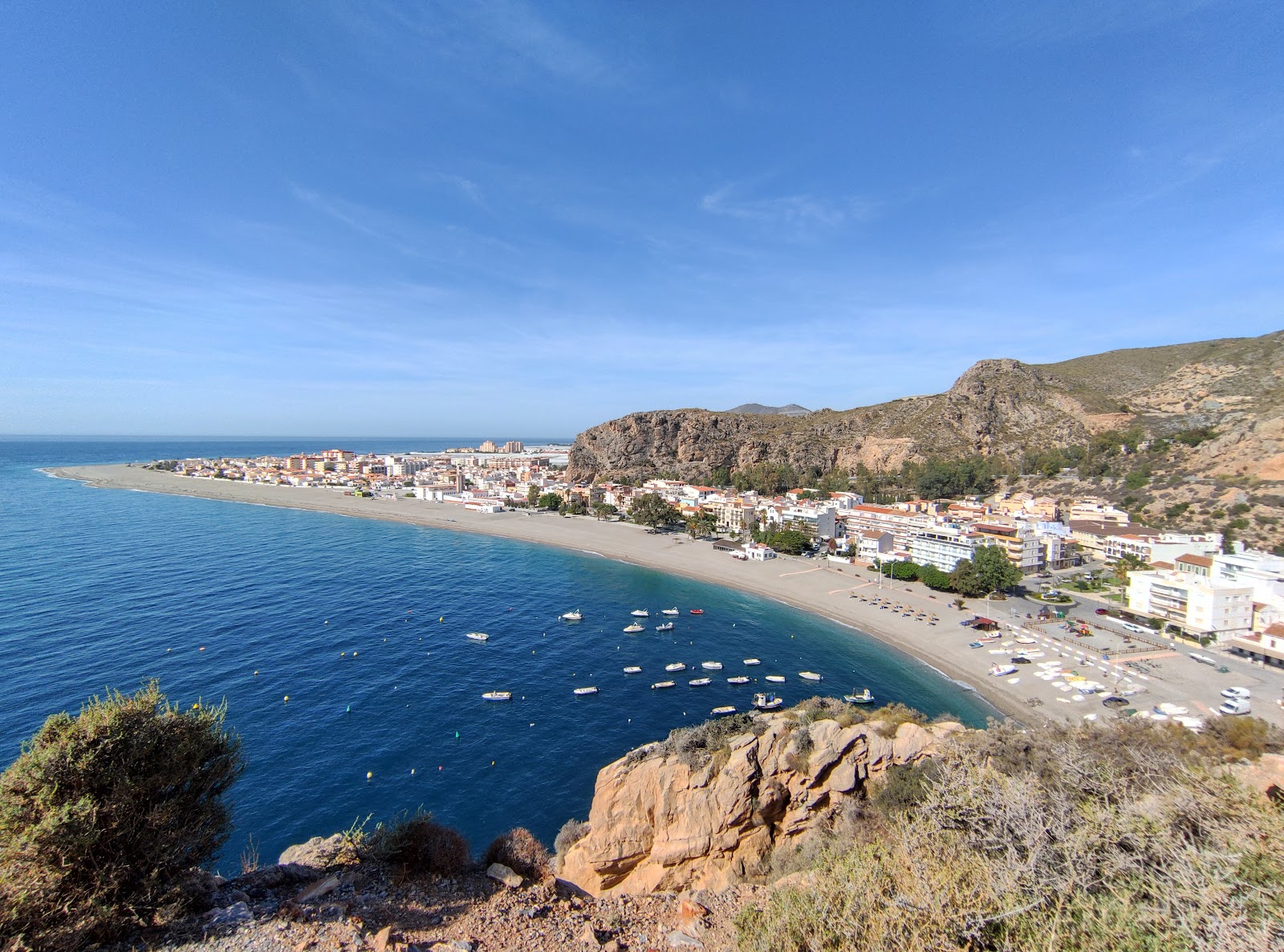
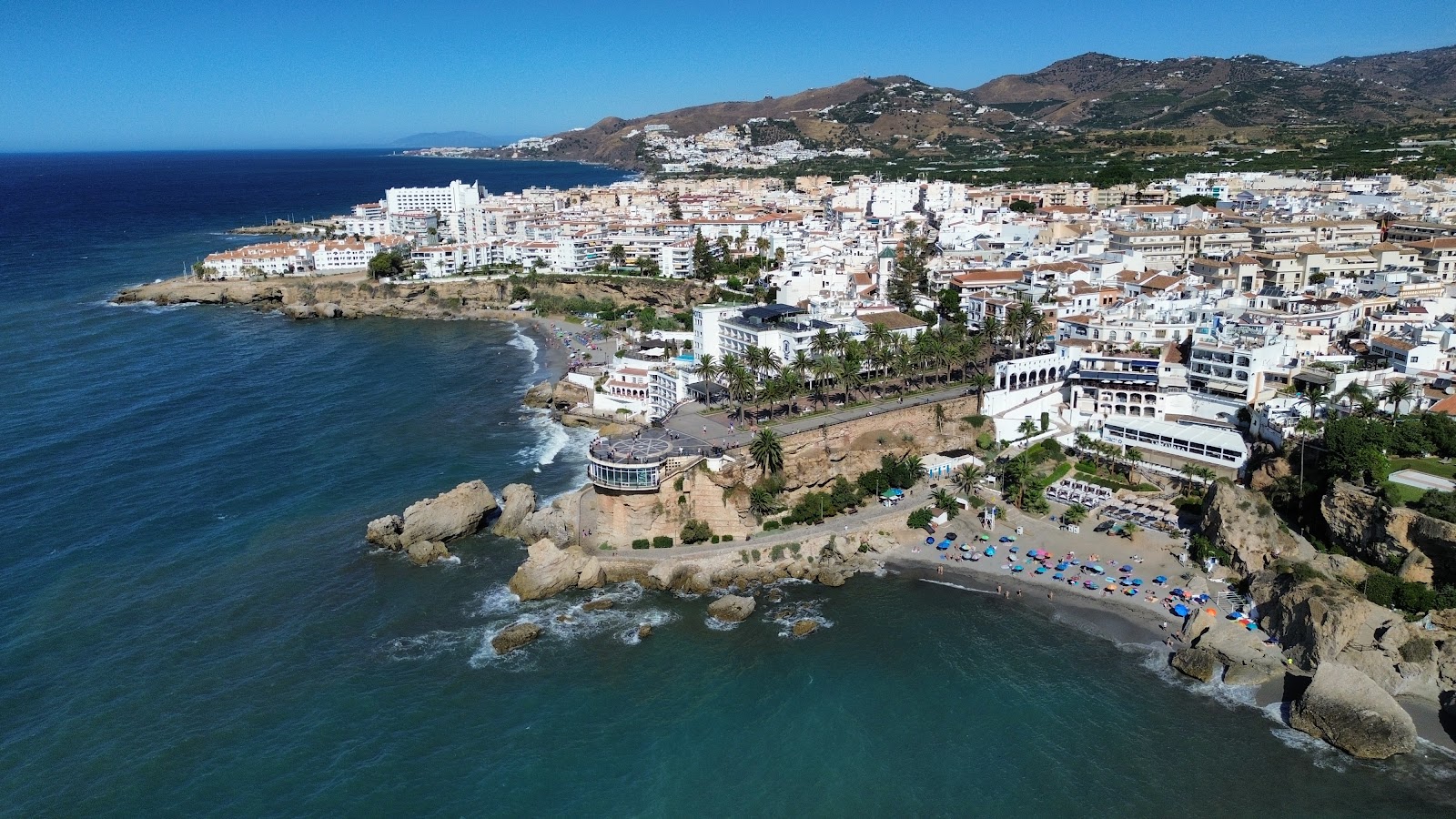
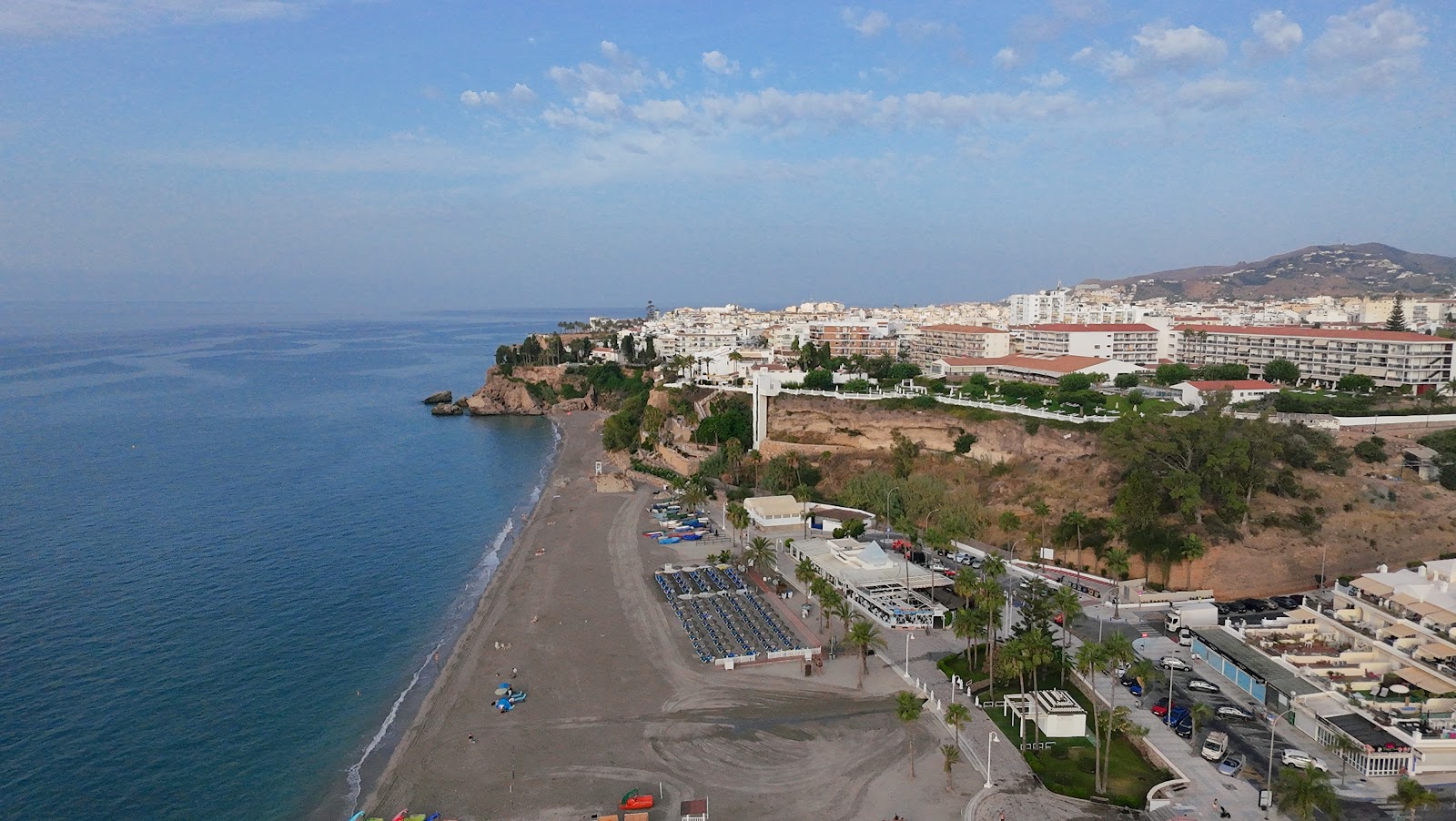
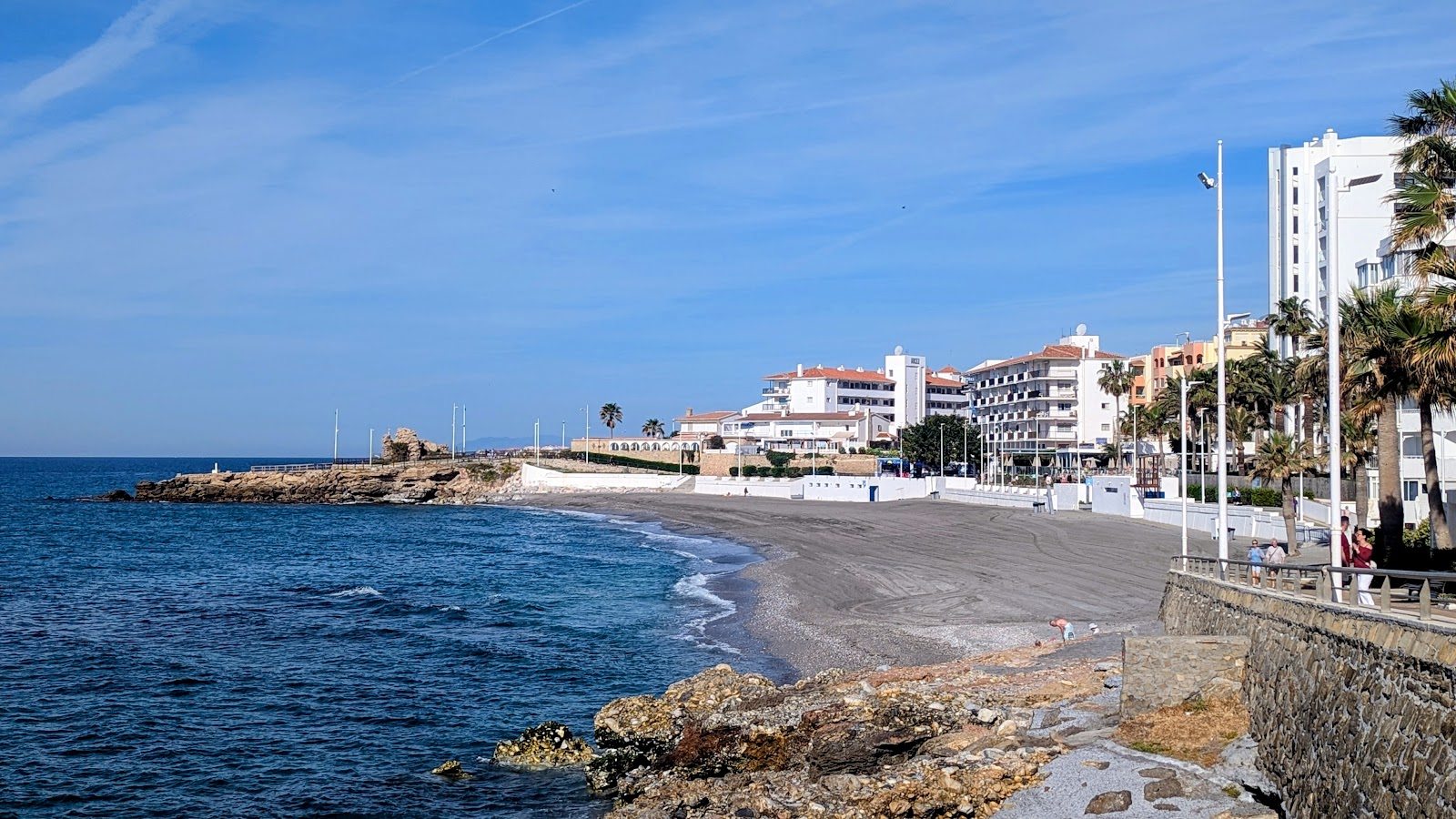
You find Calahonda by going under an arch — the Boquete de Calahonda, a low gateway behind the water fountain on the Balcón de Europa — and then down a zigzag of steps that deposits you, blinking, onto dark-sand shore about 120 metres long and 20 metres wide. The scale is intimate. White-walled sheds with blue doors press up against the rocks, and a handful of small fishing boats sit where the sand runs out.
This is one of Nerja's more central beaches, which means it fills up, but the geography keeps it from feeling like a strip. The cliffs hold it in, the café above it looks down at the water, and on a calm morning the whole place has the quality of a stage set waiting for its cast.
💛 What travellers fall for
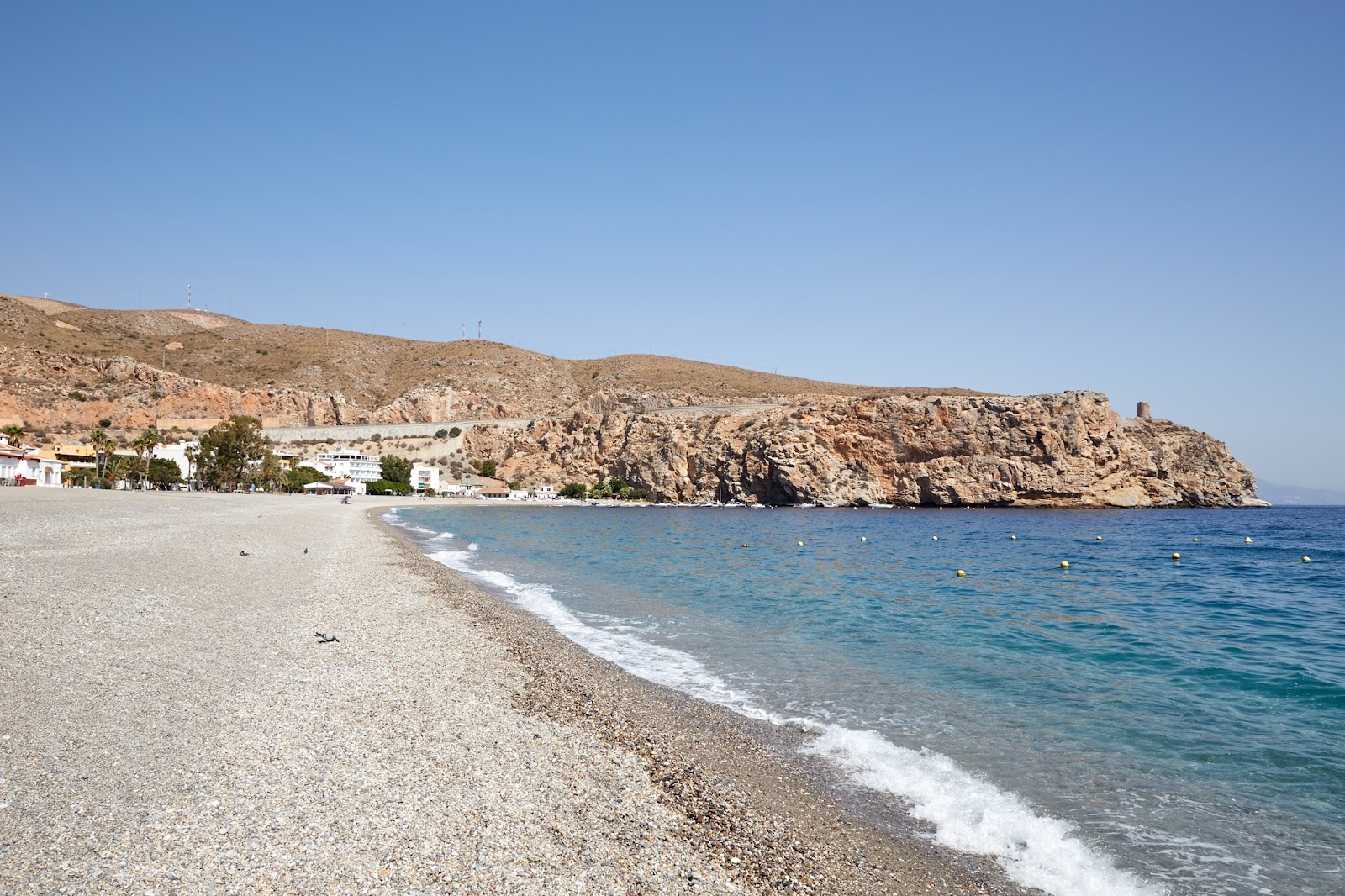
People who come back tend to time their arrival for early morning, before the sunbeds go out, when the fishermen are still around and the light off the cliffs is worth photographing. The best angle on the beach itself is from the Balcón de Europa above — worth a look before you descend. The single café is fine for a coffee; for lunch, most regulars walk back up.
The story behind Playa de Calahonda
Calahonda doesn't carry a documented founding story — no recorded date of construction, no named architect. What it has instead is accumulated use: the whitewashed sheds and modest warehouses built against the rocks speak to a working fishing beach rather than a planned resort, a place that took its shape from the boats that needed shelter and the people who worked them.
The beach entered a different kind of cultural record when it became a filming location for Verano Azul, the Spanish television series that ran in the early 1980s and fixed this particular stretch of dark sand in the memory of a generation. The Paseo de los Carabineros, the coastal path connecting Calahonda to Playa El Salón and the broader Senda Litoral, was restored and opened to the public in 2021.
Good to know
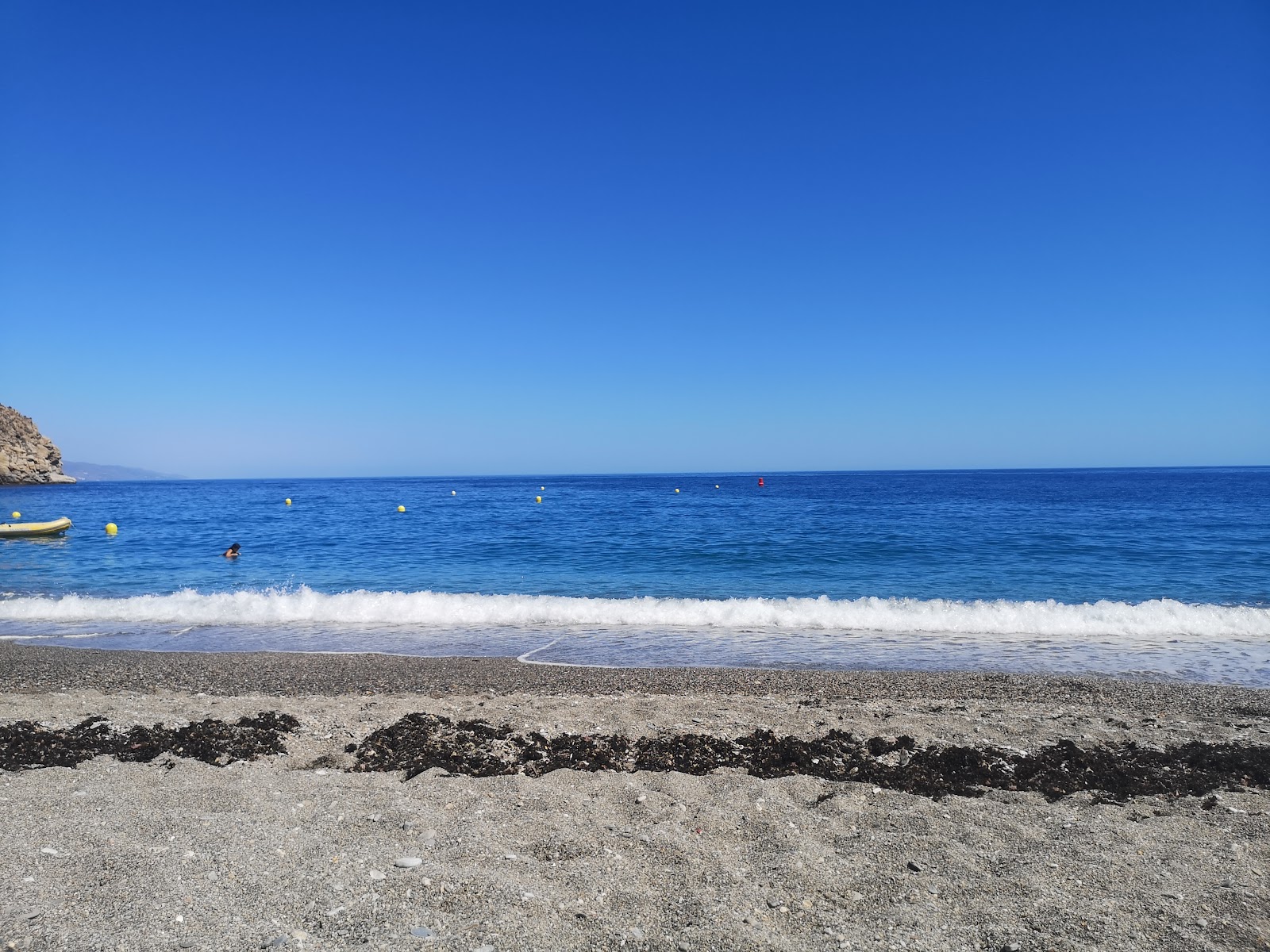
Access is on foot only, through the arch on the Balcón de Europa. The nearest car park is about five minutes' walk. Sunbed-and-umbrella rental runs €15–17. Lifeguards are on duty in summer. The ALSA bus from Málaga takes around an hour and fifteen minutes.
July and August are the warmest months for swimming — sea temperatures reach around 24°C and the beach sees almost no rain. From December through March the weather turns wetter and cooler, though the beach stays open and is rarely empty even then.
Where is Playa de Calahonda?
More tickets & tours for Playa de Calahonda
Book directly at the provider
What travellers say about Playa de Calahonda
A mainly shingle beach but nice all the same. Quite blustery when we visited and the sea was quite rough! There's a beach bar and amenities.
Beautiful place to swim/ snorkeling crystal clear waters, as it’s a pebble beach ..beach shoes advisable !
Very clean and quiet (Thursday in mid June). Water is crystal clear.
Wonderful place!
Attractive Quiet Spanish village..
More of Nerja
Discover where to stay, what to do and the best deals for your trip.
Explore Nerja →More attractions in Nerja
All of Nerja →
Background adapted from Wikipedia (CC BY-SA) · map data © OpenStreetMap contributors · ratings & place photos via Google · other photos with per-image credit. Ticket links may earn us a commission at no extra cost to you.