
Playa de Burriana
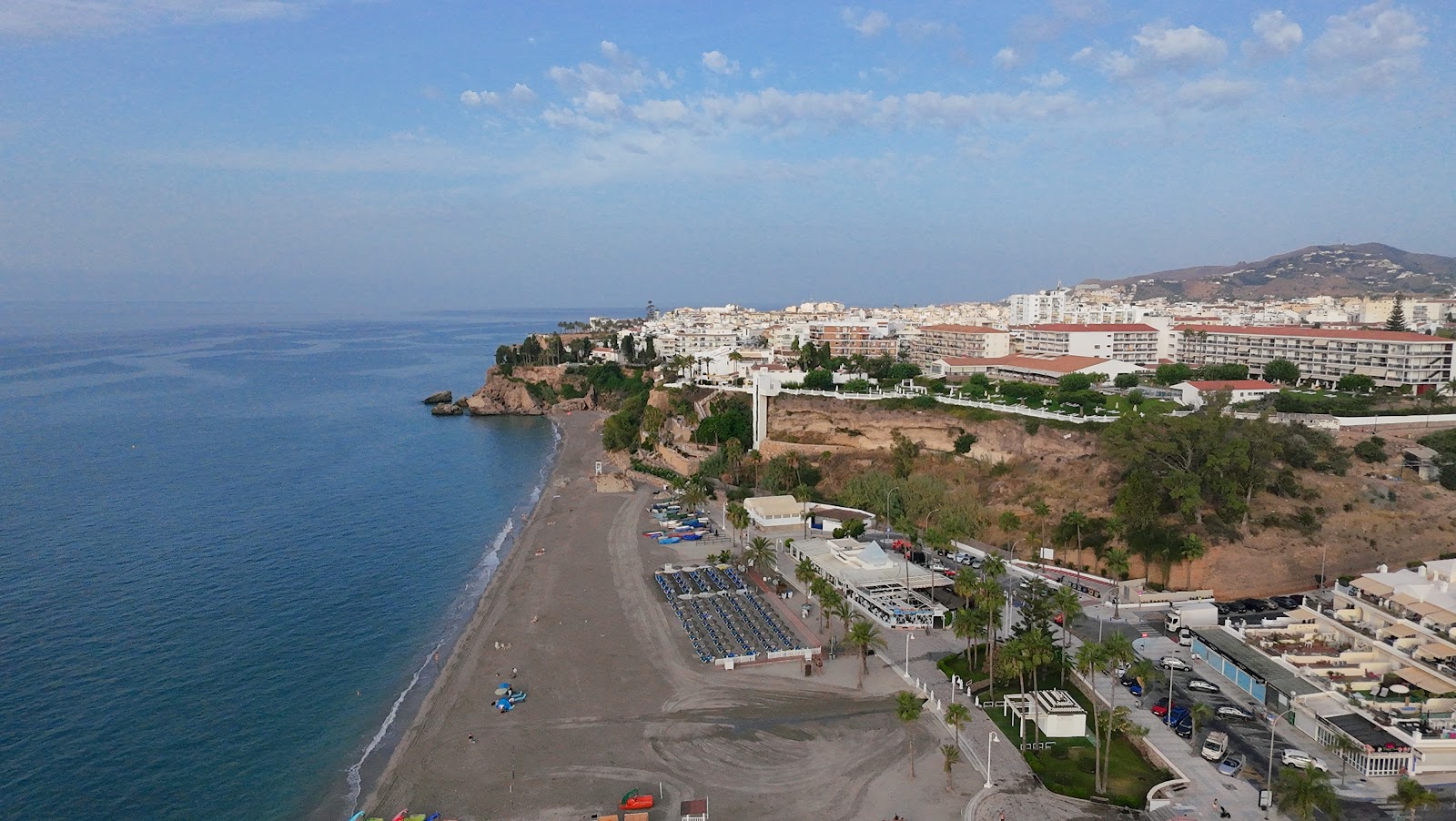
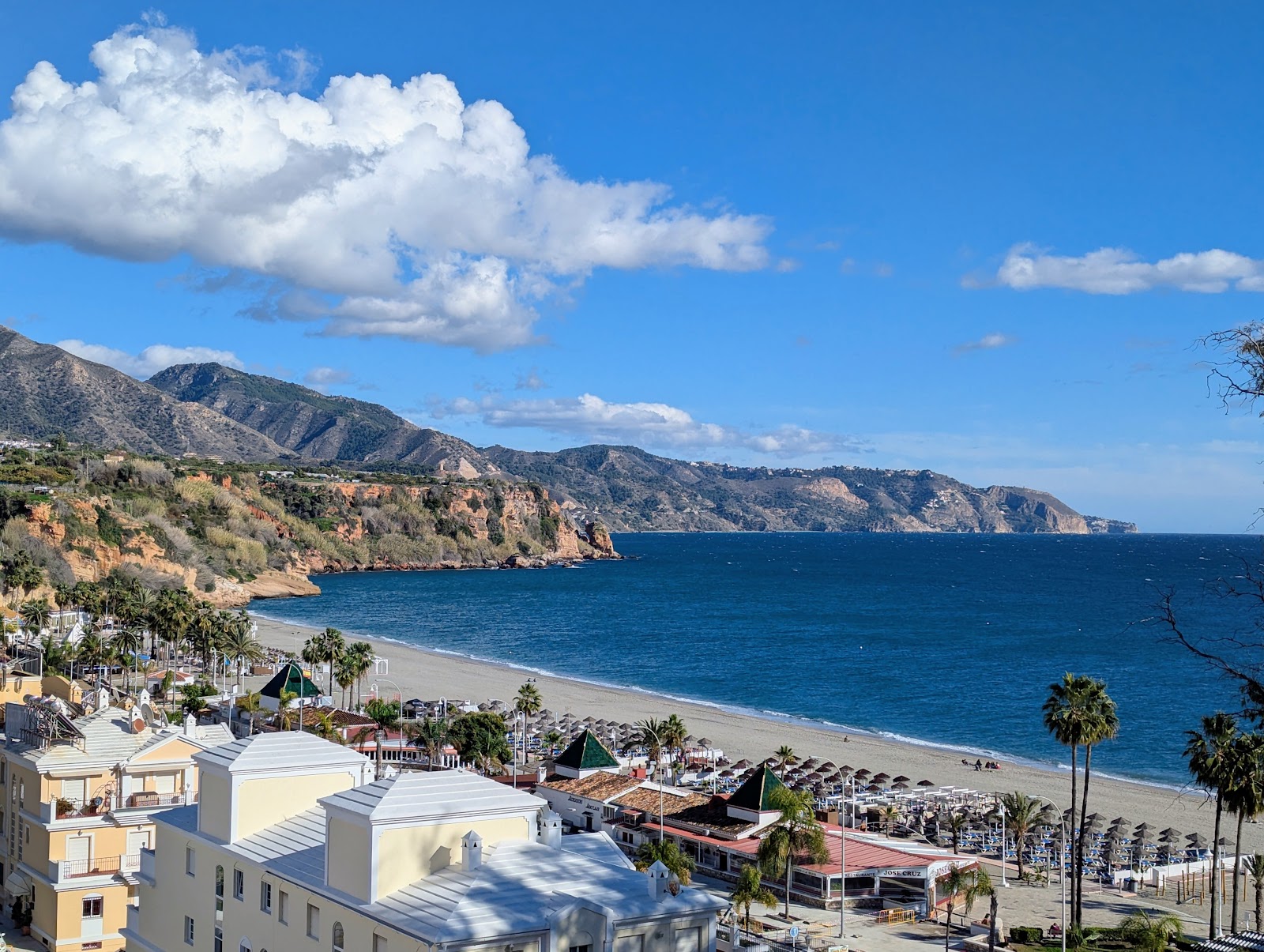
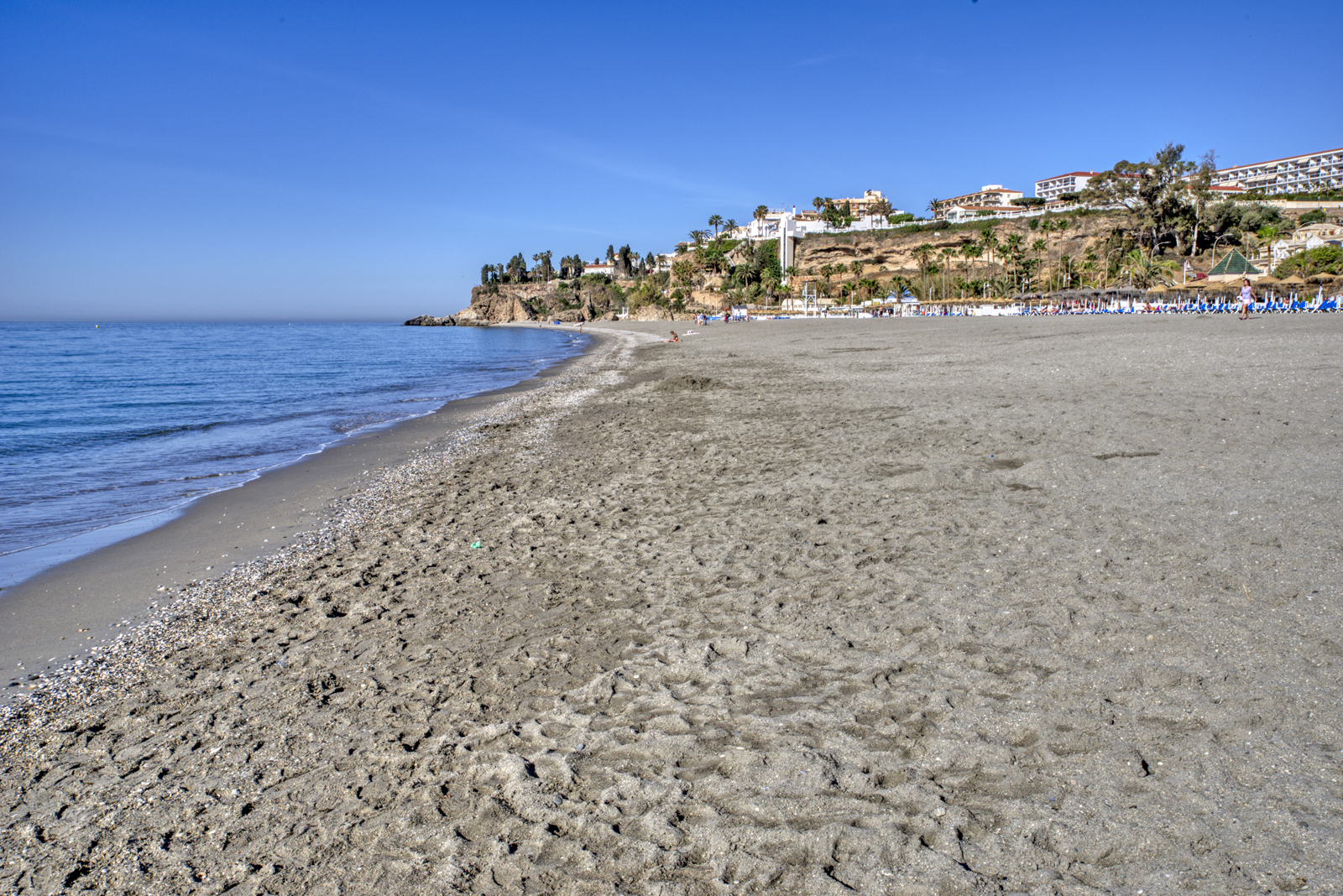
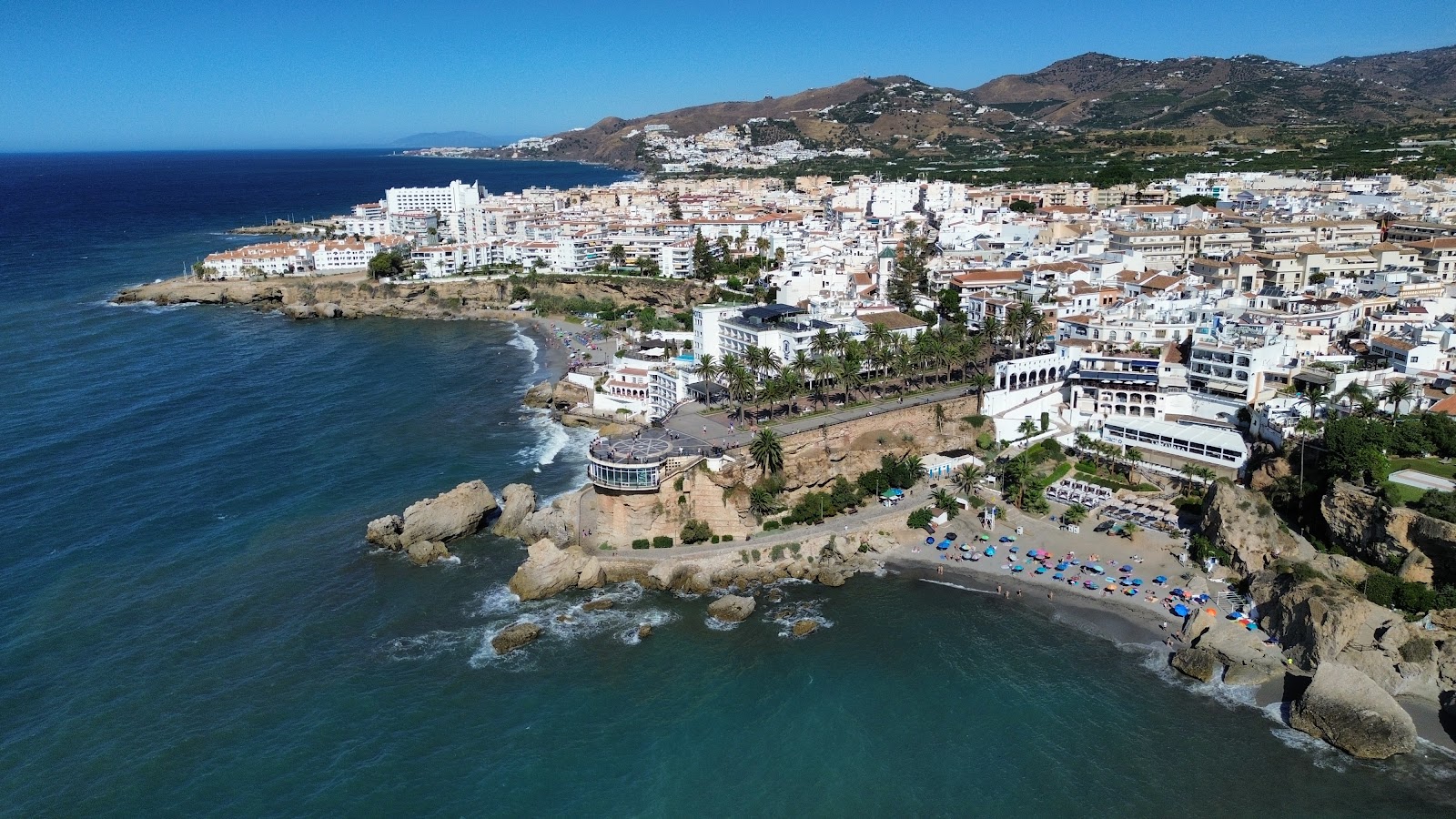
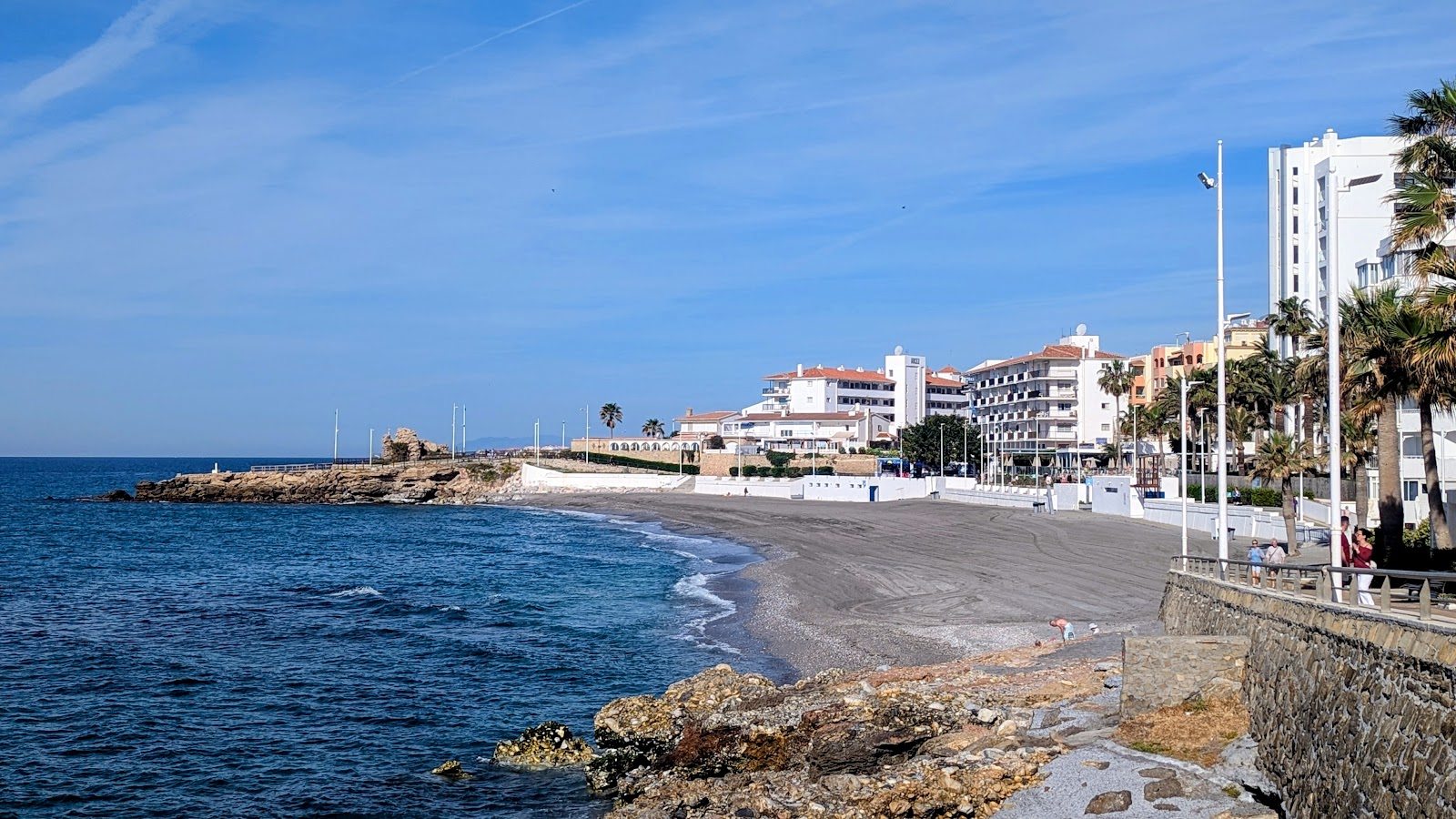
Burriana is Nerja's longest beach — 800 metres of fine golden sand that takes a good twenty minutes to walk end to end. The descent to reach it is steep enough that locals call the main approach road Cardiac Hill, and the effort of getting down (and back up) does seem to keep the beach a fraction calmer than its reputation suggests, even in high summer.
At the southern end, a beachfront promenade named after a Spanish TV producer runs behind the sunbeds, and somewhere in the middle of it all, an old man named Ayo still cooks paella over a wood fire in the restaurant that bears his name — a detail that tells you something true about the place.
💛 What travellers fall for
Regulars go straight to Restaurante Ayo for the wood-fired paella, ordered early because it sells out. The beach library near the promenade is genuinely useful on a long afternoon. Most people park underground at Burriana Parking rather than risk the free spots on Calle Andalucía in July or August — the 240-space garage saves a real headache.
The story behind Playa de Burriana
The coastline around Nerja has been inhabited since long before the beach had a name. The town itself appears in writing as early as 917, when the Arabic poet Ibn Sadî passed through a settlement that had already existed under the Caliphate of Abderramán III. Burriana as a distinct place on the map is a more recent idea — shaped less by a founding moment than by decades of incremental use.
The promenade behind the beach carries the name of Antonio Mercero, producer of the 1980s Spanish television series Verano Azul, which was filmed in Nerja and introduced the town to a generation of Spanish viewers. Restaurante Ayo has been operating for more than forty years, long enough that it has become a landmark in its own right.
Good to know
Walk from Balcón de Europa via Calle Carabeo in about fifteen minutes, or take a taxi down Calle Filipinas. Lifeguards and full facilities run June through September; outside those months, services thin out considerably. August packs the sand — May, June, and September offer the same warm water with noticeably more room.
Summer runs hot and dry — August air temperatures reach around 29°C with sea water close to 24°C, and July sees almost no rain. The shoulder months of May, June, September, and October sit between 20°C and 26°C and are considerably more comfortable for walking the length of the beach. February is the coldest month, averaging around 14°C, and October brings the heaviest rainfall.
Where is Playa de Burriana?
More tickets & tours for Playa de Burriana
Book directly at the provider
What travellers say about Playa de Burriana
Boy is it a busy beach every day of week.Llots of food and drink places.Loads of sunbeds but almost impossible to get one. Not a sand beach is shingĺe and waves almost costabtly crashing to shore if thats your thing 20 min walk from Nerja.
Lovely place, very well structured with plenty of amenities, shops, chiringuitos, parasol and sunbed services. It caters for all ages. Chilled vibes. We visited as a couple, paid 22€ to stay all day on a wooden sunbed with mattress, very comfortable, clean and organised. The water was cold so we didn’t have a swim but the sea definitely looked very clean.
Beautiful destination, how a public beach should be. Long gravel / dand beach, classy bars and restaurants all along the sea front, sunbeds need to be booked early and arrive early for easy beach front parking.
This is a beach experience location. The views and access are outstanding. The areas attracts a multinational community. We visited in January, the low season. Population ~ 20k jumps to ~100k in season. The surrounding area is well developed with high value homes. Most appear vacant off season. Likely not return in season but restful now.
Very nice beach, it gets pretty crowded but it’s big enough that it doesn’t feel overwhelmingly busy.
More of Nerja
Discover where to stay, what to do and the best deals for your trip.
Explore Nerja →More attractions in Nerja
All of Nerja →
Background adapted from Wikipedia (CC BY-SA) · map data © OpenStreetMap contributors · ratings & place photos via Google · other photos with per-image credit. Ticket links may earn us a commission at no extra cost to you.