
Plage de la Bouillabaisse
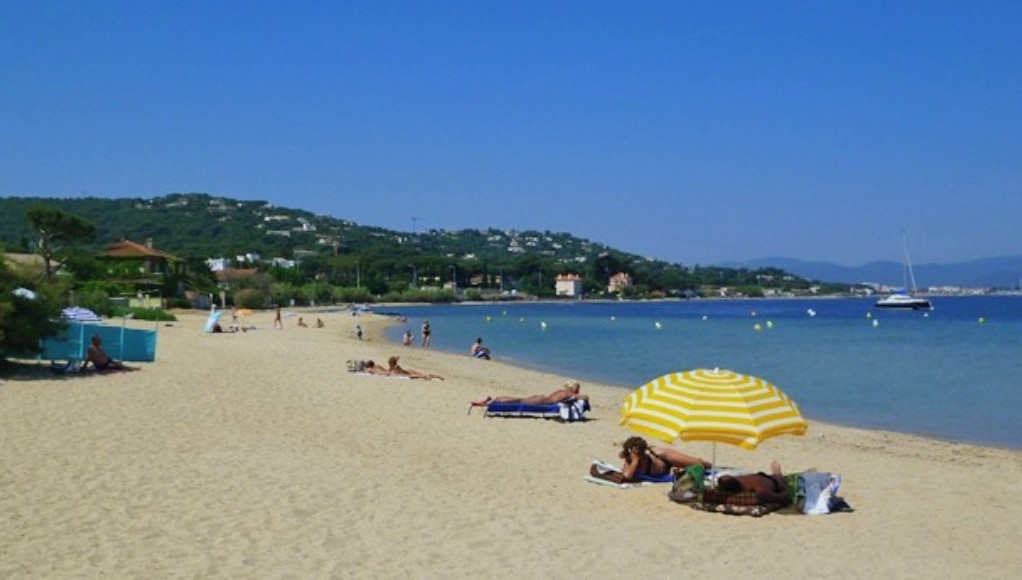
The first thing you notice at Plage de la Bouillabaisse is what you can't see: the Pampelonne crowd, the velvet ropes, the price tags on sun loungers. This 500-metre arc of sand sits right at Saint-Tropez's western edge, where the town gives way to Gassin, and it faces the dark ridgeline of the Massif des Maures rather than the open sea. There are beach clubs here, yes, and Provençal-fronted buildings line the back of the sand — but the shoreline itself is free, the water clean, and the whole place operates at a noticeably lower register than the town's more theatrical stretches.
💛 What travellers fall for
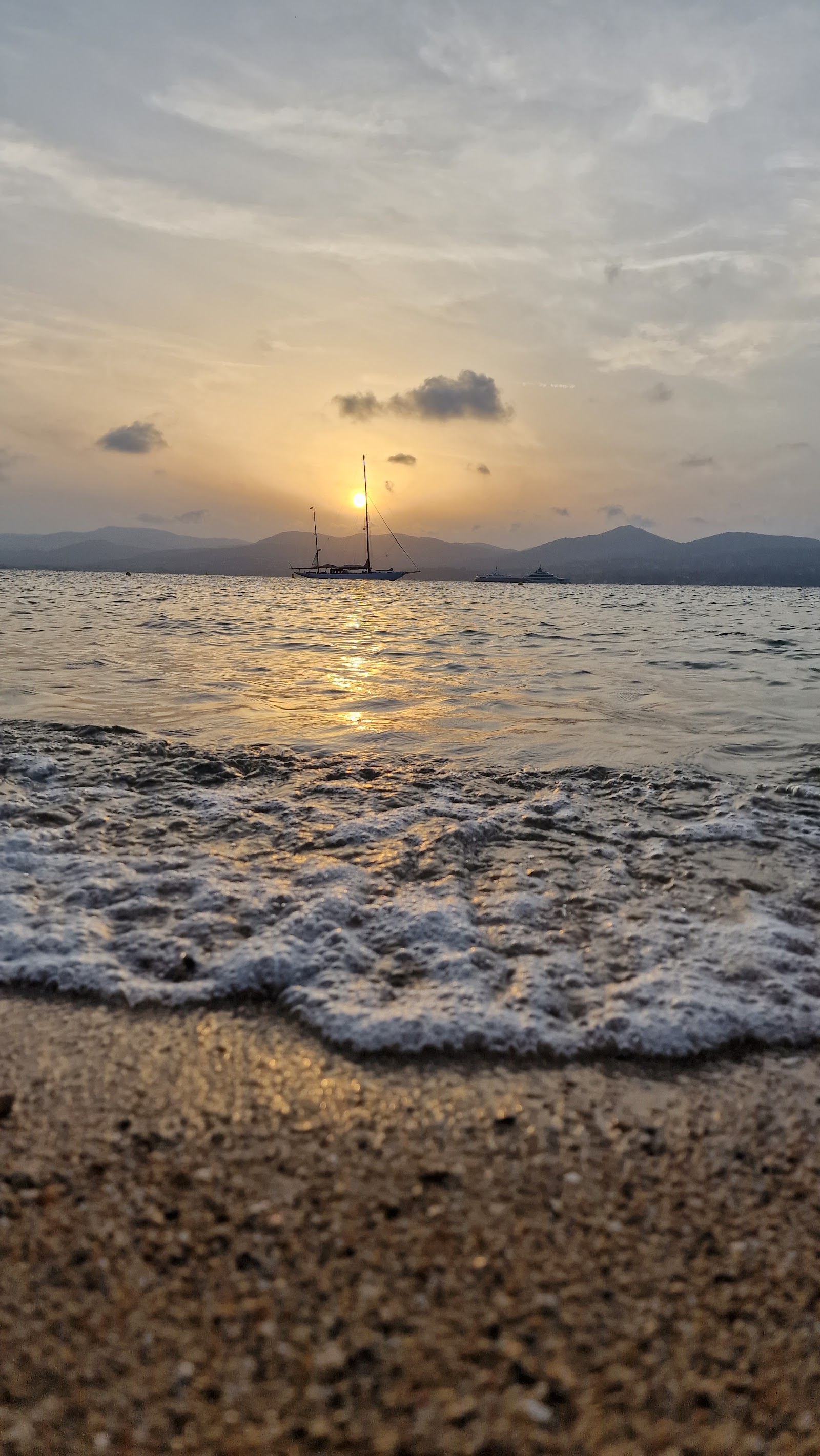
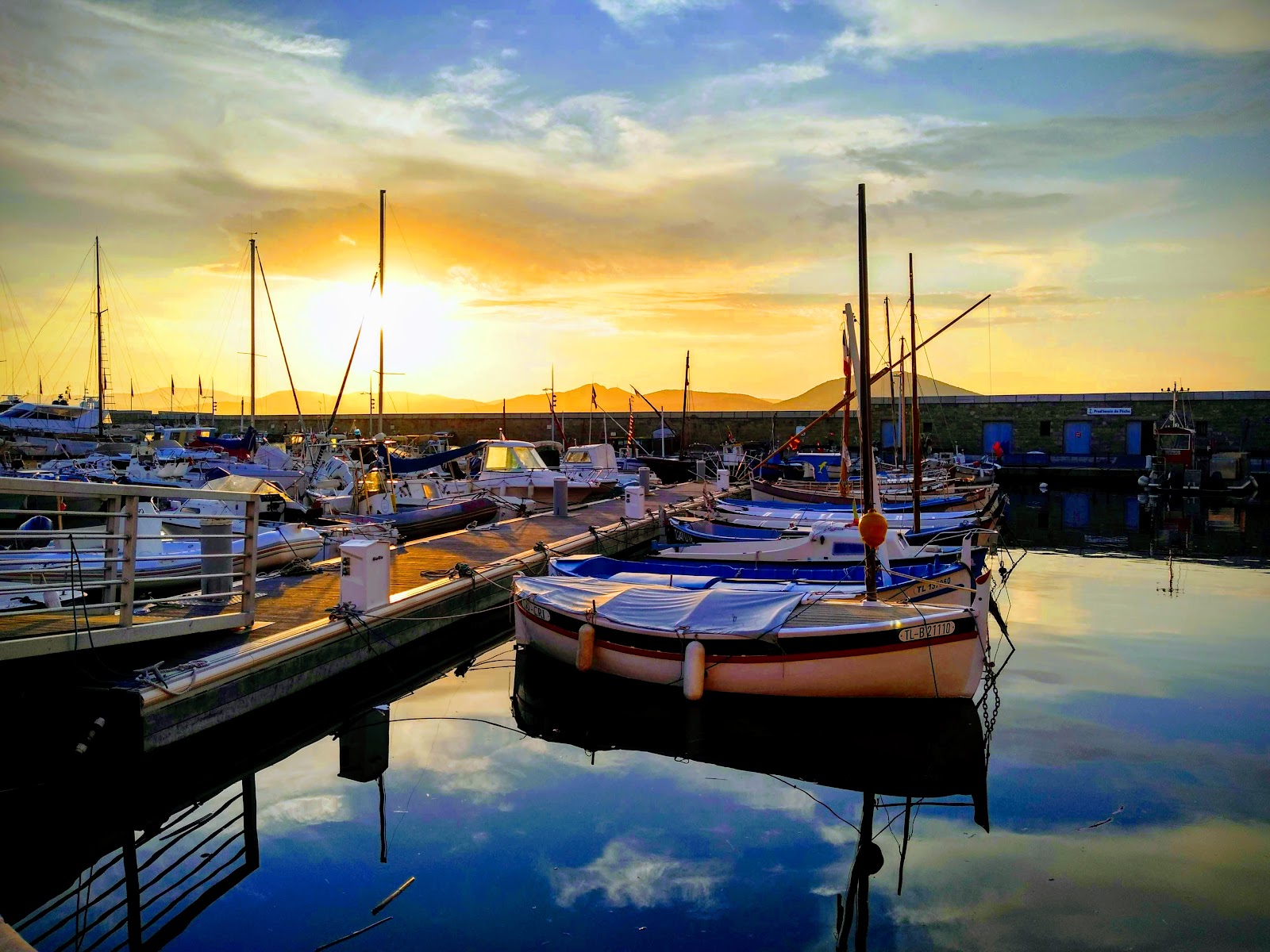
People who come back tend to time their visit for late afternoon, when the Maures hills catch the last light and the water turns a particular shade of green-gold. The sunset here, with the mountains as a backdrop rather than the horizon, is unlike anything on the Pampelonne side of town. Arrive by bus on line 876 or 878 and you skip the parking entirely.
The story behind Plage de la Bouillabaisse
No founding date or single act of creation defines this beach — it grew as Saint-Tropez grew, absorbing the slow commercial logic that turned the Côte d'Azur's shorelines into a sequence of clubs and concessions across the twentieth century. Its name predates the tourism era, borrowed from the Provençal fish stew that once defined the local diet, though no documented link between the dish and this particular stretch of sand has been established.
What separates it from the town's more storied spots is partly geography: straddling the commune boundary with Gassin, it was never entirely absorbed into the Saint-Tropez mythology that took hold after the 1950s. It remained, and remains, the beach you go to when you want the water without the spectacle.
Good to know
Access is free all year. Lifeguards, showers, toilets and first aid are in place from 15 June to 15 September. Two small free car parks sit nearby, but both fill fast in July and August — the bus from Saint-Raphaël is the more reliable option. Dogs are not permitted on the sand. Wheelchair-accessible beach mats and adapted facilities are available.
Summer is reliably dry and sunny, with July and August temperatures around 27°C and water warm enough to swim comfortably from June through September. October brings the coast's heaviest rainfall and a sharp drop in atmosphere; if you're coming outside the summer window, September offers the best balance of warmth and fewer crowds.
Where is Plage de la Bouillabaisse?
More tickets & tours for Plage de la Bouillabaisse
Book directly at the provider
What travellers say about Plage de la Bouillabaisse
Quite a nice beach but not the clearest sand. Very nice for swimming and a gorgeous view of the surrounding bay.
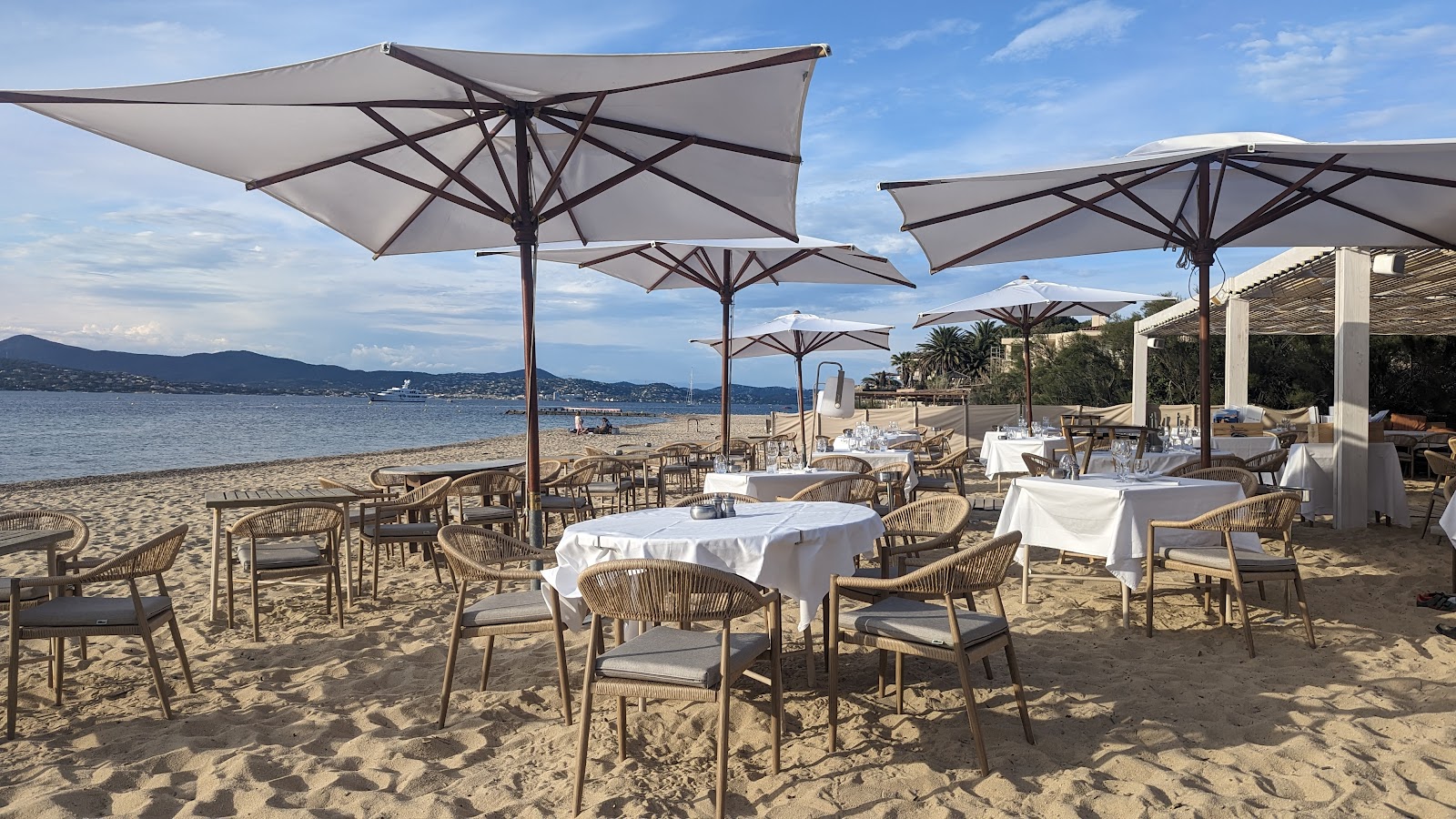
The beach club is approximately a five-minute drive from St. Tropez. Its beautiful decor evokes a sense of a bygone era, and the food and service were truly exceptional. We certainly plan to return.
Went here again today, and yet it again it didnt disappoint, food fantastic (Tuna steak) plus the service was also on point. This is a great beach club and run well. We arrived by jetski and tethered to the pontoon as you can't leave your tender or ski in the boating area its for drop off only. (Good to note). The restaurant is cooled by a water mist, keeping everything and body cool, especially on days when it's 36° like today. I can't rate this pkace highly enough what more could you want !! Great resturant with fabulous service and quality of food is on point. It's a very relaxed atmosphere with average prices for this kind of establishment. The sun beds need to be booked in advance or you will be disappointed if you just turn up. The bathing area is oveooked by a life guard which covers the unlicensed swimming area next door. You aren't able to Moor your boat or ski here but if you phone ahead they have a "beach boy or Girl" who will collect you with a tender. Over all lovely place to eat and drink and take I'm the views of the Gukf of St. Tropez.
What a disaster. Most of the plate we order were full of fried, even the one supposed to be light. They advise to take more and more saying that what we order is not a full plate… but it was. Second and last time for us.
A great beach very close to St Tropez. There is both a public space and paid for private space. Beach was very clean and not crowded.
More of Saint-Tropez
Discover where to stay, what to do and the best deals for your trip.
Explore Saint-Tropez →More attractions in Saint-Tropez
All of Saint-Tropez →
Background adapted from Wikipedia (CC BY-SA) · map data © OpenStreetMap contributors · ratings & place photos via Google · other photos with per-image credit. Ticket links may earn us a commission at no extra cost to you.