
Place du Tertre
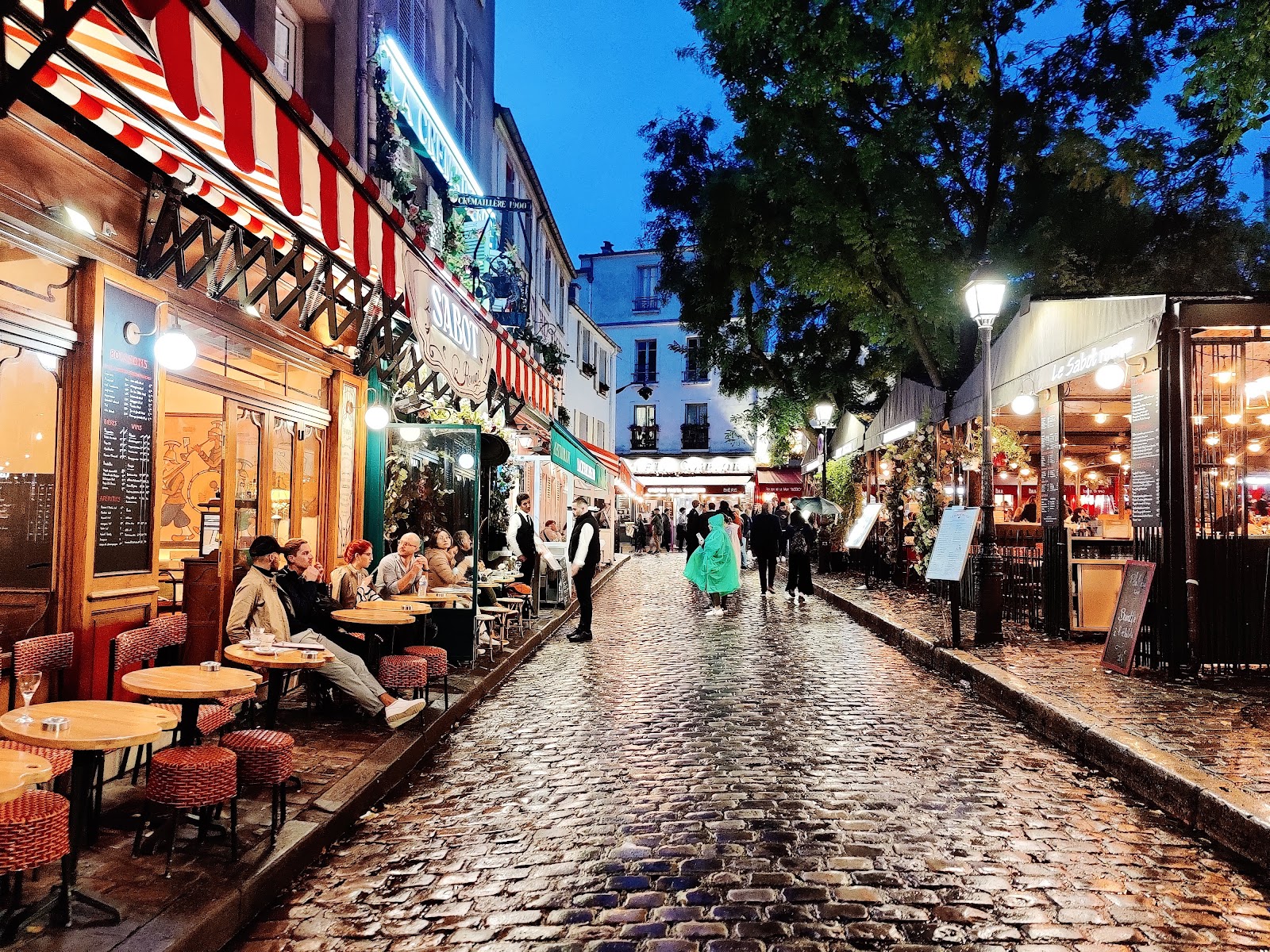
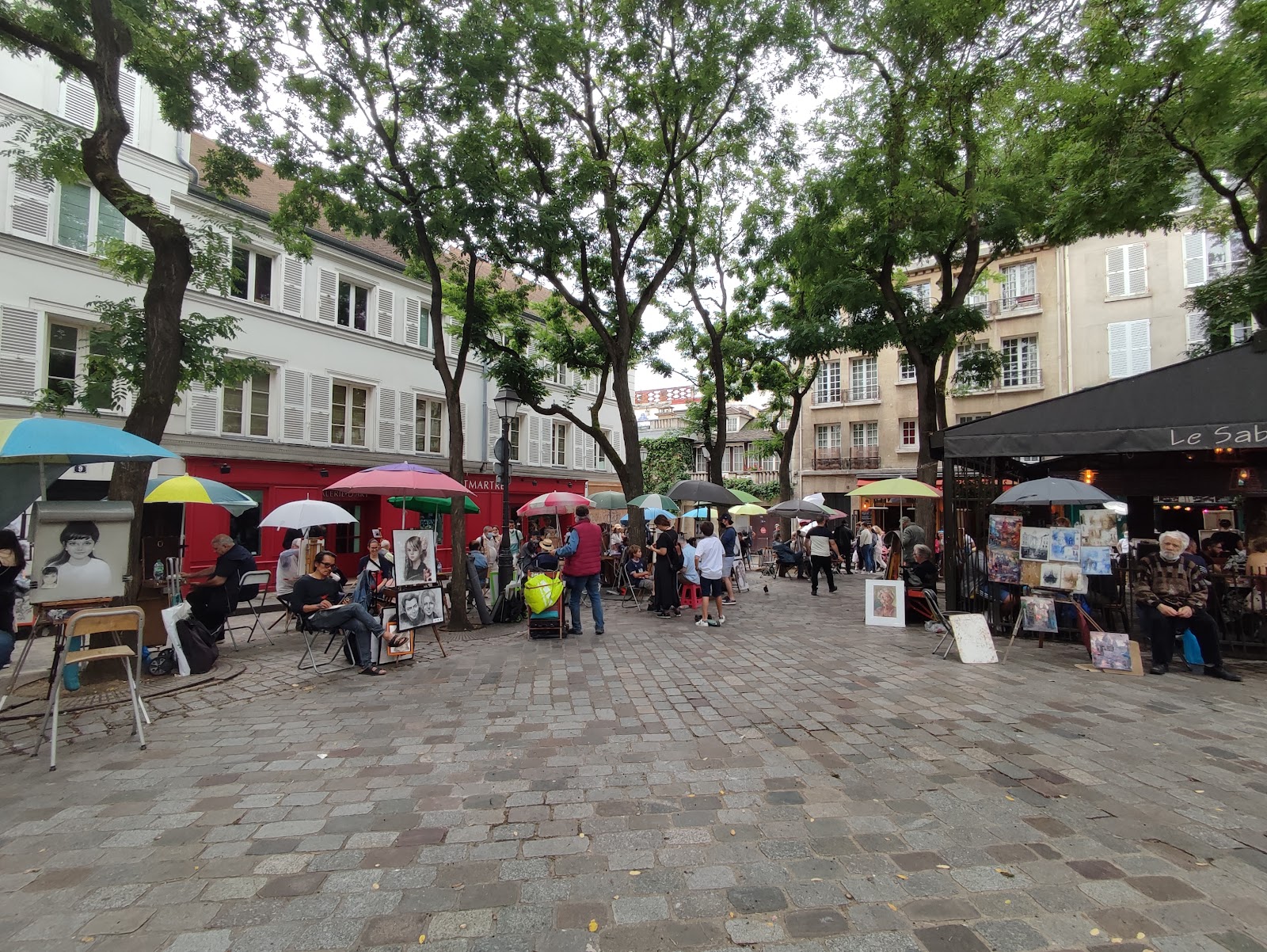
At the top of the Butte, Place du Tertre is a cobbled square roughly the size of a tennis court, ringed by easels. Every square metre of pavement is spoken for: painters working in oils, caricaturists with a fast hand, portrait artists who can catch a likeness in twenty minutes. The square has been the geographic and social heart of Montmartre village since 1635, and the surrounding buildings — many from the 17th and 18th centuries — still carry the proportions of a provincial French town rather than a capital city.
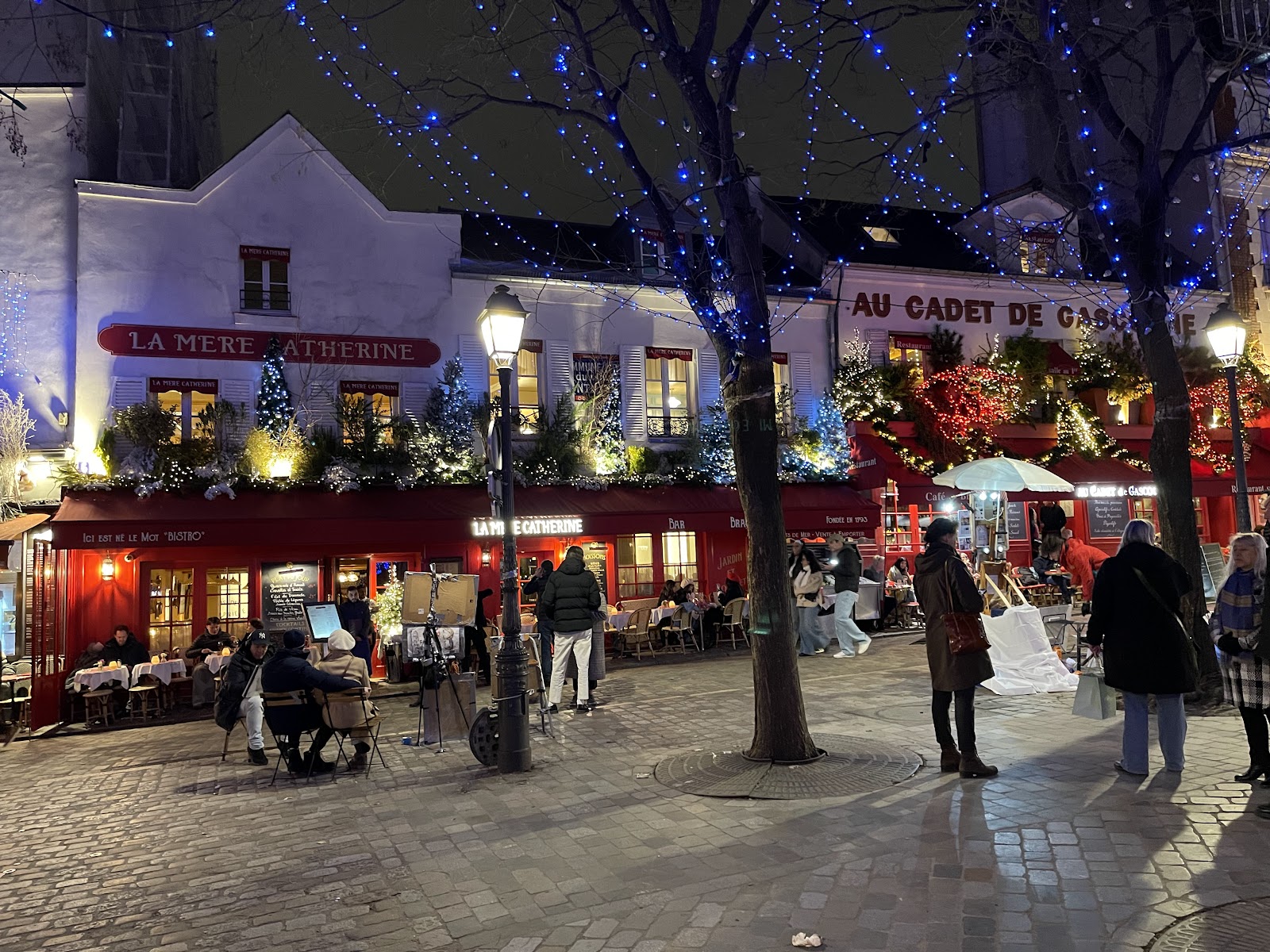
At its centre, a fountain is watched over by a statue of Saint-Denis holding his own severed head. La Mère Catherine, the restaurant on the square's edge, has been feeding people here since 1793. The competition for an artist's pitch — roughly three square feet, shared on alternating days — runs a waiting list of about ten years.
💛 What travellers fall for
People who come back tend to arrive early, around 10am, when the artists are just setting up and the tour groups haven't yet crested the hill. Rue Saint-Rustique, the old main street leading off the square toward the hill's highest point, gives you a few minutes of genuine quiet. If you want a portrait, agree on the price before sitting down.
The story behind Place du Tertre
Montmartre Abbey, founded in 1133 by King Louis VI, shaped the hill for centuries before Place du Tertre opened as the village's central square in 1635. In 1790, No. 3 on the square became Montmartre's first town hall, home to its first mayor, Félix Desportes. On 18 March 1871, the square sat at the ignition point of the Paris Commune, when General Claude Lecomte arrived with troops to recover 171 cannons stored on the Butte.
On Christmas Eve 1898, Louis Renault drove his first automobile up the hill to this square — an event later credited with marking the birth of the French automobile industry. From the late 18th century through to the First World War, the square drew painters, poets and songwriters; Picasso, Matisse, Modigliani and Utrillo all worked in the neighbourhood. In 1920, the Free Commune was founded at No. 21 to preserve Montmartre's traditions; it now houses the local tourist office.
Good to know
Take Metro Line 12 to Abbesses, then walk uphill eight to ten minutes via Rue Norvins. Alternatively, Line 2 to Anvers and the funicular (valid with a standard transit ticket) drops you near Sacré-Cœur, then five minutes west on foot. The square is free and open around the clock; artists typically appear from mid-morning. Spring and autumn offer the most comfortable conditions.
Spring and autumn are the most comfortable seasons — mild enough to linger while a portrait is drawn. Winter thins the crowds and quiets the square considerably, though fewer artists work in the cold. Summer brings the heaviest foot traffic; August in particular, when Parisian businesses often close, can make the square feel more like a transit point than a village square.
Where is Place du Tertre?
Location
- In Paris 18th Arrondissement
- 48.8865, 2.3408
- Open in Google Maps
Rating
4.5 ★ · 19,987 Google reviews
More tickets & tours for Place du Tertre
Book directly at the provider
What travellers say about Place du Tertre
🎨 Place du Tertre – Creative, relaxed, and full of charm ⭐⭐⭐⭐⭐ After visiting the Basilique du Sacré-Cœur, we wandered into Place du Tertre, and it really is a beautiful place to just slow down and take everything in. 🖌️ Atmosphere & Artists There are dozens of artists (easily 50–100) all working and displaying their craft: Portraits in pencil and paint Caricatures being drawn live Finished artwork available to browse and buy It feels like a living, breathing art gallery, and you can happily meander around just admiring the work. 😌 Relaxed Experience One thing we really liked: No pressure selling The occasional artist may ask if you’d like a portrait But it never felt pushy or uncomfortable It made the whole experience feel welcoming and enjoyable rather than overwhelming. ⚠️ Staying Aware As with much of Montmartre: It’s known for pickpockets, so keep your wits about you Easy to get distracted looking at artwork That said, we personally didn’t experience any issues and felt safe and comfortable throughout. ☕ Surroundings The square is lined with: Cafés and bars All with a great view and atmosphere Prices are definitely on the higher side (as you’d expect in such a tourist hotspot). We chose not to sit this time, but you can absolutely see the appeal of relaxing there with a drink and soaking it all in. 👨👩👧👦 Family Perspective We carried on down into Montmartre afterwards for ice creams for the kids, which they loved. Probably better value than paying premium prices for desserts in the square, but it all depends on what kind of experience you want. 💬 A Nice Touch We spoke to one of the artists who told us he works there in all weathers, simply putting up an umbrella when it rains. It’s great to see people genuinely making a living from their craft in such an authentic setting. ⭐ Final Verdict A fantastic place to wander, admire, and soak up the atmosphere of Montmartre. Whether you buy something or just browse, it’s a memorable experience. Highly recommended – 5 stars ⭐⭐⭐⭐⭐
Lively place cute shops and artist square to get portrait done, make sure to walk around and view all artists to see what style you like before choosing. There’s some music shopping and food available as well as an atm nearby.
Place du Tertre has a beautiful and lively atmosphere. It can get crowded, but the artists are incredibly talented and the surroundings are stunning. A truly enjoyable experience and definitely worth visiting.
Place du Tertre is such a lively and charming square. It’s filled with talented street artists offering portraits and sketches for visitors, which makes the whole place feel vibrant and full of creativity. Even if you’re not planning to get a portrait done, the atmosphere alone is worth visiting. I really loved the artistic vibes and the unique Parisian charm here.
I I visited the other places of Paris and it was really amazing. If you’re planning to visit, go for it—but be mindful of your budget and just enjoy the moment for what it is. Follow my journey on Insta: @GlobalYatri98 🌍
More of Paris 18th Arrondissement
Discover where to stay, what to do and the best deals for your trip.
Explore Paris 18th Arrondissement →More attractions in Paris 18th Arrondissement
All of Paris 18th Arrondissement →
Background adapted from Wikipedia (CC BY-SA) · map data © OpenStreetMap contributors · ratings & place photos via Google · other photos with per-image credit. Ticket links may earn us a commission at no extra cost to you.