
Place des Vosges
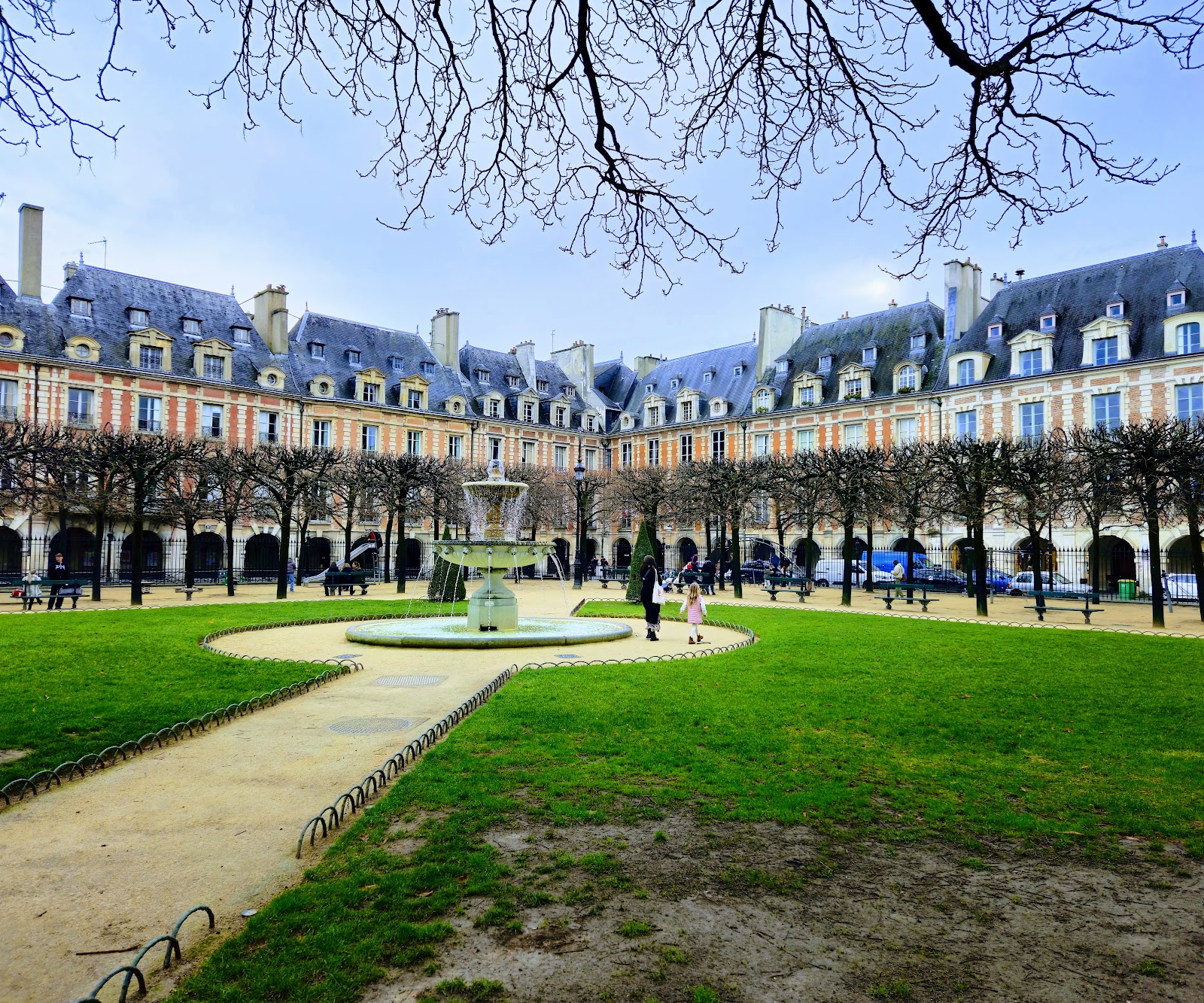
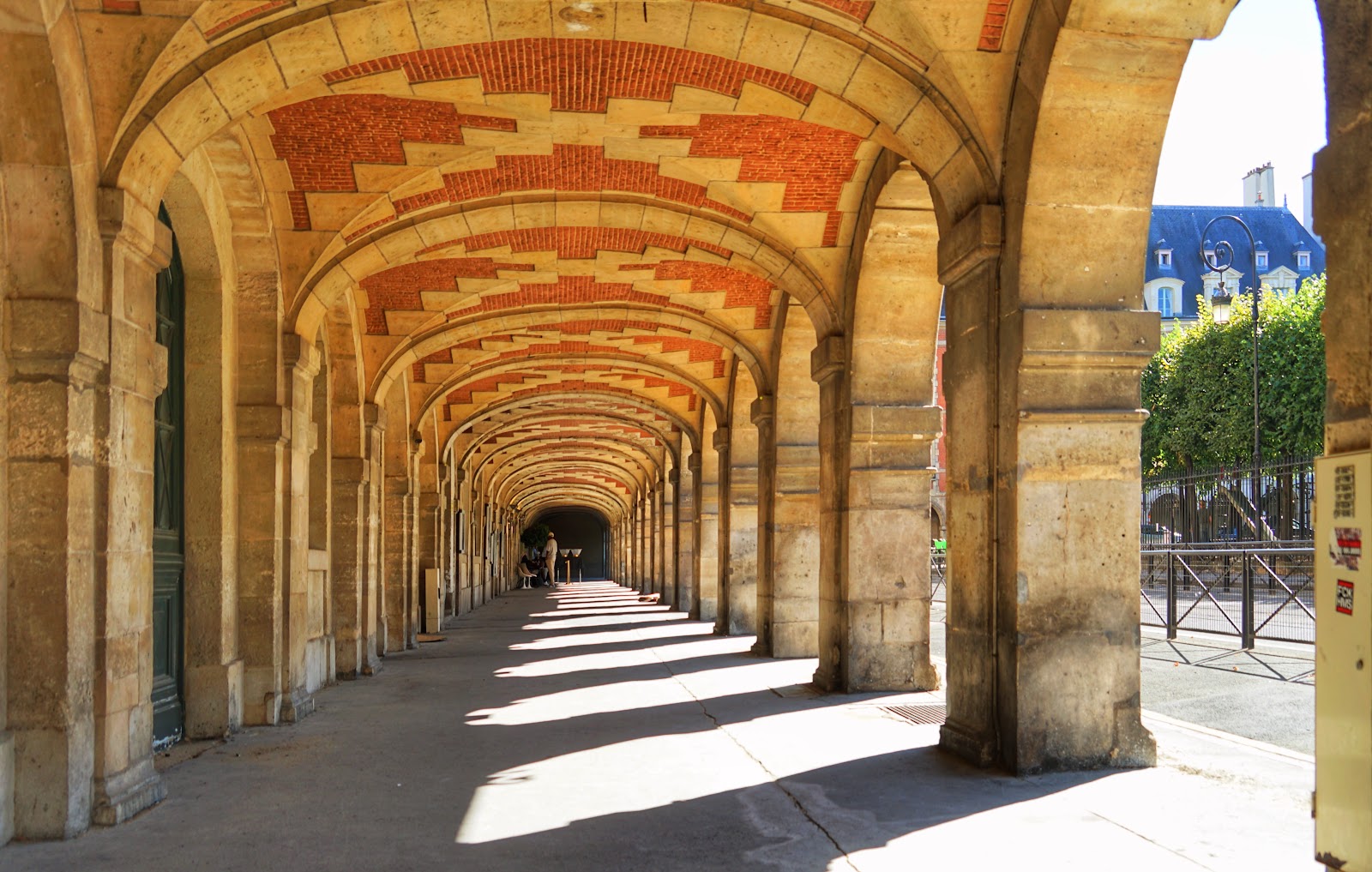
The first thing you notice is the symmetry — 36 red-brick facades, each one identical, running around a perfect 140-metre square as if the city held its breath for a moment in 1612 and never quite let it out. Steep blue-slate roofs, stone quoins, vaulted arcades on square pillars: every house obeys the same grammar, which makes the whole thing oddly calming rather than monotonous.
Under those arcades you'll find L'Ambroisie (three Michelin stars, No. 9), the tea room Carette, and the brasserie Ma Bourgogne, along with galleries and antique dealers. The garden at the centre — linden trees over grass and gravel — arrived only after the Revolution; when Henri IV inaugurated the square in 1612, it was bare sand, built for tournaments.
💛 What travellers fall for
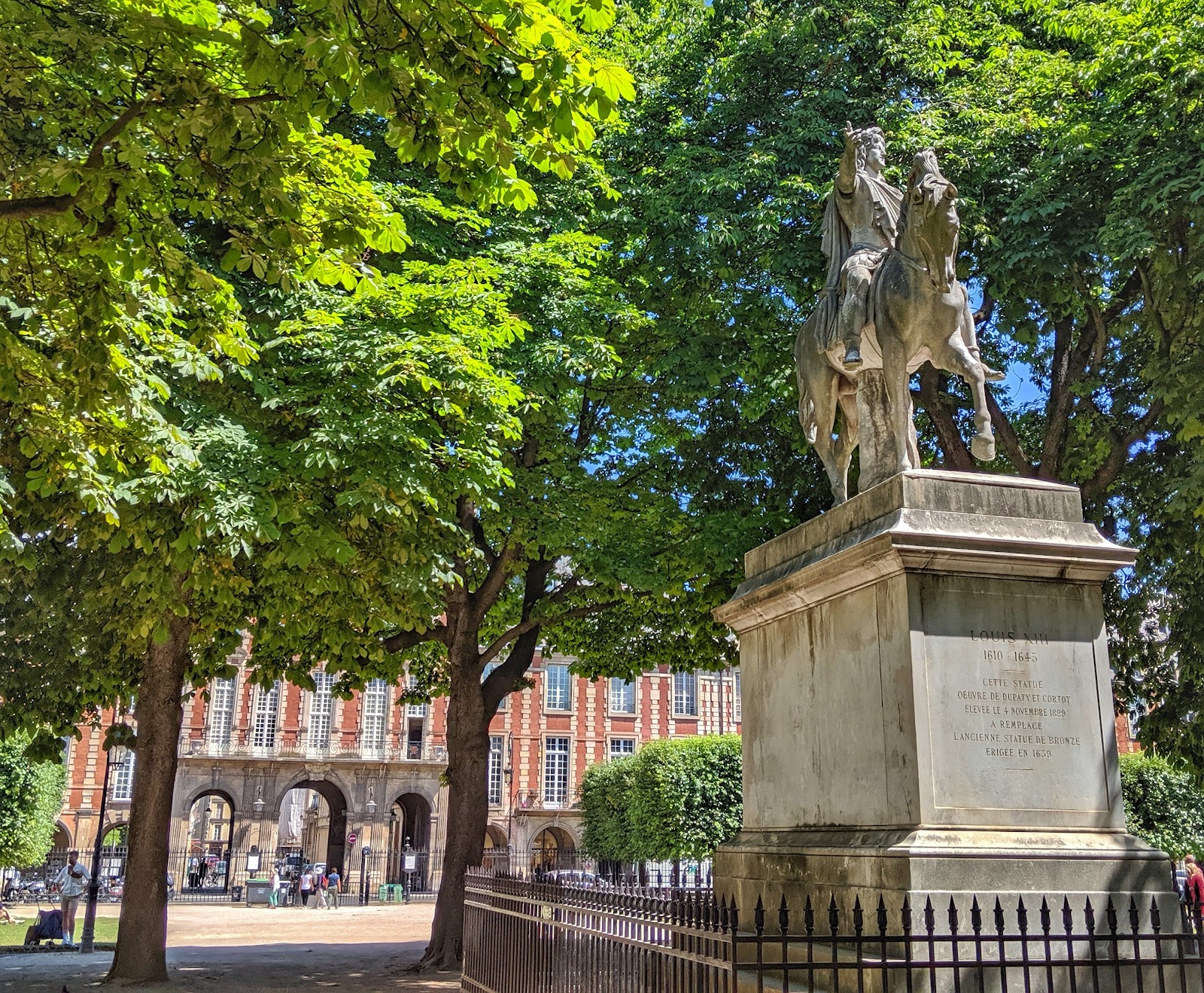
People who come back tend to arrive on a weekday morning before the garden fills. Grab a coffee at Ma Bourgogne, take a bench under the lindens, and look up at the dormers. If you're curious about Victor Hugo's actual rooms — wallpapers, furniture, manuscripts — the museum at No. 6 is free to enter and consistently under-visited.
The story behind Place des Vosges
The ground has weight. The Hôtel des Tournelles stood here from 1388 until Catherine de' Medici ordered it demolished after Henri II died on this spot in 1559 — wounded in a tournament, of all things. Henri IV began building the Place Royale, as it was first known, in 1605, and inaugurated it in 1612 with a carrousel marking the engagement of Louis XIII and Anne of Austria. The King's Pavilion (No. 1) was completed in 1608 but Henri IV never lived in it.
Cardinal Richelieu took No. 21 from 1615 to 1627; Sully, Henri IV's finance minister, settled at No. 7 in his mid-seventies. Victor Hugo lived at No. 6 from 1832 to 1848. The square was renamed Place des Vosges in 1800 to honour the first département to fund a Revolutionary campaign — a name that stuck, despite two monarchist reversions, until 1870.
Good to know
Reach it via Saint-Paul (M1) or Bastille (M1, M5, M8). The Victor Hugo Museum (No. 6) opens Tuesday–Sunday, 10am–6pm; closed Mondays and public holidays. L'Ambroisie requires booking well in advance. The garden closes at dusk.
The garden is at its best in late spring and early autumn, when the linden trees are full and the light across the brick is warm in the late afternoon. Midsummer brings crowds; in winter the arcades offer shelter, and the square has a particular stillness on grey days.
Where is Place des Vosges?
Location
- In Paris 4th Arrondissement
- 48.8554, 2.3625
- Open in Google Maps
Rating
4.6 ★ · 32,993 Google reviews
More tickets & tours for Place des Vosges
Book directly at the provider
What travellers say about Place des Vosges
Wow, and the word I've started this review with, can not sum the impact of this green, calm place on me. I was amazed how it was planned and how many trees can bring so much joy to me in particular, and otger people that come to be there or move via Place des Vosges to their next destination. Also the similar pattern of the buildings around the place is remarkable. Its a wonderful place for inhabitants as well as tourists. And I'm gladly share my point of view, visually as well.
Fantastic open space to sit in the grass or on a park bench and enjoy a coffee or lunch while enjoying this beautiful square. While heading to the Victor Hugo house museum, my partner and I stopped in the park to enjoy our sandwiches and the beautiful townhouses that line Place des Vosges. Great spot to hang out and enjoy the warmer days of Spring.
Place des Vosges is one of the most beautiful and historic squares in Paris. Built in the early 17th century during the reign of King Henry IV, it is considered the oldest planned square in the city. The elegant red-brick buildings, stone arcades, and perfectly symmetrical design give the area a timeless charm. Walking around Place des Vosges is a relaxing experience. The central garden is filled with locals and visitors enjoying the day, reading books, chatting with friends, or having picnics on the grass. The atmosphere feels peaceful despite being in the heart of Paris. Surrounded by cafés, art galleries, and historic residences—including the former home of writer Victor Hugo—Place des Vosges is a wonderful place to slow down, take in the scenery, and experience a quieter side of Paris. Whether you’re strolling through Le Marais or looking for a spot to relax, this historic square is well worth a visit.
This park turns golden in autumn, its trees glowing in warm shades of amber and gold. Simply spellbinding. It’s easy to see why it has inspired so many dreamers, poets, and painters over the centuries.
Everybody knows the most famous and oldest square of Paris with the wonderful buildings that surround it. Unfortunately, it is usually rather crowded, so I would suggest that you catch your breath at the wonderful nearby garden of the Hôtel de Sully
More of Paris 4th Arrondissement
Discover where to stay, what to do and the best deals for your trip.
Explore Paris 4th Arrondissement →More attractions in Paris 4th Arrondissement
All of Paris 4th Arrondissement →
Background adapted from Wikipedia (CC BY-SA) · map data © OpenStreetMap contributors · ratings & place photos via Google · other photos with per-image credit. Ticket links may earn us a commission at no extra cost to you.