
Pinacoteca Nazionale di Siena
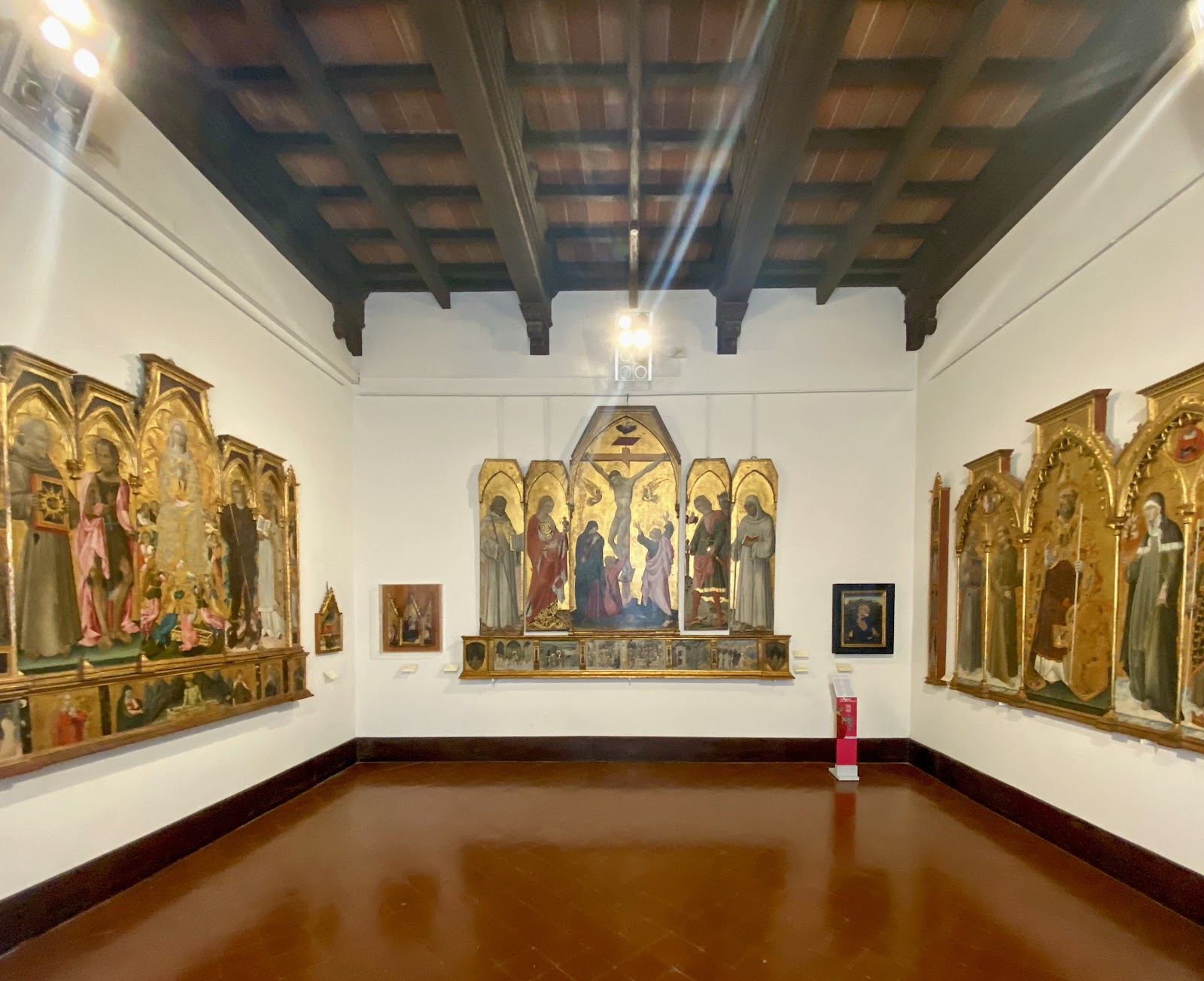
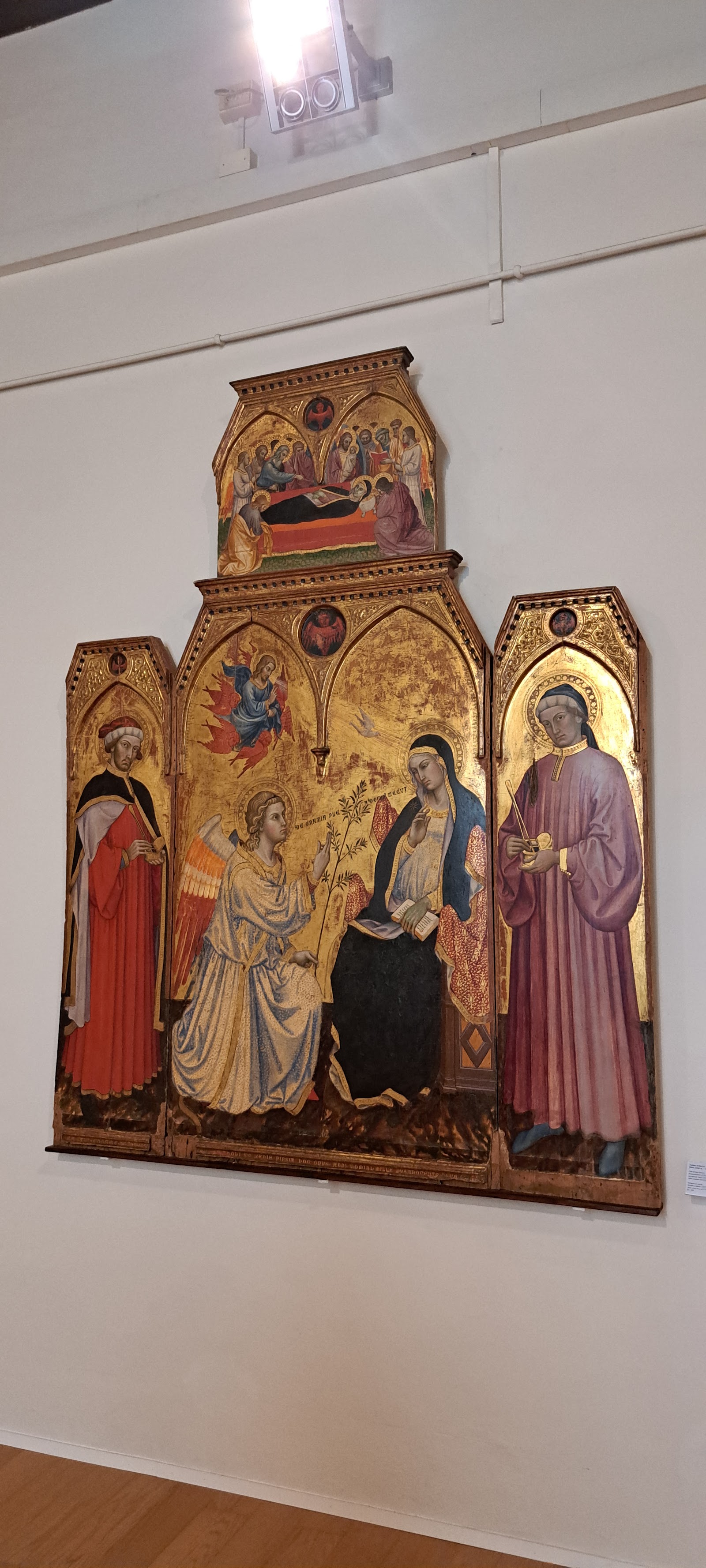
The Pinacoteca Nazionale di Siena occupies two medieval and Renaissance palaces on Via di San Pietro, a few minutes' walk from the Duomo but noticeably quieter. Inside, the collection traces Sienese painting from the 13th century onward — Duccio, the Lorenzetti brothers, Sassetta — arranged so that you can watch a single city's visual imagination develop across three hundred years.
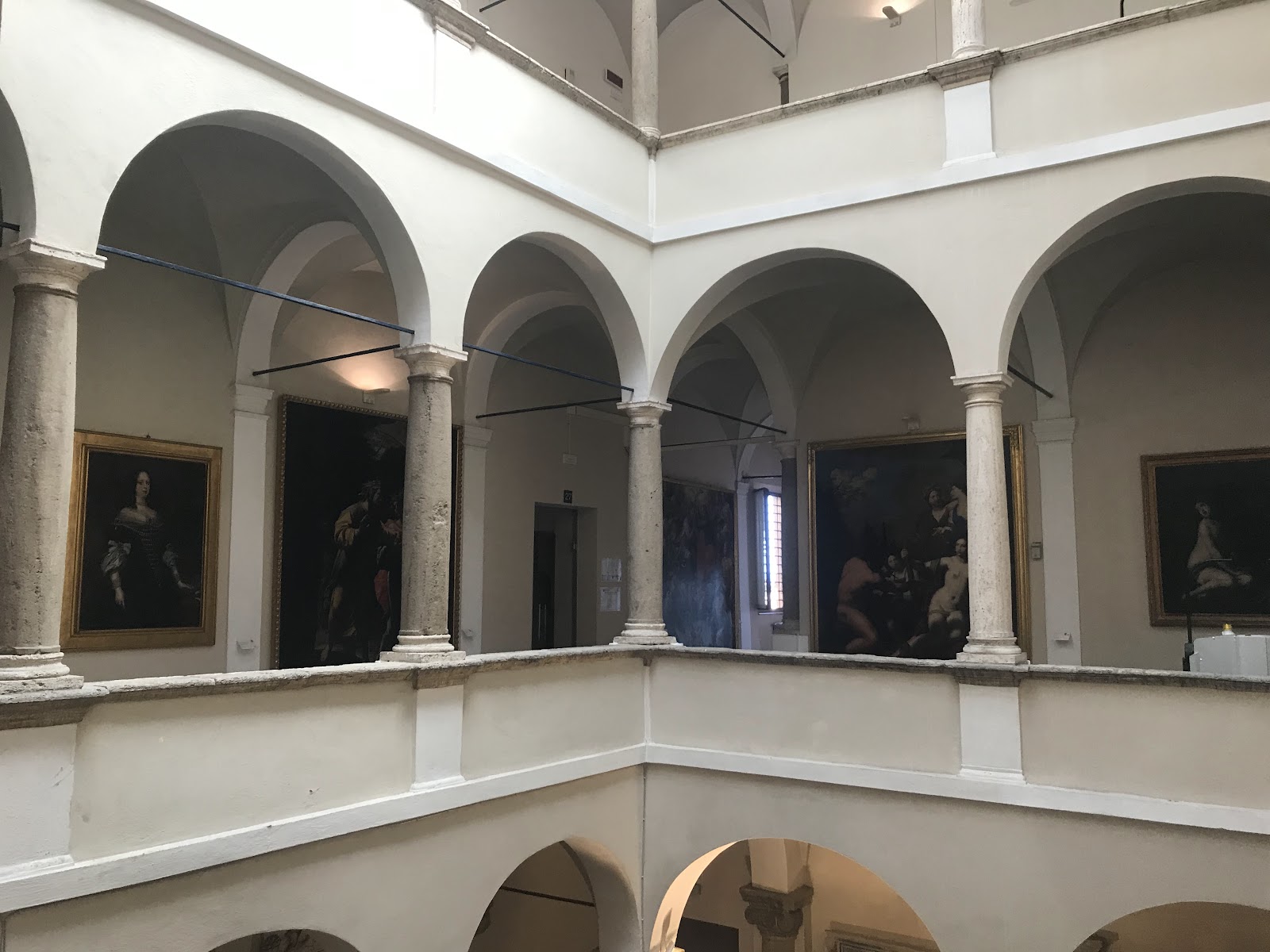
Before you reach the galleries, pause in the Renaissance courtyard: a portico on three sides, a cistern at the centre, and a Roman sarcophagus sharing space with an Etruscan urn. A 14th-century Pietà fresco survives on the unporticoed wall. The building itself, it turns out, is older than anyone thought — a 2022 restoration confirmed the façade of the Palazzo Bichi-Buonsignori is largely original 15th-century work.
💛 What travellers fall for
People who come back tend to head straight to the third floor for the Spannocchi-Piccolomini Collection, a separate donation from 1835 that feels like a different conversation entirely. Photography is banned throughout, which keeps the rooms genuinely quiet — worth knowing before you arrive.
The story behind Pinacoteca Nazionale di Siena
The collection began accumulating between 1750 and 1810, driven by two abbots — Giuseppe Ciaccheri and Luigi de Angelis — who set about preserving significant works by Sienese painters. The physical home came later: in 1915, the aristocrat Niccolò Bonsignori left his palace on Via di San Pietro to the city with the explicit intention that it become a museum.
The Pinacoteca as visitors know it today opened in 1932. The art historian Cesare Brandi organised the permanent display and wrote its first catalogue — an early example of what would become his influential thinking about conservation and art history. The Spannocchi-Piccolomini family had already added their own collection to the city's holdings in 1835, and it now occupies the third floor as a distinct bequest.
Good to know
The museum can only be reached on foot; the closest you can get by bus is the Curtatone stop (roughly 7 minutes from the train station, hourly service). Note that the Pinacoteca is closed for refurbishment from 26 January 2026 until at least June 2026. Free lockers are available at the entrance. General admission is €8; children under 12 and Siena residents enter free.
Where is Pinacoteca Nazionale di Siena?
More tickets & tours for Pinacoteca Nazionale di Siena
Book directly at the provider
What travellers say about Pinacoteca Nazionale di Siena
That’s a great museum, it’s definitely worth visiting! Too many biblical stories to my taste, but it’s just the way the Middle Ages were 😄. There were very few people so the atmosphere was just right to take our time to fully enjoy the collection. There is also a room with the view on the city and that view is astonishing!
Amazing collection of Sienese painting - very friendly and helpful staff - calm and peaceful - even on a holiday weekend
Both the praise and criticism in other reviews are right: this museum has an excellent collection of renaissance paintings, but the lighting of the items on display is not always great. Personally I find the strong points of this place much more important than its weak points - besides, most items do not suffer from bad lighting.
Museum consists of two parts: the second floor with old (12th - 14th century) paintings on wood (like crosses found above altars in churches), and on the first floor normal paintings from the 15th to 17th century. However there is a reoccuring theme in the whole collection, namely Madonna with child. The museum consists of about 37 rooms which take less than 2 hours. All in all I would recommend this museum because it is not too big and has a beautiful and rare collection.
A lovely museum, and a calm oasis in which to observe beautiful art. A special than you to Sabrina, for making our visit so enjoyable!
More of Siena
Discover where to stay, what to do and the best deals for your trip.
Explore Siena →More attractions in Siena
All of Siena →
Background adapted from Wikipedia (CC BY-SA) · map data © OpenStreetMap contributors · ratings & place photos via Google · other photos with per-image credit. Ticket links may earn us a commission at no extra cost to you.