
Piazza dell'Anfiteatro
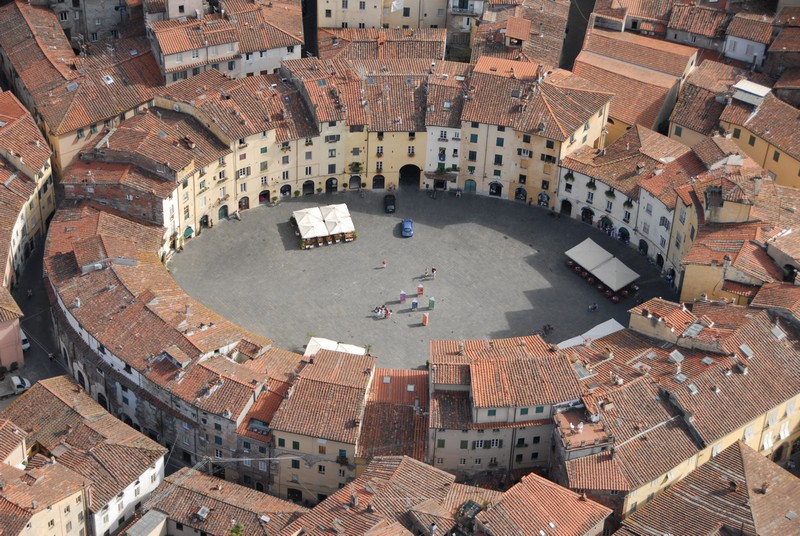
You pass through a narrow archway — one of four cut into the ring of medieval buildings — and the city suddenly exhales into an oval. The shape is not accidental. Beneath your feet, some three metres down, lie the foundations of a Roman amphitheatre that once seated around 10,000 people.
The buildings enclosing the square follow that ancient ellipse almost exactly, their facades a palimpsest of centuries: Roman stonework absorbed into medieval walls, archways bricked up and reopened, the whole ring now lined with cafés and small shops. A cross is inlaid into the central paving, its arms pointing to the four gateways.
💛 What travellers fall for
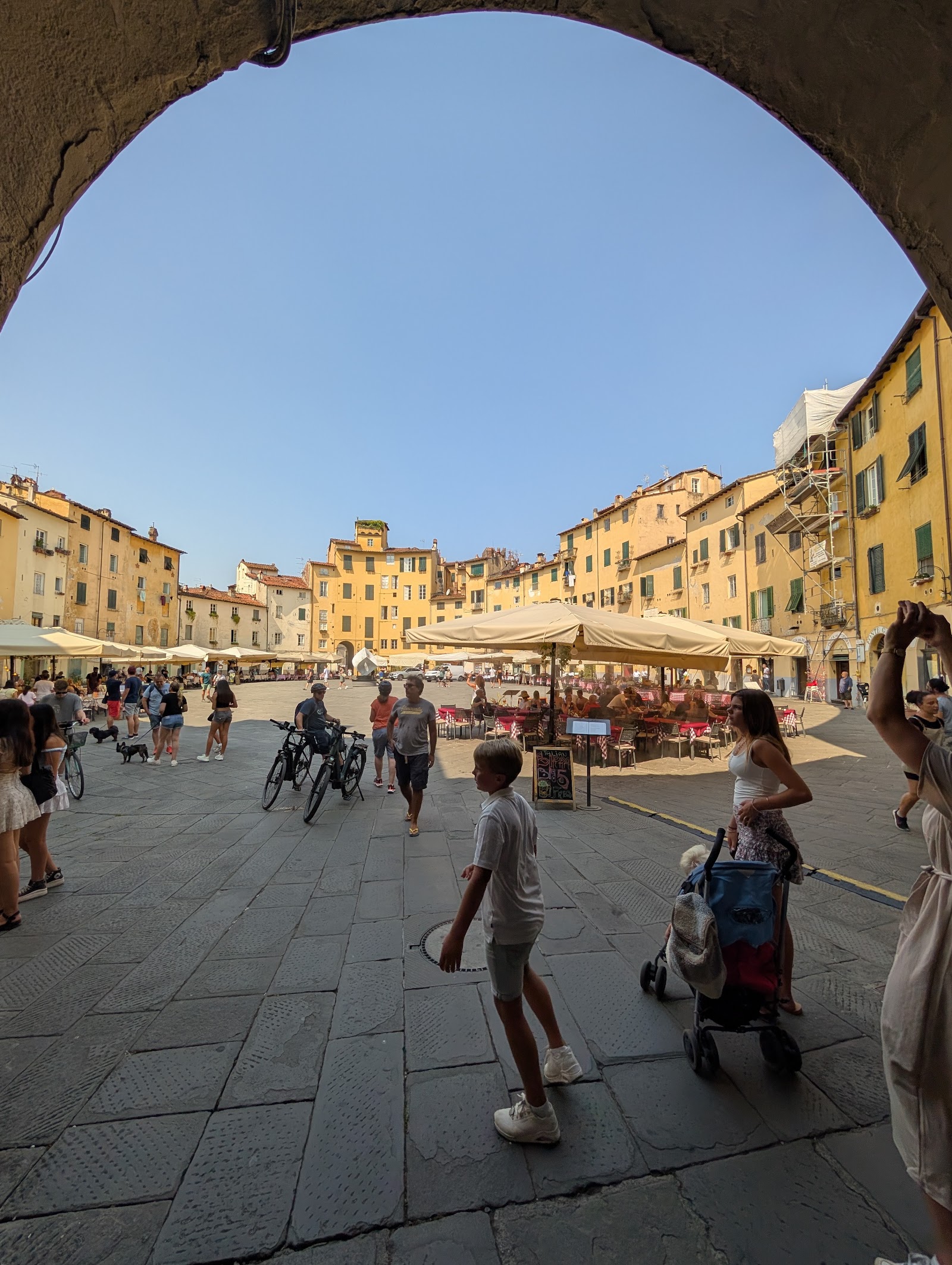
People who come back tend to time it for early evening, when the light turns the facades a deep amber and the square fills with an easy mix of children on bikes, locals cutting through on errands, and tables spilling out from the restaurants. Igor Mitoraj's large bronze head draws a queue of photographers most afternoons — arrive before the dinner crowd if you want the square to yourself.
The story behind Piazza dell'Anfiteatro
The Roman amphitheatre was begun in the 1st century AD under Emperor Claudius and completed during the Flavian period. Over the following centuries it was fortified during the Gothic Wars, stripped for building material, and gradually buried under terraced houses. The inner space served at various points as a powder magazine, a salt store, and a prison known locally as the 'grotte' — the caves.
In 1830, architect Lorenzo Nottolini cleared the buildings that had accumulated inside the oval and opened up the central arena. By October 1839 it was inaugurated as Piazza del Mercato, a working market square. The elliptical ring of buildings he left standing still traces the exact footprint of the ancient structure, and one original Roman arch — the lowest of the four gateways — survives intact.
Good to know
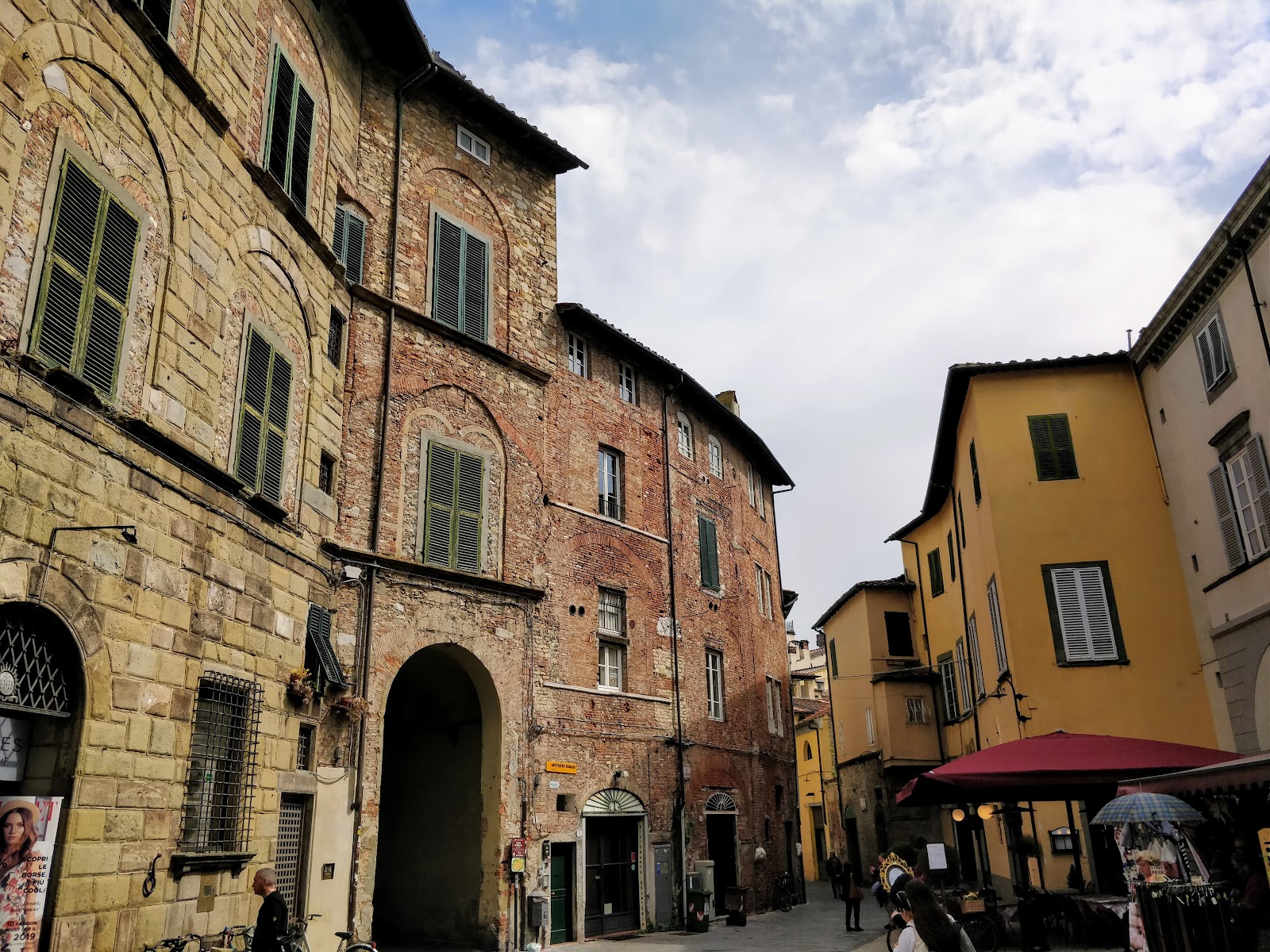
The piazza is free to enter, open at all hours, and about a 15-minute walk from the train station through Porta San Pietro. Spring (May) and early autumn (September) offer the most comfortable temperatures. Summer is hot — shade at a café table becomes genuinely useful by midday.
May and September are the most comfortable months to linger here: warm enough to sit outside, cool enough to walk. July and August can push well above 35°C by afternoon, though the cafés around the perimeter offer shade. Winter days are short and can be chilly, but the square is rarely crowded and the light on the stone is clear and low.
Where is Piazza dell'Anfiteatro?
More tickets & tours for Piazza dell'Anfiteatro
Book directly at the provider
What travellers say about Piazza dell'Anfiteatro
Visited in May 2026. Charming and unique, Piazza dell’Anfiteatro is a must-see in Lucca. This elliptical square is built on the remains of a Roman amphitheater, with its curved shape perfectly preserved and surrounded by colorful historic buildings that follow the original outline. The atmosphere is wonderful: tucked away from the main tourist rush, it’s full of lively cafes, small shops, restaurants and a local, everyday vibe. Walking the full circle, you can still see traces of the old arches in some buildings, and the whole place feels like stepping back in time. Great for photos, people-watching, coffee, or just soaking in the history. A truly special spot in Lucca.
Piazza dell'Anfiteatro in Lucca is an absolutely stunning and unique place. Built on the remains of an ancient Roman amphitheater, the oval shape of the square gives it a special charm you won’t find anywhere else. The colorful buildings, cozy cafes, and lively atmosphere make it perfect for relaxing, enjoying a coffee, or just soaking in the history. Whether you visit during the day or in the evening, the vibe is magical. It’s a must-see spot if you’re in Lucca—full of character, history, and authentic Italian beauty. Highly recommended!
A must see if you visit Lucca. If you're a Top Gear fan, it's from episode 2 of series 17 where the lads start their journey with the supposed simple task of leaving the walled town. A typically Roman style plaza, which these days houses dozens of restaurants with outdoor seating. Nearby you'll find streets of shops and other cafes and restaurants. A great place to start exploring the ancient walled village of Lucca.
The absolute highlight of my Italy trip! Piazza dell'Anfiteatro has such an interesting and unique setup. The surrounding neighborhood is incredibly lively, and the square is packed with lots of great restaurants where you can sit down, grab a bite, and just watch people go by. It is definitely touristy and can get a little crowded, but the atmosphere makes it completely worth it. Don't miss it if you're in Lucca!
Wonderful memories here, the casa are simply beautiful under the sunshine. The two benches at the corner give you one of the best view especially in the early morning.
More of Lucca
Discover where to stay, what to do and the best deals for your trip.
Explore Lucca →More attractions in Lucca
All of Lucca →

Background adapted from Wikipedia (CC BY-SA) · map data © OpenStreetMap contributors · ratings & place photos via Google · other photos with per-image credit. Ticket links may earn us a commission at no extra cost to you.