
Piazza del Campo
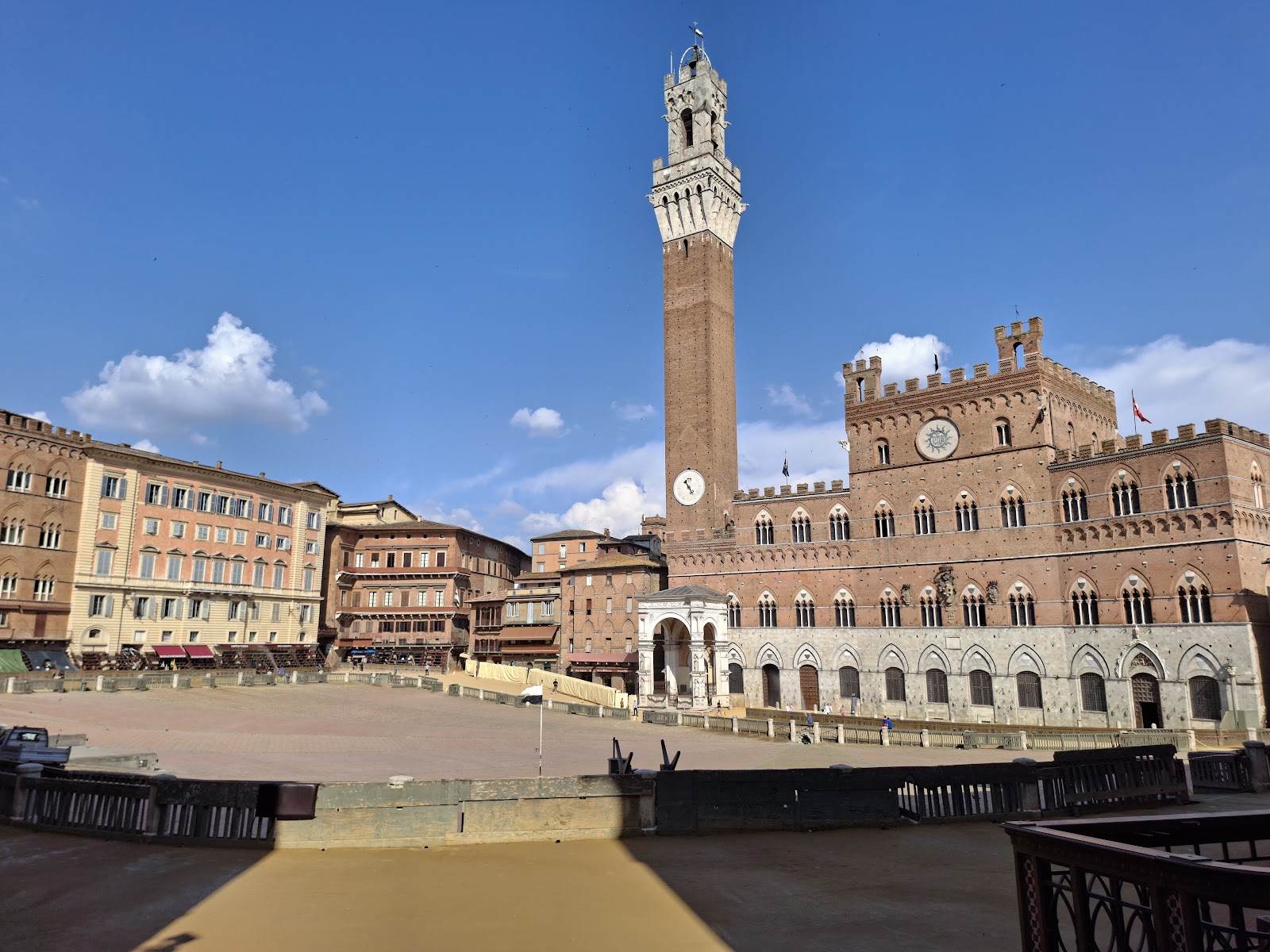
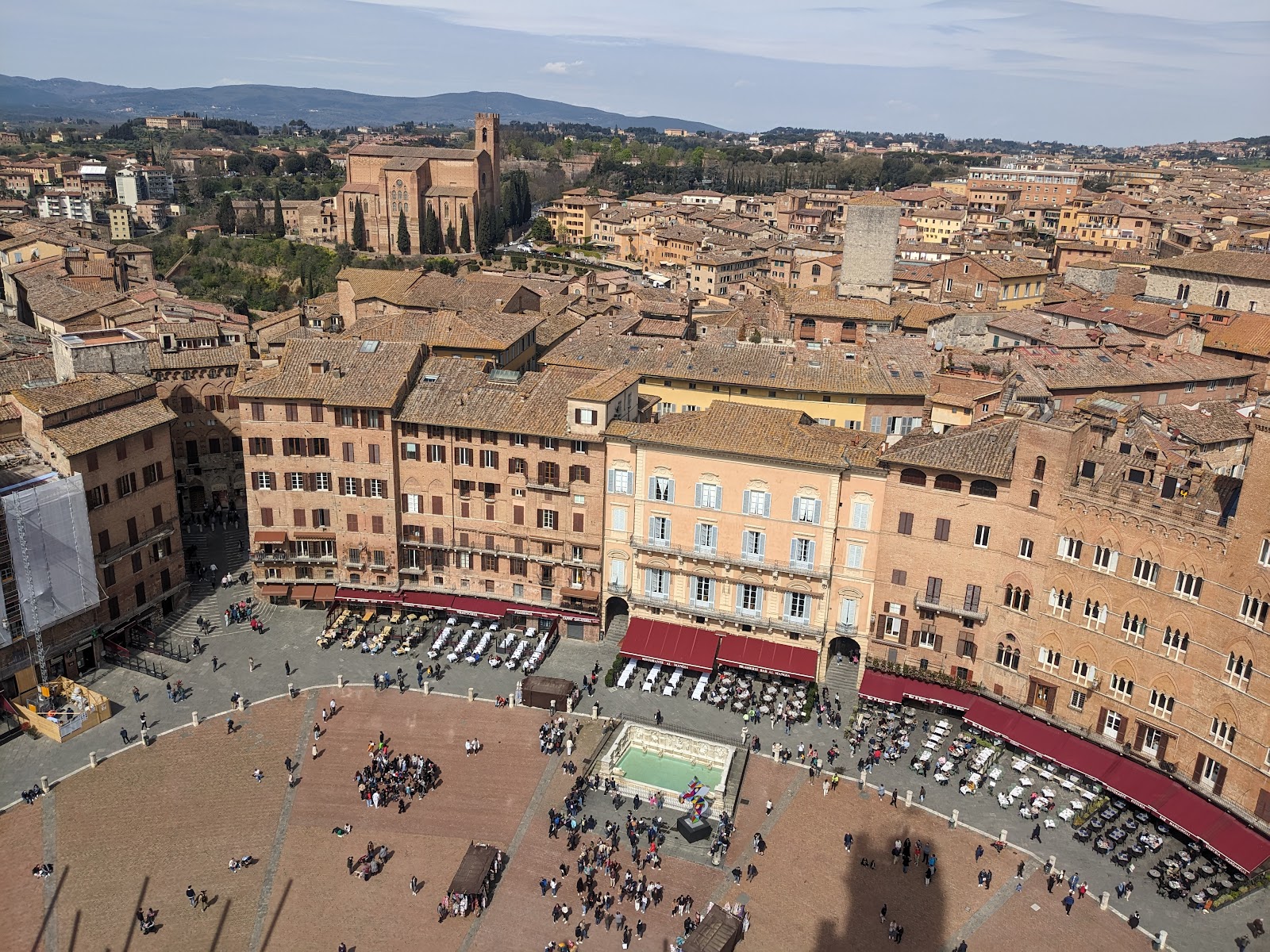
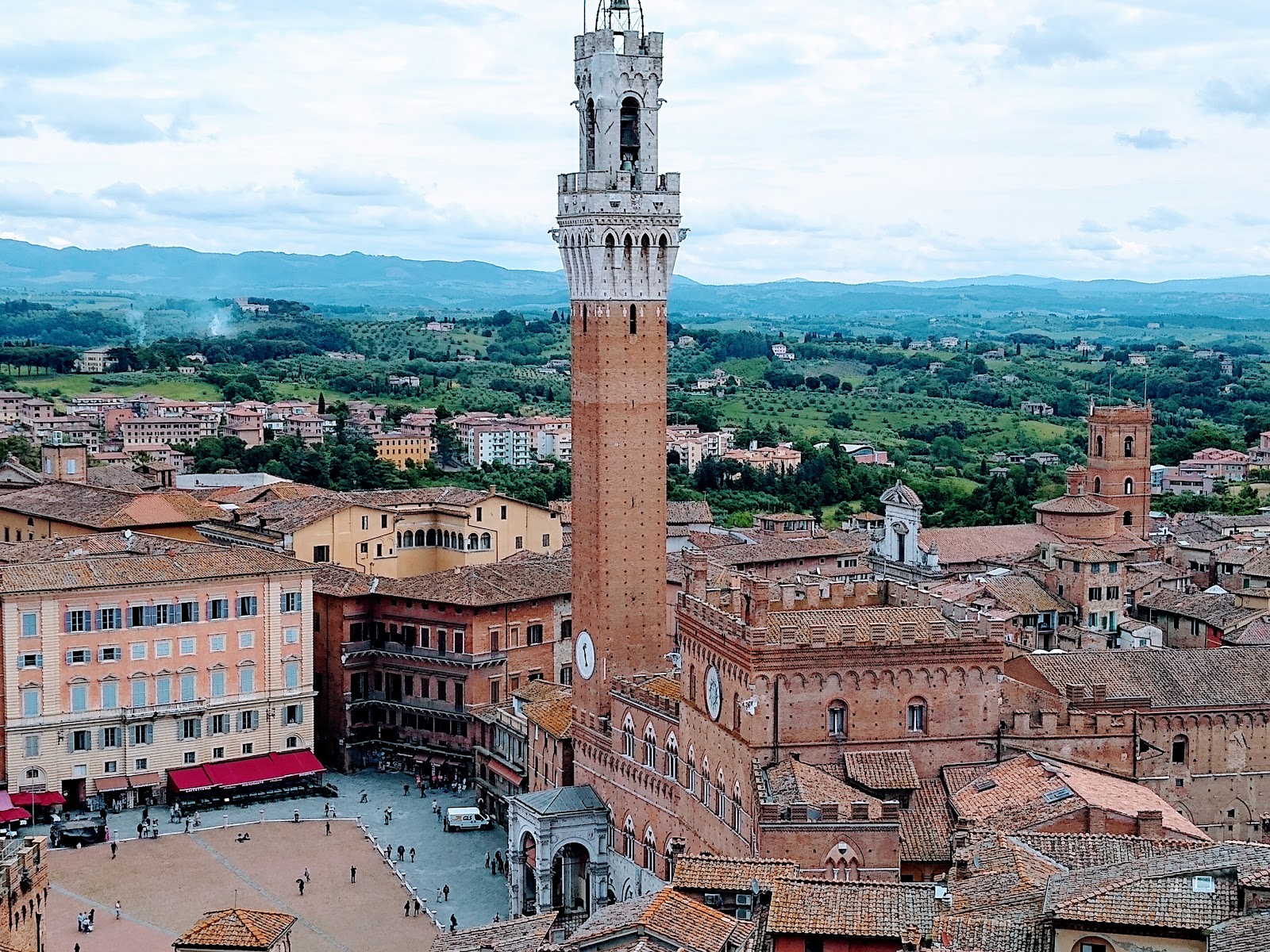
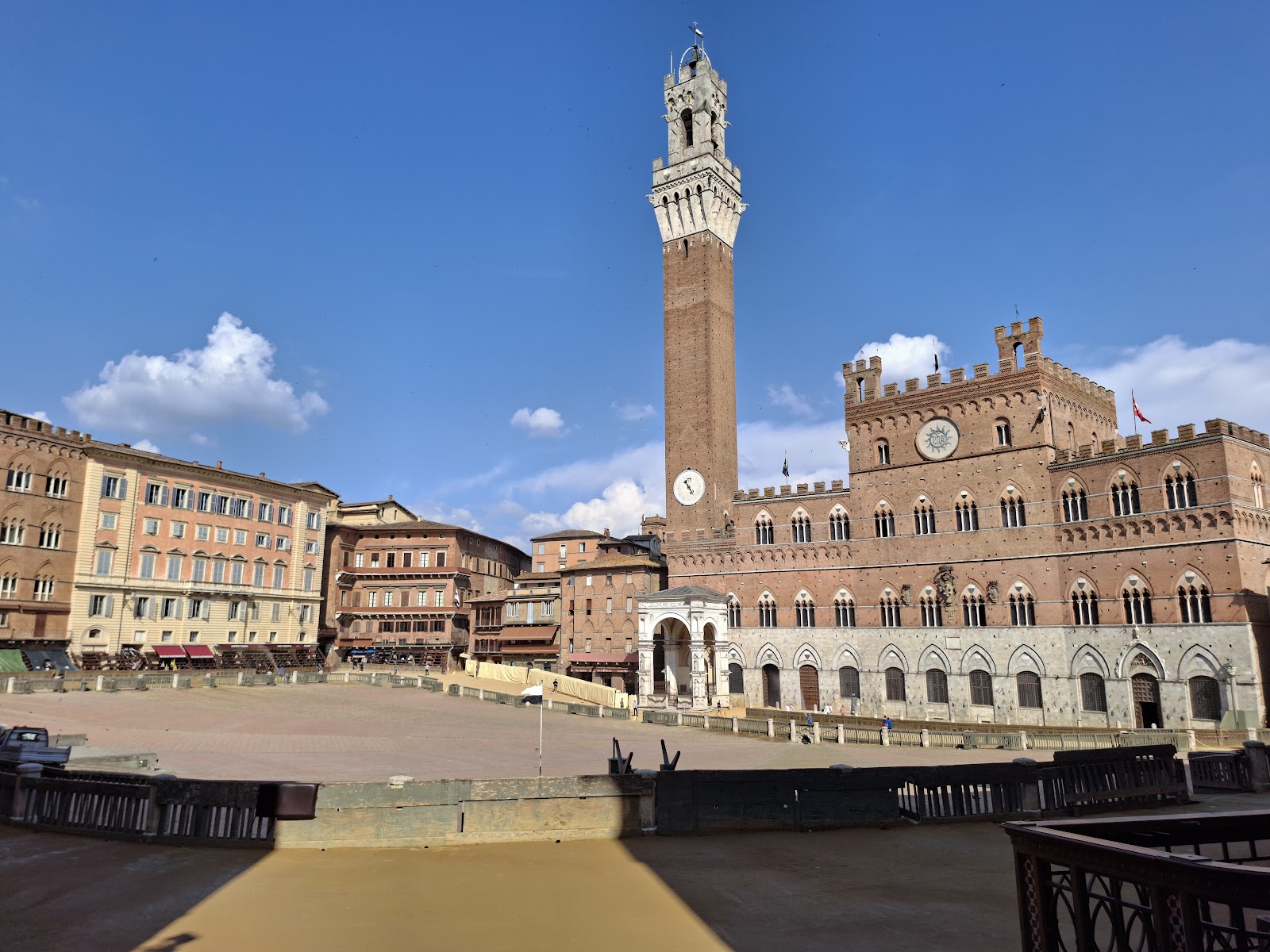
The Campo tilts gently downward like a cupped hand, and that slope is the first thing you notice when you walk in — the way the whole piazza seems to gather itself toward the Palazzo Pubblico at the lower end. It is shell-shaped, paved in herringbone brick, and divided by eight white marble lines into nine sections that still map onto the medieval government that ordered it built.
At its upper rim, the Fonte Gaia holds its shallow marble basin. At the far left flank, the Torre del Mangia climbs 102 meters, its terracotta shaft capped in white travertine. The square measures roughly 425 by 650 feet — large enough, when it was built, to hold all of Siena.
💛 What travellers fall for
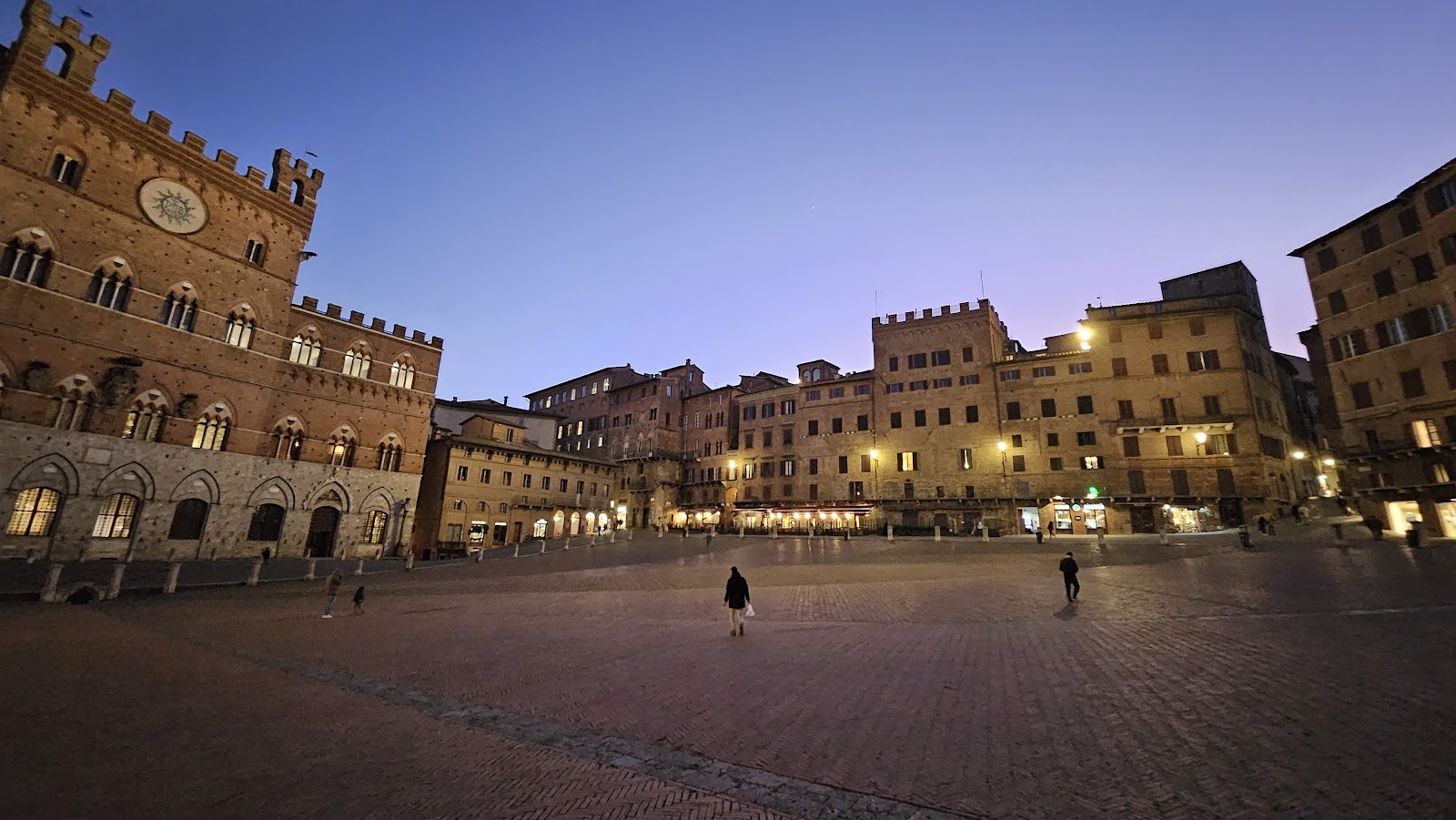
People who come back tend to arrive early, before the tour groups, and sit directly on the brick with a coffee from one of the bars at the rim. The light hits the Palazzo Pubblico's Gothic facade differently each hour. The 5 PM slot for the Torre del Mangia queue is also the repeat visitor's move — shorter wait, better shadows across the Campo below.
The story behind Piazza del Campo
The site sits at the convergence of three medieval hill communities — Castellare, San Martino, and Camollia — and had been gathering people informally long before the city formalized it. In 1297, Siena's governing council, the Nine (the Noveschi), issued guidelines for the square's construction. The paving was completed in 1349, and the nine brick sections divided by white marble lines were a direct reference to the Nine themselves, who ruled from 1292 to 1355.
The Palazzo Pubblico rose between 1288 and 1342, and the Torre del Mangia followed, built by Muccio and Francesco di Rinaldo between 1325 and 1348. Its name comes from a nickname — Giovanni di Balduccio, called il mangiaguadagni, said to squander his earnings, was the tower's first bell-ringer. The Capella di Piazza, the small Gothic chapel at the tower's base, was built as a vow after the Black Death of 1348 ended. Jacopo della Quercia designed the Fonte Gaia in 1419, carving two female nudes — the first in public space since antiquity — though copies replaced his originals in 1866.
Good to know
The piazza is free, open around the clock, and reached by TRA-IN bus from the train station every 15 minutes — worth taking if you have luggage, as the uphill walk is steep. Buy a combined Museo Civico and Torre del Mangia ticket; it's cheaper than separate entry. Torre del Mangia admits 30 people at a time; queues hit 90 minutes in July and August.
July and August are hot, and the open brick offers almost no shade at midday; early morning or evening visits are considerably more comfortable. Winter is mild but can be wet, and the Campo is quieter and more contemplative then.
Where is Piazza del Campo?
More tickets & tours for Piazza del Campo
Book directly at the provider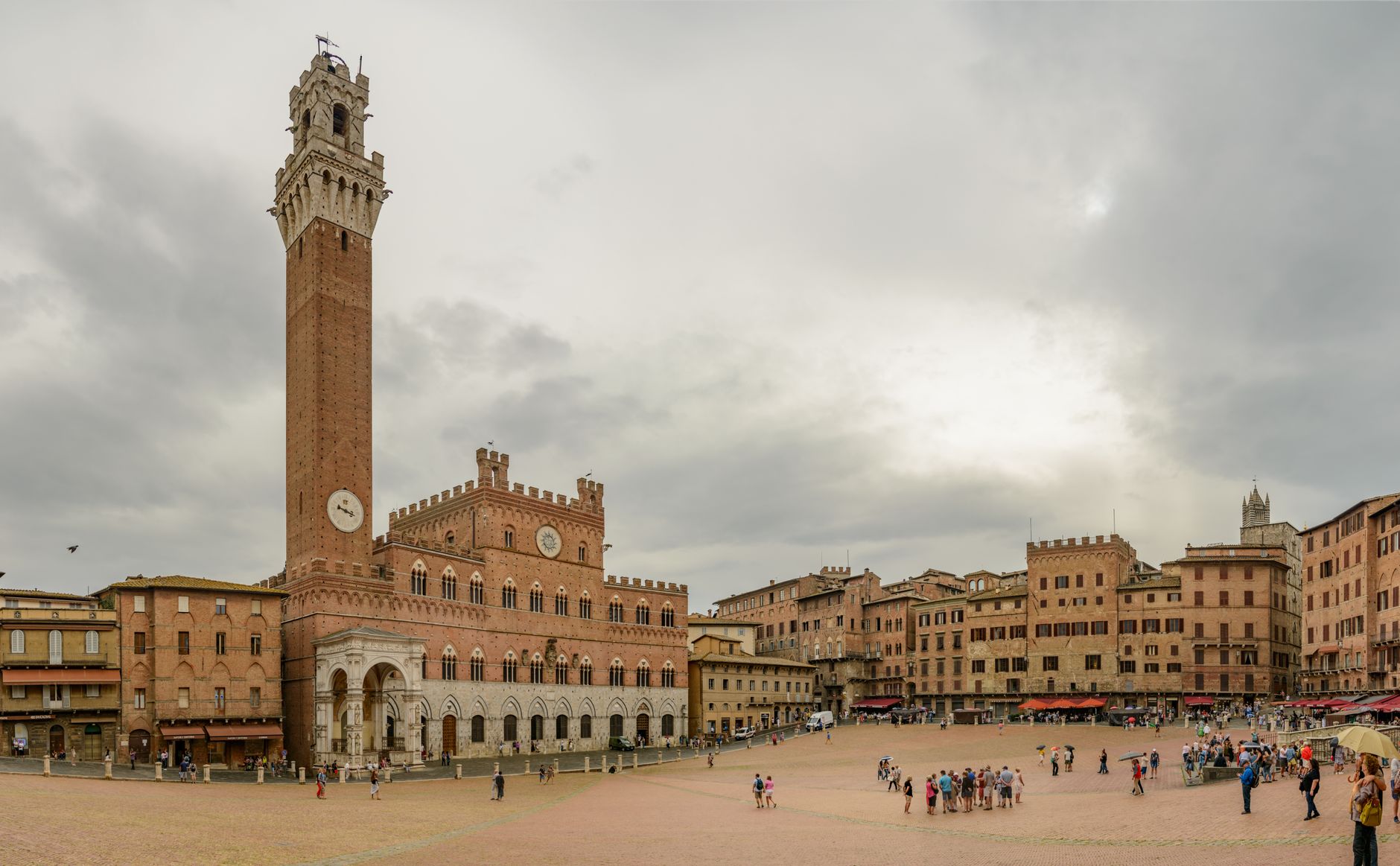
What travellers say about Piazza del Campo
Piazza del Campo is the historic heart of Siena and one of Europe’s most famous medieval squares. Known for its unique shell shaped design and beautiful brick paving, it is surrounded by elegant palaces, cafés, and the impressive Palazzo Pubblico with its iconic Torre del Mangia. During our visit, a graduation ceremony at the University of Siena was taking place, adding an even more colorful and festive atmosphere to the square.
The shell-shaped Piazza del Campo is considered to be one of the greatest medieval squares in Europe. Established before the 13th century on sloping ground where the city's three original hilltop communities met, it was paved in red brick 1349. To honour the highly successful civic group that ruled the Republic of Siena during its golden age, consisting nine people, the square was deliberately divided by white travertine stone into nine distinct, symmetric wedges that funnel downward toward the city hall. Dominating the bottom of the square is the Palazzo Pubblico, the impressive Gothic town hall constructed between 1297 and 1310. It served as the central headquarters for the city's governors, and still serves as the active city hall today, including for weddings, one of which was taking place whilst I was there. The square's concave slope was a brilliant piece of medieval engineering designed to naturally channel rainwater away from the local businesses and down into the city's massive underground drainage system. A beautiful and busy place to stop for a bit of lunch and enjoy the views and atmosphere!
Piazza del Campo is the heart of Siena, famous for its unique shell shape and lively atmosphere. Surrounded by historic buildings, it’s the perfect place to sit, relax, and people-watch. The square truly comes alive during the Palio di Siena, but even on a normal day, it feels vibrant and full of character — a must-visit spot that captures the spirit of the city.
Piazza del Campo was one of the highlights of our day trip to Siena in May. Seeing this famous shell-shaped square in person was truly impressive and gave us a real sense of the city’s history and character. Our tour guide explained how the piazza has been the heart of Siena’s civic life since the medieval period and is renowned for hosting the historic Palio horse race twice each year. Learning about its history while standing in the square made the experience much more meaningful. The weather was pleasant, and although the piazza was comfortably busy with visitors and locals, it never felt overcrowded. There was a wonderful atmosphere, with people relaxing, taking photos, and enjoying the surrounding cafés and architecture. Visiting as part of a guided group was a great way to appreciate the significance of this iconic landmark.
Piazza del Campo is one of the most beautiful and unique squares in Italy, famous for its distinctive shell shape and warm, earthy tones. Located in the heart of Siena, the piazza has a special charm that immediately draws you in. I understood that the piazza is best known for hosting the famous Palio di Siena, a centuries-old horse race that transforms the square into a vibrant and intense spectacole.
More of Siena
Discover where to stay, what to do and the best deals for your trip.
Explore Siena →More attractions in Siena
All of Siena →
Background adapted from Wikipedia (CC BY-SA) · map data © OpenStreetMap contributors · ratings & place photos via Google · other photos with per-image credit. Ticket links may earn us a commission at no extra cost to you.