
Piazza Dante Alighieri
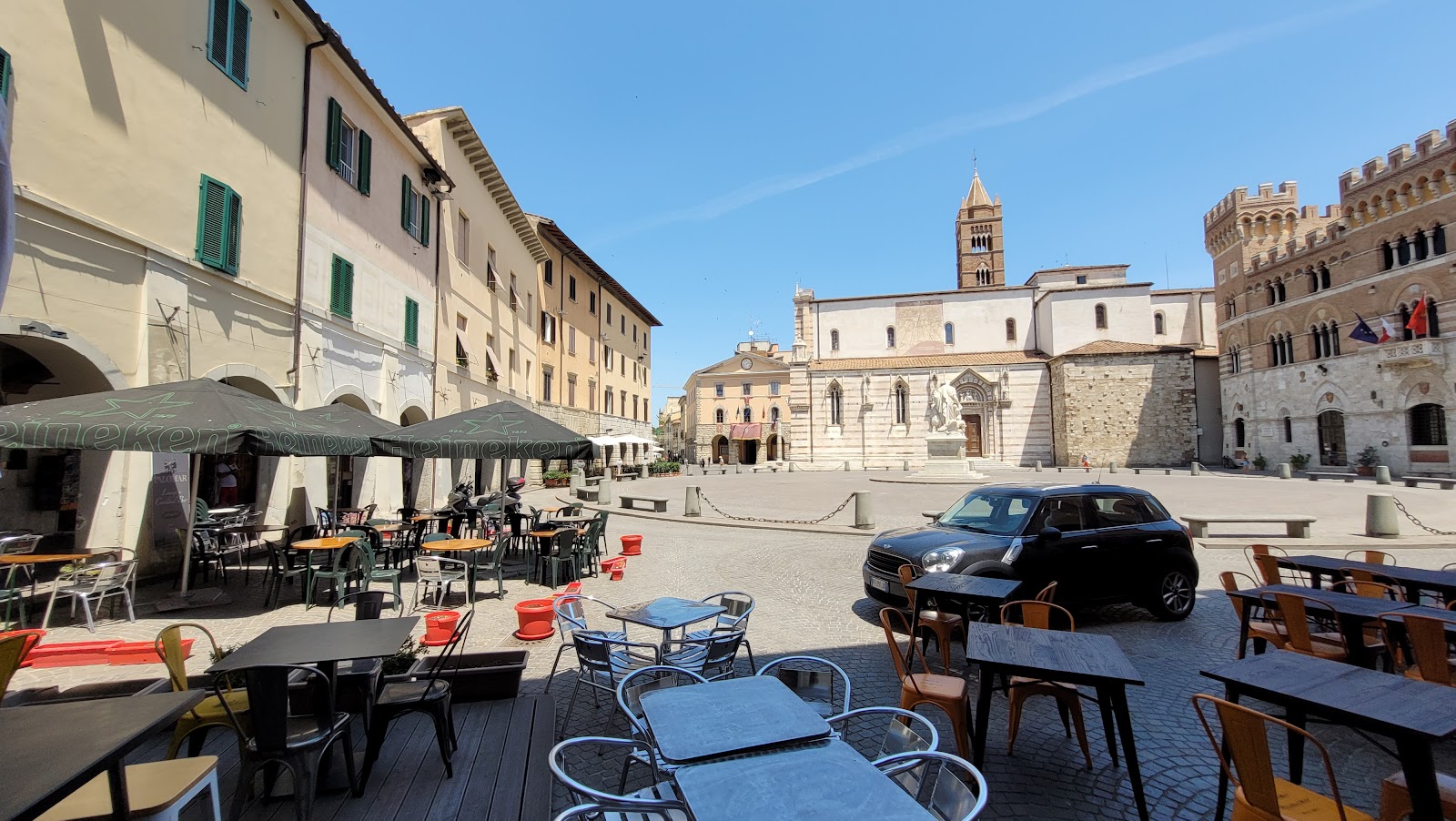
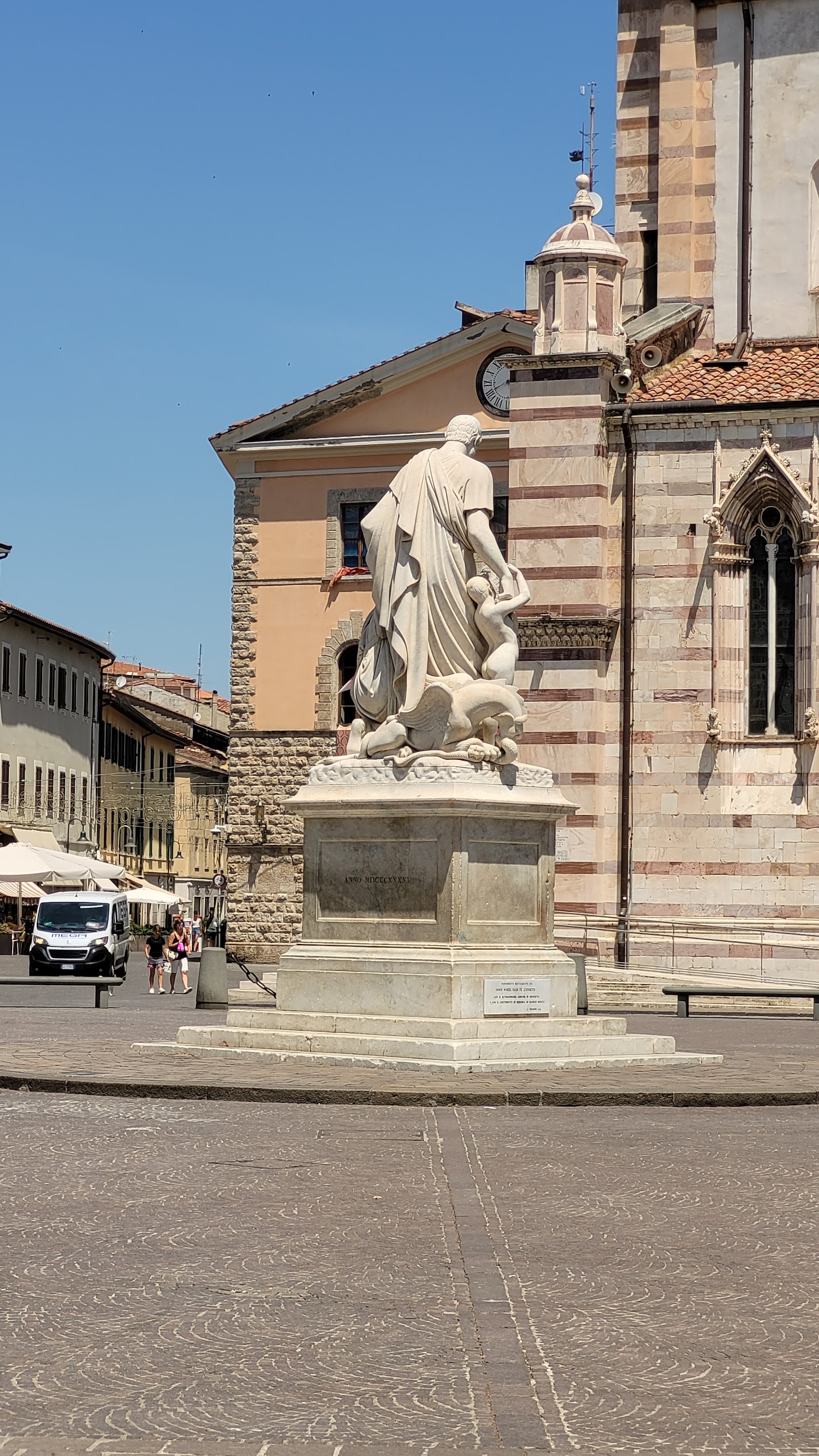
At the centre of Grosseto's walled city, Piazza Dante Alighieri has been the town's civic stage since it first appeared in records as Platea Communis in 1222. The square's most arresting object is a white marble monument at its heart: Leopold II of Tuscany, carved by Luigi Magi in 1846, rendered in the manner of a Roman emperor, one hand resting on an allegorical figure of the suffering Maremma, the other extended toward a child representing the region's future.
The buildings that ring the square read like a compressed history of Grosseto: the striped stone facade of the Cathedral of San Lorenzo, the Neo-Gothic bulk of the Palazzo Aldobrandeschi with its Sienese echoes, and, to the north of the cathedral, an ancient Roman column from Rusellae, set here in 1966 on the same spot where the town once posted its public notices.
💛 What travellers fall for
People who come back tend to time it for early morning, when the ZTL zone keeps the square quiet and the light hits the cathedral's facade at a low angle. The Colonna dei Bandi is easy to walk past — worth pausing at; the column itself is second century AD, and the story of how it ended up here is longer than it looks.
The story behind Piazza Dante Alighieri
The piazza takes its shape from an ambitious medieval moment: between the late 13th and early 14th centuries, Grosseto restructured its civic heart along lines inspired by Siena's Piazza del Campo, drawing the cathedral, the communal palace, and other public buildings into alignment around a single shared space. The Cathedral of San Lorenzo was built by Sienese architect Sozzo Rustichini, with a facade inscription dating it to the end of the 13th century. Later, Grand Ducal engineer Angiolo Cianferoni redesigned the paving into a circular layout edged with stone posts, chains, and benches — a configuration that survived until 1956, when it was swept away for a car park.
After Italian unification the square was renamed Piazza Vittorio Emanuele II, and on 7 August 1945 the city council, at the proposal of the Italian Republican Party, gave it the name it carries today. The nineteenth-century character Cianferoni had established was only recovered in 2002.
Good to know
The square sits inside Grosseto's 16th-century walls, a short walk from Porta Corsica. The ZTL restricted-traffic zone keeps cars out of the historic centre, so arrive on foot or by bicycle. Spring and autumn are the most comfortable seasons for time spent outdoors here.
Grosseto has a Mediterranean climate: summers are hot and sunny, with July and August highs regularly above 30 °C, making early mornings the practical window for lingering in the square. Spring — particularly mid-April through May — and September offer the most comfortable conditions, with mild temperatures and manageable crowds.
Where is Piazza Dante Alighieri?
Location
- In Grosseto
- 42.7600, 11.1107
- Open in Google Maps
More tickets & tours for Piazza Dante Alighieri
Book directly at the provider
More of Grosseto
Discover where to stay, what to do and the best deals for your trip.
Explore Grosseto →More attractions in Grosseto
All of Grosseto →
Background adapted from Wikipedia (CC BY-SA) · map data © OpenStreetMap contributors · ratings & place photos via Google · other photos with per-image credit. Ticket links may earn us a commission at no extra cost to you.