
Petit Riad
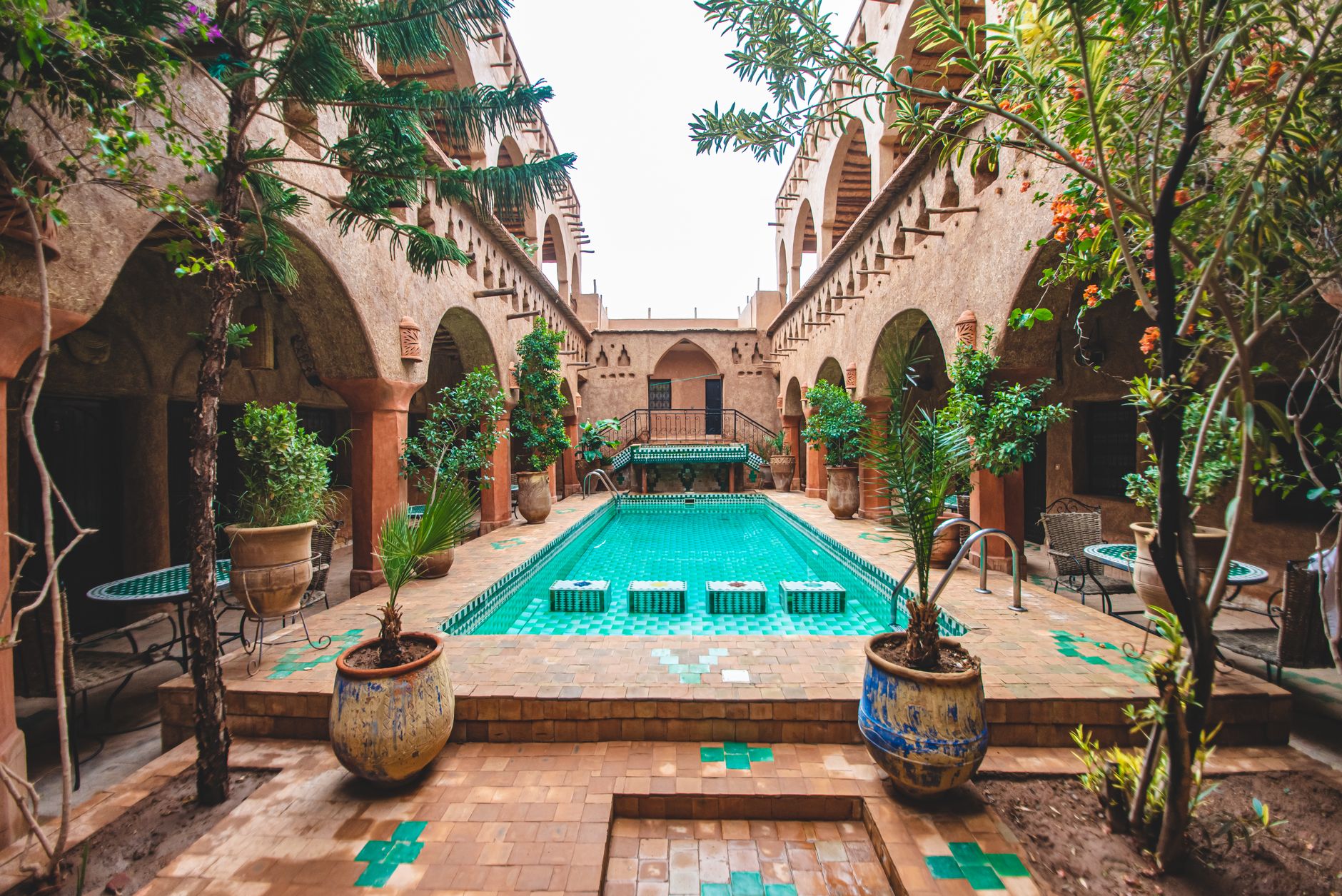
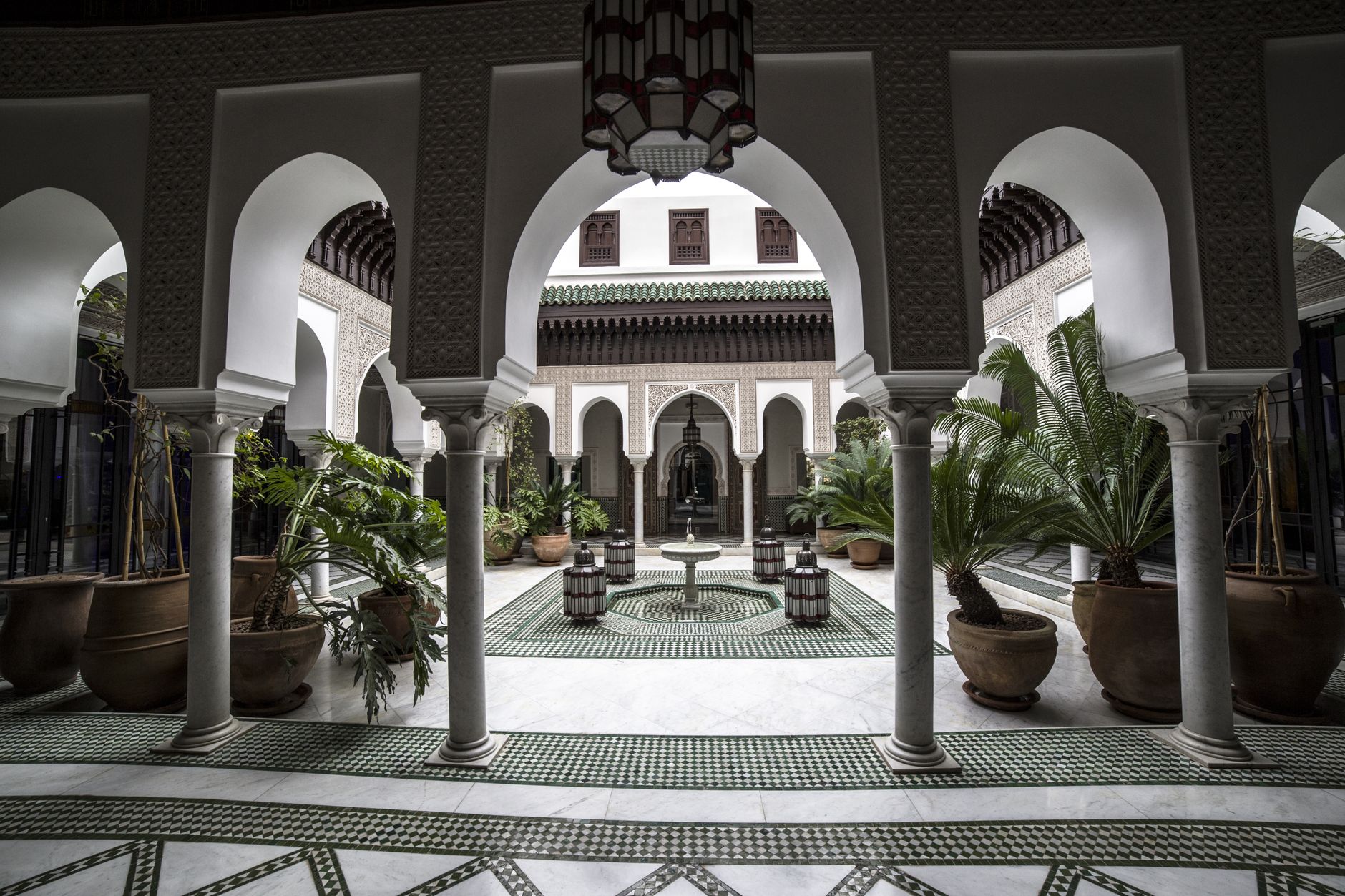
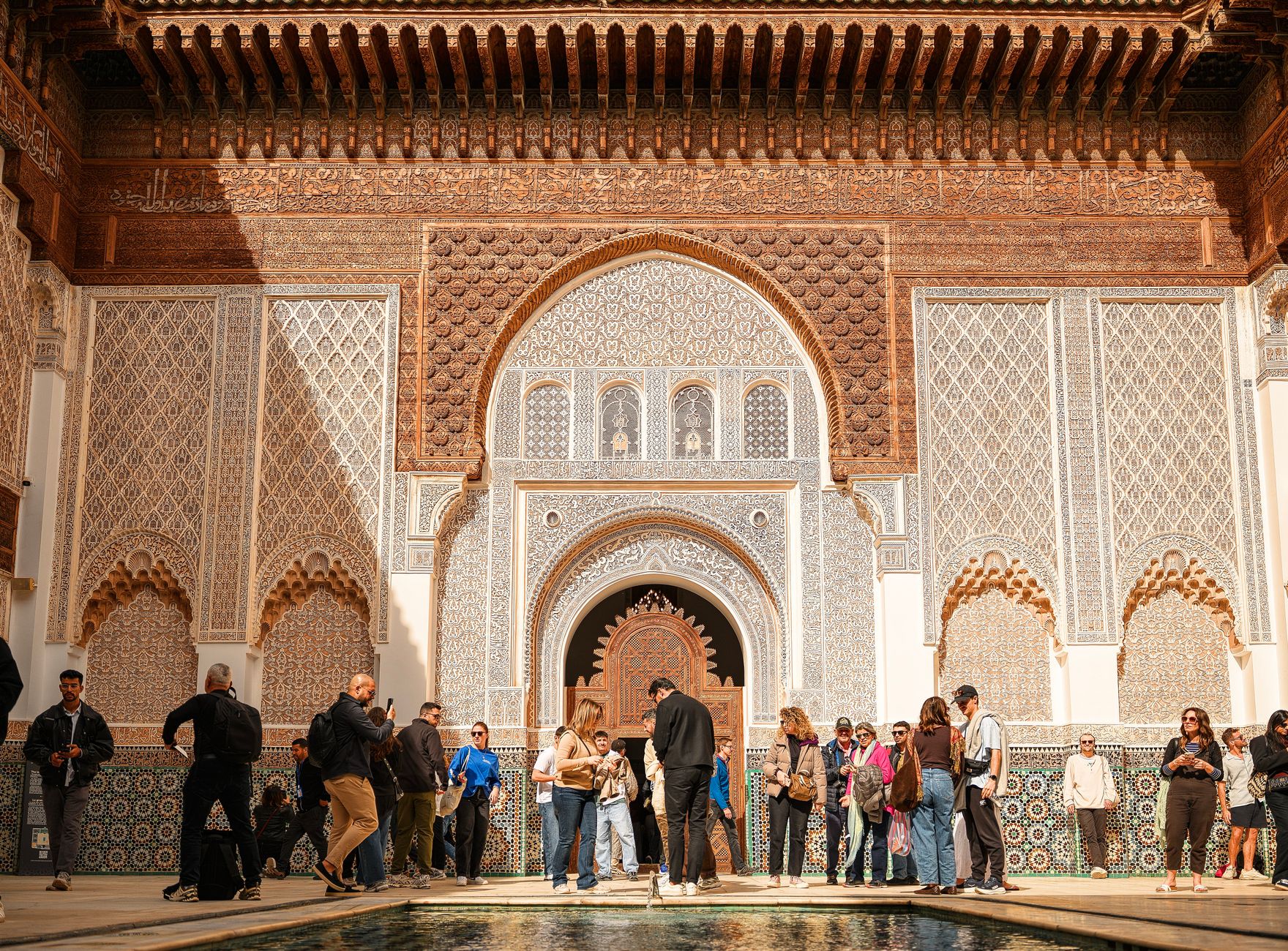
You arrive at Petit Riad before you've fully found your bearings in Bahia Palace — it sits closest to the entrance, single-storey and square, its courtyard divided by walkways along two axes. A ceramic fountain anchors the centre. Around it, the galleries carry walls of white plasterwork carved while the plaster was still wet, Quranic verses and geometric lacework pressed into the surface by hand in the nineteenth century.
After 3pm, light through the stained glass shifts across that plasterwork in ways that make the carving read differently than it did an hour earlier. The space rewards slowness.
💛 What travellers fall for
People who've been through the palace more than once tend to start here and linger, then loop back. The tip that circulates: come in the morning to get your bearings, then return to Petit Riad in the late afternoon when the light does its work on the carved plaster. The difference is worth the extra circuit.
How Petit Riad came to be
Bahia Palace grew in stages across the second half of the nineteenth century. Petit Riad belongs to the earlier layer, built under Ba Ahmed — Ahmad ibn Musa — who directed the construction of much of the palace's southern sections. Its layout mirrors the proportions of a traditional medina house: a single storey, a square courtyard, galleries on all sides.
After Ba Ahmed's death, the Glaoui lord Madani el-Glaoui added a second-floor apartment above the riad, a later imposition that sits above but doesn't quite belong to the original logic of the space. The plasterwork on the walls dates to the nineteenth-century construction, carved in situ by craftsmen working wet material under time pressure — a technique that left no room for revision.
Who and what shaped it
People who shaped it
Landmark buildings
Plan your visit
On the map
When to go
Right now
Background & history adapted from Wikipedia (CC BY-SA) · specs from Wikidata (CC0) · weather from Open-Meteo · map data © OpenStreetMap contributors · photos from Wikimedia Commons / Unsplash with per-image credit. No third-party reviews or social posts reproduced.