
Parque Acuático Mijas (Aquamijas)
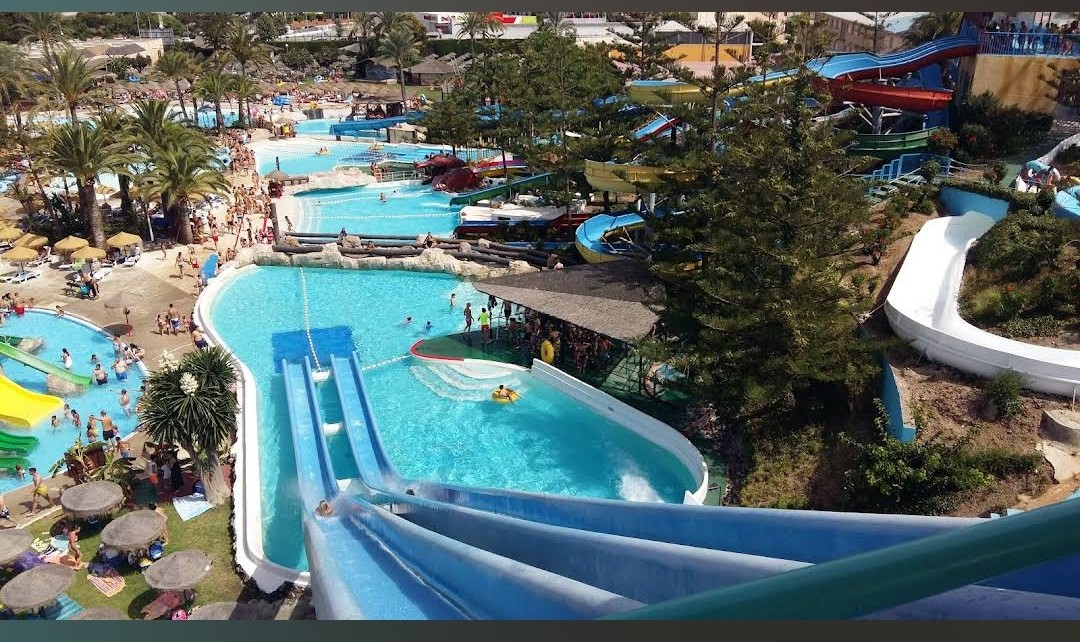
The Kamikaze drop — 17 metres straight down, 30 metres of slide path — is the first thing you'll hear about from anyone who has been. Parque Acuático Mijas, also known as Aquamijas, sits just off the A7 at exit 208, a short ride inland from Fuengirola's beach strip, spread across 34,000 square metres of water rides, pools and shaded corners.
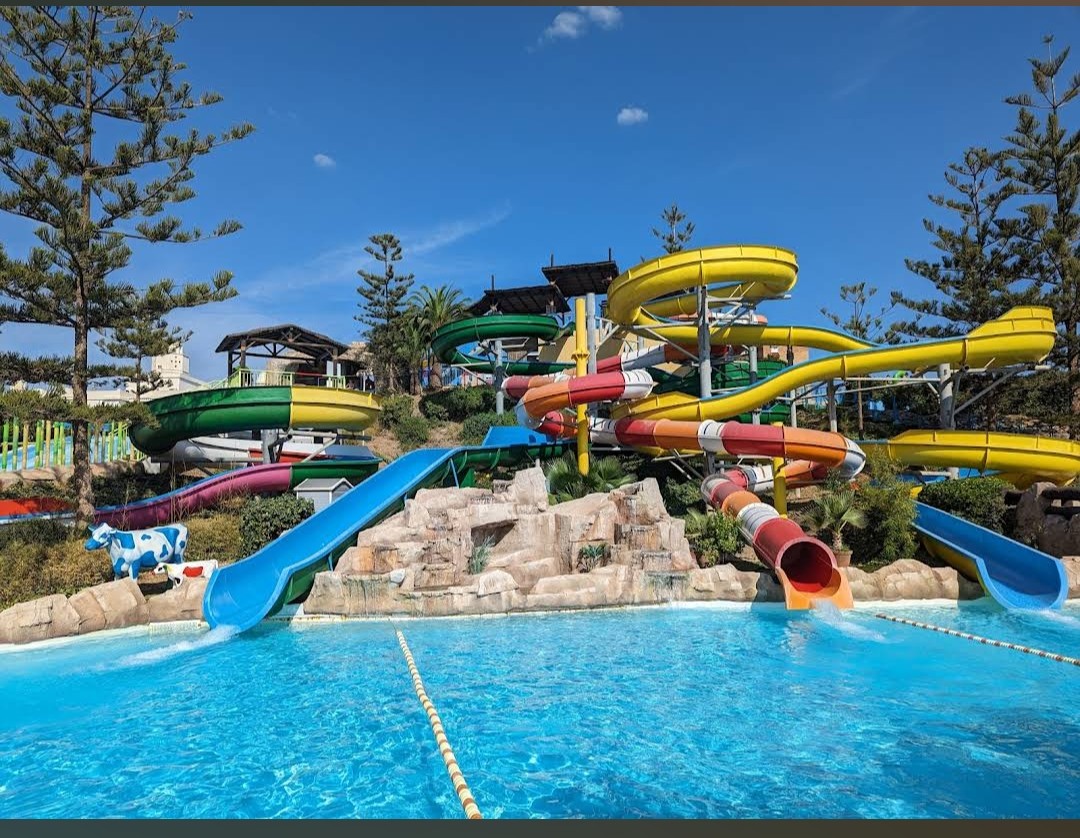
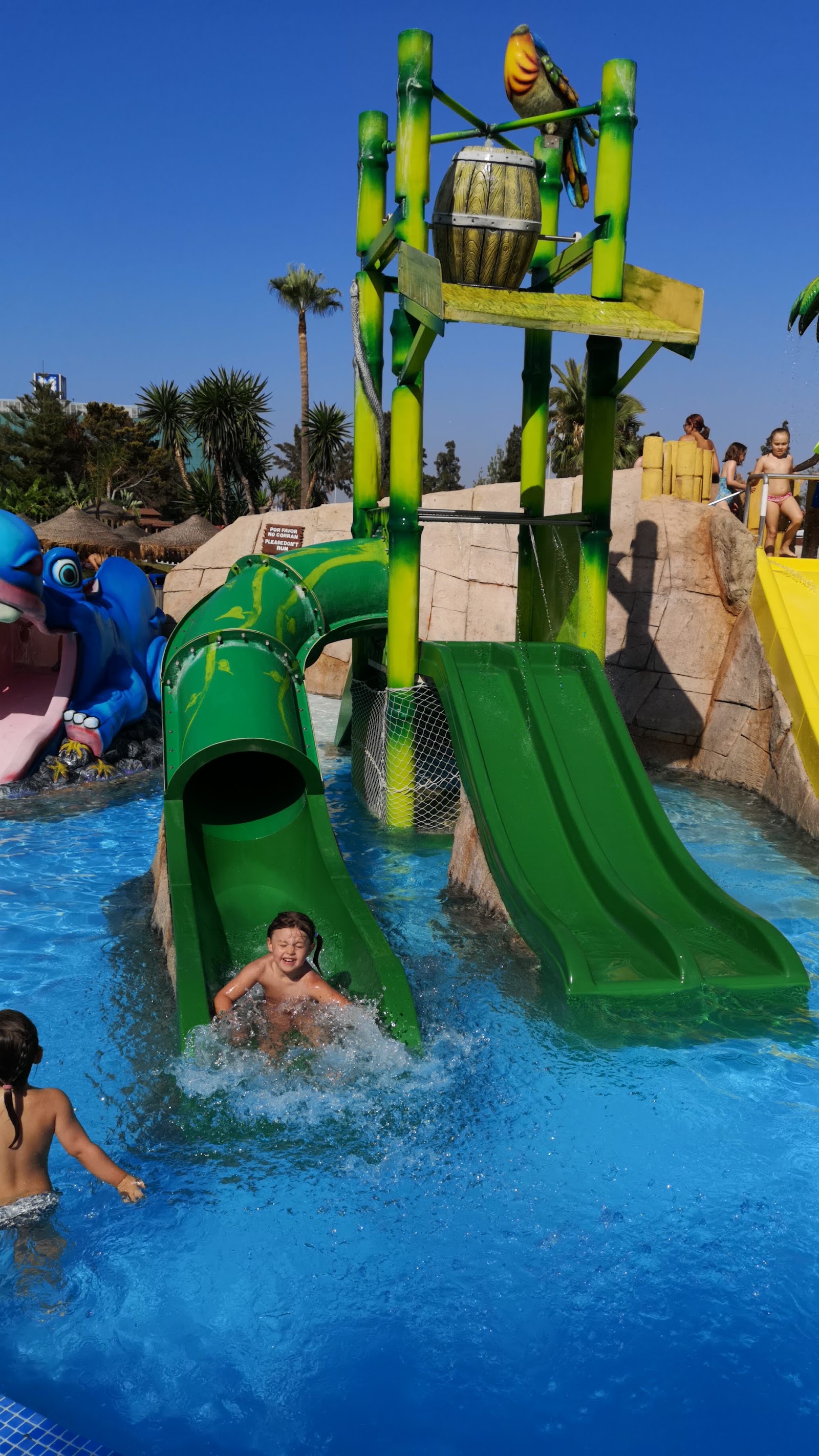
The wave pool runs on freshwater. The Crazy Loop closes around you in a tube of coloured lights before spitting you out into daylight. Children under six have their own territory — La Jungla and Isla Lagartos, a rocky island structure threaded with water pipes — while the Laberinto de Toboganes sends older riders down 108-metre runs before anyone's had lunch.
💛 What travellers fall for
Regulars tend to arrive at opening, hit the Kamikaze and Río Aventura before queues build, then drift toward the wave pool mid-afternoon. The 40% late-entry discount (after 3pm in June, 4pm in July and August) is worth knowing if you're only after a few hours. September, once local schools restart around 2pm, is the quietest window of the whole season.
The story behind Parque Acuático Mijas (Aquamijas)
Aquamijas opened in July 1986, operated by Aqualand S.A., making it one of the earlier water parks on the Costa del Sol. By August 1990, contemporary accounts described it as a modest setup — a handful of slides and a small wave pool — the bones of what it would eventually become.
Over the following decades the park expanded its ride count to more than ten attractions, adding closed-tube experiences like the Crazy Loop, multi-pool river rides like Río Bravo, and dedicated children's zones. No founding architect or individual designer has been publicly documented in available sources.
Good to know
Take the Cercanías C-1 train to Fuengirola (around 30 minutes from Málaga), then a taxi or local bus to the park. Driving guests get free parking. Bring food in plastic containers — glass is not allowed in. The ticket office closes 90 minutes before the park does; plan accordingly.
The park runs April through September, which maps neatly onto the Costa del Sol's dependable warm months — expect strong sun from late morning onward and afternoon temperatures that make the water a genuine relief rather than a novelty. July and August are the hottest and most crowded; early June and mid-September offer much the same weather with noticeably thinner crowds.
Where is Parque Acuático Mijas (Aquamijas)?
More tickets & tours for Parque Acuático Mijas (Aquamijas)
Book directly at the provider
What travellers say about Parque Acuático Mijas (Aquamijas)
Aquamijas was a really nice water park, and the kids had a great time. We visited during a time that was especially popular with locals, so the queues for the most popular slides were sometimes quite long. Waiting times typically ranged from 10 to 30 minutes. The park offers plenty of space to relax and soak up the sun, so the crowds didn’t feel overwhelming all the time. Overall, it was a very enjoyable day for the whole family, and we would definitely recommend it, especially for families with children.
Can’t fault the place. Visited end of June/early July twice with a 2 year old and they absolutely loved it. You can take any food in with you, small queues if arriving when opening and short queues for slides. Food is standard fried stuff (chips chicken nuggets, sausages etc) but you don’t need to buy it. Yes you have to pay for sunbeds but plenty of places to lie down under shade around the park. Toilets are well maintained and cleaned, they have lockers etc. Brilliant for small children and you can easily spend 8hrs here
Half day after 2.30pm 30% discount in May. Changes dependant on season. Lovely afternoon in the sun Park quiet, no queus to ride and extremely clean and has hot or cold food you can order on the app. Water was good for slides and swim. We took a picnic in. Only a 4* as very small but as we expected as have been many times. Would suit under 10s
A fabulous day for the family - nb. Slides are generally for children aged 7 and above. We had booked our tickets in advance so walked in without any queue. We would highly recommend hiring the floats, it saves hassle for most of the slides. Remember to keep your receipt so you get your deposit back!! Overall the queueing time was pretty minimal and we went on the slides multiple times with just one notable exception which we honestly don't know why it took so long - may have been down to the members of staff manning it or that it relies on radios rather than visuals to send the next person down? The food and drink was reasonably priced and again the queues were absolutely fine. The place was clean and the staff very helpful. We will be back next year!!
A really good day out. The staff are a credit to your team and are very helpful. The queues for the slides are well organised. Your life guards are very switched on and alert which is good piece of mind for parents with young children.
More of Fuengirola
Discover where to stay, what to do and the best deals for your trip.
Explore Fuengirola →More attractions in Fuengirola
All of Fuengirola →
Background adapted from Wikipedia (CC BY-SA) · map data © OpenStreetMap contributors · ratings & place photos via Google · other photos with per-image credit. Ticket links may earn us a commission at no extra cost to you.