
Parc Monceau
At the north entrance on Boulevard de Courcelles, a circular rotunda designed by Claude-Nicolas Ledoux stands guard — originally a customs house, its Doric columns now framing the gate to one of Paris's stranger green spaces. Step through and the 8th arrondissement falls quiet behind you.
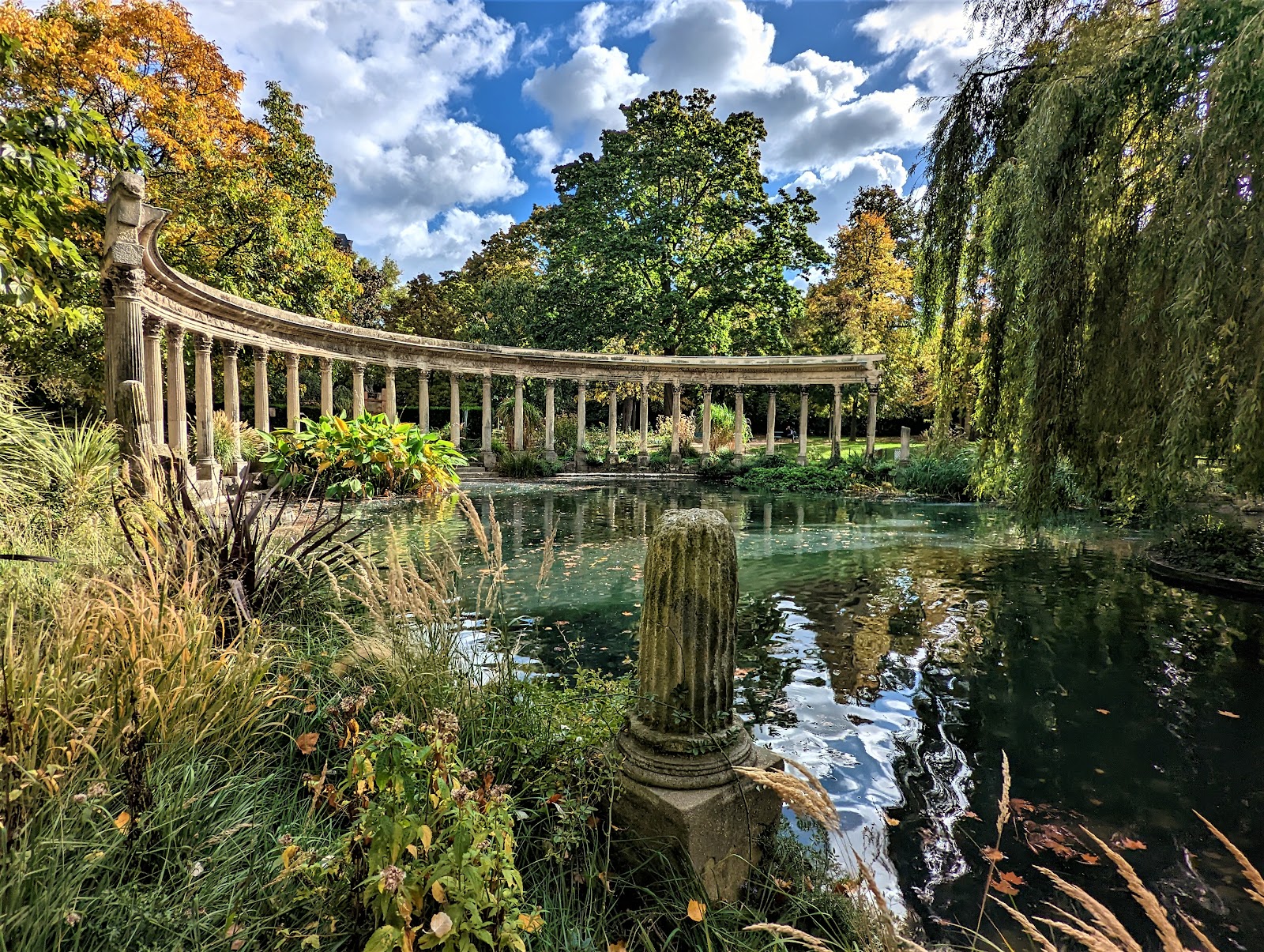
Parc Monceau is not a formal garden and not quite a park in the ordinary sense. It's a collection of deliberate surprises: a Corinthian colonnade rising from an oval pond, a weathered Egyptian pyramid, a bridge modelled on the Rialto. Monet painted it three times in 1876 and again in 1878. The light, filtered through plane trees with trunks nearly seven metres around, still earns that attention.
💛 What travellers fall for
People who return tend to make for the Naumachie first — that oval basin ringed by columns salvaged from Catherine de Médicis's unfinished mausoleum. Go early on a weekday, when the water is still and the colonnade reflects cleanly. The oldest sycamore maple, planted in 1853, is worth finding too: thirty metres tall, bark like old armour.
The story behind Parc Monceau
Philippe d'Orléans, Duke of Chartres, began buying land here in 1769. By 1778 he had commissioned Louis Carrogis Carmontelle — writer, painter, entertainer of courts — to design a garden of theatrical contrasts: a Dutch windmill beside a Tartar tent, a minaret near a gothic chemistry laboratory. Carmontelle finished it in 1779. In 1797, André-Jacques Garnerin landed here after the first recorded silk parachute jump, dropping from a Montgolfier balloon overhead.
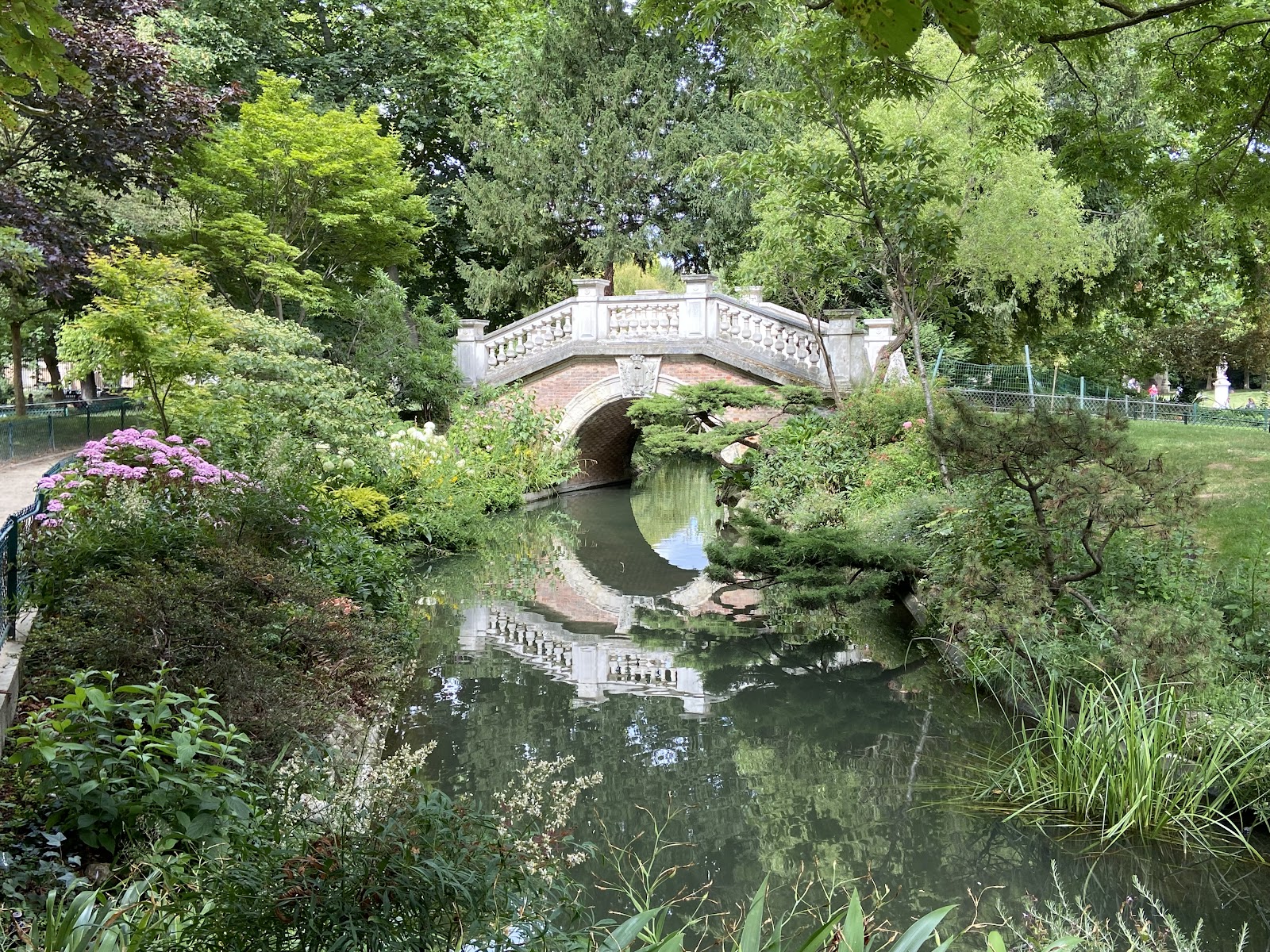
The Duke's heirs sold off half the land to developers during the Second Empire. The City of Paris bought what remained in 1860, and in August 1861 engineer Adolphe Alphand opened the redesigned 8.4-hectare park to the public — the first new public park created under Baron Haussmann's transformation of the city. Carmontelle's colonnade stayed; architect Gabriel Davioud added the dome to Ledoux's rotunda and replaced the Chinese bridge with one modelled on the Rialto.
Good to know
Take Métro Line 2 to Monceau — the station exits directly at the main gate. The park opens at 7am year-round; April through October it stays open until 10pm, making it a workable evening stop. Entry is free. Allow two hours if you want to find all the follies.
Spring and early autumn are the most comfortable seasons — the plane trees are in full leaf from May onward, and the long October evenings stretch the park's hours to good use. Midsummer can be warm and the lawns draw crowds on weekends; winter mornings, when the park opens at 7am into near-silence, have their own quality.
Where is Parc Monceau?
Location
- In Paris 8th Arrondissement
- 48.8796, 2.3087
- Open in Google Maps
Rating
4.6 ★ · 23,641 Google reviews
More tickets & tours for Parc Monceau
Book directly at the provider
What travellers say about Parc Monceau
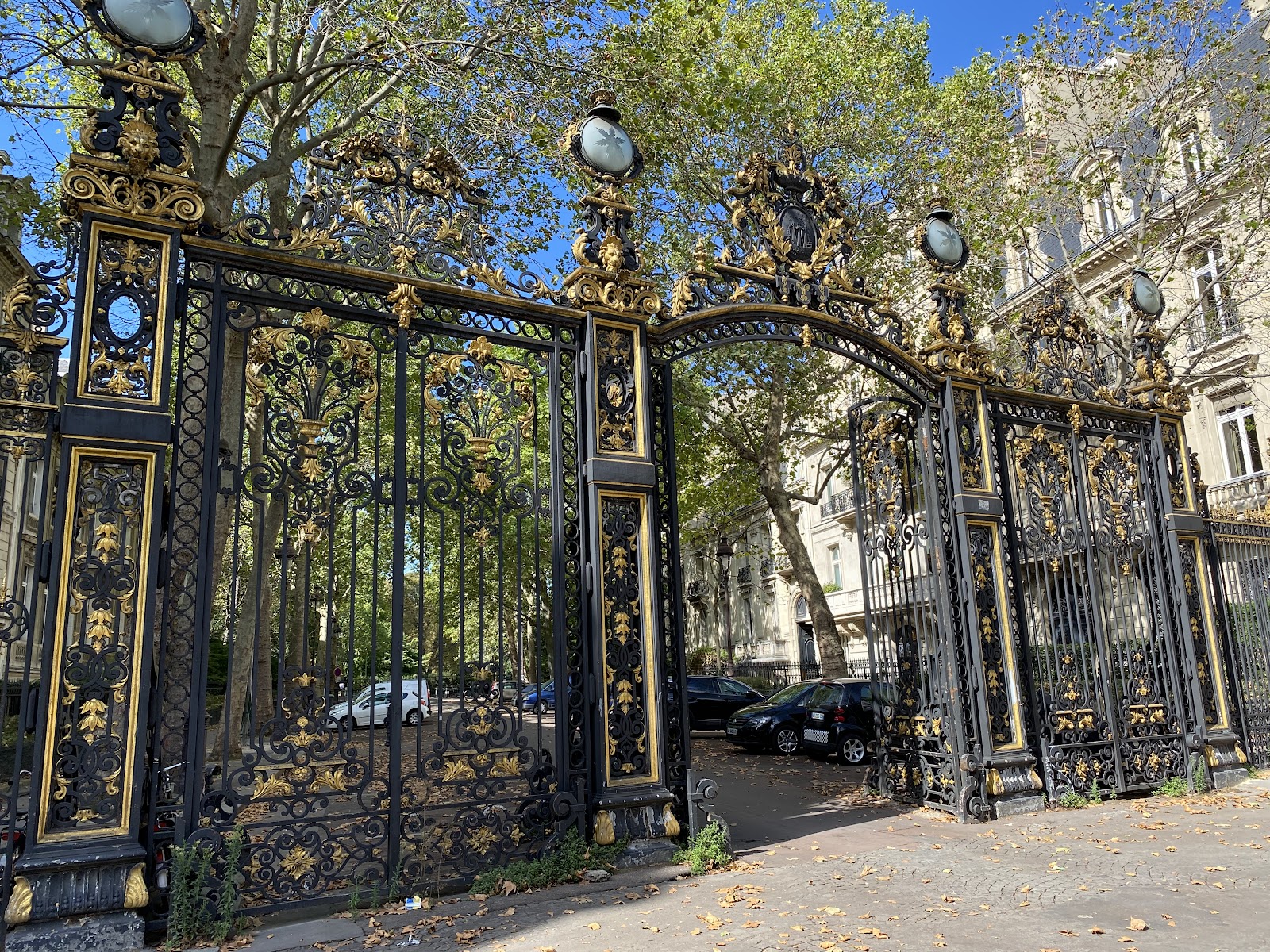
Very large park in the 8th, with many walking paths, statues, water features and plantings that add color along with many trees. The large black and gold gates at the many entrances are breathtaking. Benches are all around the park, some in the sun and some in the shade. Grassy areas to sit and enjoy the afternoon along with areas for younger people to enjoy the warmer weather. There is no fee to enter and water fountains are all over the park. The water feature with the roman columns surrounding part it is impressive. There are collections of other ruins throughout the parc, with columns, stone entrance ways, stone blocks and more. Great park to visit while in Paris, one of the most beautiful.
Parc Monceau is an absolutely wonderful local park. It has a genuinely authentic French vibe, away from the usual tourist crowds. The nature here is so beautiful and fresh, the air feels amazing, and the park is filled with the lovely sounds of singing birds and ducks swimming around. It’s the perfect spot to sit back, relax, and live like a local for an afternoon. Highly recommend!
What a great park! The weather was so beautiful, but this park would be beautiful even if the weather was bad. Couples were having romantic picnics, runners were jogging along the outer perimeter, families were feeding the ducks, & tourists (like me) were wandering around talking pictures & marveling at the beauty all around. Such peaceful experience & a wonderful way to spend a morning!
I visited Parc Monceau at around 3:41 PM on a beautiful sunny afternoon. The weather was perfect — bright and sunny without being too hot, with a fresh and comfortable atmosphere. The park felt peaceful and relaxing. I saw many elderly people enjoying a quiet walk, while couples were sitting together and embracing under the shade of the trees. The greenery and open spaces create a wonderful environment to unwind and escape the busy city streets. There is also a playground for children, along with places to buy ice cream, drinks, and snacks, making it a great destination for families. Many families were having picnics on the grass, enjoying meals together in the pleasant weather. Another convenient feature is the availability of public restrooms inside the park. Overall, Parc Monceau is a charming and well-maintained park that offers something for everyone, whether you are looking for a peaceful stroll, a family outing, or simply a beautiful place to relax in Paris.
Beautiful public park located in the 8th arrondissement but on the very border of the 17th arrondissement. It is a unique example of the Anglo-Chinese landscape style. Great for running, going on a walk, enjoy the beauty of this little oasis.
More of Paris 8th Arrondissement
Discover where to stay, what to do and the best deals for your trip.
Explore Paris 8th Arrondissement →More attractions in Paris 8th Arrondissement
All of Paris 8th Arrondissement →
Background adapted from Wikipedia (CC BY-SA) · map data © OpenStreetMap contributors · ratings & place photos via Google · other photos with per-image credit. Ticket links may earn us a commission at no extra cost to you.