
Parc Exflora
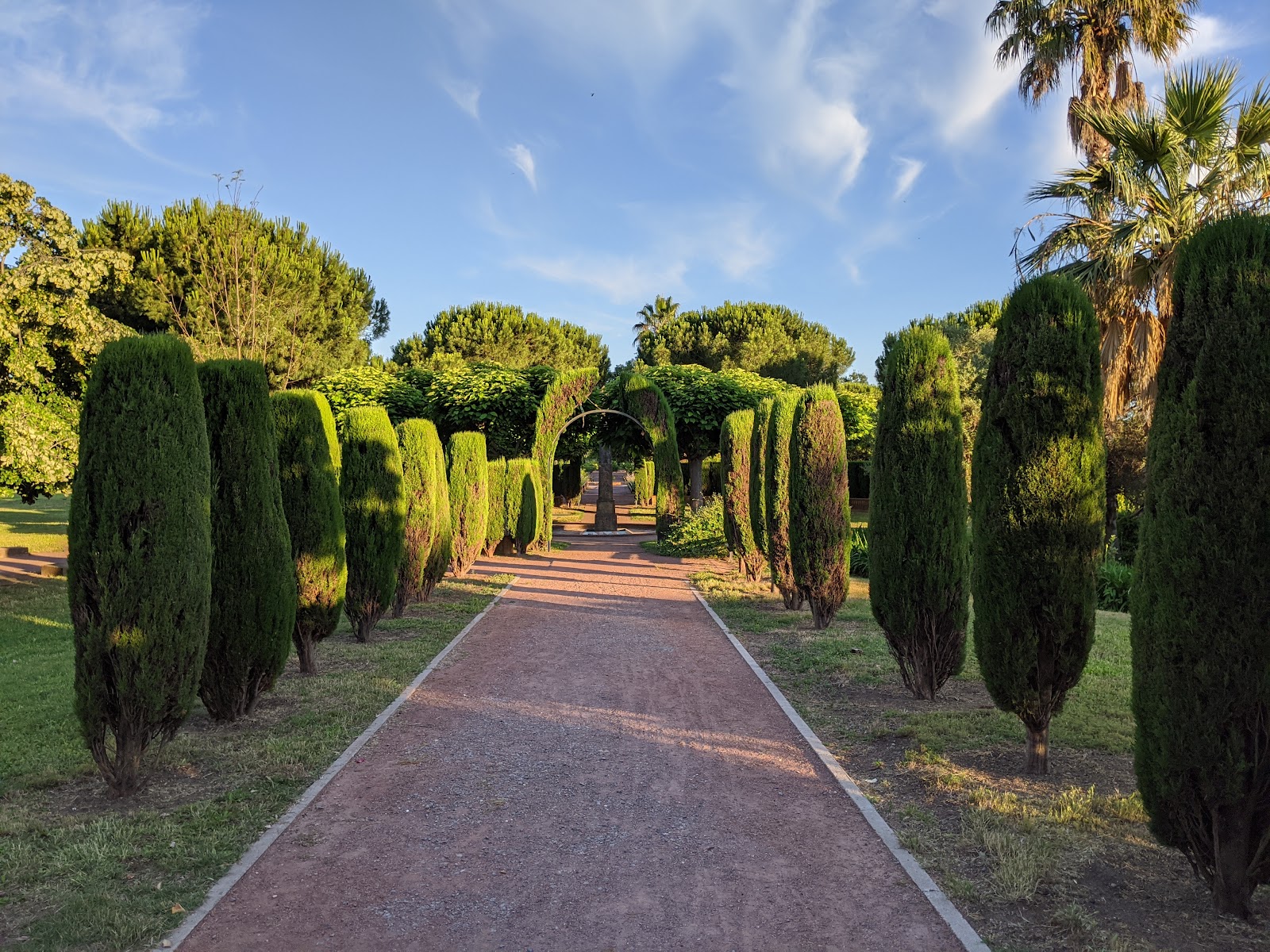
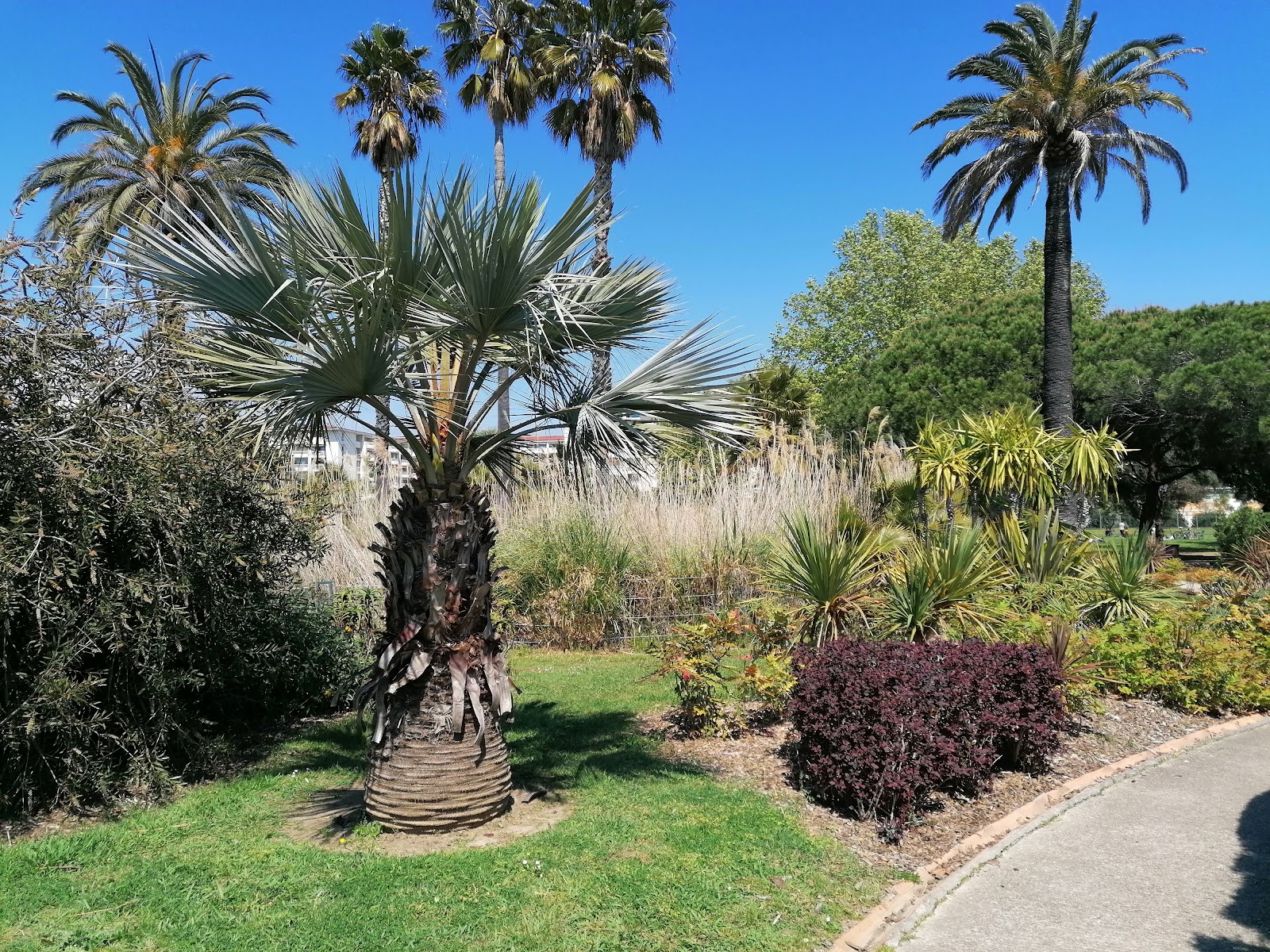
At the entrance to Parc Exflora, a monumental staircase descends beside an artificial waterfall — a theatrical opening for a garden that never quite settles on a single idea of beauty. Landscape architect Alain Goudot designed the five hectares along Avenue de Cannes as a kind of horticultural anthology: Roman road shaded by cypress and umbrella pines, a Moorish riad courtyard with a still pond, a kiosk with a blue-tiled roof lifted from Majorelle's Marrakech.
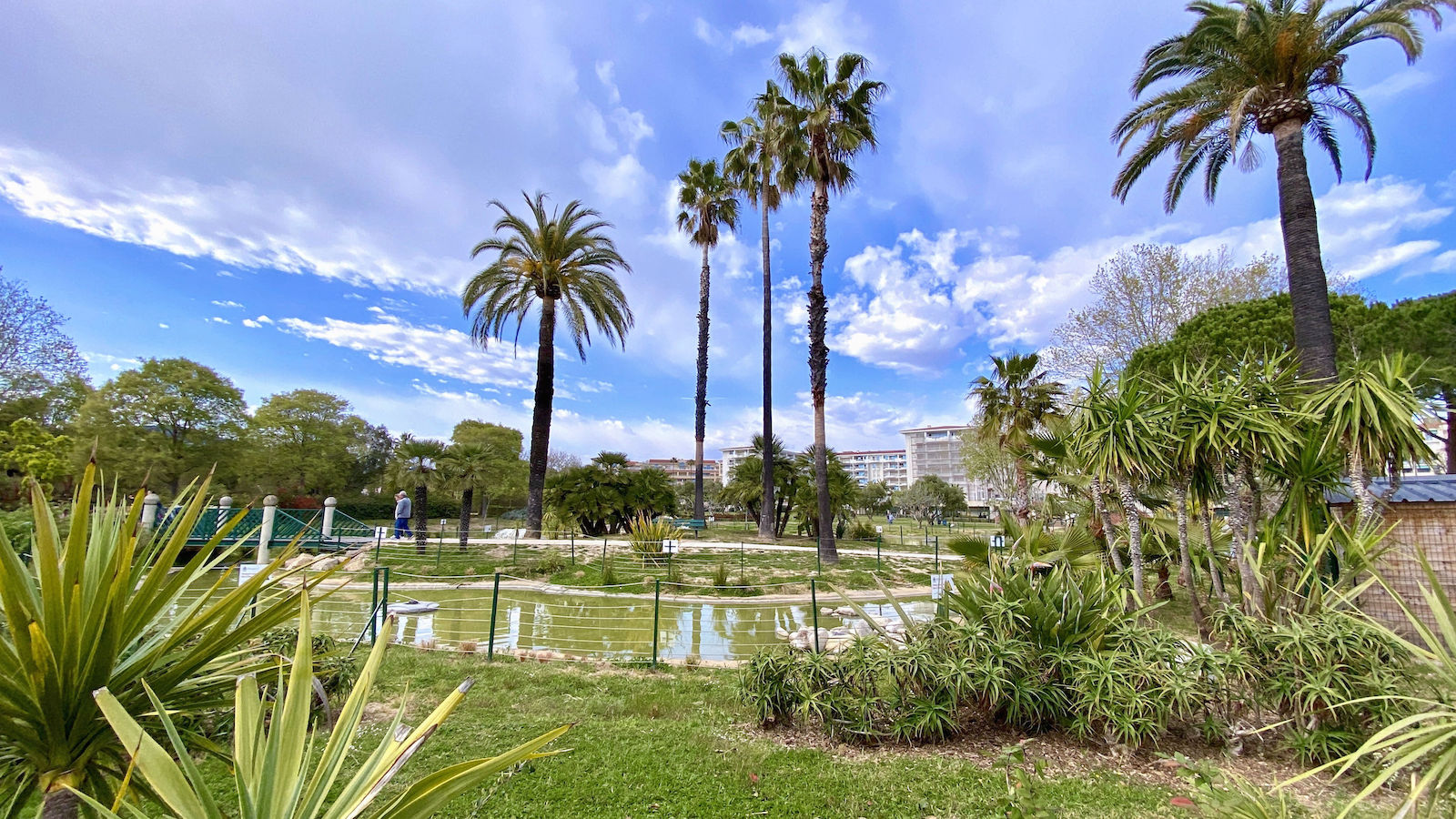
What holds it together is the long axis of water — a 500-metre path of ponds and fountains that walks you steadily toward the Mediterranean, ending at a belvedere with open views of the sea and the Lérins Islands. Eighty olive trees anchor the Provençal section. Carp drift below the surface of the main pond. Rose beds acknowledge Antibes' long history as a centre of flower production.
💛 What travellers fall for
Regulars tend to arrive early on weekday mornings when the gates open at eight and the garden is nearly empty. The false Roman road, shaded and slightly cooler than the rest of the park, is the place to linger. In winter, the mimosa and camellia section near the back rewards the short walk from the belvedere.
The story behind Parc Exflora
Parc Exflora opened in the mid-1990s — sources place the date at either 1991 or 1994 — as a public garden on the southern edge of Antibes, between the city and the sea. Alain Goudot conceived it as a sequence of distinct garden cultures arranged along a single water axis: Roman, Tuscan, Provençal, Moorish and Greek traditions each given their own section, connected by the long fountain path that terminates at the coast.
The rose plantings were a deliberate nod to local history. Antibes and the surrounding area were once major producers of cut flowers for the perfume and florist trades, and the roses here stand as a quiet acknowledgment of that agricultural past rather than mere ornament.
Good to know
Entry is free. Buses 1, 100, 620 and 621 stop nearby; a single ticket costs €1 bought in advance or €1.50 on board. Eighteen parking spaces sit at the Avenue de Cannes entrance, with a larger lot close by. Summer hours run until 9pm, useful for a late-afternoon visit before dinner.
Summer visits are comfortable in the morning and evening; midday in July and August can push above 26°C with little shade outside the cypress-lined road. Spring and autumn — May, June, September and October — offer the most even conditions. The winter garden section, with its mimosa and camellia, is worth visiting between December and February when the rest of the park is quieter and the blooms are at their peak.
Where is Parc Exflora?
More tickets & tours for Parc Exflora
Book directly at the provider
What travellers say about Parc Exflora
I did wedding photoshoot here, it’s amazing and so beautiful
Nice park where people can relax and also have some get together/parties. What is missing there is a childrens playing area.
Beautiful large park....great for picnics and playing ball or Frisbee
Parc closes at random times, got escorted out by police with reason "we are closing park", it was on Sunday at 17:23
Very beautiful Parc👍
More of Antibes
Discover where to stay, what to do and the best deals for your trip.
Explore Antibes →More attractions in Antibes
All of Antibes →

Background adapted from Wikipedia (CC BY-SA) · map data © OpenStreetMap contributors · ratings & place photos via Google · other photos with per-image credit. Ticket links may earn us a commission at no extra cost to you.