
Panthéon
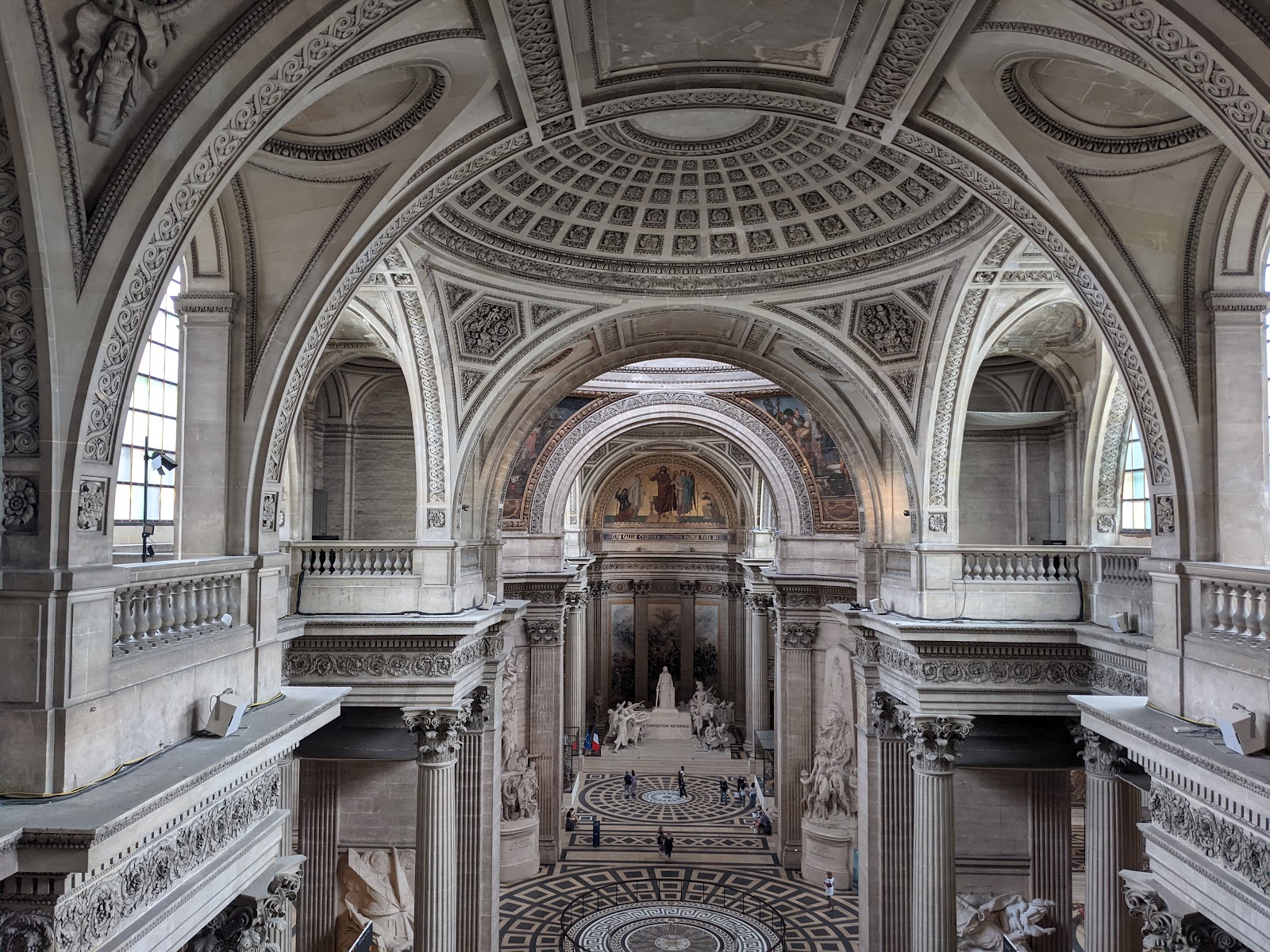
The Foucault Pendulum is still there, swinging its slow, hypnotic arc beneath the dome — a replica of the 1851 demonstration that proved, publicly and without argument, that the Earth rotates. It's a good thing to stand under for a moment before you descend into the crypt, where Voltaire and Rousseau lie a few metres apart, Marie Curie has her own alcove, and Victor Hugo's name is carved into stone as though the Republic still can't quite believe it got him.
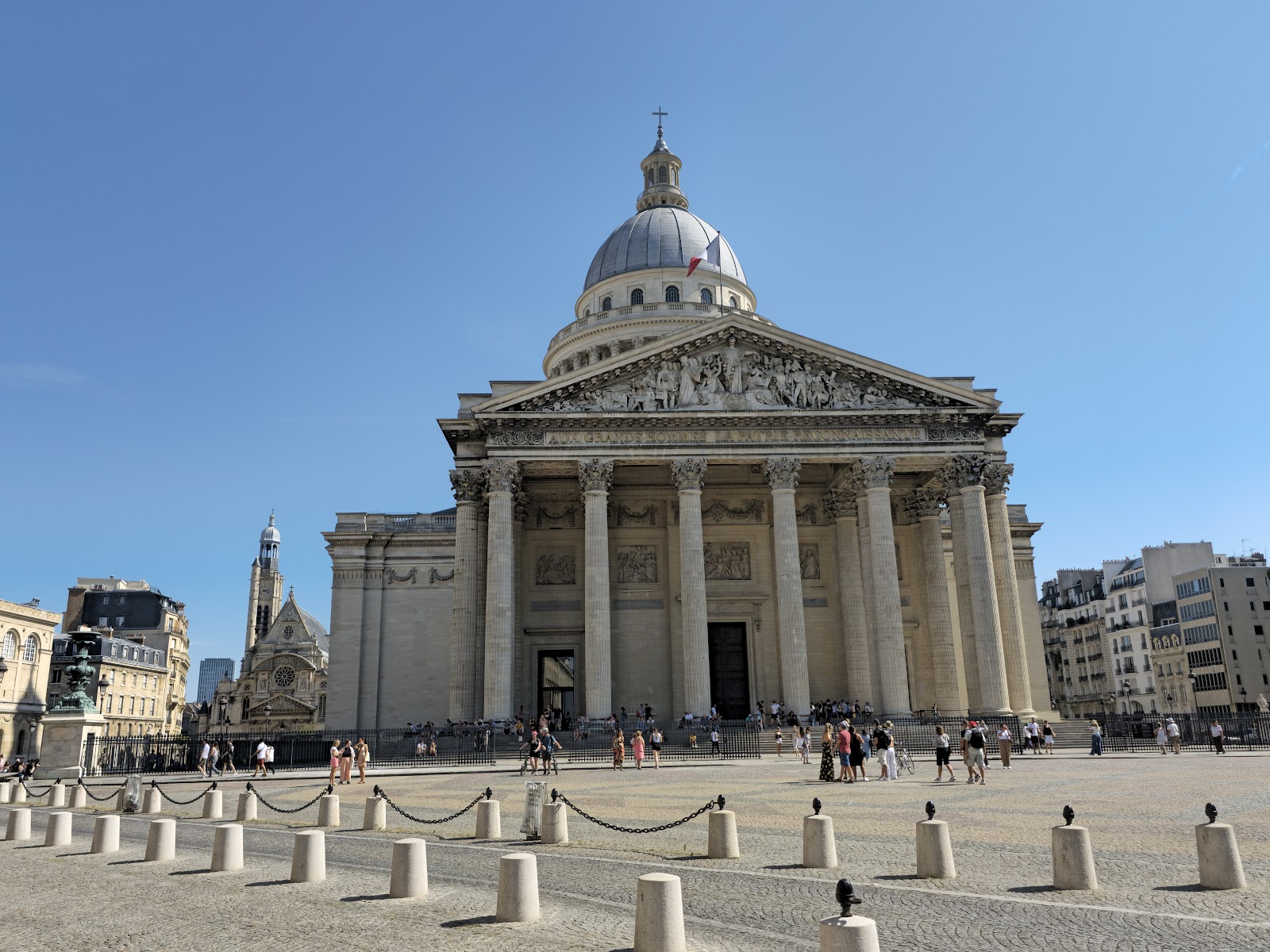
The Panthéon started life as a church dedicated to Sainte-Geneviève, patron saint of Paris, and ended up as France's secular temple to its own idea of greatness. The tension between those two identities — sacred architecture, secular purpose — gives the building a particular gravity that no amount of tourist traffic quite dissipates.
💛 What travellers fall for
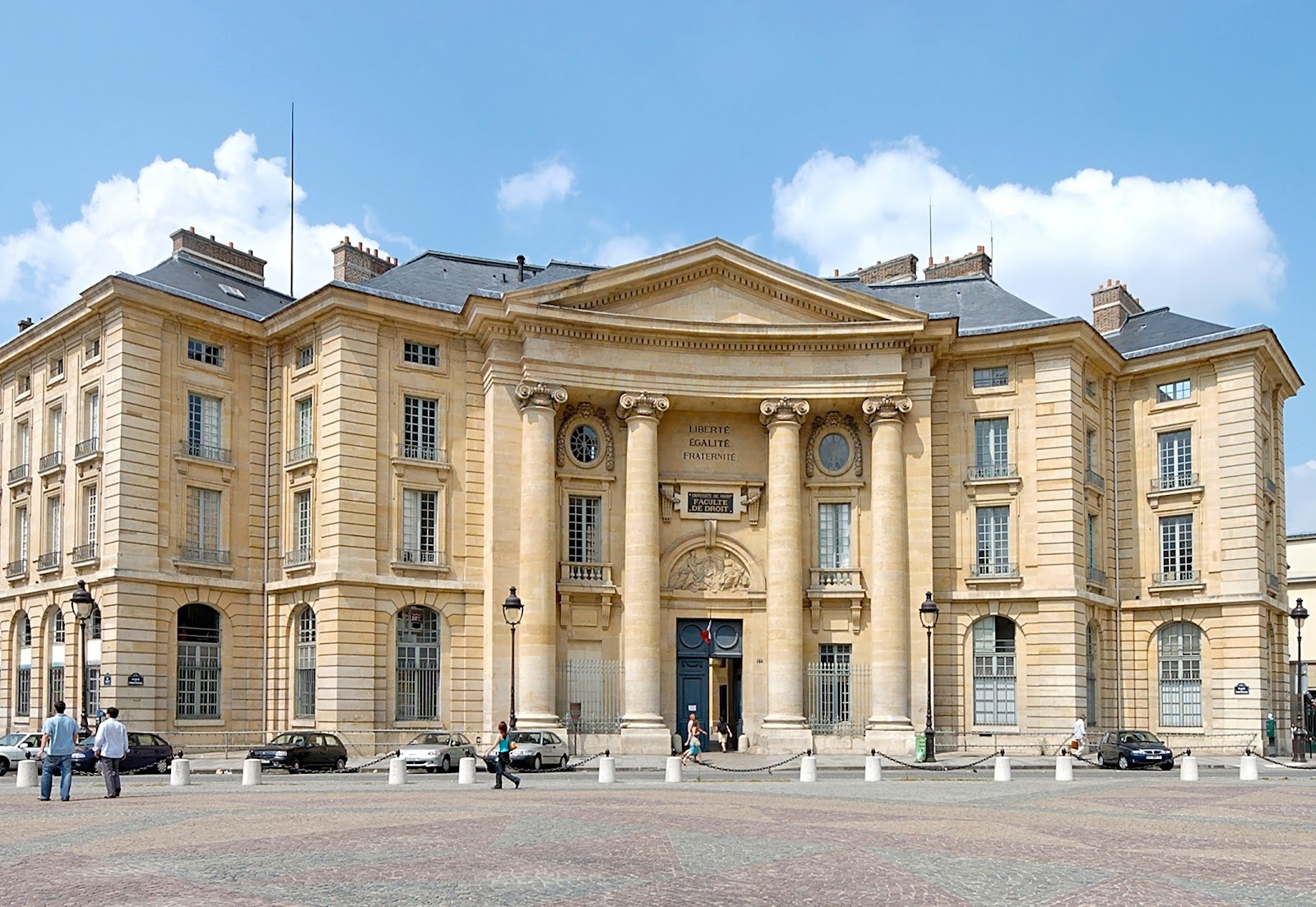
People who return tend to do it for the crypt rather than the nave. Go down early, before tour groups arrive, and take time with the individual tombs — Jean Moulin, Louis Braille, Simone Veil. The dome panorama (April to October, €3.50 extra, around 200 steps) earns its keep on a clear morning with the Sorbonne spread out below.
The story behind Panthéon
Louis XV laid the first stone on 6 September 1764, commissioning architect Jacques-Germain Soufflot to build a new Church of Sainte-Geneviève on a site that had held a church of that name for centuries. Soufflot died in 1780 before seeing it finished; Jean-Baptiste Rondelet and Maximilien Brébion brought the work to completion in 1790.
The Revolution changed everything. In 1791 the National Assembly converted the building into a mausoleum for France's great figures, and Voltaire became the first major interment, carried through Paris by an estimated 100,000 mourners. The building oscillated between church and secular monument under Napoleon and Napoleon III before Victor Hugo's state funeral in 1885 settled the question permanently. Marie Curie arrived in 1995 as the first woman interred on merit; Simone Veil in 2018; Josephine Baker in 2021.
Good to know
RER B to Luxembourg is the easiest approach — a seven-minute walk. First Sunday of the month (November to March) is free. Skip the first Monday of any month if you're arriving before noon. Budget 90 minutes for nave, crypt, and a look at the Puvis de Chavannes paintings; add 45 minutes if you're doing the panorama.
Where is Panthéon?
Location
- In Paris 5th Arrondissement
- 48.8462, 2.3461
- Open in Google Maps
Rating
4.6 ★ · 68,526 Google reviews
More tickets & tours for Panthéon
Book directly at the provider
What travellers say about Panthéon
My favourite building in all of Paris. Huge, imposing presence visible from a huge distance, a true symbol of the might of French imperialism. A renovated church turned bastion of culture, the expert stonework was a feat to behold, and provided wonderful shade from the heat. Make sure you visit the nearby church, it was also beautiful.
This is a magnificent building in Paris. I didn't go inside, but from the outside, I could easily see its massive and sophisticated architecture. The surrounding area is also spacious, clean, and well-planned.
I absolutely loved my visit to the Panthéon in May! 🏛️ The architecture is truly breathtaking, and the rich history within its walls is incredibly captivating. ✨ It's a must-see for anyone interested in French heritage. I highly recommend it! 🇫🇷💯
Nice place to roam around. The Panthéon is a really nice place to see while walking around Paris. The building looks impressive from the outside with its big columns and marvelous design. We did not go inside, but it was still worth stopping for a few minutes to take photos.
A fantastic place to visit if you’re in Paris. The Panthéon has a unique atmosphere, full of history, beauty, and character. The architecture is stunning, and walking through the building gives you a real sense of France’s rich heritage. I really enjoyed my visit and would highly recommend it to anyone interested in history, culture, or simply seeing one of Paris’s most impressive landmarks.
More of Paris 5th Arrondissement
Discover where to stay, what to do and the best deals for your trip.
Explore Paris 5th Arrondissement →More attractions in Paris 5th Arrondissement
All of Paris 5th Arrondissement →

Background adapted from Wikipedia (CC BY-SA) · map data © OpenStreetMap contributors · ratings & place photos via Google · other photos with per-image credit. Ticket links may earn us a commission at no extra cost to you.