
Palazzo Pubblico
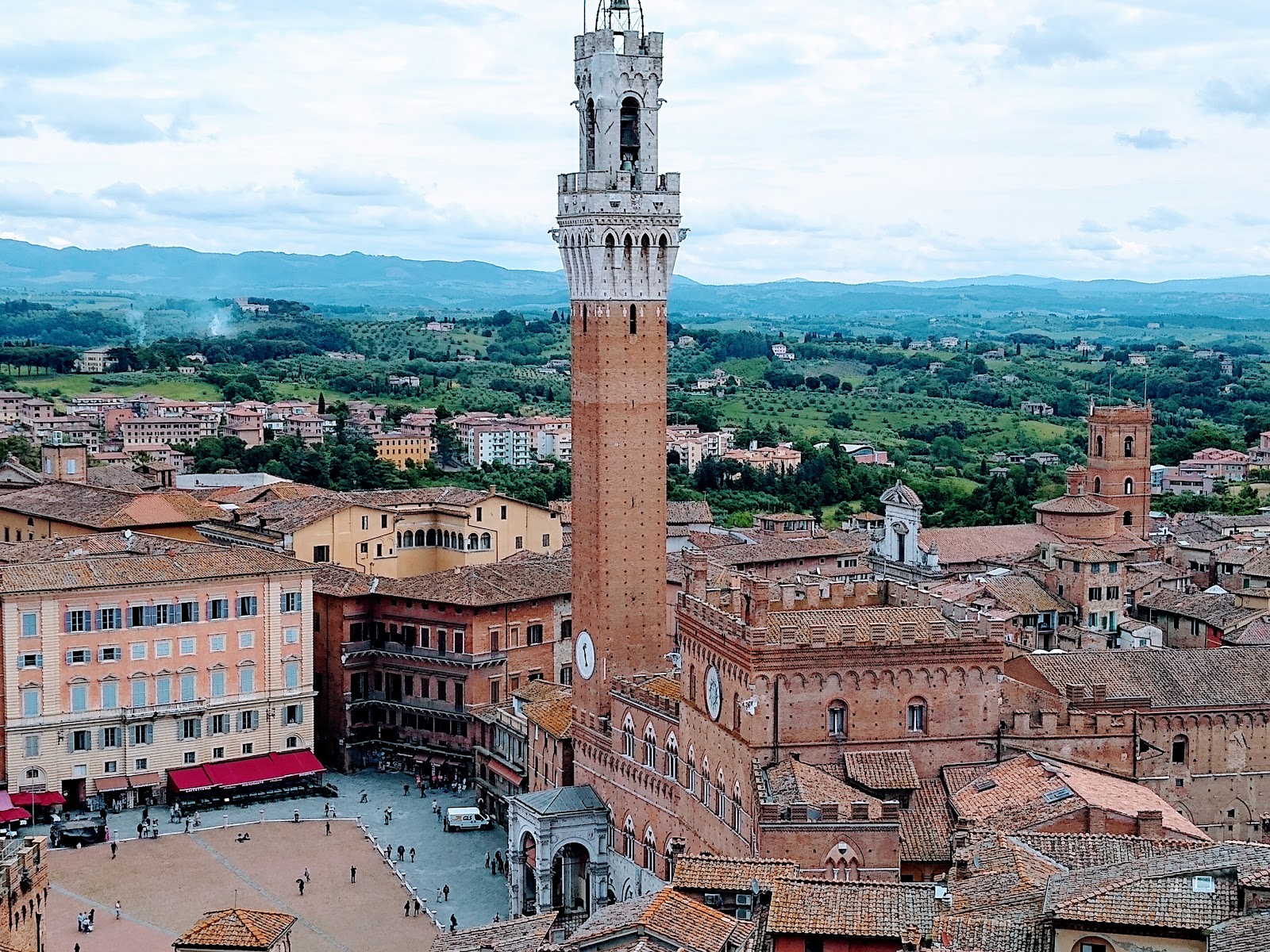
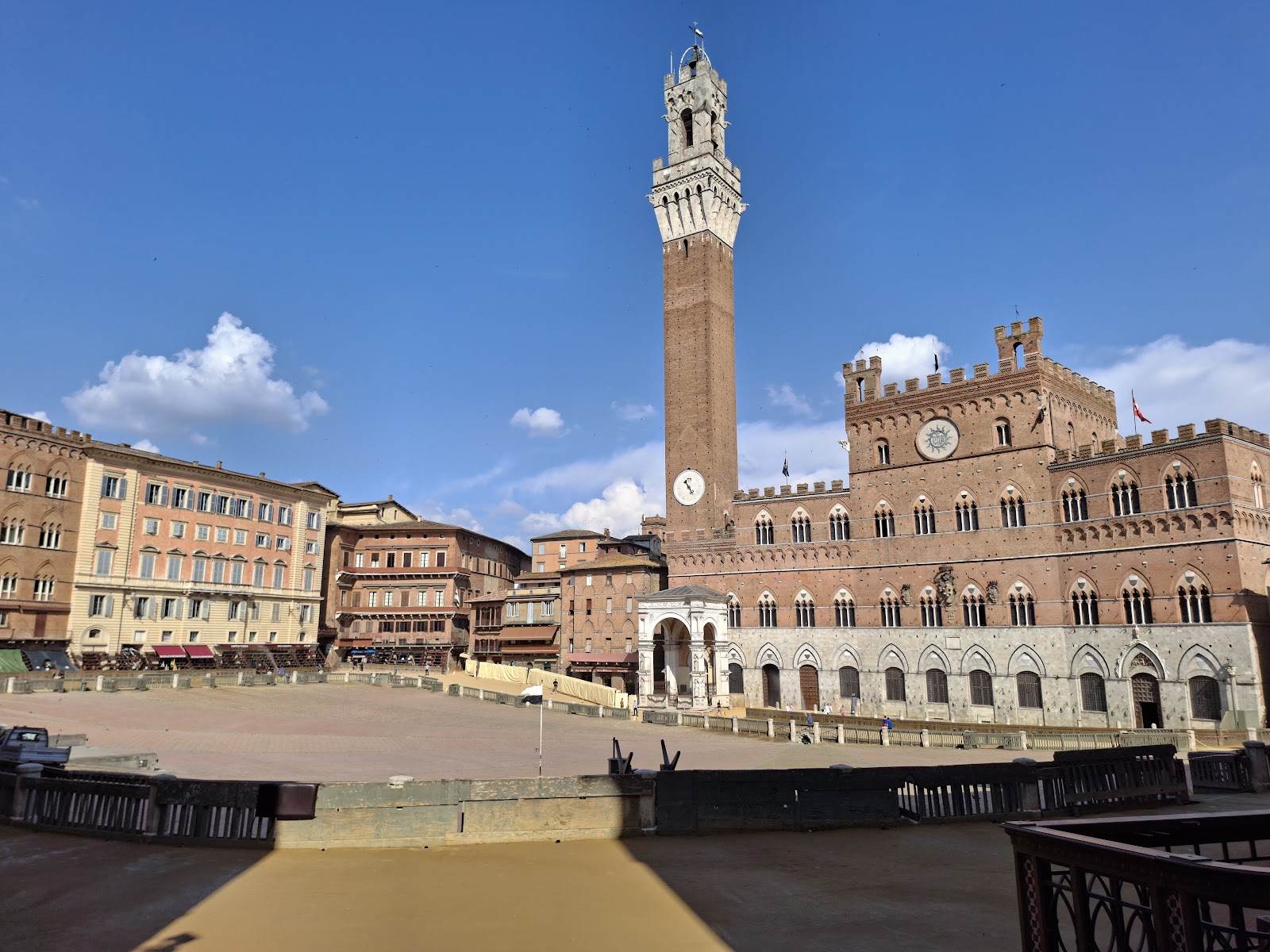
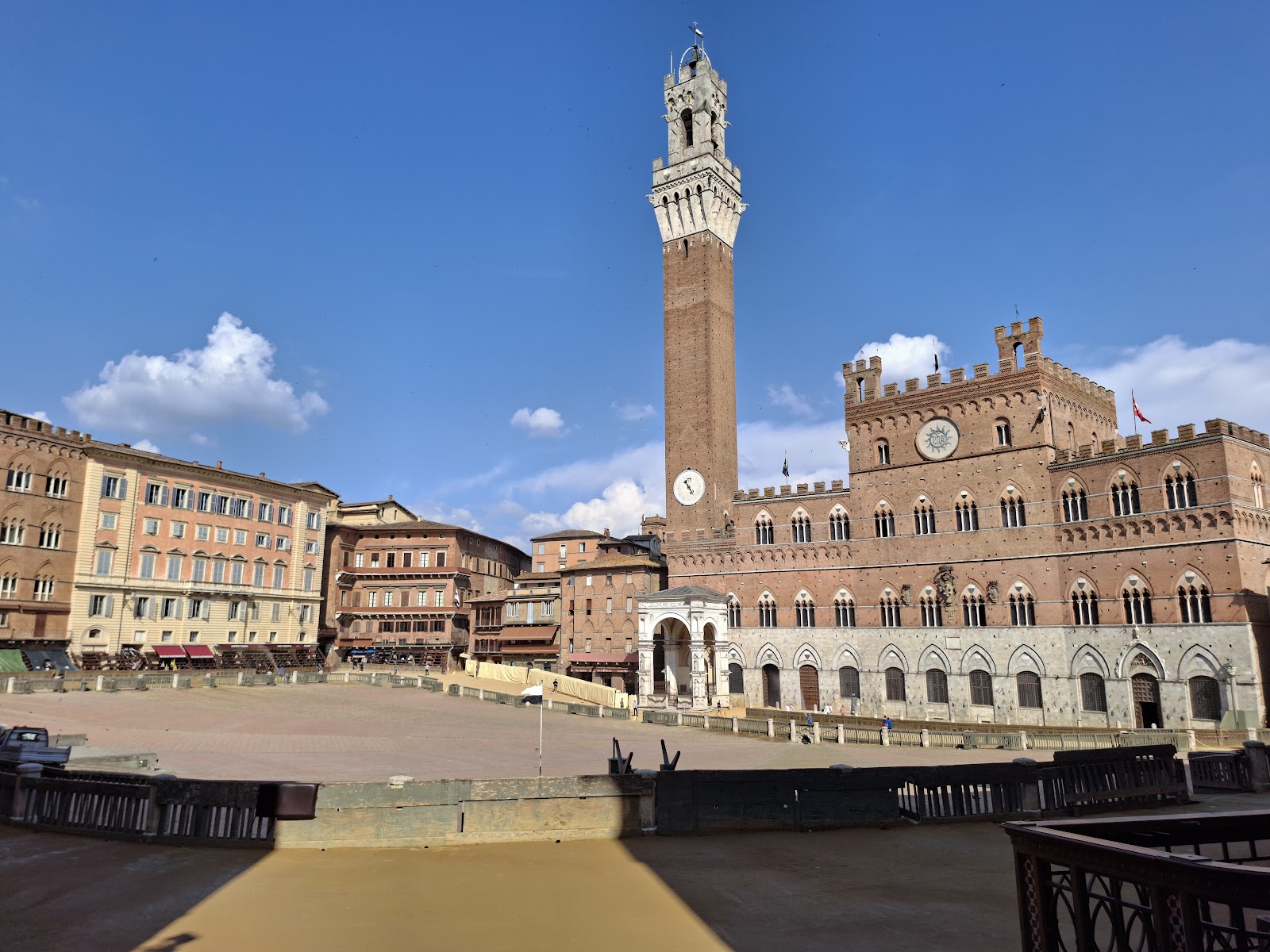
The curve of the Palazzo Pubblico's façade is not an accident. It bends slightly inward to mirror the convex sweep of the Piazza del Campo in front of it — a 13th-century architect's way of making a building feel continuous with the square it governs. Stone on the lower story, brick above, with triforate windows dividing each upper bay into three slender arches: the whole thing reads as a lesson in how a city once wanted to present itself to the world.
Built between 1297 and 1310 as the seat of Siena's Council of Nine, the palazzo still anchors the Campo. Inside the Civic Museum, two rooms hold frescoes that change how you think about medieval painting.
💛 What travellers fall for
People who come back tend to linger in the Sala della Pace longer than planned. Lorenzetti's Good Government fresco wraps around three walls and rewards slow looking — there are merchants, builders, dancers, a hanged man, all rendered in 1338. The Loggia dei Nove on the second floor, overlooking the Piazza del Mercato, is easy to miss and usually quiet.
The story behind Palazzo Pubblico
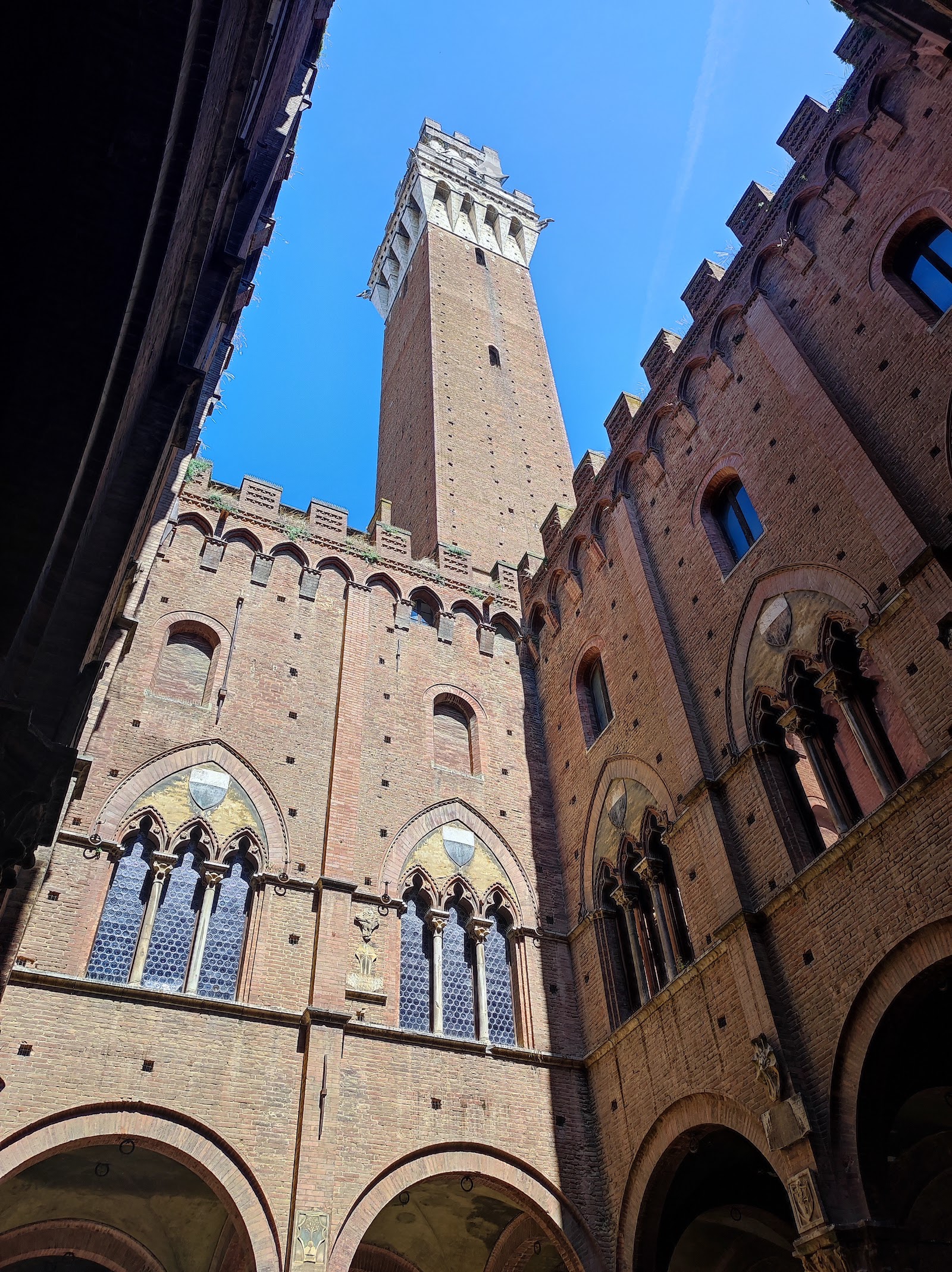
Construction began in 1297, when Siena was governed by the Council of Nine — a rotating body of merchants who ran the republic for roughly 70 years. The building was designed in three functional sections: judicial to the east, legislative at the taller centre, executive to the west. The Torre del Mangia rose alongside it between 1325 and 1344, built deliberately to match the height of Siena Cathedral — a statement that civic and ecclesiastical power stood equal. Its first bell-ringer, Giovanni di Duccio, was nicknamed Mangiaguadagni (profit eater) for his idle habits, and the tower took his name.
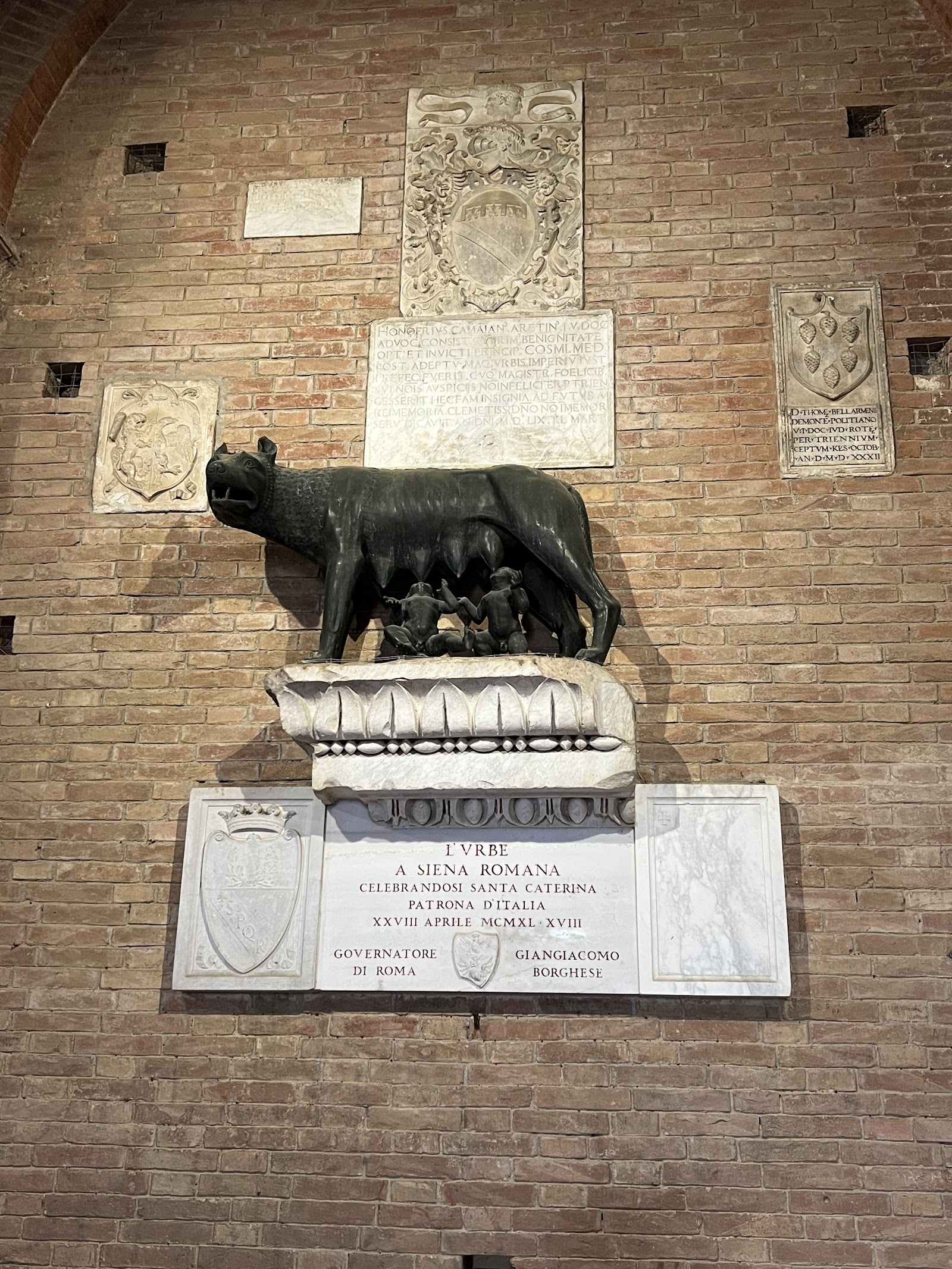
In 1348 the Black Death killed roughly half of Siena's population. The Cappella di Piazza at the tower's base was built in 1352 as thanksgiving for the plague's end. Nearly a century later, in 1425, a bronze Christogram was fixed to the façade — placed there after Saint Bernardino preached a series of sermons aimed at cooling the factional violence that had long fractured the city.
Good to know
Entry to the Civic Museum costs €10 for adults; a family ticket runs €22. Allow one to two hours for the museum, and another hour if you climb the Torre del Mangia's 400-plus steps. Ticket offices close at 6:15 pm. The Civic Museum is accessed through the courtyard of the Podestà.
Where is Palazzo Pubblico?
More tickets & tours for Palazzo Pubblico
Book directly at the provider
What travellers say about Palazzo Pubblico
Okay be ready to walk up 300 stairs to reach the top. They turn clockwise and there are low level ceilings which you can bump your head into! But is it worth it? Well the experience is unique, but has to be your thing. If you dont want to climb 300 stairs for a wonderful view of Siena, then don't go, you'll only complain. But if you want to see the bells face to face and see a magnificent view, then go for it. The stairs are stone and the walk is narrow and some ceilings are low, its dark in areas and in case No One tells you, its extremely windy (at least it was when I went 14/05/2026) and my hair was crazy over the place, ha! For me it was worth the climb and the experience, you be your own judge of what you like!
Built in Siena’s golden age, the city hall represents the pride of Siena in its rule by citizens - not by nobility or a king. The symbolism of the paintings on good government cannot be missed - even if you can not read which must have been a common occurrence in a government of nine that is exchanged every two months. The medieval frescos are spectacular, very well preserved. It pays to spend some time to look, and discover the many details hidden in the painting - whether the naturalistic depictions of medieval dress, arts and crafts or the many symbols and beautifully calligrapher texts. The halls are spacious, in particular for 13th century and speak to the wealth of the city. The tower with 88m offers spectacular views of the city. However, it takes stamina and the stairs are exceedingly narrow and claustrophobic. It is not recommended to anyone with health issues or even a minimal fear of small spaces. On top though you will will be rewarded with an unrivaled view of the medieval city, the beautiful Tuscan landscape, and the gentle rolling hills of the Appenines in the background.
The palazzo was roughly the price, (maybe a little more) to get into the Siena Cathedral. However, the museum was pretty grand and had many beautifully decorated rooms. There were some modern touches, (such as a room dedicated to the reunification of Italy) and older touches from the Roman era. The building has the historic significance of being the seat of the medieval Siena republic as well, and overlooked the beautiful square and the tuscan hills from the balcony you could get to in the museum. The staff was friendly, and had no problem with talking with anyone in English, despite my almost non-existent Italian. The staff were knowledgeable and seemed to want to answer questions. Arguably, it was more interesting and friendlier then the Signoria in Florence
The symbol of the strength and stability of medieval Siena, the Palazzo Pubblico is well sited on the low edge of the Piazza del Campo, Siena’s main square. It has a handsome exterior, especially from the vantage point of the top of the square - the Campo itself is wonderfully proportioned and the Palazzo Pubblico is the focus. It is also interesting inside, holding a collection of civic art work, including murals, paintings and artefacts. And it has a viewing platform with great views out towards the edge of the city.
A very characteristic governmental place located in the center of Siena. You can enjoy the view of it if you’re sitting on the square itself or any restaurant & bar in the square.
More of Siena
Discover where to stay, what to do and the best deals for your trip.
Explore Siena →More attractions in Siena
All of Siena →
Background adapted from Wikipedia (CC BY-SA) · map data © OpenStreetMap contributors · ratings & place photos via Google · other photos with per-image credit. Ticket links may earn us a commission at no extra cost to you.