
Palazzo Pfanner
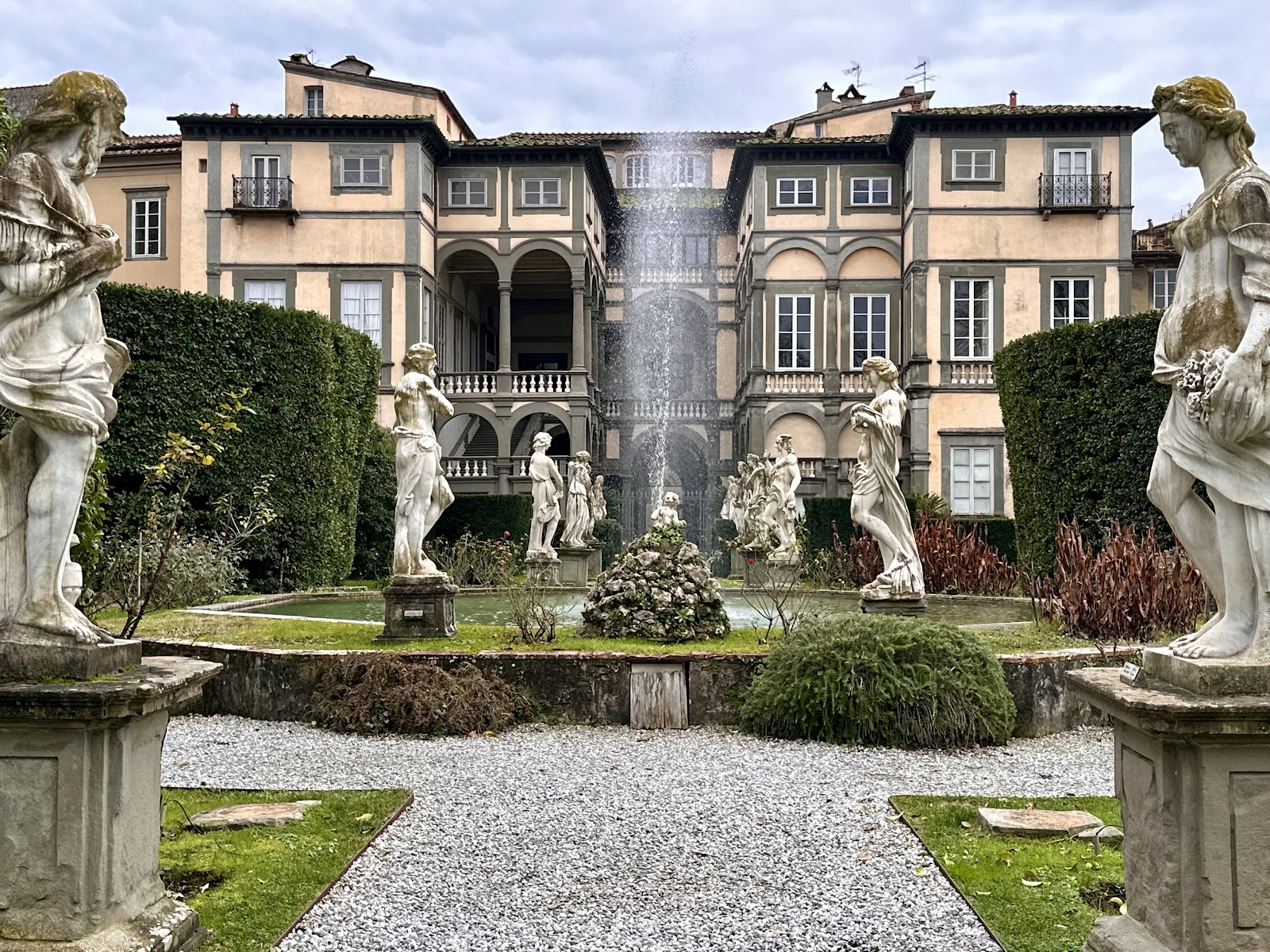
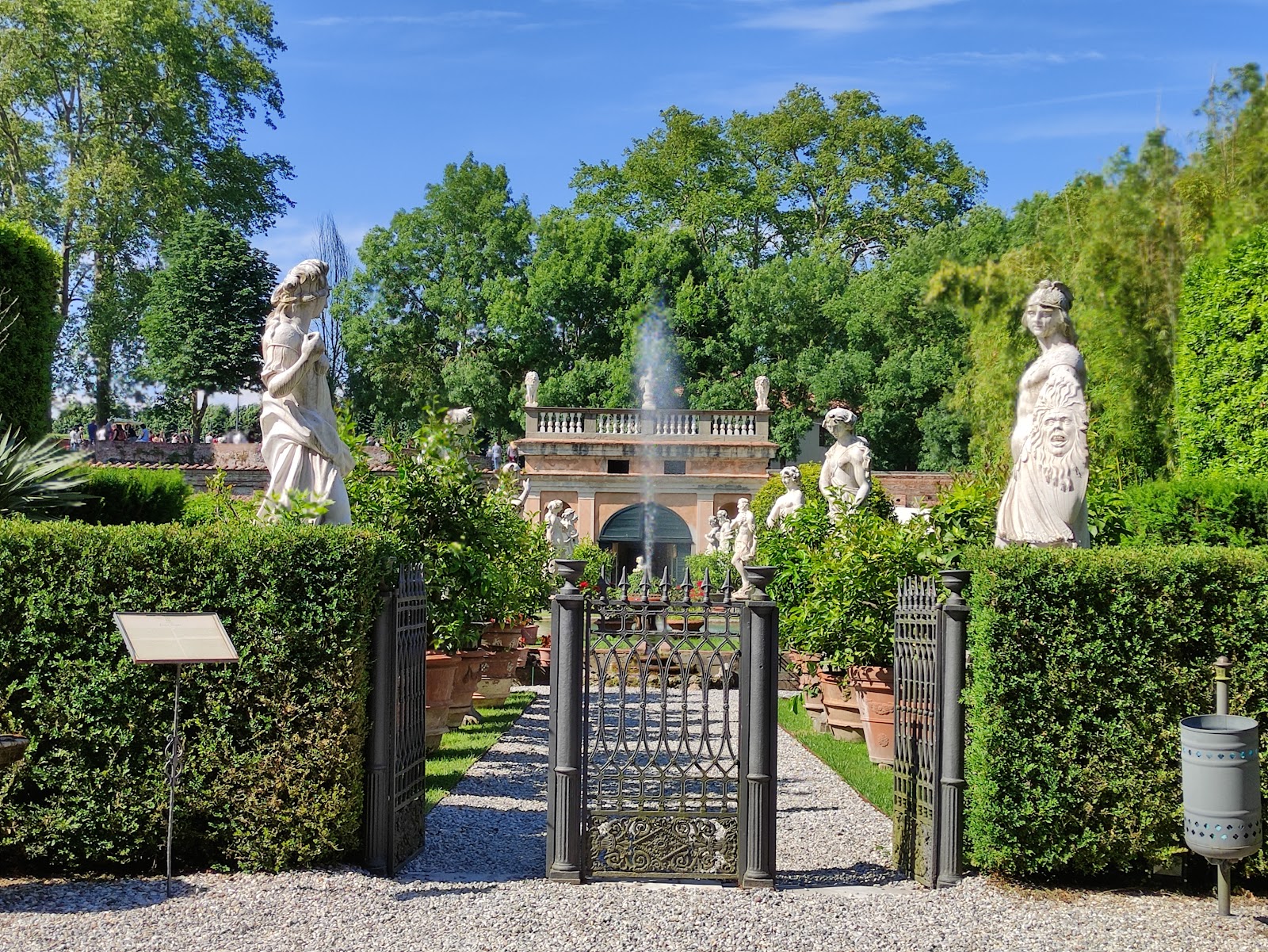
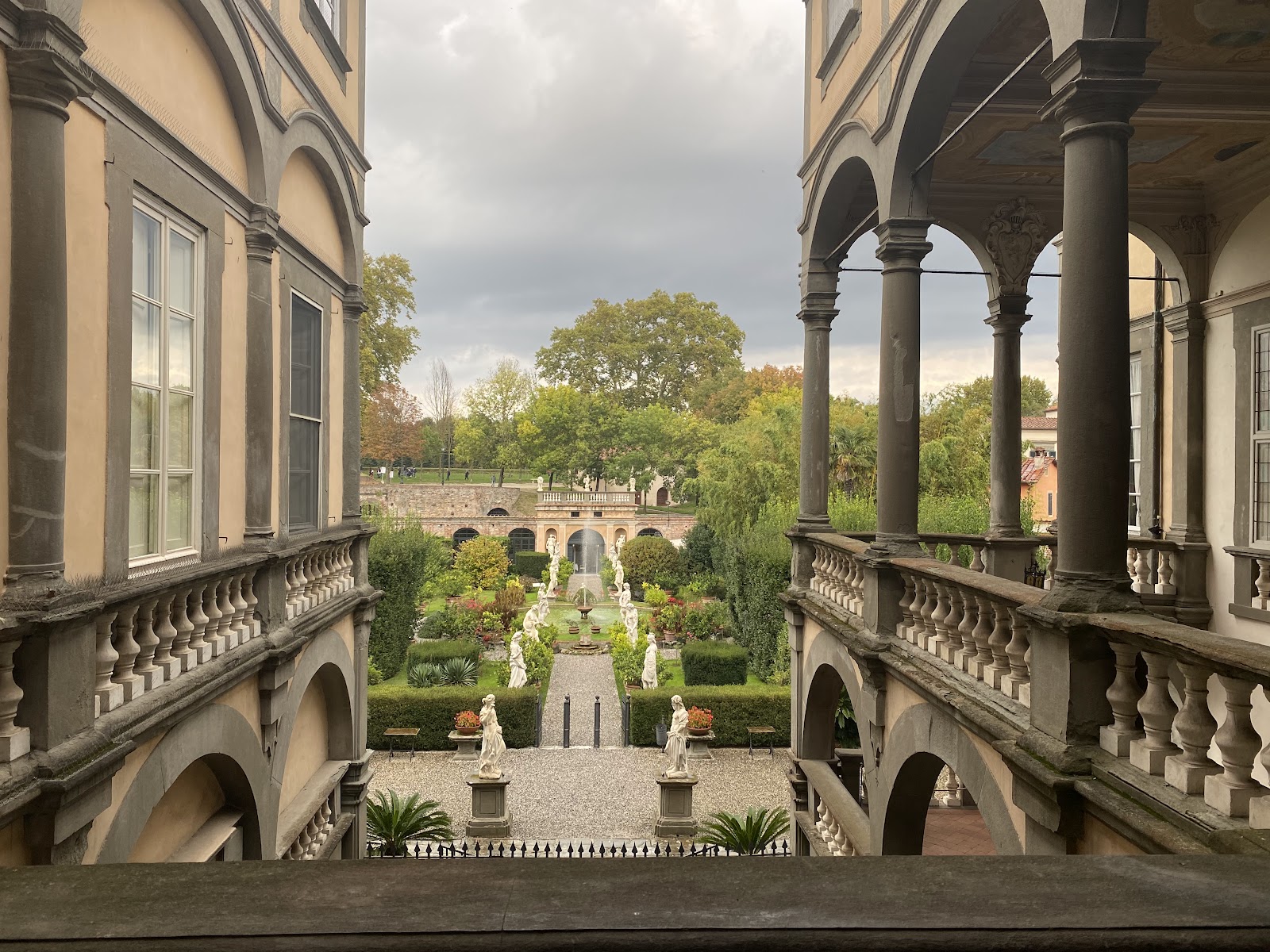
From the city walls on Lucca's northern edge, you can look down into the garden of Palazzo Pfanner before you ever set foot inside it — seven geometric lawns, an octagonal fountain, and a procession of stone Olympian gods standing among the lemon pots. That view from above is a reliable spoiler, and the garden holds up entirely once you're in it.
The palazzo itself began as a merchant's residence in 1660 and became, by the mid-nineteenth century, the site of a working brewery run by an Austrian transplant named Felix Pfanner. His family still owns it, and the rooms carry three centuries of accumulated lives: baroque frescoes, period furniture, and a quietly arresting collection of surgical instruments gathered by Felix's descendant Pietro, who served as both physician and mayor of Lucca.
💛 What travellers fall for
People who come back tend to time it for a slow Tuesday morning, when the garden is quietest. The view of San Frediano's bell tower from the gravel paths is worth framing. If you're considering the Principe Federico apartment for a stay, the garden-facing windows are the reason to book it.
The story behind Palazzo Pfanner
The Moriconi family, Lucca silk merchants risen to the aristocracy, built the palazzo in 1660. Financial ruin forced a sale in 1680 to the Controni family, fellow silk traders who immediately set about improving the property. Around 1686, architect Domenico Martinelli designed the monumental stone staircase; a decade or two later, the garden was redrawn — most likely by Filippo Juvarra, who gave it the theatrical Baroque geometry it still holds today. A Danish royal, the future Frederick IV, was among the guests in 1692.
In 1846, Felix Pfanner arrived from Hörbranz, Austria, answering a call from the Duke of Lucca for a German brewer. He succeeded well enough to buy the whole palazzo, which took his name and housed his brewhouse until 1929. The Pfanner family opened it to visitors in 1995, and the building has since appeared in films by both Mario Monicelli and Jane Campion.
Good to know
The garden opens March 15 through December 31, typically 10:00–18:00. A single ticket covers both garden and museum. Children under 12 and visitors with disabilities enter free. Allow ninety minutes comfortably. The palazzo sits on Via degli Asili, 33 — a short walk from the city walls.
The garden is open from mid-March through December, which covers the full arc of Tuscan seasons. Spring and autumn bring the most comfortable temperatures for walking the gravel paths; summer afternoons can be warm, but the lemon house and laurel cabinets offer shade.
Where is Palazzo Pfanner?
More tickets & tours for Palazzo Pfanner
Book directly at the provider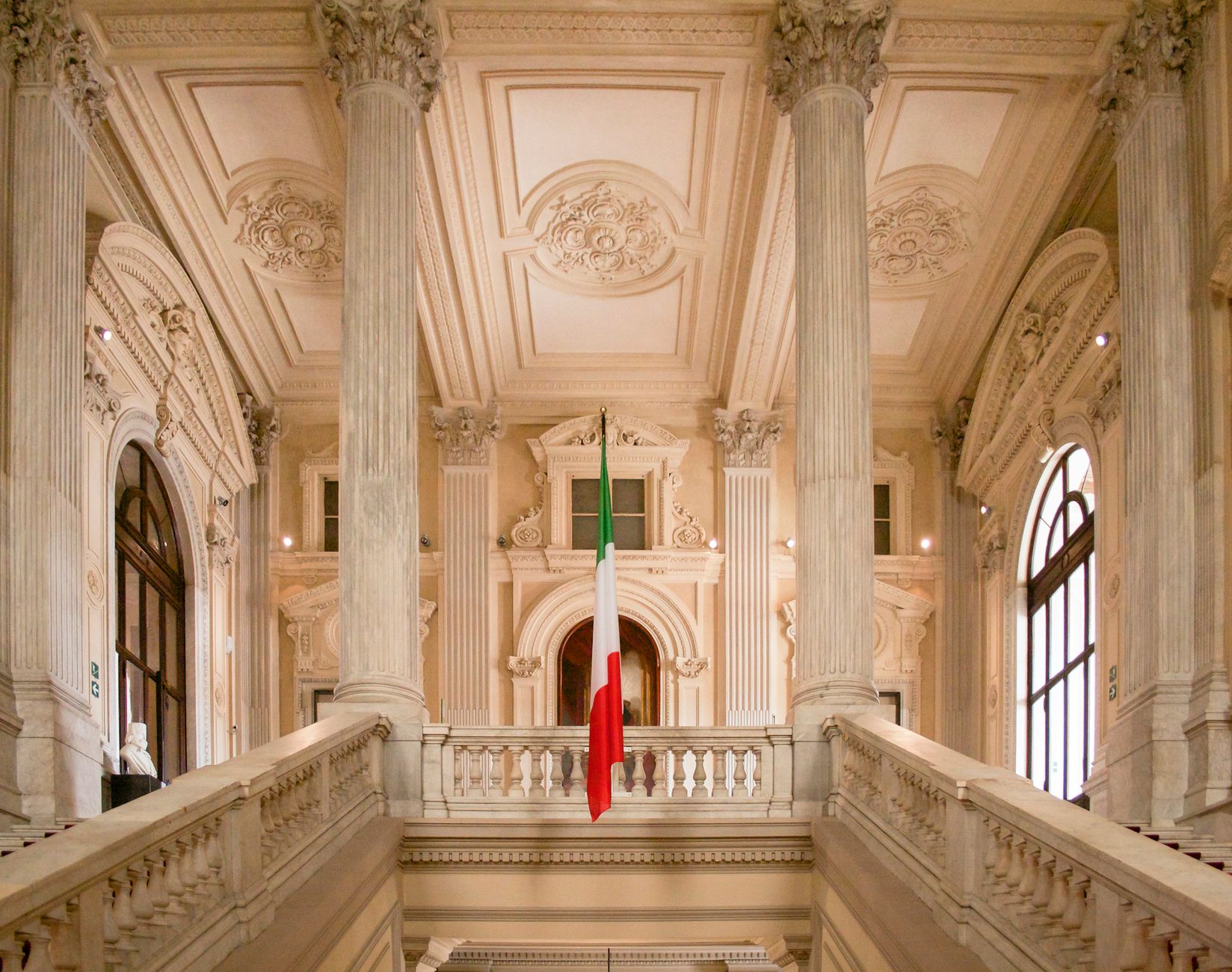
What travellers say about Palazzo Pfanner
Palazzo Pfanner is a beautiful historic house with elegant architecture and a lovely atmosphere. The garden is not very large, but it is peaceful, well maintained, and great for photos. I really enjoyed the visit and liked the overall experience. However, I felt that the €10 entrance fee was a bit expensive for the size of the attraction.
The palazzo is a beautiful piece of history. Stunning garden - I enjoyed sitting on the bench there for a while. Beautiful architecture. A small section of the palace - a ballroom, kitchen, bedroom and a few other small rooms- is open to visitors and decorated with furniture and objects from the 19th century. I thought the price of €10 was a little too high for something you can see in an hour.
The gardens are beautiful. I am very disappointed because my ticket was for a tour of "the house" as well as the gardens. They only let you see a partial of ONE floor NOT the whole house as you are led to believe. Deceptive advertising. I now know the family is still in residence and that is why the rest of the house is not included. That is fine, just be honest about it.
The gardens are small as is the museum, however it is definitely worth a visit. The gardens are a tranquil place to relax for a while. Immensely pretty and interestingly designed. We actually used this to rest for a long period during the afternoon (away from the bustle of the crowds) while waiting for a gig that evening. The museum consists of only a few rooms but there is sufficient information to occupy yourself. Definitely worth an hour of your time.
Palazzo Pfanner is well worth a visit. The garden is beautiful and well-maintained, and the architecture of the building is impressive. The museum section, however, is somewhat limited (as of April 2025—additional areas may open later). Entrance to the garden costs €7, with an additional €2 for the museum. Restrooms are located in the garden area. A thoughtful touch is the presence of QR codes providing information about many of the flowers, which adds value for those interested in botanical details. I spent around 45 minutes for the garden, 10 more for the museum.
More of Lucca
Discover where to stay, what to do and the best deals for your trip.
Explore Lucca →More attractions in Lucca
All of Lucca →


Background adapted from Wikipedia (CC BY-SA) · map data © OpenStreetMap contributors · ratings & place photos via Google · other photos with per-image credit. Ticket links may earn us a commission at no extra cost to you.