
Palais Royal
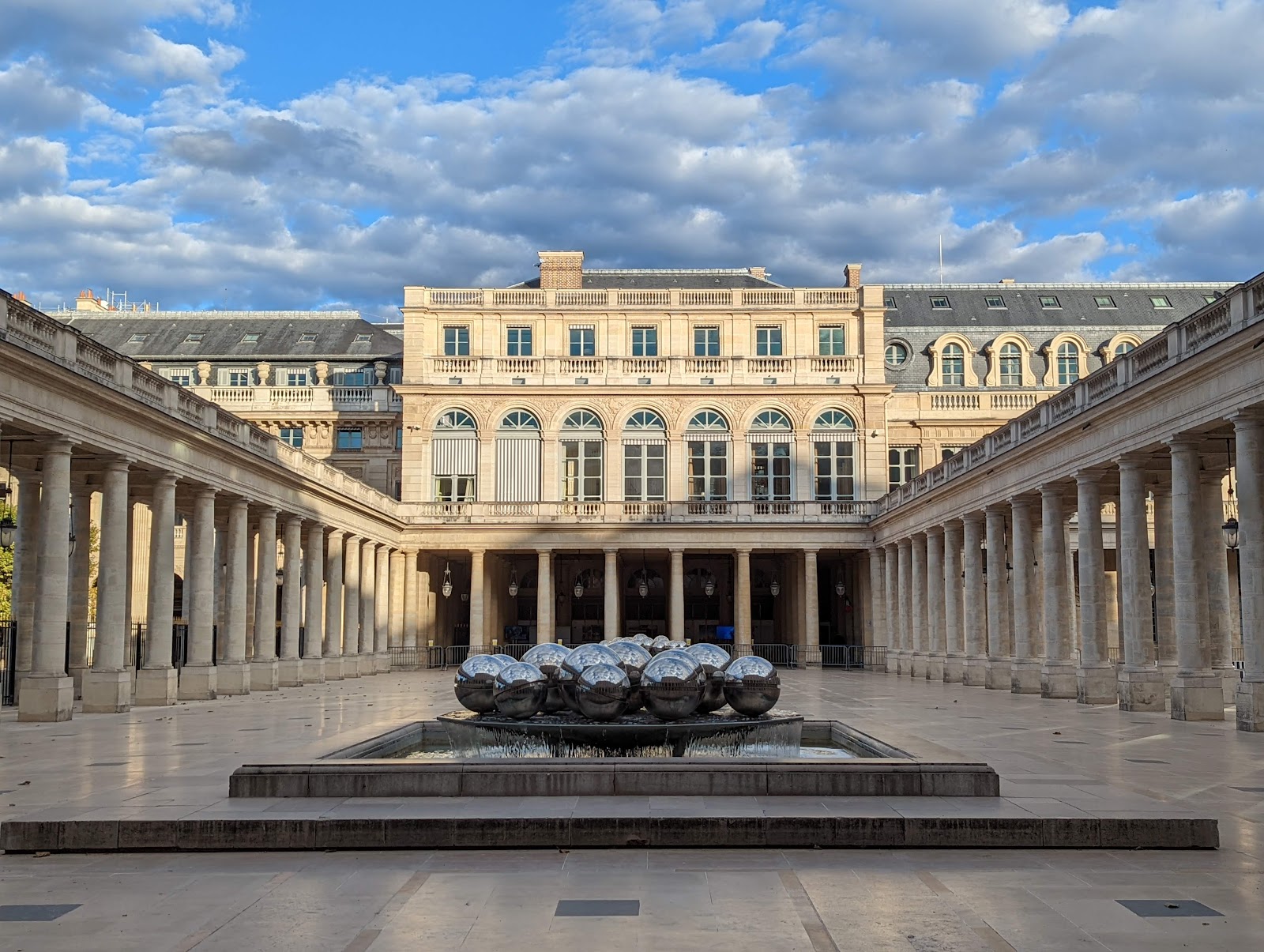
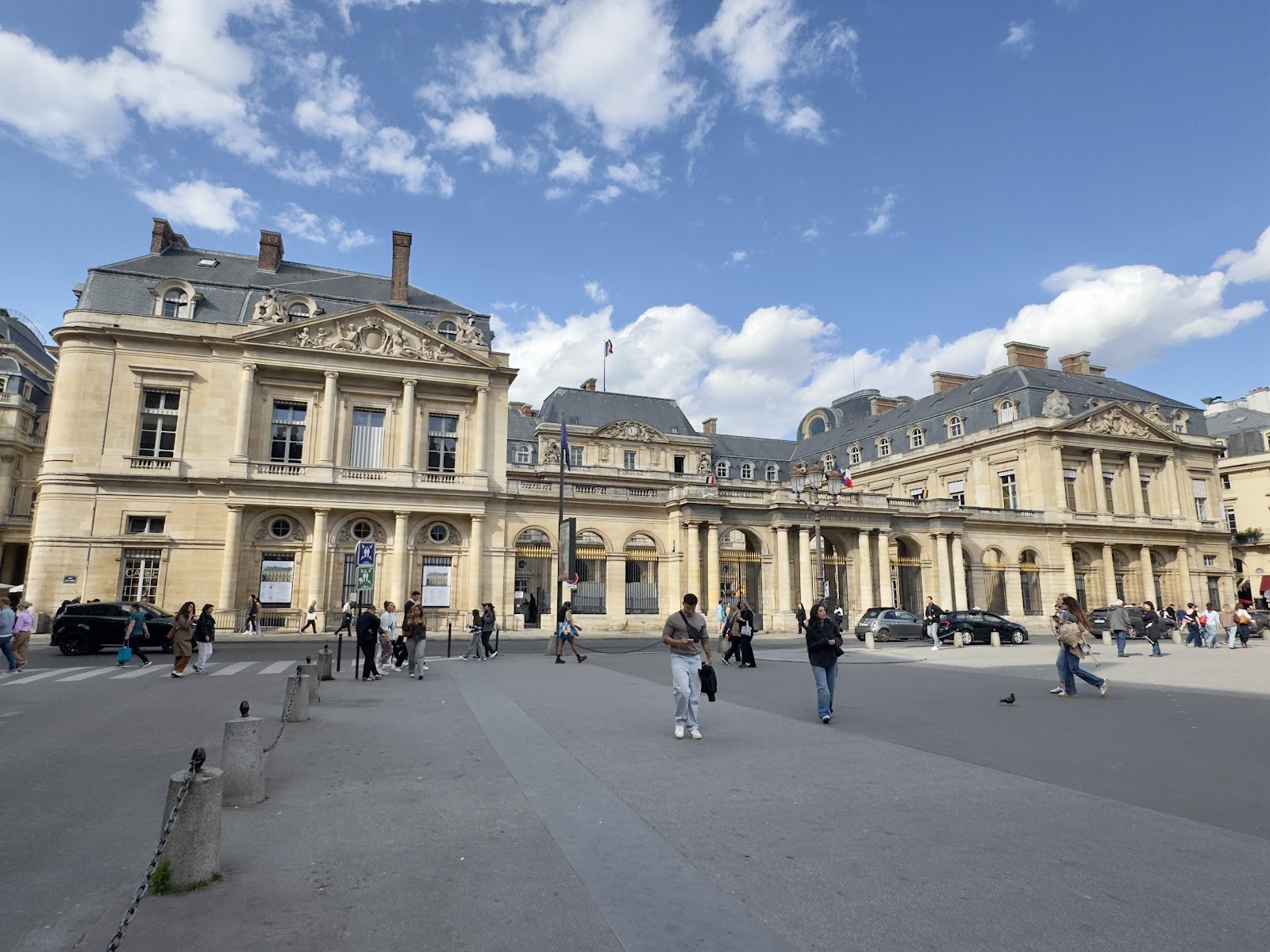
A cardinal built this place for himself in 1633, and the ambition shows. What greets you first in the Cour d'Honneur are Daniel Buren's 260 black-and-white striped columns — squat, geometric, slightly absurd — rising from the cobblestones like a chess set someone abandoned mid-game. Beyond them, the garden opens into lime-tree avenues, a central fountain, and the long arcaded galleries where Le Grand Véfour has been serving lunch since 1784.
Palais Royal does something rare in central Paris: it slows you down. The arcades muffle street noise, the garden has actual benches people actually sit on, and the whole ensemble feels less like a monument than a place where the city comes to think.
💛 What travellers fall for
People who return tend to arrive just before noon on a Wednesday to catch the small cannon in the garden fire at midday — it's powered by a lens that focuses sunlight, and it goes off with a crack that startles everyone equally. Pol Bury's polished-sphere fountains in the Galerie d'Orléans are worth a second look: the reflections distort the arcades into something almost painterly.
The story behind Palais Royal
Cardinal Richelieu commissioned Jacques Lemercier to build the palace between 1633 and 1639 as his personal residence — it was called the Palais-Cardinal until Richelieu's death, when the royal family moved in and gave it its current name. Louis XIV grew up within these walls before the court decamped to the Louvre and then Versailles.
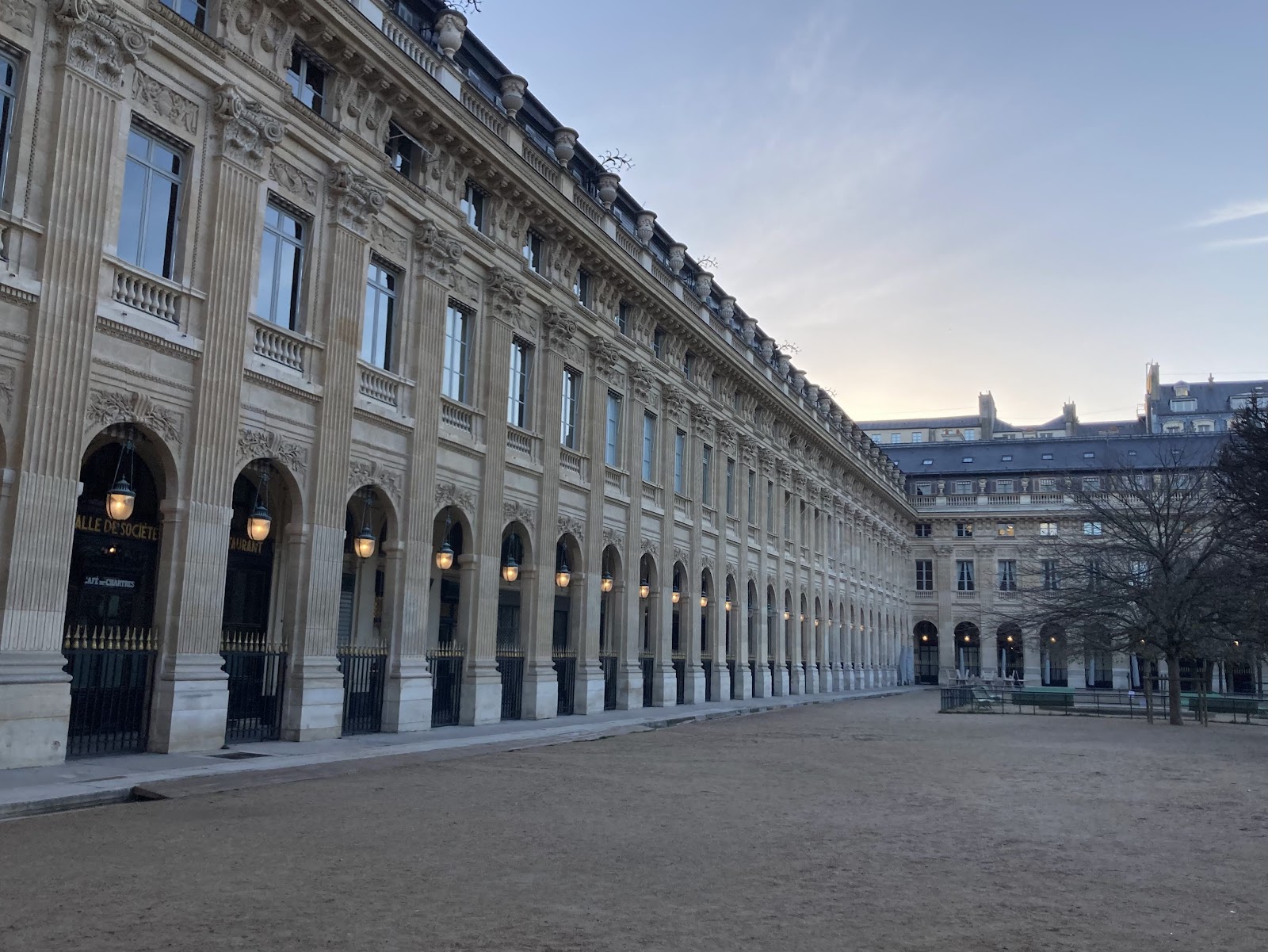
The complex changed character dramatically between 1781 and 1784, when Louis-Philippe II hired Victor Louis to line three sides of the garden with six-story arcaded buildings, effectively turning the grounds into one of Europe's first covered shopping and entertainment districts. On 12 July 1789, the journalist Camille Desmoulins stood in this garden and gave the speech that two days later became the storming of the Bastille. The Communards burned much of the palace in 1871; it was restored by 1876 and handed to the state.
Good to know
Take Métro line 1 to Palais Royal – Musée du Louvre. The garden is free and open daily — until 10:30 pm in summer, 8:30 pm in winter. The arcades house boutiques and Le Grand Véfour; the palace interior itself is occupied by government offices and not open to the public.
Spring brings flowers into the garden and makes the lime-tree avenues genuinely pleasant from late March onward. Autumn is quieter and the trees turn well; summer afternoons can be warm under the arcades but the garden stays shaded.
Where is Palais Royal?
More tickets & tours for Palais Royal
Book directly at the provider
What travellers say about Palais Royal
Entered the grounds to visit the gardens but amazed at the beauty of the structure that wandered through the many black and white stripped columns. The structure that surrounds the grounds is massive and very well maintained. The structure was created by Cardinal de Richelieu in 1633, the Palais Royal and its gardens, were home to the royal families until Versailles was built. The gardens are quite large and colorful with chairs and benches to sit and rest with some around the beautiful fountain. Beautiful structure and gardens.
What opulence the Cardinals had in the Monarchy at that period. Such grandeur structures with gardens attached makes today a sight for tourists. A sculpture has been placed in a forecourt, allowing people to stand on and take photos. It's well worth the visit
Stopped by Palais-Royal while in the area and was glad I did, even though I didn’t have as much time to linger as I would have liked. The contrast between the classical arcades and the black-and-white column installation by Daniel Buren is striking in person. The space feels composed but playful — kids climbing the columns, people sitting along the edges, light moving across the courtyard. The gardens on the other side are equally worth a walk through. It’s a rare example of historic architecture and contemporary art sharing the same space without tension. If you’re nearby, it’s absolutely worth stopping to see it for yourself, even briefly.
It's a interesting place and free to walk around. There are art galleries, shops and restaurants around the complex, good for a short break from the busy areas.
This unique location, with its rows of pillars of varying heights, makes it a popular photo spot. I visited around sunset, and there weren't many people there.
More of Paris
Discover where to stay, what to do and the best deals for your trip.
Explore Paris →More attractions in Paris
All of Paris →
Background adapted from Wikipedia (CC BY-SA) · map data © OpenStreetMap contributors · ratings & place photos via Google · other photos with per-image credit. Ticket links may earn us a commission at no extra cost to you.