
Palais de l'Élysée
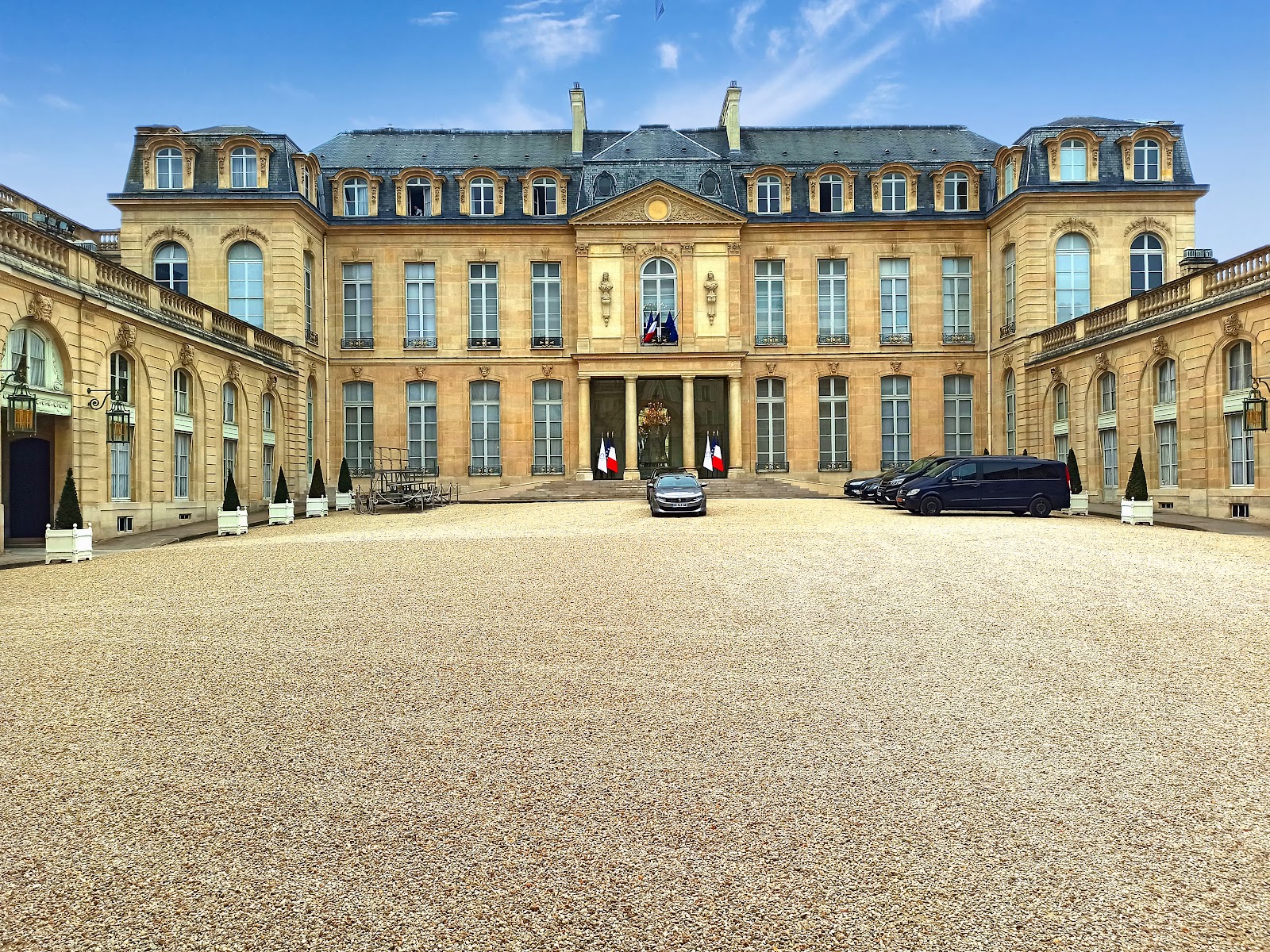
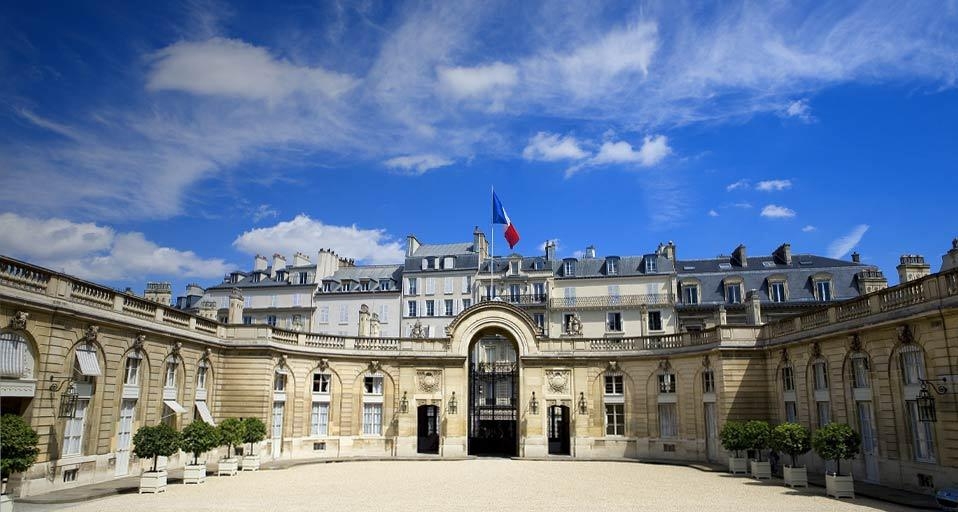
The French president's residence stands behind its iron gate on Rue du Faubourg Saint-Honoré, a 365-room hôtel particulier that the public gets exactly one weekend a year to walk through. During the Journées européennes du patrimoine, the queues stretch early and the wait is worth it: you pass through the same Hall of Honour where heads of state arrive, and into salons that have barely changed since architect Joseph-Eugène Lacroix finished his renovations in 1867.
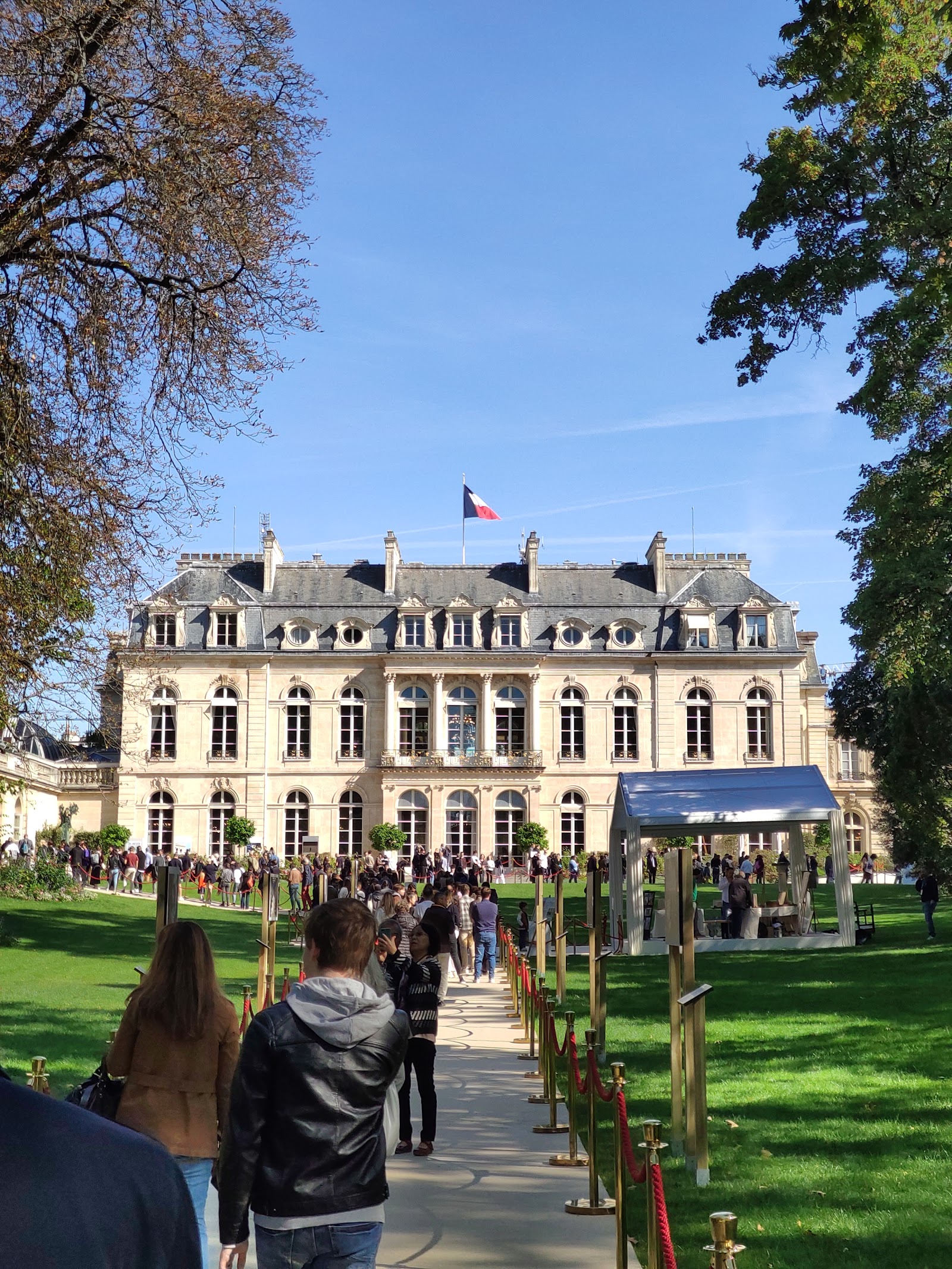
Out back, the two-hectare English garden holds plane trees that were already old before the Revolution. Near the Avenue Gabriel boundary, the Belle Époque Grille du Coq — a cast-iron gate topped with a rooster — marks the garden's edge with the kind of detail that rewards anyone who looks up.
💛 What travellers fall for
People who've done the Heritage Days visit say the same thing: go for the Salon Murat, where the cabinet meets every Wednesday, and linger in the Jardins d'Hiver — the 1883 greenhouse that now extends the Salle des Fêtes. If the line for the palace defeats you, the Maison Élysée across the street runs free guided tours Tuesday through Friday, no queue required.
The story behind Palais de l'Élysée
Armand-Claude Mollet built the mansion between 1718 and 1722 for Louis Henri de la Tour d'Auvergne, Count of Évreux, bankrolled largely by the two-million-livre dowry his wife Marie-Anne Crozat had brought to their 1707 marriage. It passed through notable hands — Madame de Pompadour lived here, as did the financier Nicolas Beaujon, for whom Étienne-Louis Boullée redecorated it in 1773. The Duchess of Bourbon gave it the name Élysée in 1787.
Louis-Napoléon Bonaparte moved in as the Republic's first president in 1848, and between 1853 and 1867 had architect Joseph-Eugène Lacroix reshape the interiors into the form they essentially hold today. The Third Republic made it the official presidential residence in 1873. On 14 June 1940, German forces raised their flag on the roof; the building served briefly as a prisoner camp before being vacated and guarded until French authorities reclaimed it in August 1944.
Good to know
The palace opens once a year for European Heritage Days (usually the third weekend of September). Entry is free; bring ID and arrive early — lines form before opening. Year-round, the Maison Élysée across the street offers free guided tours (booking online required). Nearest métro: Champs-Élysées Clemenceau, lines 1 and 13.
Where is Palais de l'Élysée?
Location
- In Paris 8th Arrondissement
- 48.8707, 2.3167
- Open in Google Maps
Rating
3.7 ★ · 1,770 Google reviews
More tickets & tours for Palais de l'Élysée
Book directly at the provider
What travellers say about Palais de l'Élysée
Élysée Palace (Palais de l’Élysée) is the official residence and workplace of the President of the French Republic, located on Rue du Faubourg-Saint-Honoré in Paris, France. It is one of the most important political buildings in the country and a symbol of the French state. The palace was built in the 18th century, completed in 1722, and originally served as a private aristocratic mansion. It later became associated with French political power and was officially designated as the presidential residence in 1873. The Élysée Palace is notable for: 🏛️ The official residence of French presidents 🇫🇷 A central symbol of the French Republic and government 👑 A former aristocratic residence with elegant classical architecture 🎨 Historic salons, gardens, and ceremonial rooms 📜 Hosting important diplomatic meetings, state ceremonies, and political decisions 🌳 Beautiful gardens and a prestigious location near the Champs-Élysées Throughout its history, the palace has witnessed major moments in French political life, from the Napoleonic era to modern presidential administrations. Its grand interiors combine royal-style decoration with the functions of a modern government institution. Although normally closed to the public, the palace occasionally opens during special events such as European Heritage Days (Journées européennes du patrimoine), allowing visitors to explore its historic rooms.
Amazing event. Lovely place. Come visit anytime if you pay some tax in France, since you technically own a piece of the palais 😍
Élysées Palace is an exquisite luxury hotel located just steps from the iconic Champs-Élysées. This opulent establishment combines classic Parisian elegance with modern comforts, making it a premier choice for discerning travelers. The rooms and suites are tastefully decorated, offering a blend of sophistication and comfort, with many featuring stunning views of the city. Guests can indulge in exceptional amenities, including a world-class spa and a fitness center. Dining at Élysées Palace is a highlight, with its renowned restaurants offering a range of culinary delights. The elegant ambiance, paired with attentive service, ensures a memorable dining experience. Whether you’re in Paris for business or leisure, Élysées Palace provides a tranquil haven amidst the vibrant city, with easy access to shopping, cultural sites, and entertainment.
We could only get a view from outside, still it was nice. There were no official acts. It was quiet
From outside is looking good ..and is one strange sensation..what makes you to enter inside ..
More of Paris 8th Arrondissement
Discover where to stay, what to do and the best deals for your trip.
Explore Paris 8th Arrondissement →More attractions in Paris 8th Arrondissement
All of Paris 8th Arrondissement →
Background adapted from Wikipedia (CC BY-SA) · map data © OpenStreetMap contributors · ratings & place photos via Google · other photos with per-image credit. Ticket links may earn us a commission at no extra cost to you.