
Palais Carnolès
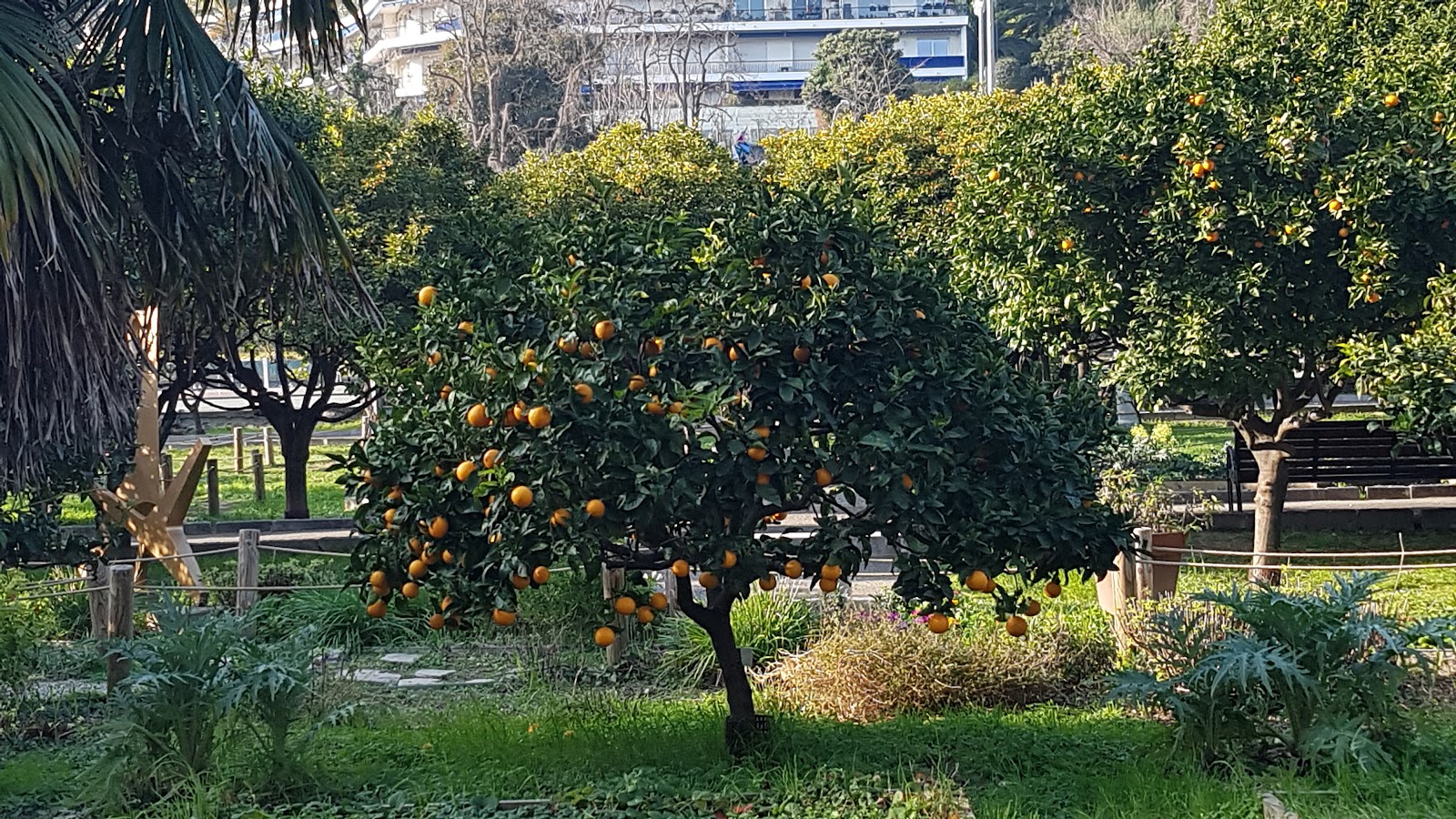
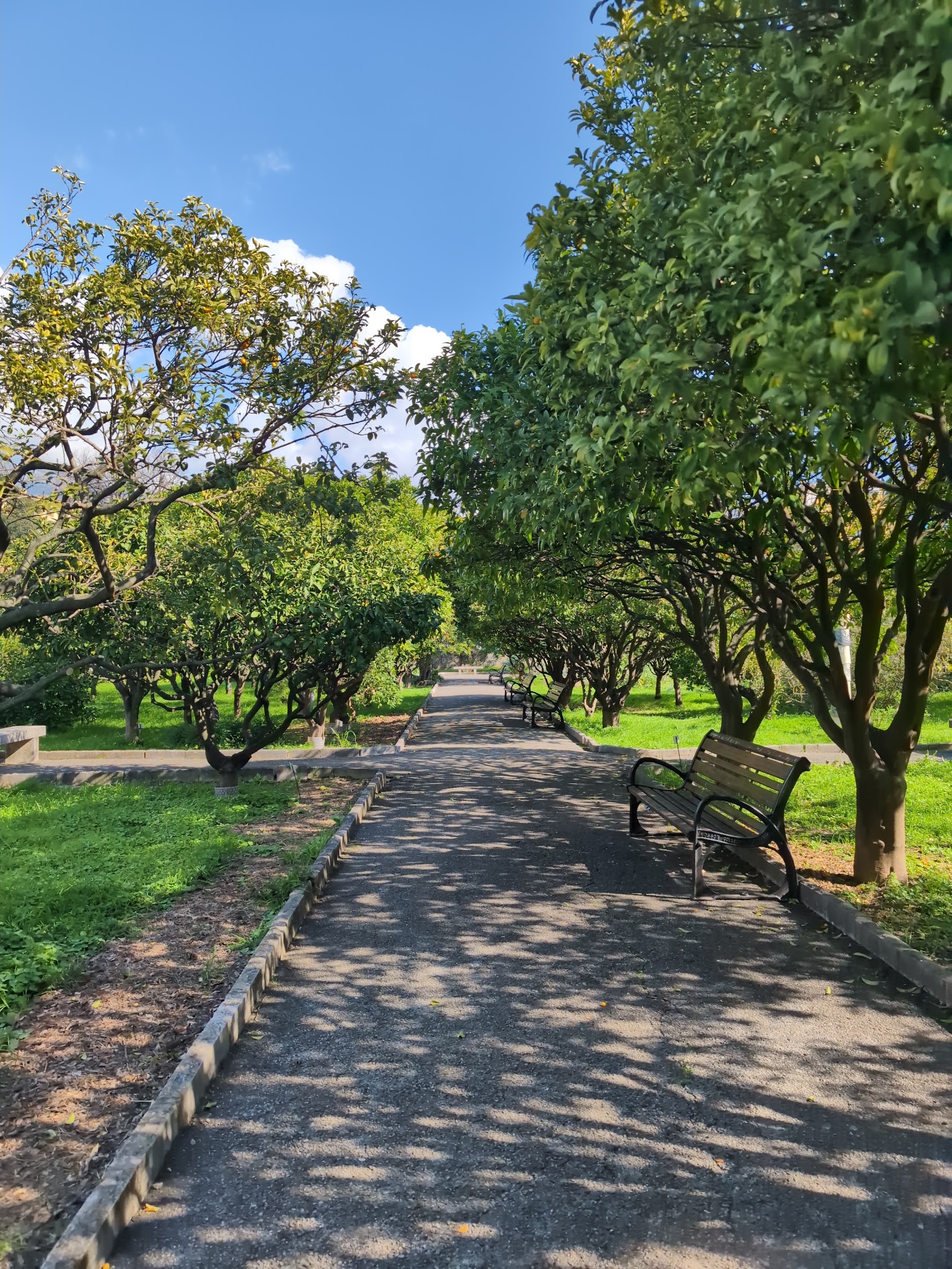
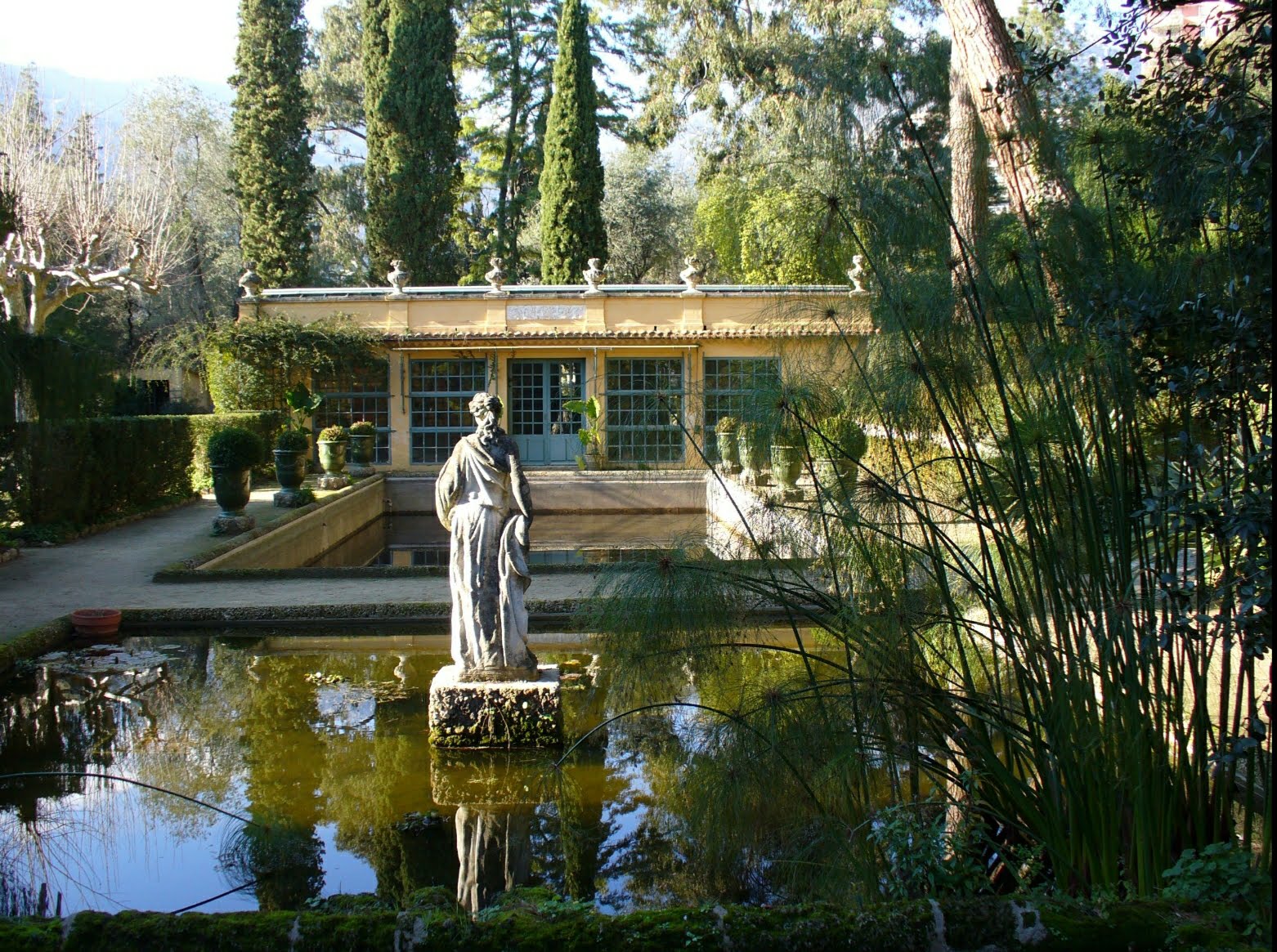
The garden at Palais Carnolès holds 137 labeled citrus varieties — sweet oranges, bitter oranges, kumquats, grapefruit, lemon trees — arranged in a rectilinear park that the Ministry of Culture has designated a *Jardin remarquable*. Phoenix canariensis palms line the main pathway, and since 1994 a collection of contemporary sculpture has occupied corners of the grounds. The whole thing is officially the Conservatoire national d'agrumes, France's national citrus collection.
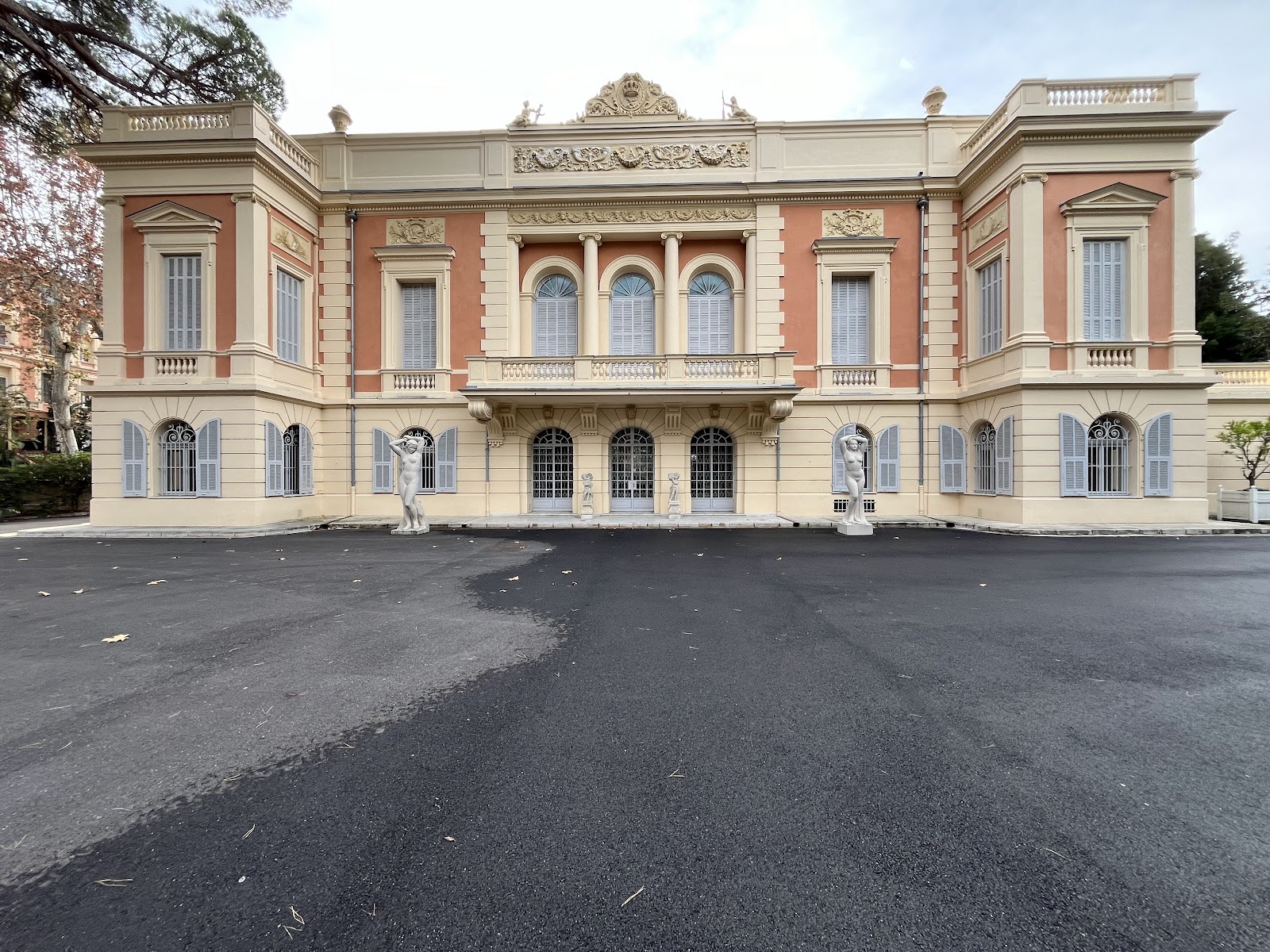
Behind the garden stands the palace itself: an 18th-century summer residence for the Grimaldi princes, built in the manner of the Grand Trianon, with two pavilions connected by a portico and a double-height Italian salon opening onto the park through three large arcades. It has been a casino, an American industrialist's retreat, and a municipal museum of fine arts. As of 2026, it is closed for a major renovation, with reopening expected in 2028.
💛 What travellers fall for
People who know the place tend to spend more time in the citrus grove than they planned. The labels are genuinely informative, and spotting the difference between *citrus aurantium* and *citrus sinensis* in fruit becomes a small, absorbing game. The hexagonal baroque kiosk with its tiled dome, tucked toward the park side, is easy to walk past without noticing.
The story behind Palais Carnolès
Antoine I Grimaldi bought the Carnolès lands from the monks of Lérins in 1717 and commissioned a summer palace completed in 1725, using architects from Louis XIV's circle — plans attributed to Jacques V Gabriel, adapted by Jean Antoine Latour. The princes reached it by boat until a carriage road was opened, now the Basse Corniche. After changing hands in 1818, the palace was redecorated in Empire style under Prince Honoré V, with painter Raphaël Orsolino working the grand salon walls in 1822.
Sold by the principality in 1863, it spent over a decade as a casino before the American industrialist Edward Philips Allis Jr. purchased it in 1896. He brought in Danish architect Hans-Georg Tersling to expand and modernise the building, and Danish painter Oscar Matthiesen to redecorate in a neo-Pompeian style in 1903. The City of Menton acquired it in 1961; the Museum of Fine Arts — anchored by a collection of around 100 paintings assembled and bequeathed by English aesthete Charles Wakefield-Mori — opened in 1977.
Good to know
The palace and museum are closed for renovation until approximately 2028 — confirm before visiting. The garden, on Avenue de la Madone, has historically been free to enter. The Menton-Garavan railway station is the closest rail stop. Allow two to three hours if the building reopens.
The garden is most rewarding in late winter and spring, when the citrus trees carry both fruit and blossom simultaneously. Summer afternoons on Avenue de la Madone can be warm; the palm-lined paths offer some shade, but mornings are more comfortable for a long visit.
Where is Palais Carnolès?
More tickets & tours for Palais Carnolès
Book directly at the provider
What travellers say about Palais Carnolès
Guided tour was excellent, very informative fusion of history, cultural traditions and their links to the local development of agriculture.
Poor maintenance, the trees and plant are sick and weedy. It was useless to come.
Nice garden, completely free. Some statues citrus trees, palms. Every fruit is just green in August.
Its not too big, but its a cool place to discover. In and out you can do the entire visit in 30 minutes, you will discover a large variety of different citrus trees. Recommended for sure and it does not have a fee :)
Wonderful collection of Citrus trees. The scent of the blossom is marvellous ( don't pick the fruit, it's not allowed) Nice place for contemplation
More of Menton
Discover where to stay, what to do and the best deals for your trip.
Explore Menton →More attractions in Menton
All of Menton →
Background adapted from Wikipedia (CC BY-SA) · map data © OpenStreetMap contributors · ratings & place photos via Google · other photos with per-image credit. Ticket links may earn us a commission at no extra cost to you.