
Oceanographic Museum of Monaco

The building announces itself before you reach the door: 100,000 tons of white La Turbie limestone stacked 85 metres above the sea, with the names of twenty scientific research vessels carved into the frieze and two allegorical figures flanking the entrance in Brescia marble. Step inside and the circular mosaic in the entrance hall shows Prince Albert I's ship *Princess-Alice* ringed by flying fish and octopus — a deliberate threshold between the world above and everything below.
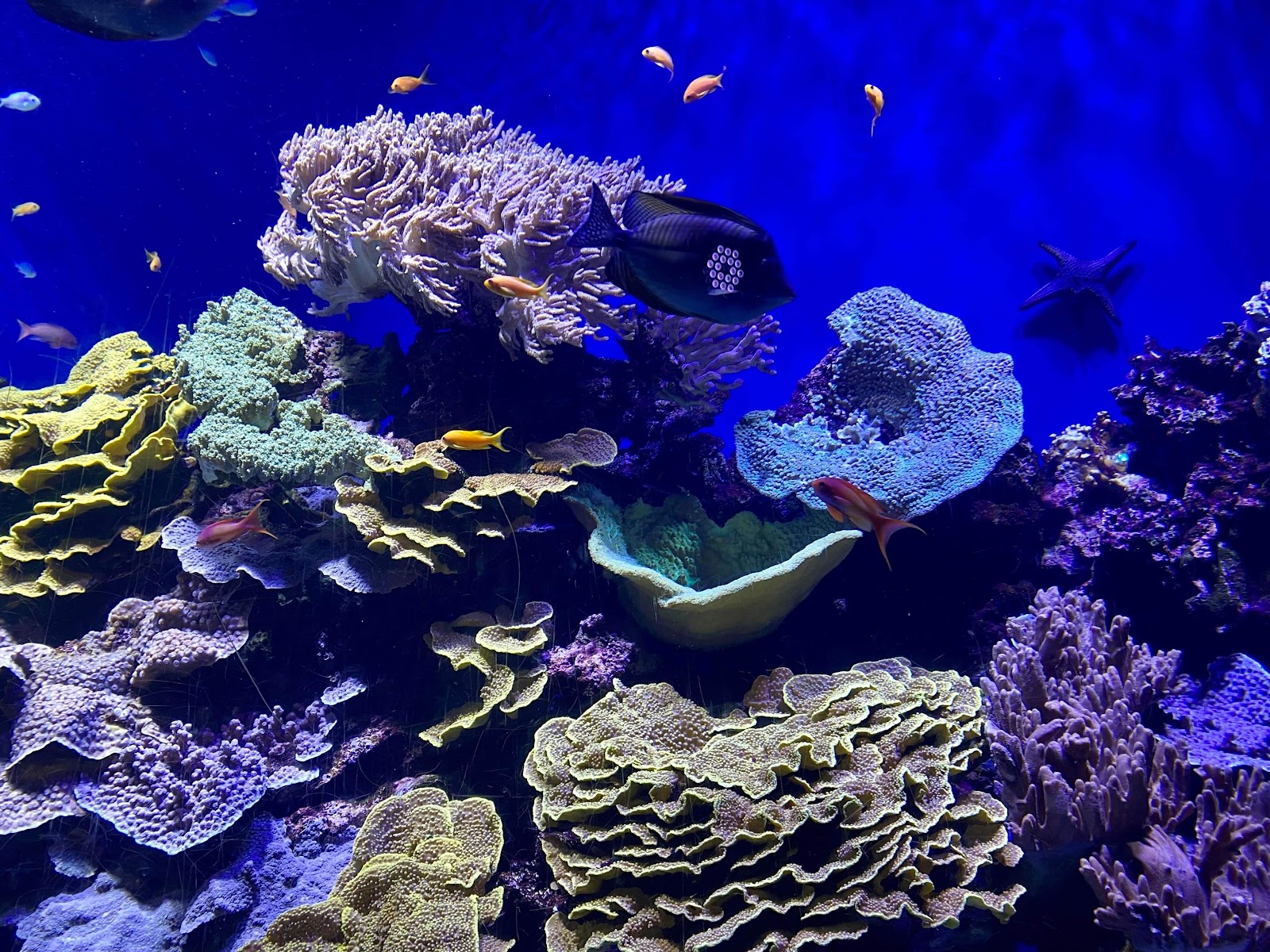
The basement aquarium holds around 6,000 specimens across roughly 100 tanks, including a moray eel that has been in residence for over thirty years and a Shark Lagoon with 450,000 litres of seawater behind 35-centimetre-thick glass.
💛 What travellers fall for
People who come back tend to linger in two places: the Salle de la Baleine, where fin whale, orca and seal skeletons are lit and scored to orchestral music on the hour, and the rooftop terrace, where a large whale harpoon points out over open water. The Cabinet of Curiosities — Oceanomania, designed by Mark Zion — rewards slow looking.
The story behind Oceanographic Museum of Monaco
Prince Albert I laid the foundation stone on 25 April 1899. Architect Paul Delefortrie spent eleven years overseeing construction before the inauguration on 29 March 1910 — an event Albert I did not live to see overshadowed, dying in 1922. Known as the 'Prince of the Seas', he had personally led 28 oceanographic campaigns and the specimens he collected still form the backbone of the natural history collections. He formalised his scientific legacy in 1906 by founding the Oceanographic Institute as a charitable organisation.
The museum's second defining chapter belongs to Jacques-Yves Cousteau, who served as director from 1957 to 1988, deepening its public profile considerably. After extensive renovations, the centenary was marked in March 2010.

Good to know
Bus lines 1 or 2 toward 'Rocher' drop you at Place de la Visitation, a short walk away. The Pêcheurs car park sits directly beneath the museum with lifts to the entrance. The museum closes on Christmas Day and during Formula 1 Grand Prix weekend. Allow at least two hours; last admission is 30 minutes before closing.
Where is Oceanographic Museum of Monaco?
More tickets & tours for Oceanographic Museum of Monaco
Book directly at the provider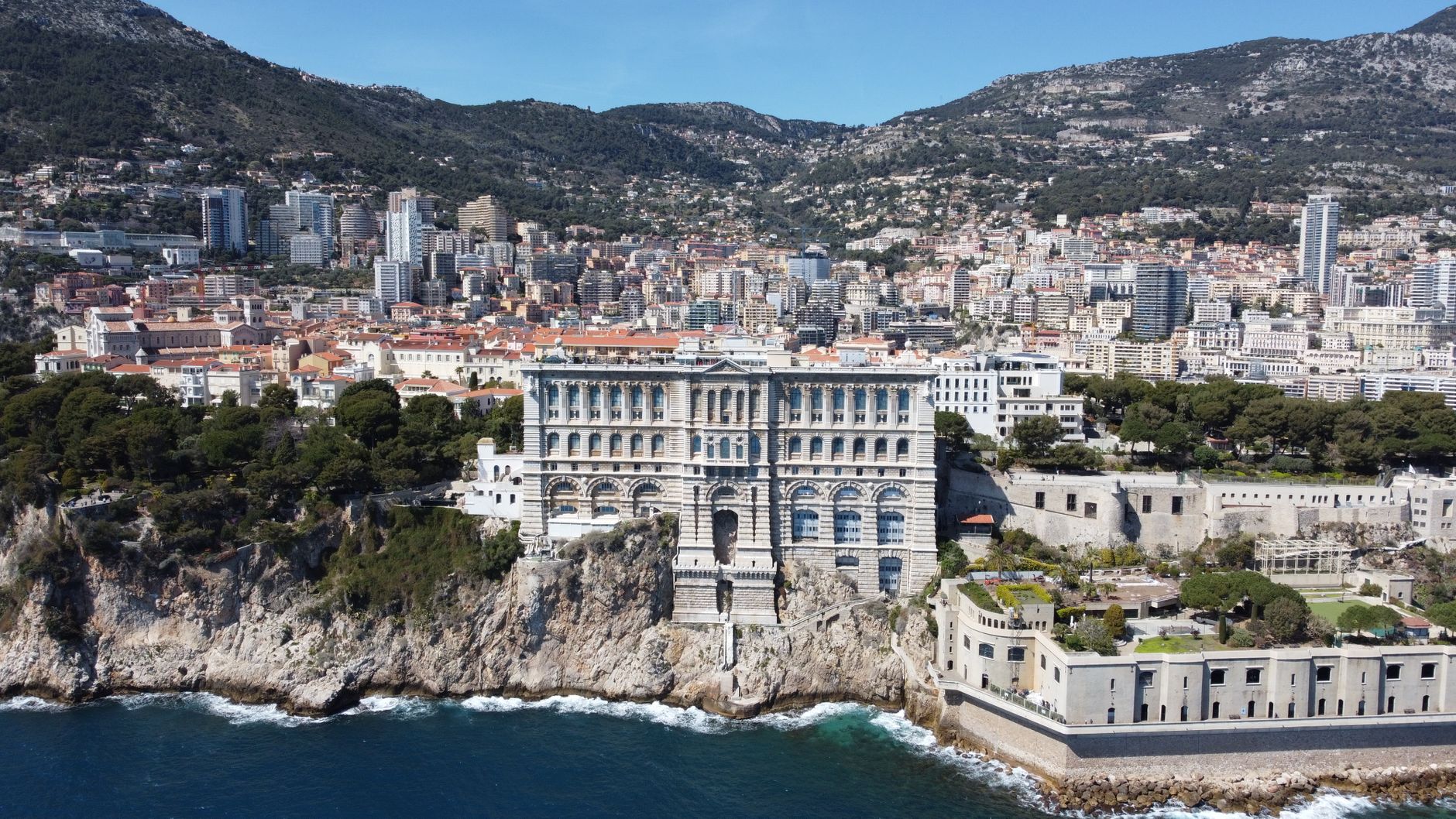
What travellers say about Oceanographic Museum of Monaco
Superb place in Monaco. Highly recommended for a day trip from Nice. If you can only do one day trip from Nice, this is the one. If you can only visit one place in Monaco, this is the one. We loved every floor of this place! The aquarium is great. The exhibit is immersive. Best place I been to in Europe so far. Not to mention that Monaco is an overall nice country to visit.
1. The museum was founded by Prince Albert I, known as the “Navigator Prince,” and officially opened in 1910. He was deeply passionate about marine science and ocean exploration. 2. It is dramatically built into the cliffs of Monaco, rising about 85 meters above the Mediterranean Sea. The building itself feels like a ship carved into stone. 3. The museum took 11 years to construct and used around 100,000 tons of stone during its creation. 4. It is one of the most famous marine science museums in the world and is dedicated to ocean conservation, education, and research. 5. The aquarium section houses more than 6,000 marine specimens and around 350 species of fish from tropical and Mediterranean ecosystems. 6. Legendary ocean explorer Jacques-Yves Cousteau served as the museum’s director from 1957 to 1988, helping elevate its global reputation. 7. The museum contains over 60,000 scientific and historical objects related to marine life, exploration, navigation, and oceanography. 8. One of the highlights is the “Shark Lagoon,” a massive coral reef aquarium that recreates a tropical underwater ecosystem. 9. The rooftop terrace offers spectacular panoramic views of Monaco and the Mediterranean Sea, making it both a scientific and scenic attraction. 10. The museum’s mission today is simple but powerful: to help people “know, love, and protect the oceans.” It continues to play an important role in marine conservation and environmental awareness worldwide.
Didn't visit inside, but the building and its surroundings are stunning. Perched on the edge of the cliff of Le Rocher, this building is visible from almost everywhere. Its daily visited by hundreds people, when I was around there were lot of organized tourist groups, that's why I didn't enter as it was to crowded for me.
Great aquarium, exhibit, and museum! A lot of interactive components to this museum. Easy enough to arrive via metro, bus, and walking. Easy to buy tickets at the desk when you arrive. Great collection of the sea. We really enjoyed the tortoise odyssey. The restaurant kitchen closes around 2pm, but they still have a cafe that serves drinks and sandwiches during that time. The elevators were in high demand during peak hours. There were only two elevators for the entire place so that was inconvenient at times with a stroller. They do have an unsupervised stroller parking area if you wanted to off load and be more mobile. Just plan ahead for this! Otherwise great place and terrace for views of Monaco
A must do in Monaco. The building is beautiful and the fish/animals all seem very happy and active! You can combine your ticket purchase with the gardens or palace - highly recommend you do so!
More of Monaco
Discover where to stay, what to do and the best deals for your trip.
Explore Monaco →More attractions in Monaco
All of Monaco →

Background adapted from Wikipedia (CC BY-SA) · map data © OpenStreetMap contributors · ratings & place photos via Google · other photos with per-image credit. Ticket links may earn us a commission at no extra cost to you.