
Notre-Dame de Paris
Gothic masterpiece on the Île de la Cité — reopened in 2024 and free to admire.
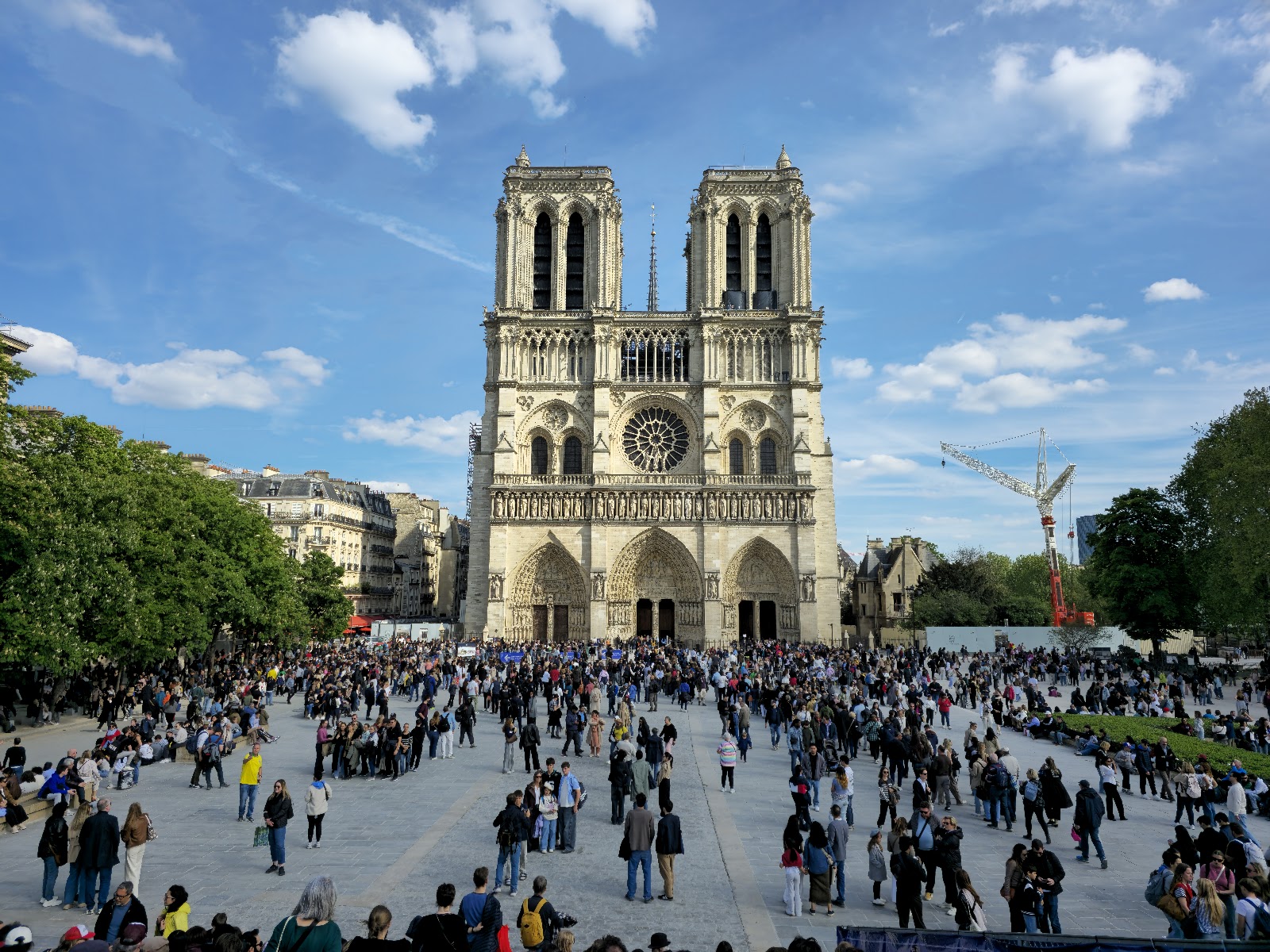
Stand on the Île de la Cité and look up at the west façade long enough and you start to notice the asymmetries — the way the two towers, built decades apart, diverge in small ways that no photograph quite captures. Notre-Dame de Paris has been the gravitational centre of the city since the 12th century, and after the fire of April 2019 stripped its roof and brought down Viollet-le-Duc's spire on live television, it came back on 8 December 2024, rebuilt and free to enter.
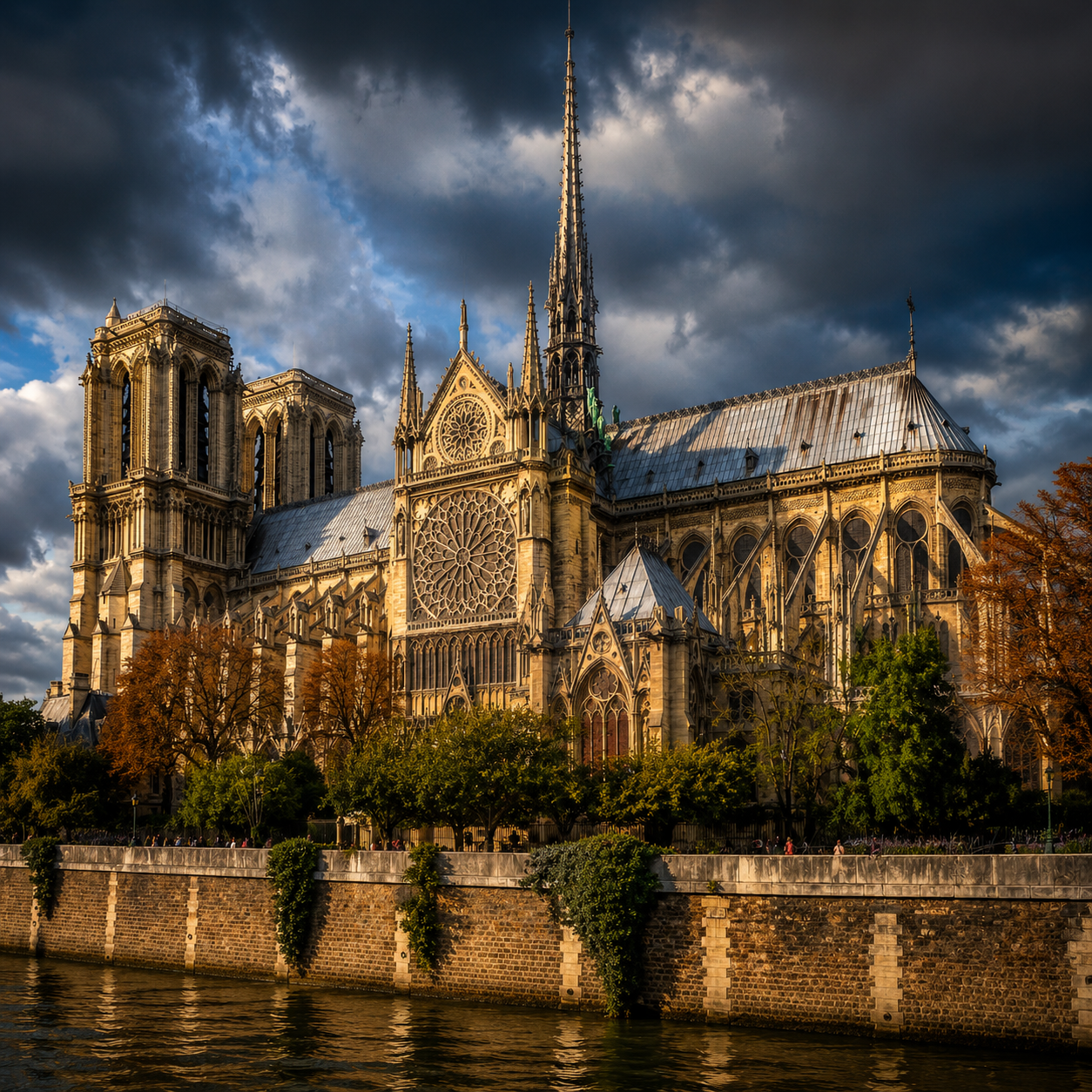
All three rose windows survived the fire — the north (1250), south (1260), and west (1225) — and they remain among the finest examples of 13th-century stained glass anywhere. The spire was rebuilt to Viollet-le-Duc's original design, golden rooster and all.
💛 What travellers fall for
People who return tend to time a visit for a Thursday evening, when the cathedral stays open until 10pm and the crowds have thinned to something manageable. The tower climb — 424 steps, reopened September 2025 with a remarkable wooden double-helix staircase — rewards patience with chimera encounters and a 360° view at 69 metres.
The story behind Notre-Dame de Paris
Bishop Maurice de Sully decided in 1160 that Paris needed a cathedral on a different scale. Construction began in 1163 — King Louis VII and Pope Alexander III were present — and the building took shape over nearly two centuries, with no single architect leaving a name on the work. Jehan de Chelles shaped the north transept from 1250; Pierre de Montreuil completed the south; Jean Ravy finalised the choir screen by 1344. The building as a whole was not considered complete until 1345.
Eugène Viollet-le-Duc led a major restoration from 1844 to 1864, adding the chimeras, recreating the Gallery of Kings, and raising the oak-and-lead spire that would stand until 2019. The post-fire restoration, supervised by architect Philippe Villeneuve, continues into 2026 with stained glass work still underway.
Good to know
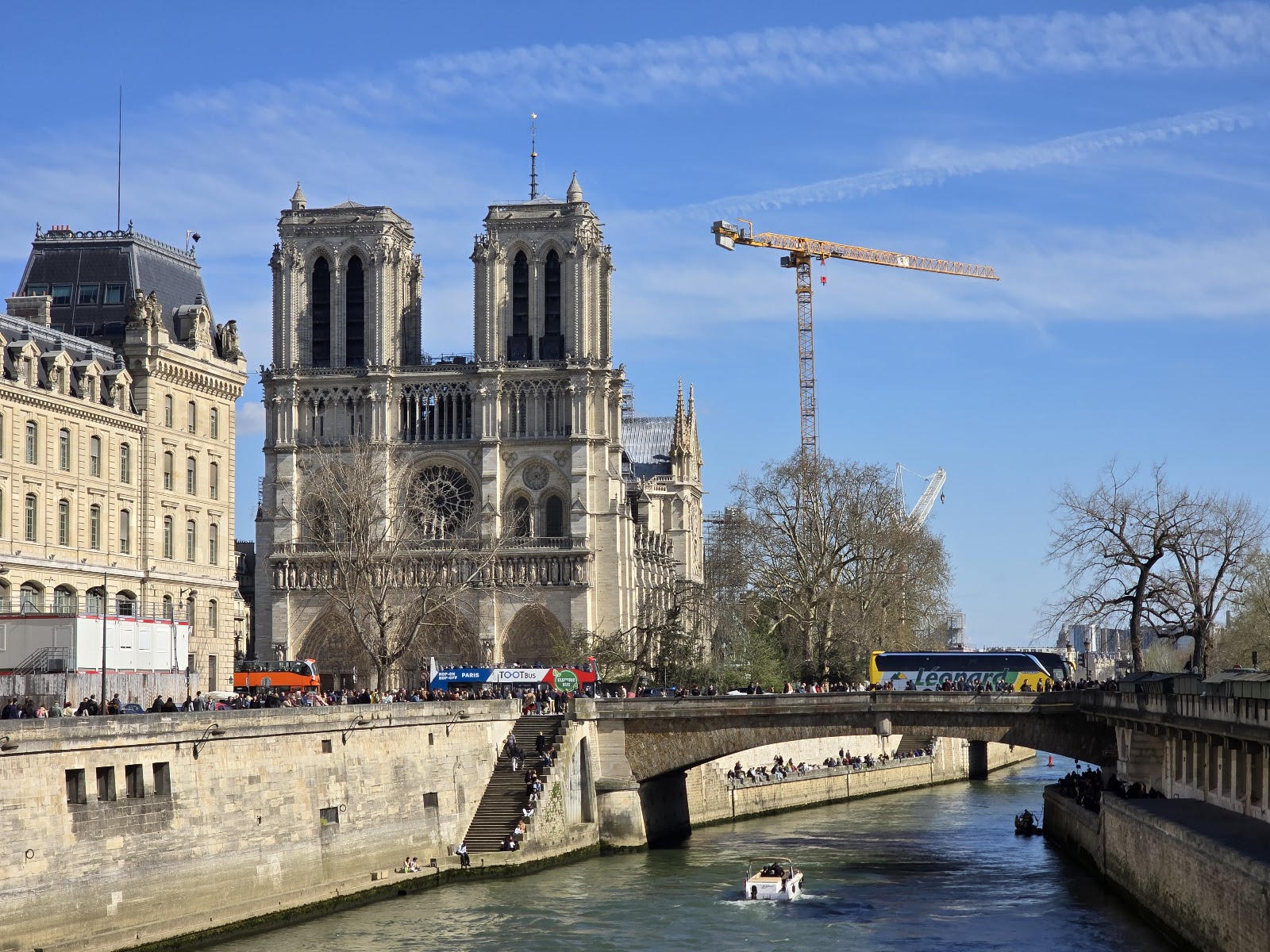
Metro Line 4 to Cité is the closest stop; RER B and C reach Saint-Michel–Notre-Dame. Cathedral entry is free but timed-slot reservations, available on the official website 2–3 days ahead, are strongly advised from April to October — walk-in queues can stretch two to three hours. Cover shoulders and knees or you won't get in.
Where is Notre-Dame de Paris?
More tickets & tours for Notre-Dame de Paris
Book directly at the provider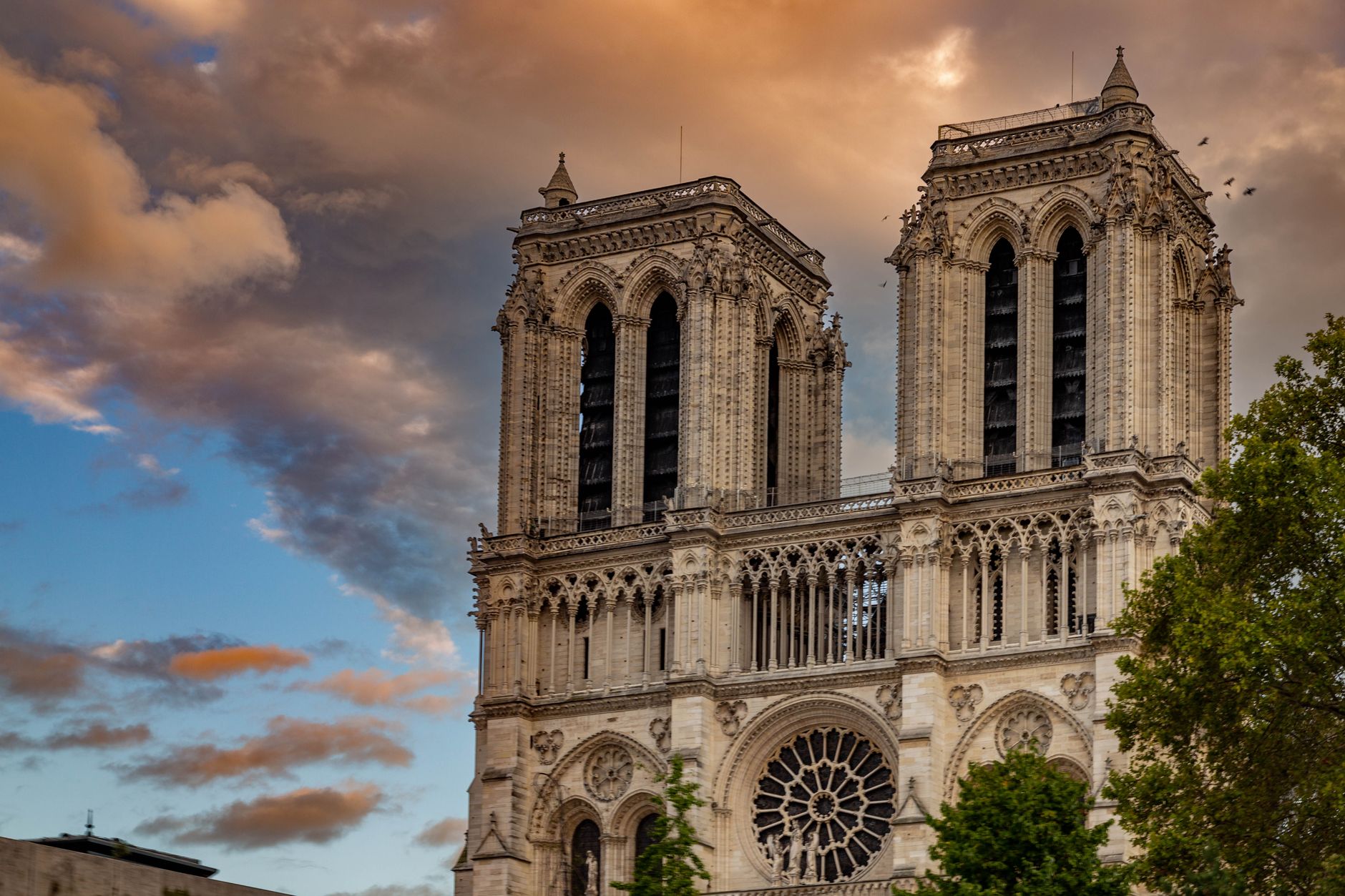
What travellers say about Notre-Dame de Paris
⭐⭐⭐⭐⭐ A truly remarkable and inspiring place. The architecture, craftsmanship, and history of Notre-Dame are simply breathtaking. Every detail of the cathedral reflects centuries of art, faith, and dedication. What made our visit especially memorable was that we happened to arrive during a religious service. The combination of the beautiful choir, the sound of the organ, and the peaceful atmosphere inside the cathedral created an unforgettable experience. It allowed us to appreciate not only the building itself but also its spiritual significance. The recent restoration work is impressive, and seeing this iconic landmark in person was one of the highlights of our trip to Paris. Whether you are interested in history, architecture, or simply wish to experience a unique atmosphere, Notre-Dame is an absolute must-visit.
Notre-Dame Cathedral is one of the most iconic landmarks in Paris and an absolute must-visit. The architecture is breathtaking, with incredible Gothic details, beautiful stained-glass windows, and a remarkable sense of history. Standing in front of the cathedral, it's easy to appreciate the craftsmanship and cultural significance of this world-famous monument. After its restoration, the cathedral continues to inspire visitors from around the world. The interior is peaceful and impressive, while the surrounding area along the Seine offers wonderful views and a perfect setting for a walk through the heart of Paris. Whether you're interested in history, architecture, or simply exploring Paris, Notre-Dame is an unforgettable experience and one of the city's true treasures.
Notre-Dame de Paris is one of the most iconic landmarks in Paris and a masterpiece of French Gothic architecture. Even after the devastating 2019 fire, the cathedral continues to inspire visitors with its remarkable restoration, soaring towers, intricate stone carvings, and stunning stained-glass rose windows. The atmosphere around Notre-Dame is unforgettable, especially when walking along the Seine at sunset. The detailed façade, gargoyles, and grand interior reflect centuries of history, art, and spirituality. Whether you are interested in architecture, history, photography, or simply experiencing the heart of Paris, Notre-Dame is a must-visit destination. Highlights include: * Magnificent Gothic design and craftsmanship * Beautiful stained-glass rose windows * Historic location on Île de la Cité * Incredible views of the Seine and surrounding Paris * Deep cultural and historical significance A visit to Notre-Dame offers a powerful blend of beauty, resilience, and history that leaves a lasting impression on almost every traveler.
Notre-Dame de Paris is absolutely worth visiting. At first, I was shocked by the number of people, but the line moved surprisingly fast. It was more like a slowly walking queue, and even without a reservation it took us only around 15 minutes to get inside on Sunday around midday. Still, I would recommend making a free reservation in advance for a smoother experience. There is also a free app on the official website with an audio guide for both the exterior and interior, which is very helpful if you want to understand the cathedral more deeply. The entrance to the cathedral is free, and there are also organ performances, so it is worth checking the schedule in advance if you would like to experience the music inside this incredible place.
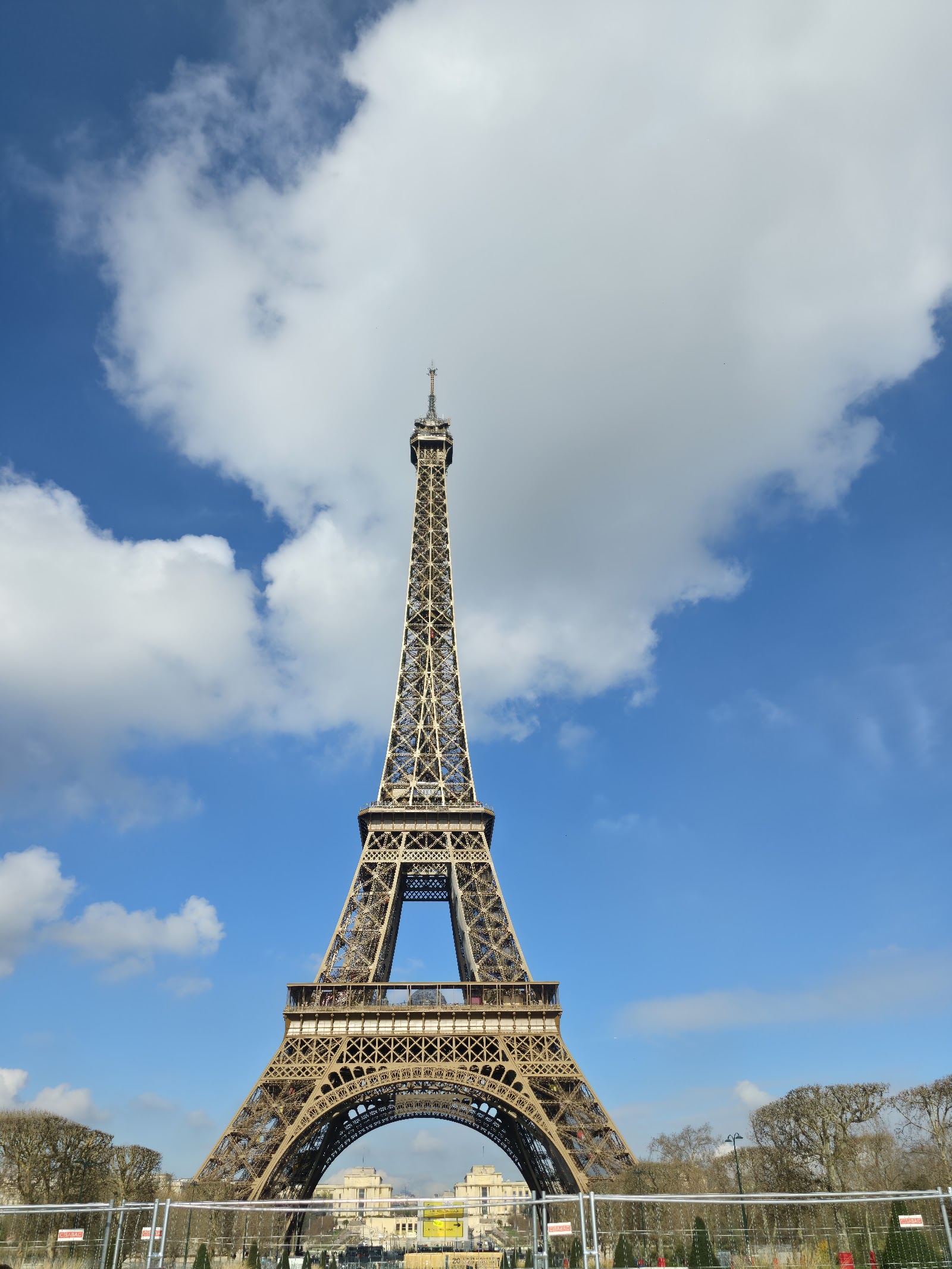
In my opinion, a bigger must-see than the Eiffel Tower. The cathedral was absolutely stunning! If you are not claustrophobic or afraid of heights I highly recommend climbing to the top of the bell tower and experiencing the view of Paris from there. I promise you won’t regret it! If you want to see the inside of the cathedral I recommend planning that out and reserving tickets in advance. This is a highly visited spot and because I didn’t reserve tickets or get there early enough, I was unable to visit the inside of the cathedral. Dont make my mistake!
More of Paris
Discover where to stay, what to do and the best deals for your trip.
Explore Paris →More attractions in Paris
All of Paris →
Background adapted from Wikipedia (CC BY-SA) · map data © OpenStreetMap contributors · ratings & place photos via Google · other photos with per-image credit. Ticket links may earn us a commission at no extra cost to you.