
Noordermarkt
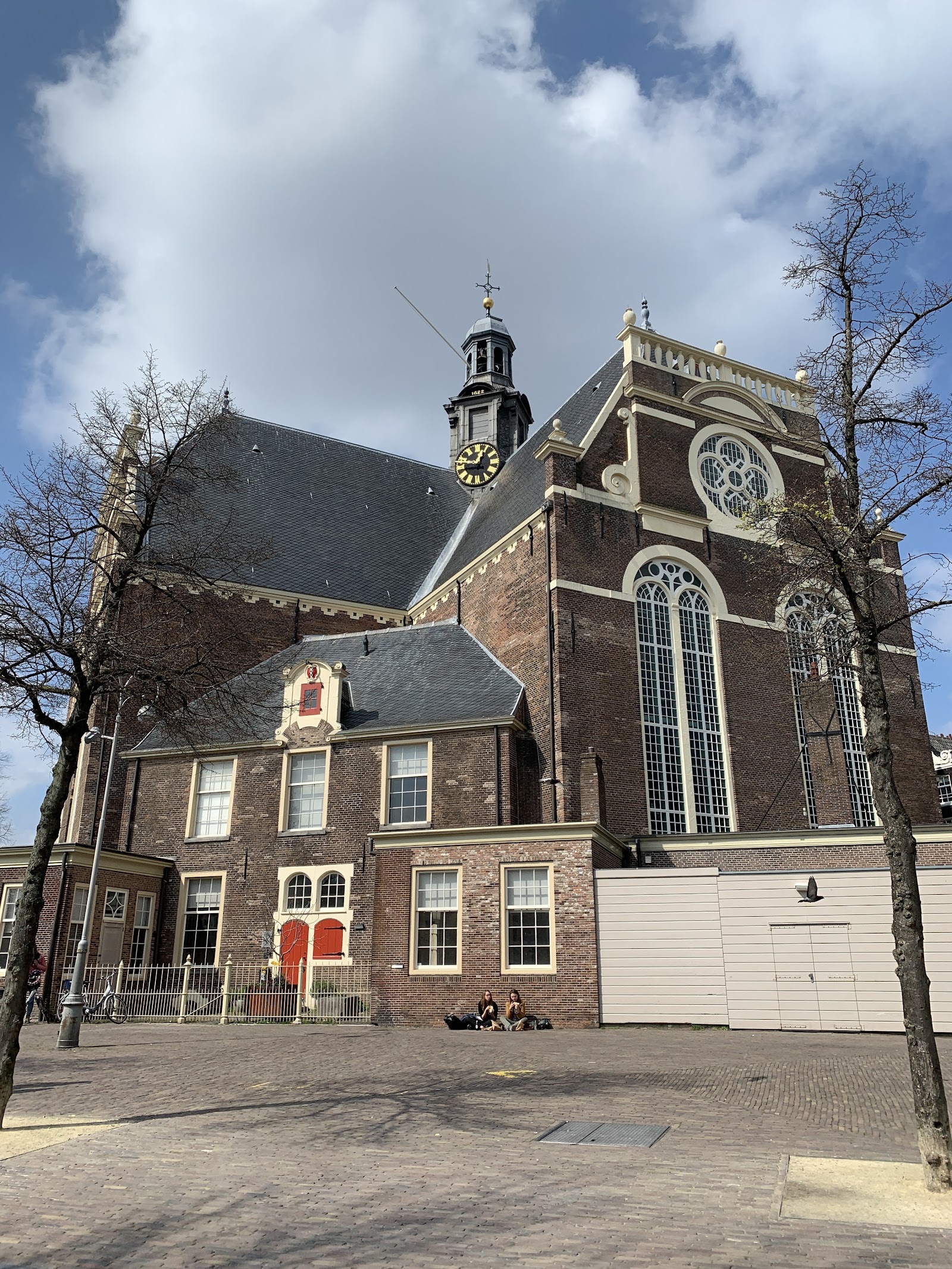
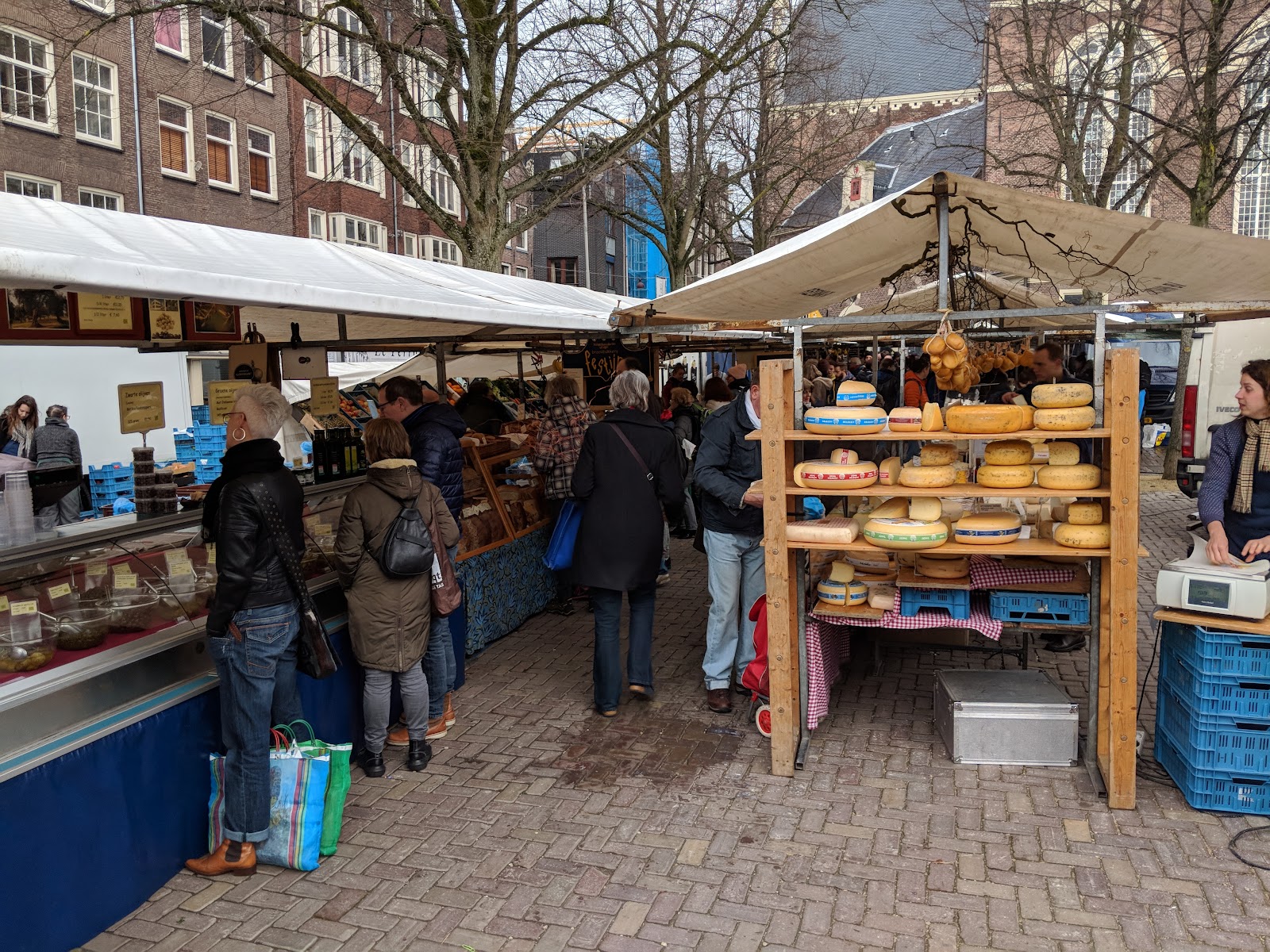
On a Saturday morning, the Noordermarkt square fills before most of Amsterdam has finished its first coffee. Farmers lay out wheels of aged cheese and muddy root vegetables along one end; at the other, someone is holding a stack of old prints up to the light. The 17th-century Noorderkerk anchors it all, its brick tower watching over a square that has hosted commerce in one form or another since 1623.
This is where the Jordaan does its weekly accounting — food, objects, conversation. The organic farmers market here, founded in 1987, was the first of its kind in the Netherlands. The Monday market pulls a quieter crowd, with an emphasis on textiles spilling into adjacent Westerstraat.
💛 What travellers fall for
People who come back tend to arrive early on Saturday for the farmers market end near Café Winkel, then drift toward the brocante stalls as the square fills. Café 't Papeneiland, on the corner of Prinsengracht and Brouwersgracht and trading since 1642, is where regulars land afterward — the apple pie is the reason, and it has been for a long time.
The story behind Noordermarkt
The square was laid out in 1616 under the name Prinsenmarkt, after the Prinsengracht canal running alongside it. Four years later, the city council decided to build a church here. On June 15, 1622, town carpenter Hendrick Staets laid the first stone of the Noorderkerk; the building was in use by April 1623, and the square took the name it still carries today.
For its first three decades the space functioned largely as a churchyard. Markets arrived incrementally — pottery, rags, old hats, straw — and by 1845 a formal weekly Monday market was established. In February 1941, the square served a graver purpose: organizers of the February Strike, a public protest against the Nazi deportation of Amsterdam's Jewish population, held their first open meetings here.
Good to know
Tram 3 or 10 to Marnixbad is the closest stop. Saturday runs 9am–4pm; Monday 9am–2pm. No entry fee — you pay only for what you buy. An hour is enough to cover the square; two if you stop to eat.
Amsterdam's markets run year-round, but winter Saturdays on the square are cold and sometimes wet — dress accordingly and the crowds thin pleasantly. Spring and early autumn offer the most comfortable conditions; summer brings larger numbers and longer light.
Where is Noordermarkt?
Location
- In Jordaan
- 52.3785, 4.8836
- Open in Google Maps
More tickets & tours for Noordermarkt
Book directly at the provider
More of Jordaan
Discover where to stay, what to do and the best deals for your trip.
Explore Jordaan →More attractions in Jordaan
All of Jordaan →


Background adapted from Wikipedia (CC BY-SA) · map data © OpenStreetMap contributors · ratings & place photos via Google · other photos with per-image credit. Ticket links may earn us a commission at no extra cost to you.