
Nieuwmarkt
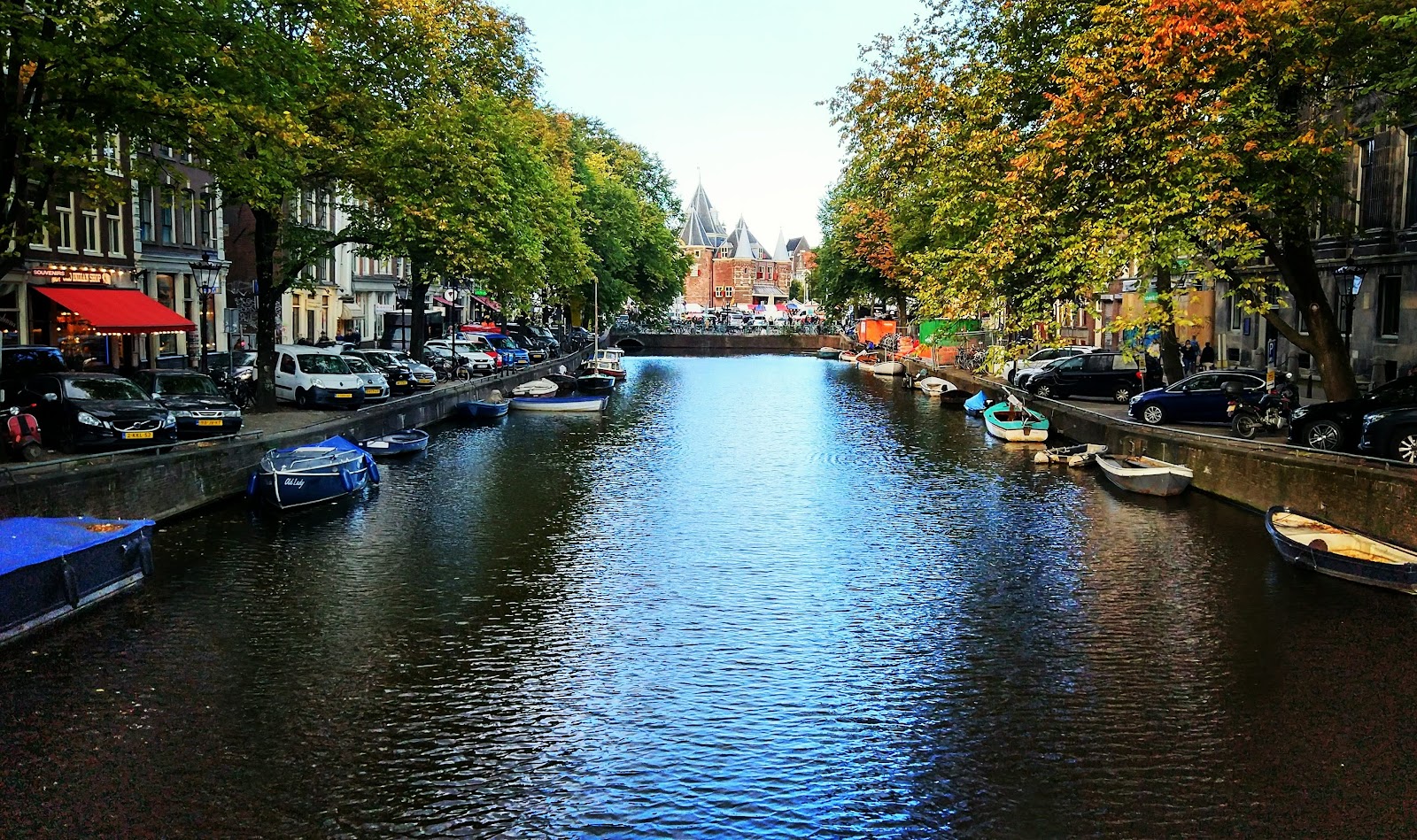
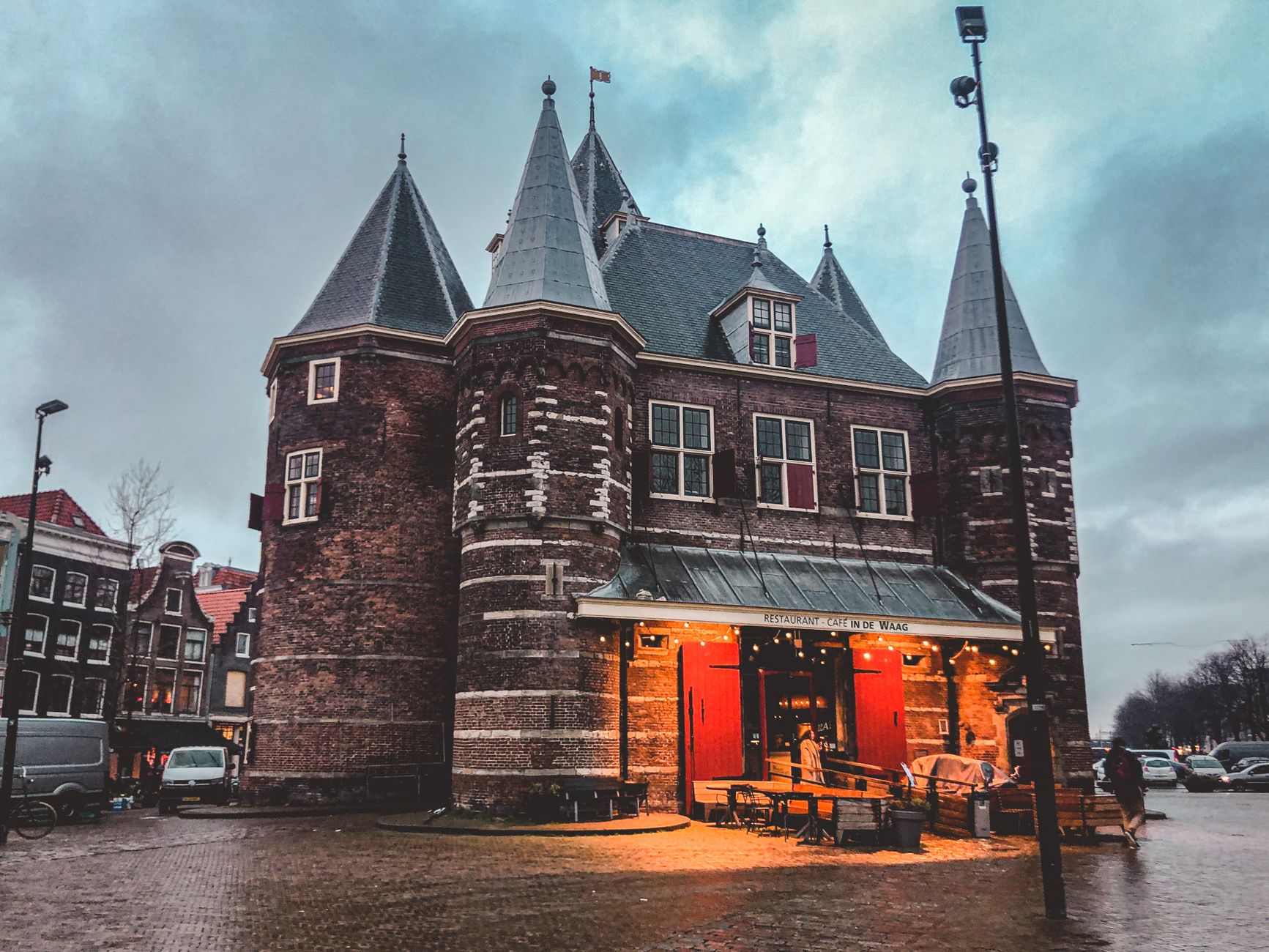
At the centre of Nieuwmarkt stands De Waag, a turreted medieval gatehouse that has been, at various points, a city wall, a weighing house, a surgeons' guild hall, and now a candlelit café. The square around it took its present shape gradually — the surrounding canals filled in 1614, the market officially established a few years later — and it still reads as one of Amsterdam's more layered corners, sitting at the edge of Chinatown and a short walk from De Wallen.
On a weekday morning you'll find a cheesemonger, a flower stall, and usually someone selling herring near the base of De Waag. By Saturday the organic farmers' market takes over; by Sunday in summer, antique dealers spread books and objects across the cobbles.
💛 What travellers fall for
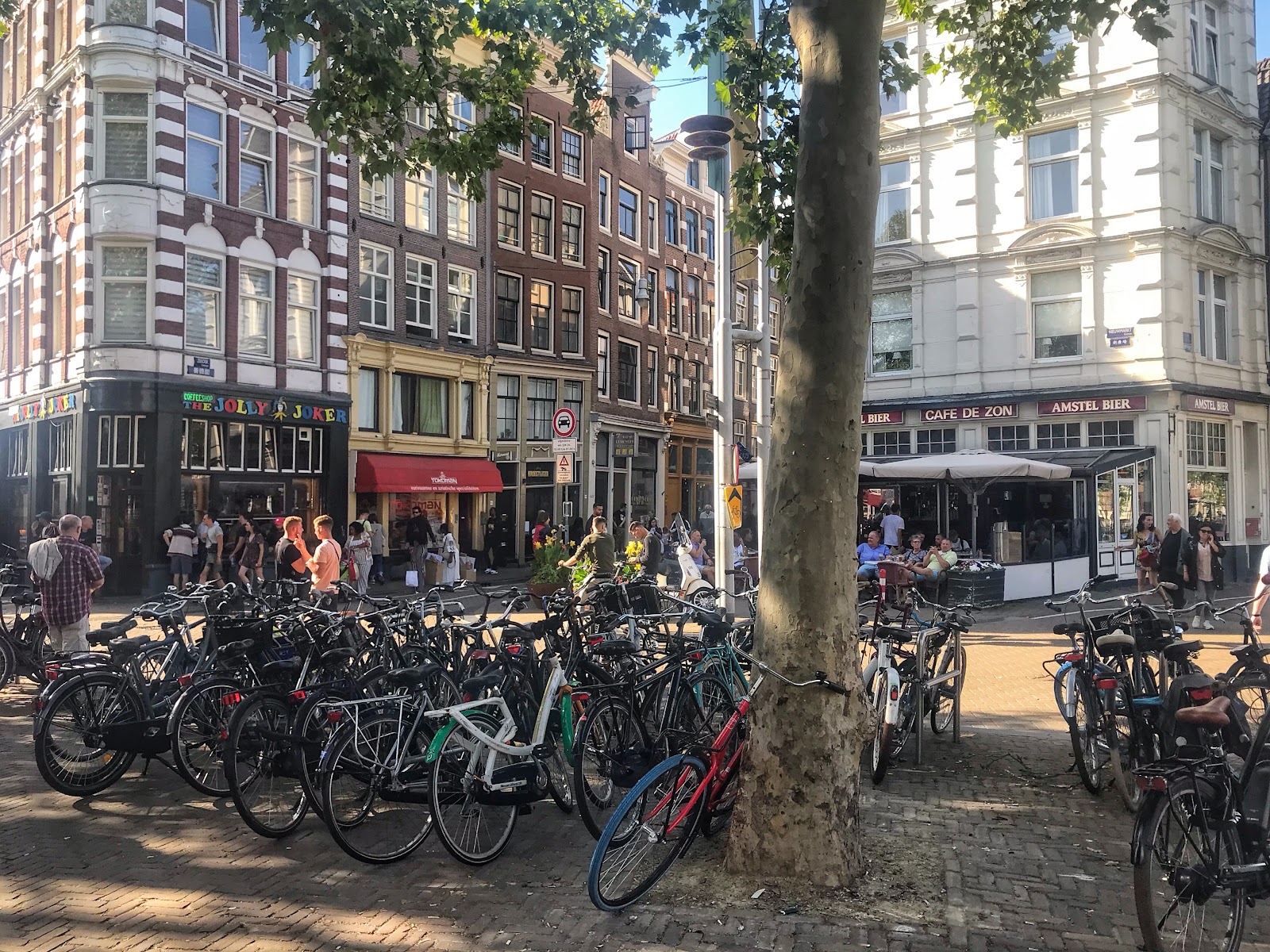
People who come back tend to time it for a Saturday: the farmers' market runs until five, and Café Fonteyn's heated patio fills with a crowd that has nowhere urgent to be. The Zuiderkerk tower, just off the square, offers guided climbs for groups of up to ten — it's the kind of small, unhurried detour that makes the afternoon stretch out properly.
The story behind Nieuwmarkt
De Waag began as Sint Antoniespoort, a gate in Amsterdam's medieval city wall, built around 1488 (some historians place it as early as 1425). When the city expanded beyond those walls in the 17th century, the gate lost its defensive purpose and was converted into a weighing house — the 'waag' — where goods entering the city were taxed by weight. Its upper floor became the Theatrum Anatomicum, where the Surgeons' Guild held anatomy lectures through 1869, dissecting the corpses of criminals in winter. It was here, in 1632, that Rembrandt witnessed the scene he painted as The Anatomy Lesson of Dr. Nicolaes Tulp.
The square's darker chapter came during the Second World War, when the Nazis used it as a collection point for Jewish residents being deported. In the 1970s, city plans to build a metro and a four-lane highway through the neighbourhood triggered serious rioting in 1975; the highway was abandoned. The metro opened in 1980, and by the early 1990s cars were removed from the square entirely, leaving it as it is now.
Good to know
Metro lines 51, 53, and 54 stop directly at Nieuwmarkt. The square is at its most alive on Saturday mornings and Sunday afternoons in summer. Skip it on a rainy Monday when the small daily market is thin — save that day for the Rembrandt House Museum, a short walk away on Jodenbreestraat.
Summer — roughly June through August — is when the square fully comes into its own as an outdoor space, with café tables covering most of the cobbles and the Sunday antique market running through November. Winter visits are quieter and colder, but De Waag's ground-floor café is warm, and the market stalls still appear most mornings.
Where is Nieuwmarkt?
Location
- In Amsterdam Centrum
- 52.3726, 4.9003
- Open in Google Maps
More tickets & tours for Nieuwmarkt
Book directly at the provider
More of Amsterdam Centrum
Discover where to stay, what to do and the best deals for your trip.
Explore Amsterdam Centrum →More attractions in Amsterdam Centrum
All of Amsterdam Centrum →
Background adapted from Wikipedia (CC BY-SA) · map data © OpenStreetMap contributors · ratings & place photos via Google · other photos with per-image credit. Ticket links may earn us a commission at no extra cost to you.