
Museo Nazionale d'Arte Medievale e Moderna
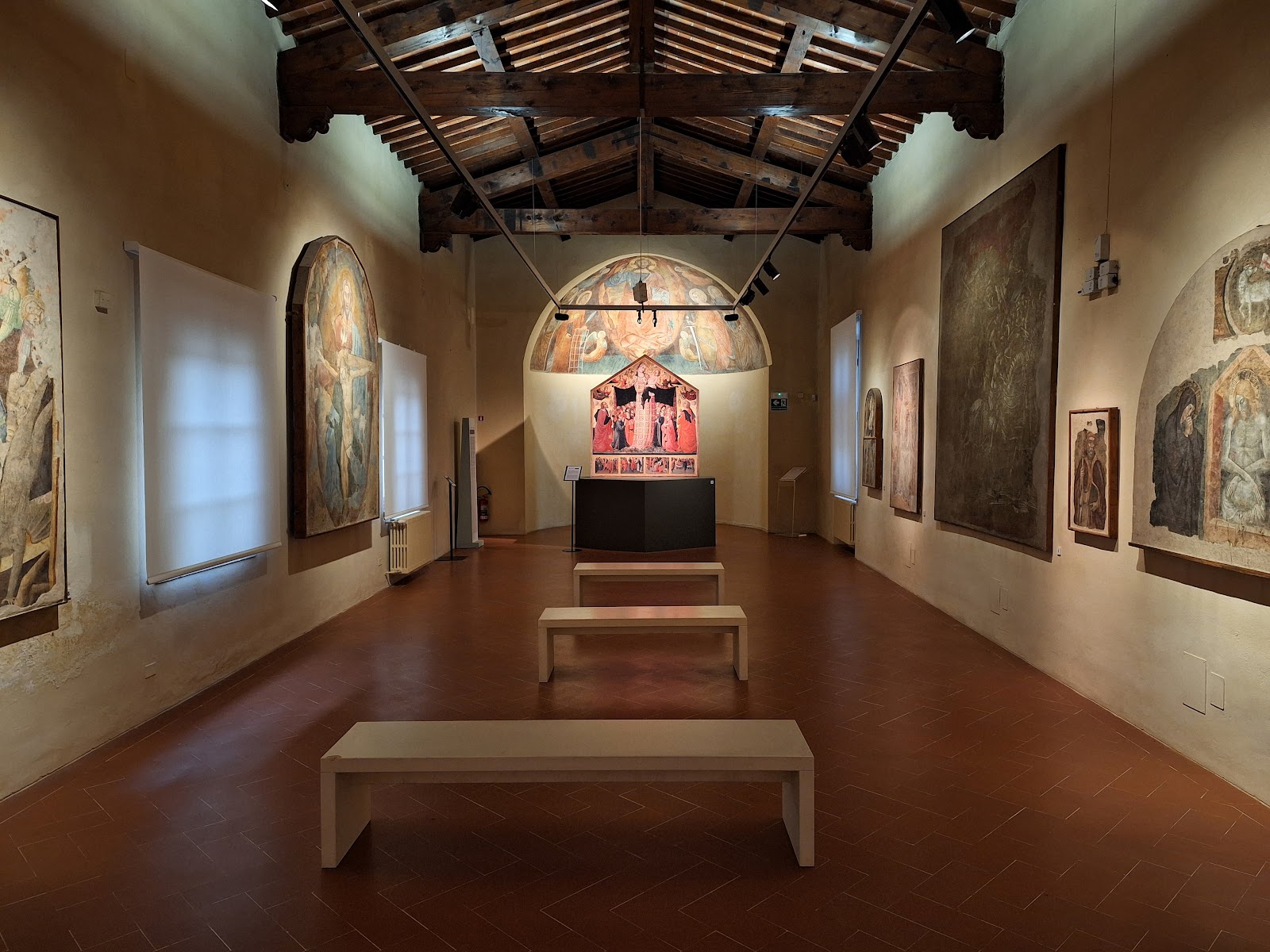
The first thing you notice is the courtyard — a porticoed Renaissance space attributed to Bernardo Rossellino, quiet enough that your footsteps carry. The Palazzo Bruni Ciocchi has been holding things worth looking at since the mid-15th century, and the twenty rooms inside arrange themselves in a long, unhurried chronology from the early Middle Ages to the 19th century.
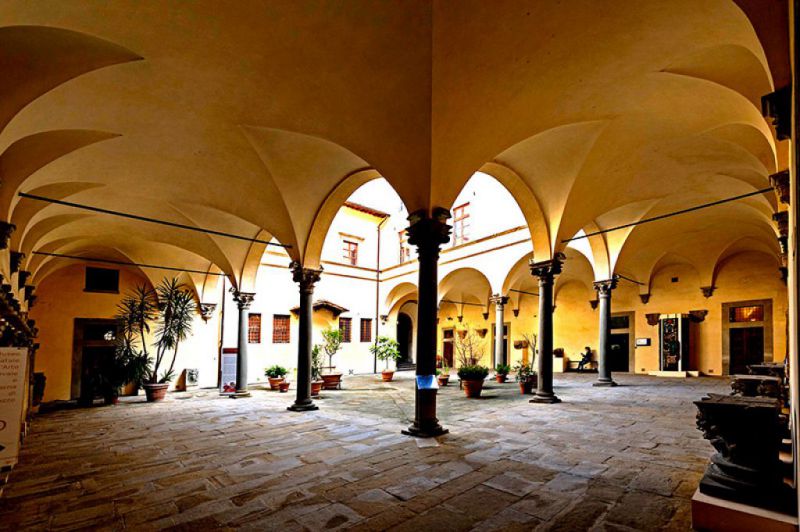
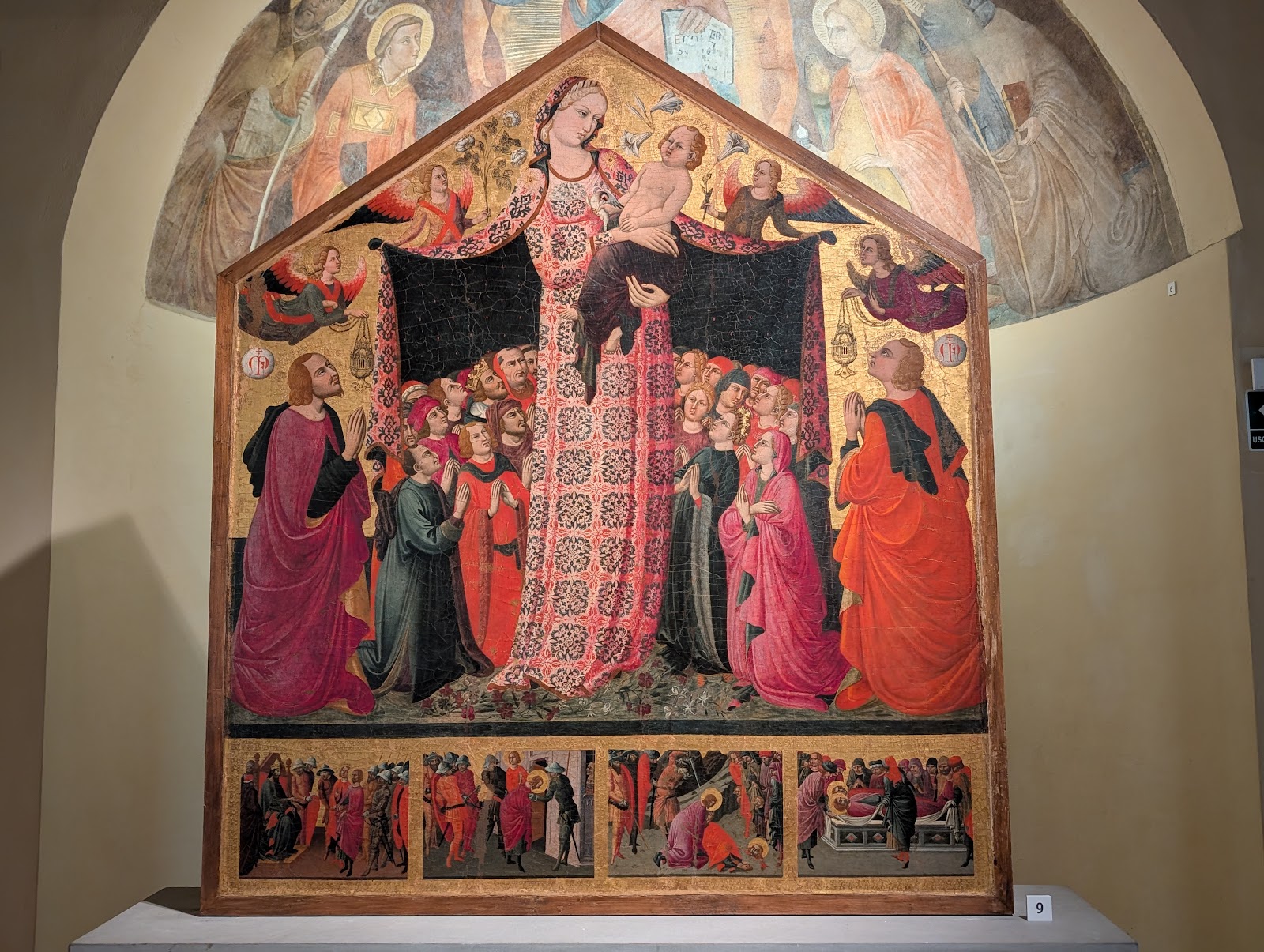
This is where Arezzo keeps its depth. Giorgio Vasari's enormous panel painting of the Feast of Esther and Ahasuerus — made for a monastery refectory — fills one room almost entirely. Nearby, 13th-century panels by Margarito d'Arezzo sit alongside maiolica, glazed terracotta by Andrea della Robbia, and a scapular that once belonged to a beatified pope.
💛 What travellers fall for
People who come back tend to linger in the maiolica rooms longer than they planned, and to seek out the roof garden — Renaissance in inspiration, sitting at first-floor level on the rear of the palace — which most visitors walk past without realising it's accessible. The Salmi Collection, added in 1964, rewards a second look once you know its origin.
The story behind Museo Nazionale d'Arte Medievale e Moderna
The palazzo was built in the mid-15th century for Donato Bruni, whose father Leonardo had served as Chancellor of the Florentine Republic and was one of the defining humanist figures of his era. The building later became known as the Palazzo della Dogana.
The museum's collections took their modern form after WWII bombing destroyed the Palazzo Pretorio, where Arezzo's civic picture gallery had been housed. Works moved here, the building was restored, and the museum was formally founded in 1958, inaugurating in 1972. Art historian Mario Salmi donated his personal collection in 1964; his daughter added further works in 2010. Holdings also draw from the Fraternita dei Laici, founded 1262, and from monasteries suppressed in the 19th century.
Good to know
Open Tuesday through Sunday, 8:30 AM to 7:30 PM; closed Mondays. Entry is €9 regular, €5 reduced, free for under-18s and on the first Sunday of every month. The ticket office closes an hour before the museum does. Book online at discoverarezzo.ticka.it to avoid queuing.
Where is Museo Nazionale d'Arte Medievale e Moderna?
More tickets & tours for Museo Nazionale d'Arte Medievale e Moderna
Book directly at the provider
What travellers say about Museo Nazionale d'Arte Medievale e Moderna
Wonderful collection of medieval and Renaissance art, glorious and injudiciously forgotten names. I came here for an hour (as I thought) and spent full two hours there (and I was the last visitor on this day, and all museum guides patiently waited for me). If you like Italian art, it's a place for you to visit
A wide collection of Master pieces worthing the visit. Just a few remarks. The light system shall be revised because many times you can't enjoy the beauty of the different paintings. The descriptions shall be located close to the pieces because going back and forward the totems diverts from opera.
We visited it with our Erasmus+ group for project "Eutourism 2019". Our students from Turkey, Romania, Croatia and Canary Islands were favourably impressed by the fantastic works if art there.
A superb collection of maiolica (pottery) competing with Bargello and every national museum, arms, medieval and Renaissance painting : Signorelli, Danti, Pierino da Vinci and the largest and stunning collection of Vasari masterpieces.
This large museum has an excellent collection. Unfortunately the way in which most items are presented doesn’t meet modern standards for museums. The use of one or two signboards in each room to provide captions for the items is particularly annoying. Nevertheless, the museum is well worth visiting.
More of Arezzo
Discover where to stay, what to do and the best deals for your trip.
Explore Arezzo →More attractions in Arezzo
All of Arezzo →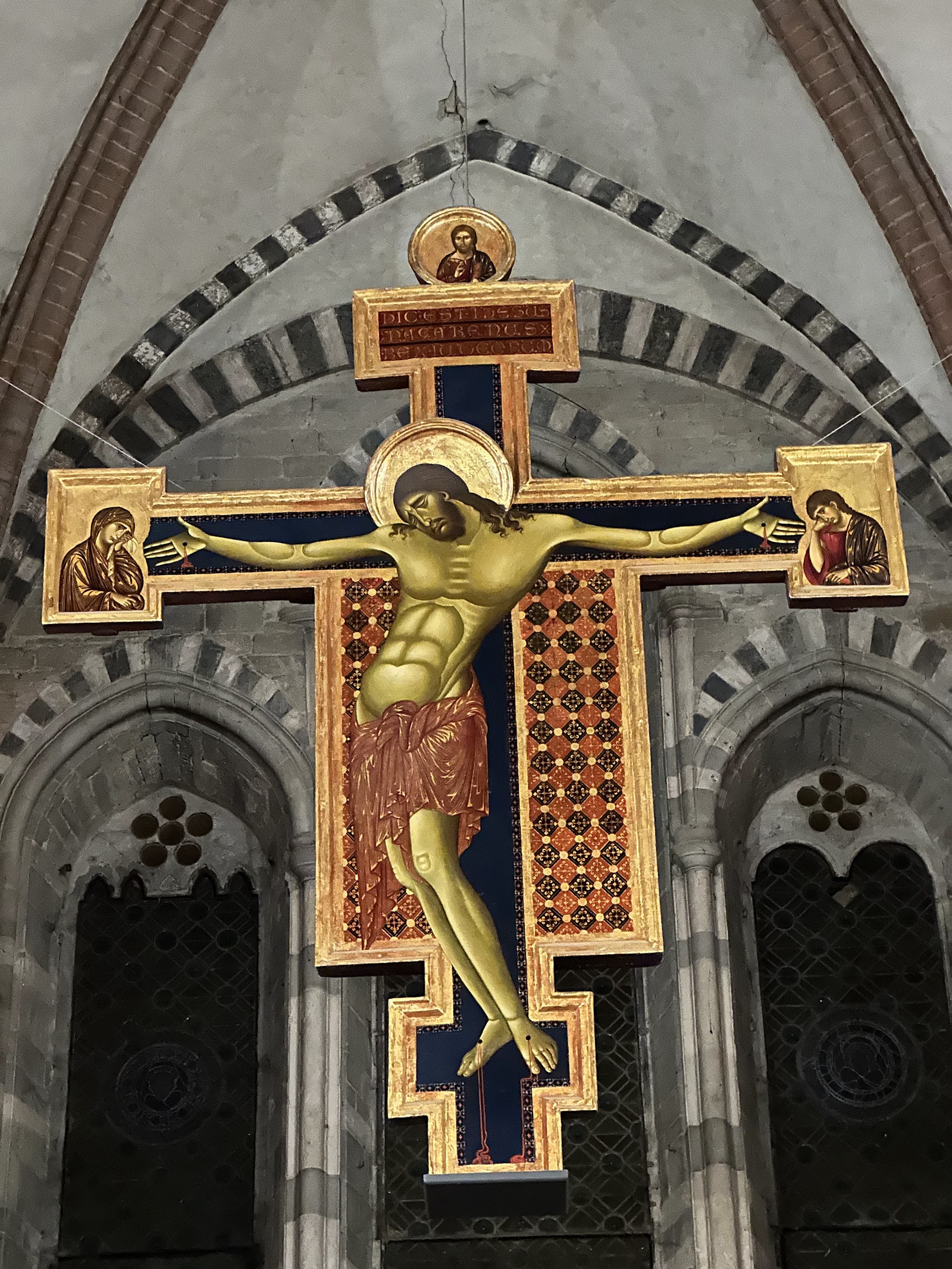
Background adapted from Wikipedia (CC BY-SA) · map data © OpenStreetMap contributors · ratings & place photos via Google · other photos with per-image credit. Ticket links may earn us a commission at no extra cost to you.