
Musée National d'Histoire Naturelle

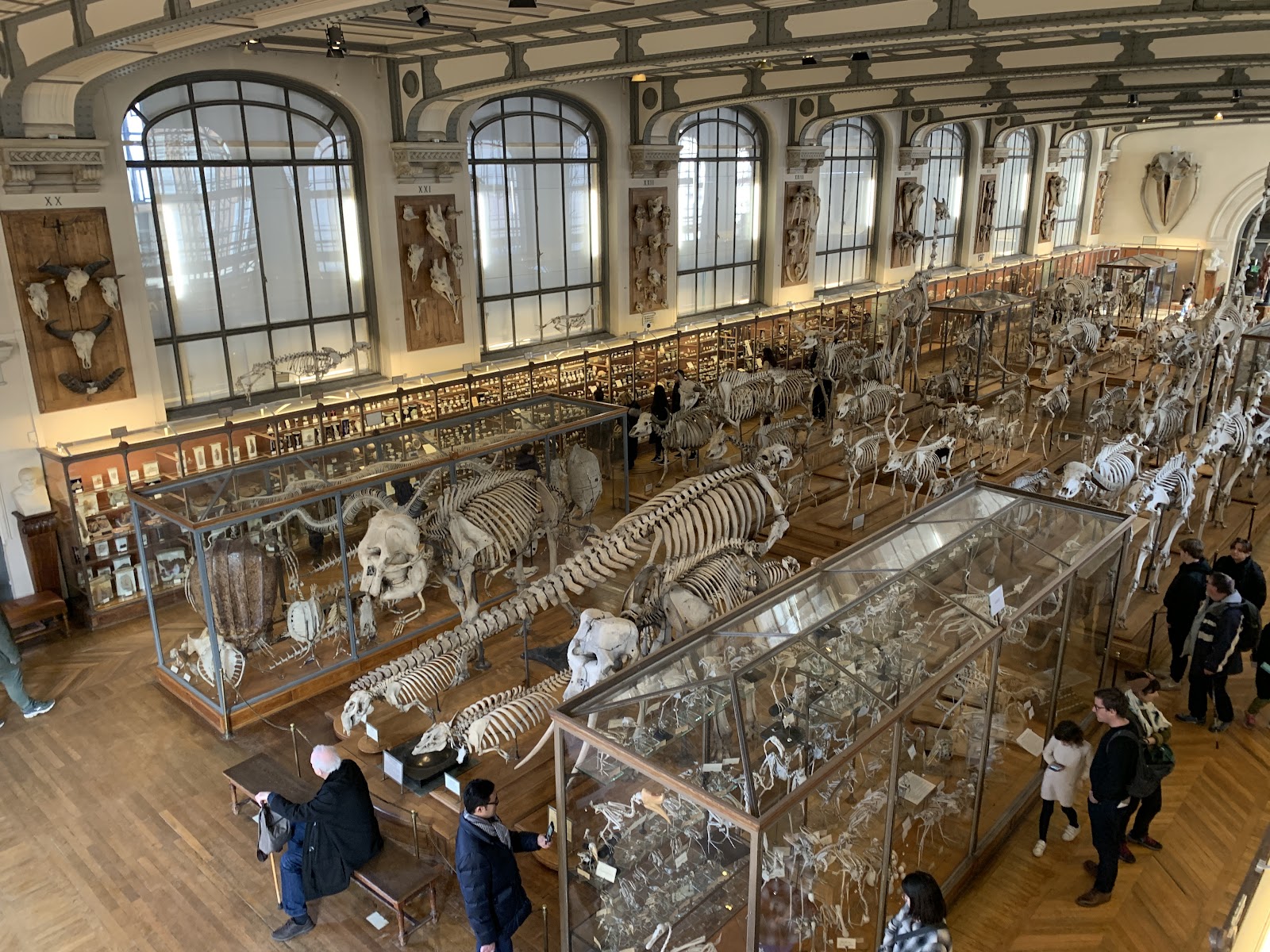
The skeleton of a blue whale hangs in the Grande Galerie de l'Évolution, suspended above a procession of taxidermied animals that winds through the nave like a slow migration caught mid-step. The building itself — iron and glass, built by Jules André between 1877 and 1889, then dark for nearly three decades before Paul Chemetov and Borja Huidobro brought it back in 1993 — does something rare: it makes natural history feel genuinely alive.
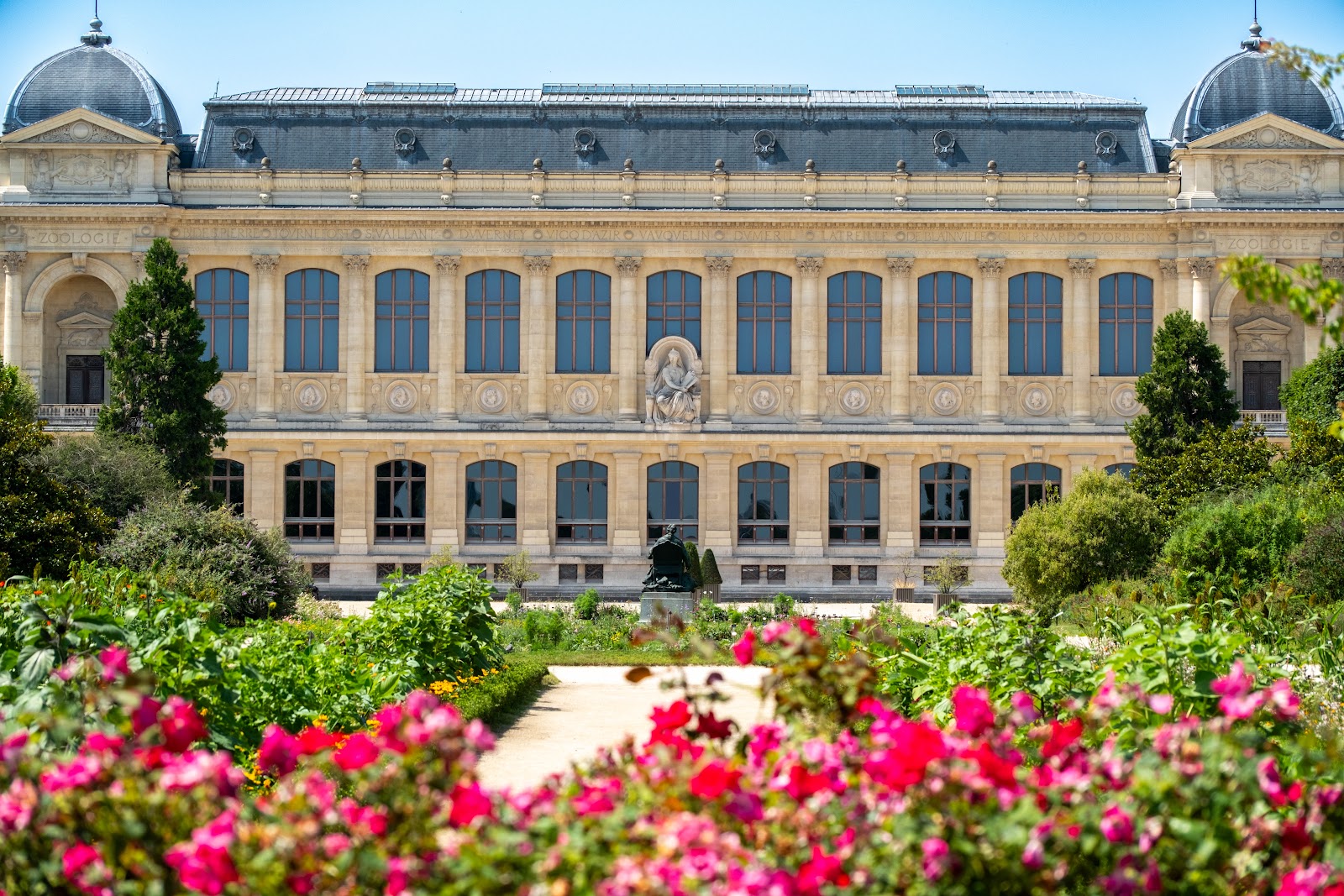
The museum is not one building but a campus spread across the Jardin des Plantes, 27 hectares on the Seine's left bank. The Galerie de Paléontologie et d'Anatomie Comparée, the greenhouses, the zoo, the mineralogy halls — each is its own world, and you could come back four times and still not overlap.
💛 What travellers fall for
Regulars tend to go straight to the Galerie de Paléontologie et d'Anatomie Comparée on a Tuesday — it's closed, which clears the rest of the campus. The alpine garden inside the Jardin des Plantes is easy to miss; it sits tucked against the geology gallery and rewards a slow loop. The Grandes Serres, especially the humid tropical greenhouse, feel genuinely disorienting on a cold morning.
The story behind Musée National d'Histoire Naturelle
The ground beneath the museum was already cultivated in 1635, when Louis XIII confirmed the establishment of a Royal Garden of Medicinal Plants — a place for teaching botany, chemistry, and anatomy as much as growing things. It was Georges-Louis Leclerc, Comte de Buffon, who transformed it during his long directorship from 1739 to 1788, expanding the collections and the garden's ambition into something approaching a full natural history institution.
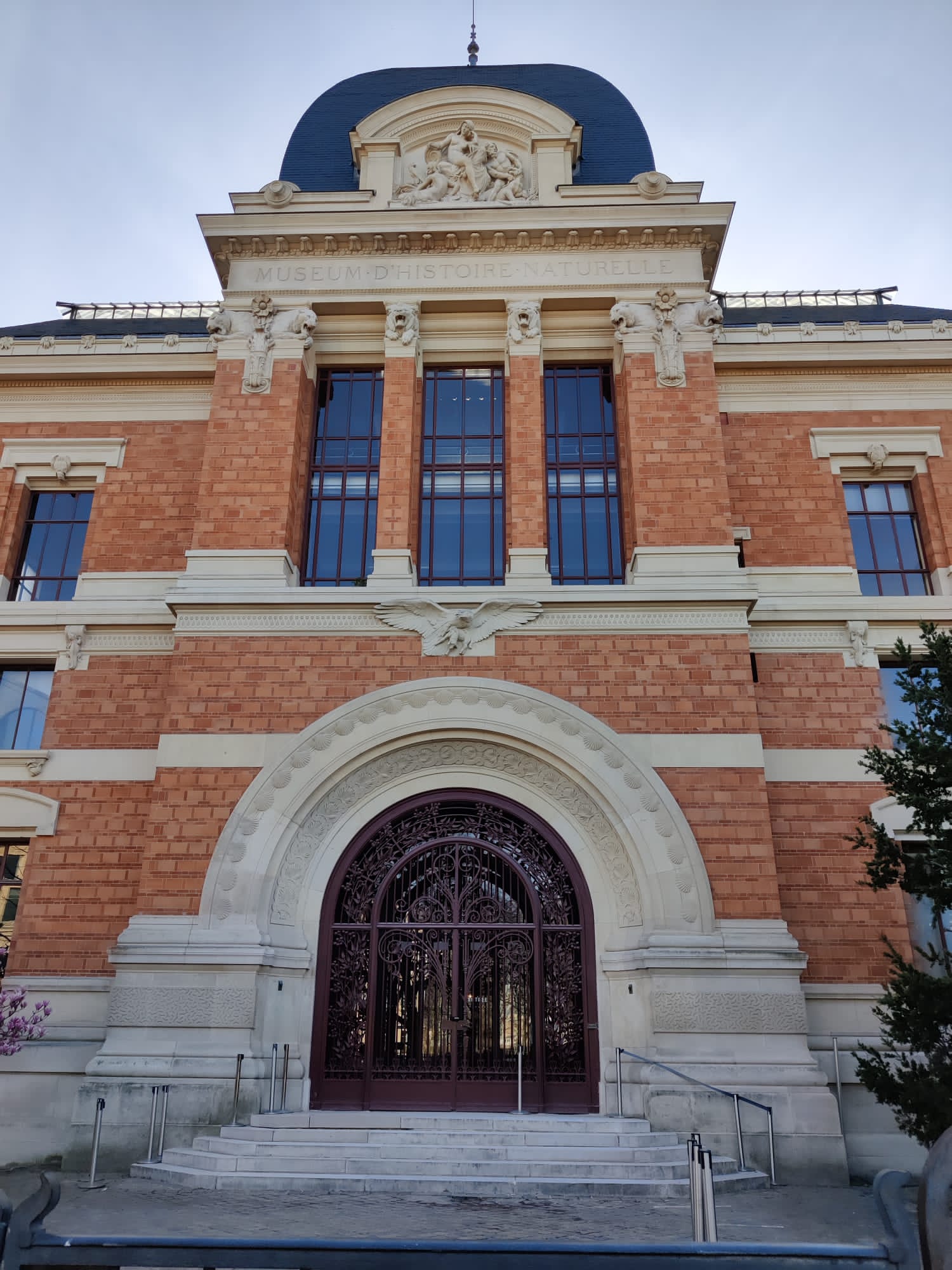
The Revolution finished the job. On June 10, 1793, the Convention formally created the Muséum National d'Histoire Naturelle, organized around twelve professor-administrators — among them Jean-Baptiste de Lamarck, who would go on to develop early ideas about biological transformation. The buildings followed across the next century: the mineralogy gallery in the 1830s, the paleontology gallery completed in 1898 in an Art Nouveau frame of iron, and the Grand Gallery of Evolution, closed entirely in 1965 and only restored to use in 1994.
Good to know
Metro lines 5 and 10 stop at Gare d'Austerlitz; line 7 serves Censier-Daubenton. The Jardin des Plantes is free. Individual galleries cost €7–€13, with free entry for under-26s and teachers. Galleries close Tuesdays — plan around that. The Grande Galerie de l'Évolution alone takes a solid two hours.
Where is Musée National d'Histoire Naturelle?
Location
- In Paris 5th Arrondissement
- 48.8438, 2.3595
- Open in Google Maps
Rating
4.5 ★ · 7,461 Google reviews
More tickets & tours for Musée National d'Histoire Naturelle
Book directly at the provider
What travellers say about Musée National d'Histoire Naturelle
Very interesting museum, the interior of the building itself is gorgeous and the animal display is really well thought. Many sections with good explanations and the dinosaur skeletons are really amazing. Well worth a visit when in Paris.
There are not a lot of exhibits, but it is the most beautifully decorated museum I have visited. The interior and lighting are artistically designed, and it feels like an opera theater. I wish there were English descriptions for the exhibits, as this would greatly benefit international visitors. I also wish there could be exhibits dedicated to Buffon, Cuvier, and Lamarck, great naturist who contributed to our understanding of the world.
Beautiful museum but as usual no signs in English in the Galerie de evolution, apart from one or two electronic quiz boards, which is a pity for such a big establishment in the capital of Paris. It’s impressive for the kids.
I intended to visit the other museum with cooler skeletal specimen but by mistake i bought ticket for this one, did not disappoint! The temporary exhibition on desert was really informative and fun, also explained in English which was not the case for almost entirely the permanent collection. One note: the white texts in the second pic are a bit difficult to comprehend without enough light. Permanent exhibition seems titanic, i saw the greatest diversity of butterflies ive ever seen in my life. Museum itself is also lit up in an aesthetically pleasing way. Need to reserve at least three hours if you want to even browse everything
I just love this museum, it would be amazing when some of the explanations are at least in English, too. It is only in French (except for the temporary expositions). I would be glad when they could do it a bit more interactive.
More of Paris 5th Arrondissement
Discover where to stay, what to do and the best deals for your trip.
Explore Paris 5th Arrondissement →More attractions in Paris 5th Arrondissement
All of Paris 5th Arrondissement →
Background adapted from Wikipedia (CC BY-SA) · map data © OpenStreetMap contributors · ratings & place photos via Google · other photos with per-image credit. Ticket links may earn us a commission at no extra cost to you.