
Musée de Cluny (Musée national du Moyen Âge)
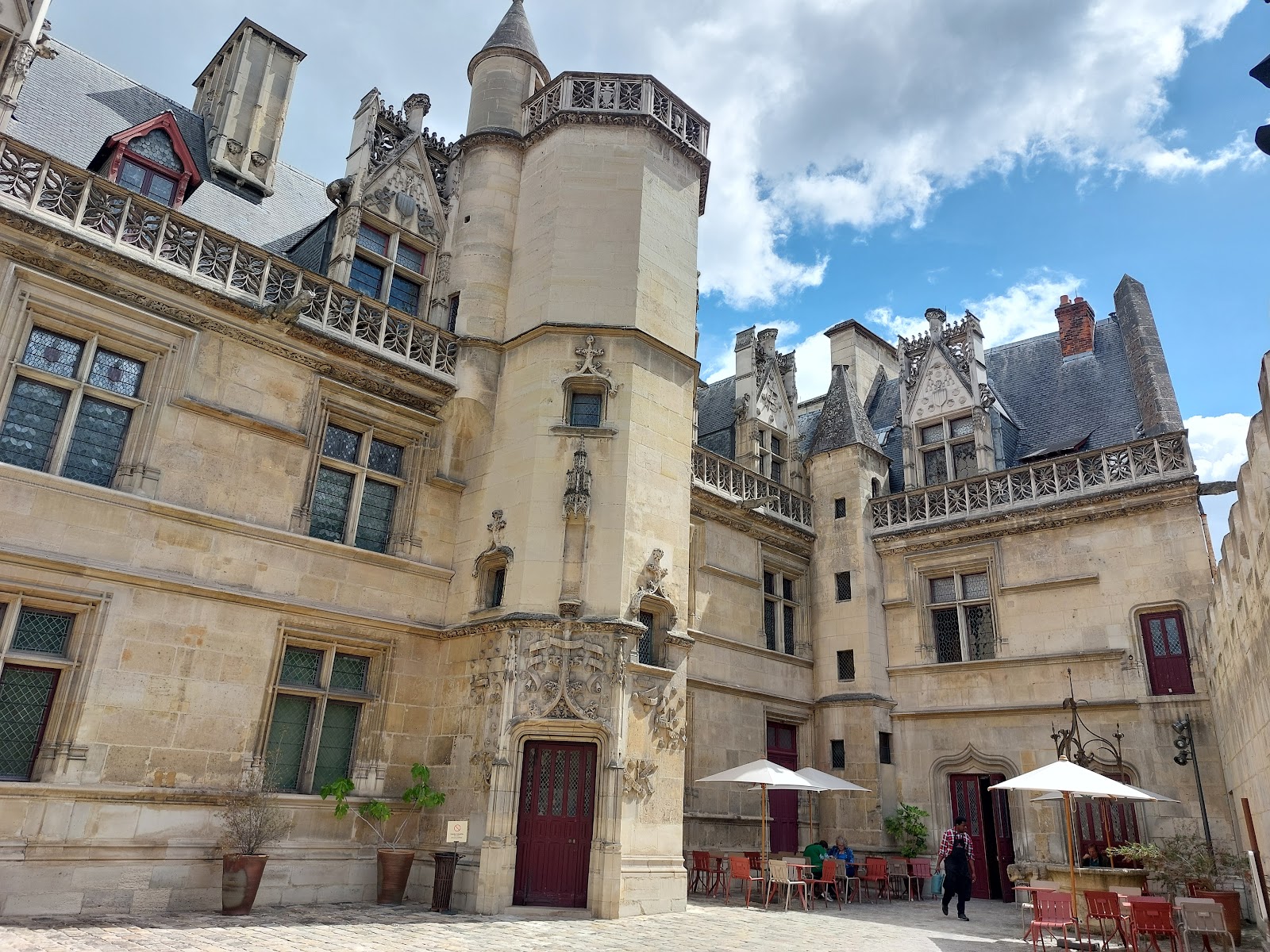
Six tapestries hang in a darkened oval room on the upper floor, and the first time you see them — the Lady, the lion, the unicorn, the millefleurs background dense with rabbits and flowers — you understand why people come back. The Lady and the Unicorn series dates to the late 15th century and is the reason most visitors make the trip, but the Musée de Cluny holds far more: 23,000 objects in total, some 2,300 on display, drawn from a millennium of medieval life.
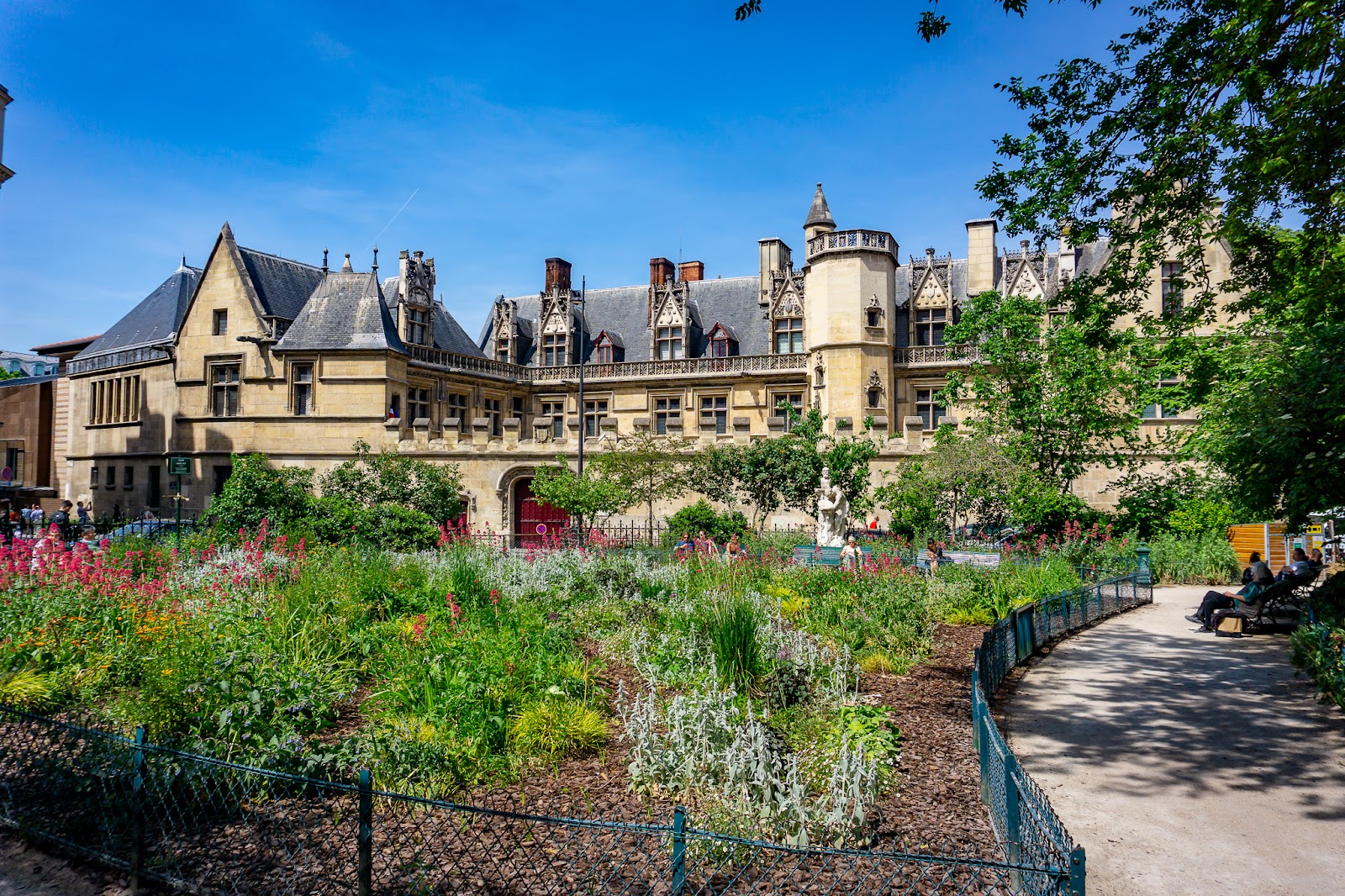
The museum occupies two buildings of startling age: a Gallo-Roman frigidarium with a 14-metre vaulted ceiling, and the Hôtel des abbés de Cluny, a Gothic mansion built from 1485 as the Paris residence of the abbots of Cluny — one of only two medieval residences still standing in the city.
💛 What travellers fall for
Regulars will tell you to come on a Tuesday or Wednesday morning, when the tapestry room is quiet enough to sit with for a while. The reinstated medieval garden — restored and reopened in June 2025, included in your ticket — is worth the detour before or after. The courtyard café has terrace seating if the weather holds.
The story behind Musée de Cluny (Musée national du Moyen Âge)
The collection began with Alexandre Du Sommerard, an archaeologist and collector who bought the Hôtel de Cluny in 1832 and filled it with medieval and Renaissance objects. When he died in 1842, the French state purchased everything, and the following year his son Edmond became the museum's first director. Architect Albert Lenoir carried out the restoration of both buildings.
The Gallo-Roman thermal baths received monument historique status in 1862; the mansion had been listed in 1846. A room for statuary recovered from Notre-Dame cathedral was added in 1981. After a decade-long renovation project initiated in 2011, the museum fully reopened on 12 May 2022 with a new reception building designed by Bernard Desmoulin.
Good to know
Metro line 10 to Cluny-La Sorbonne drops you at the door. Open Tuesday through Sunday, 9:30am to 6:15pm; first and third Thursdays until 9pm. Closed Mondays and major public holidays. Full price €12; Paris Museum Pass accepted. No advance booking required. Leave large bags and rolling luggage at your hotel — they are not admitted.
Where is Musée de Cluny (Musée national du Moyen Âge)?
Location
- In Paris 5th Arrondissement
- 48.8503, 2.3441
- Open in Google Maps
Rating
4.5 ★ · 7,517 Google reviews
More tickets & tours for Musée de Cluny (Musée national du Moyen Âge)
Book directly at the provider
What travellers say about Musée de Cluny (Musée national du Moyen Âge)
The Lady and the Unicorn tapestries are truly impressive. Actually in this museum I enjoyed the best collections of tapestries I’ve ever seen, vivid in color and rich in details. The information panels includes English version and content is concise and clear. It takes two or three hours to go through all the rooms and appreciate the details. It opens at 9:30am, good to make this one the first destination of the day. Last but not least, about the “enigma” of “my only desire”, well, to my secular superficial and shallow understanding, it seems that the lady is content with her jewelry collection😉.
Musée de Cluny is a very impressive and underrated museum in Paris. It is a great place to visit if you are interested in medieval history, art, and architecture. The building itself already creates a special atmosphere, and the collection is rich and beautifully presented. The tapestries, sculptures, stained glass, religious objects, and everyday medieval items help you imagine life and culture in the Middle Ages. What I liked most was that the museum feels calmer and less overwhelming than some of the bigger museums in Paris. You can take your time, walk through the rooms peacefully, and really appreciate the details. It also offers a different side of Paris, beyond the usual famous monuments and large museums. Definitely worth visiting, especially for history and art lovers.
Very old site having had multiple roles throughout the ages. A highly detailed melange of the history of Paris, Europe and the evolution of design and fabrication from religious artefacts to everyday medieval objects with a particular focus on unicorns!!! Particular focus on the 1500’s as printing gained traction. The richness of myth and legend and the fight for religious control of society is manifest and intriguing to see and speculate on. The workmanship is sometimes incomprehensible in its skill and detail given the tools and technologies of the time. Take your time this is a very rich environment.
Musee de Cluny is definitely an under rated museum in Paris. It has a great exhibit related to medieval history and art. The tapestries, sculptures and art on display is absolutely stunning. Its very relaxed here compared to some of the other overcrowded museums in Paris.
I highly recommend visiting the National Museum of the Middle Ages (Musée de Cluny). One very practical bonus is the free cloakroom, where you can leave your winter coat and bags — extremely convenient, especially in colder seasons. The museum itself is quite large and divided into different sections. My main reason for visiting was “The Lady and the Unicorn” tapestries, which truly are the highlights of the museum. They were genuinely striking. What impressed me most is how they express a sense of female autonomy and self-awareness as early as the 14th–15th century. The symbolism of the unicorn is also very different from the modern, fairy-tale interpretation we have today. These tapestries left a strong impression on me. Beyond that, many of the other exhibits are fascinating as well — especially the ivory carvings, which feel irreplaceable and truly represent masterpieces of human artistry. Some of the staff-like objects on display are also intriguing, and their historical background is worth looking into if you’re interested. Downstairs, the Roman bath remains are another highlight. The ancient bathing pool is particularly interesting, and if you’re into archaeology, this part alone is worth the visit. The way the museum connects ancient Roman remains with medieval art creates a meaningful dialogue between the past and the present. Overall, this museum is absolutely worth visiting. If you’re in Paris, don’t miss it.
More of Paris 5th Arrondissement
Discover where to stay, what to do and the best deals for your trip.
Explore Paris 5th Arrondissement →More attractions in Paris 5th Arrondissement
All of Paris 5th Arrondissement →

Background adapted from Wikipedia (CC BY-SA) · map data © OpenStreetMap contributors · ratings & place photos via Google · other photos with per-image credit. Ticket links may earn us a commission at no extra cost to you.