
Mura Medicee di Grosseto

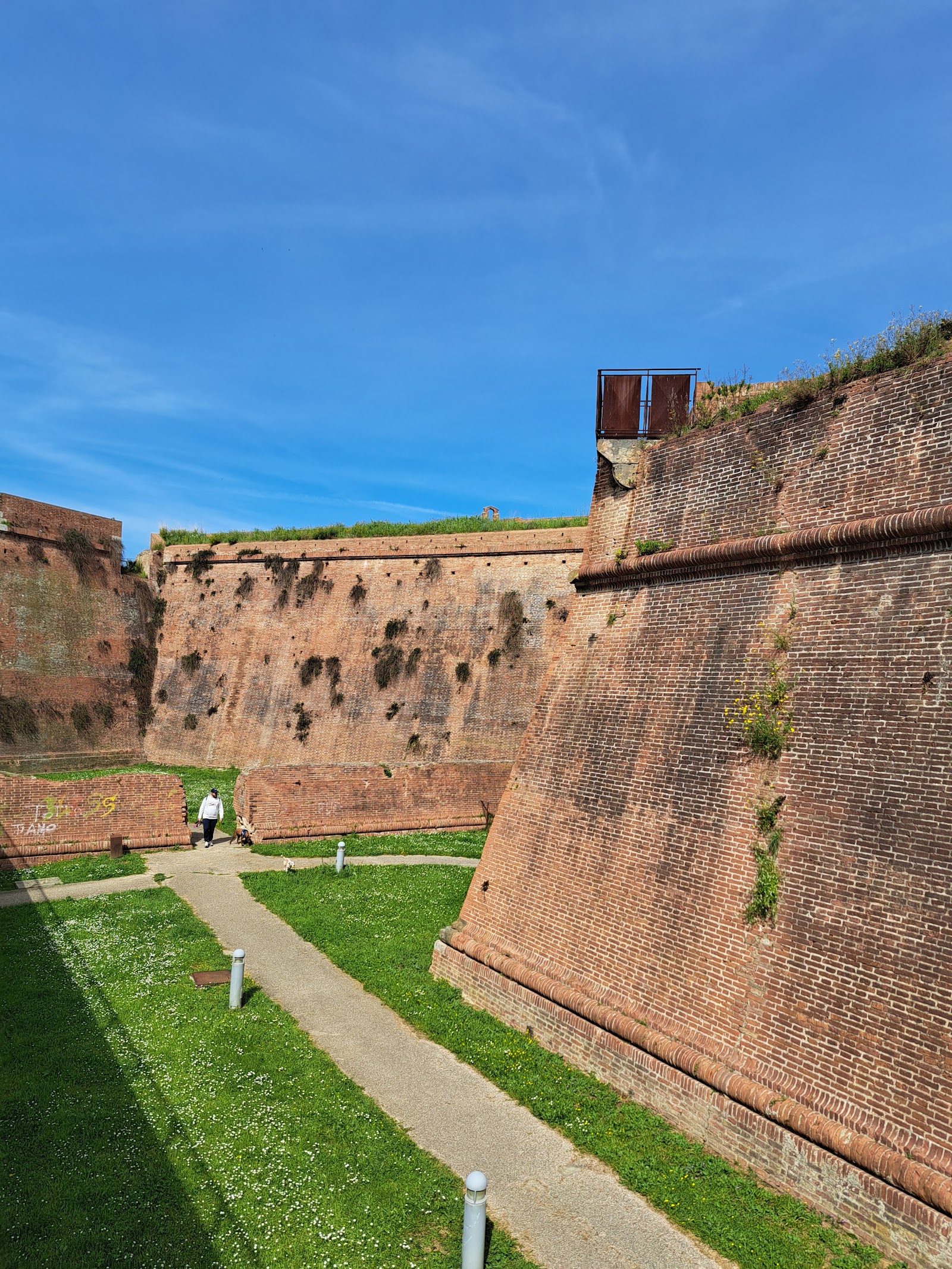
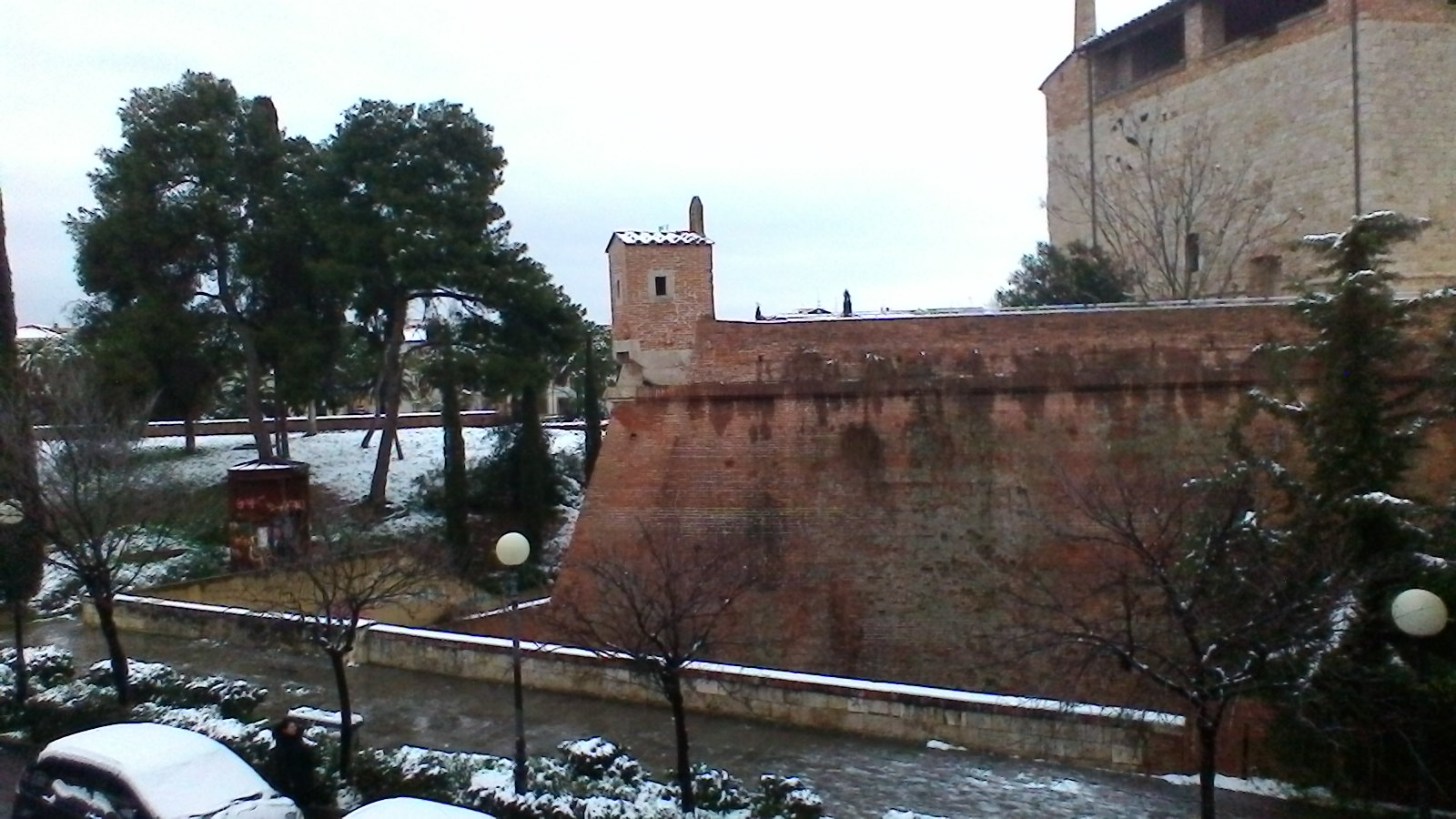
The walls of Grosseto do something unusual: they don't keep you out, they invite you in. Since the 1830s, what Cosimo I de' Medici built as a military fortification has been a public garden — plane trees, acacias, myrtle hedges — running the full hexagonal circuit of roughly three kilometres atop red brick ramparts.
Climb to the embankment at any of the six bastions and the city opens below you on one side, the Maremma plain on the other. The walk is flat, the pace is yours, and on a weekday morning you'll share it mostly with Grossetani walking dogs.
💛 What travellers fall for
People who return tend to time it for early evening, when the light goes horizontal across the pietra serena details and the plane trees throw long shadows over the path. The Bastione della Fortezza is worth a slow stop — look for where the 14th-century Sienese stonework meets the Medici brick, the seam visible if you know to look.
The story behind Mura Medicee di Grosseto
Before Cosimo I de' Medici got involved, Grosseto already had walls — the Sienese had rebuilt them in the 14th century, including the Cassero Senese in 1345, whose Porta di Santa Lucia survives inside the later Bastione della Fortezza. After the Republic of Siena was absorbed into the Grand Duchy of Tuscany, Cosimo I commissioned engineer Baldassarre Lanci to design a new circuit suited to artillery-age warfare. Construction ran from the 1560s through 1593, when a plaque on the Fortezza portal marked completion; Lanci's successors Marino Lanci and Simone Genga finished the project, and architect Raffaello Pagni added the Piazza d'Armi — with its herringbone brick pavement, underground cisterns and water channels — in 1590.
The military logic faded before the walls did. Starting in 1833, by order of Granduca Leopoldo di Lorena, the ramparts were planted and opened to the public, a transformation completed by 1850. The Chapel of Santa Barbara, built in 1594 for the exclusive use of troops, was deconsecrated in the second half of the 1800s. The Cassero Senese now hosts temporary exhibitions.
Good to know
The walls are walkable year-round, with two short breaks in the circuit at Corso Carducci and Via Amiata. Walking the embankment itself is free; some internal structures charge separately. Grosseto's train station is a 15-minute walk from the historic centre, with connections to Rome and Pisa roughly every two hours.
Mid-April to mid-June and September to early October are the most comfortable windows — warm without the intensity of July and August, when the walls can bake by midday. Summer visits work best in the early morning or around sunset. Winter is mild enough for a walk, though November brings the most rain.
Where is Mura Medicee di Grosseto?
Location
- In Grosseto
- 42.7603, 11.1117
- Open in Google Maps
More tickets & tours for Mura Medicee di Grosseto
Book directly at the provider
More of Grosseto
Discover where to stay, what to do and the best deals for your trip.
Explore Grosseto →More attractions in Grosseto
All of Grosseto →
Background adapted from Wikipedia (CC BY-SA) · map data © OpenStreetMap contributors · ratings & place photos via Google · other photos with per-image credit. Ticket links may earn us a commission at no extra cost to you.