
Mouassine Quarter
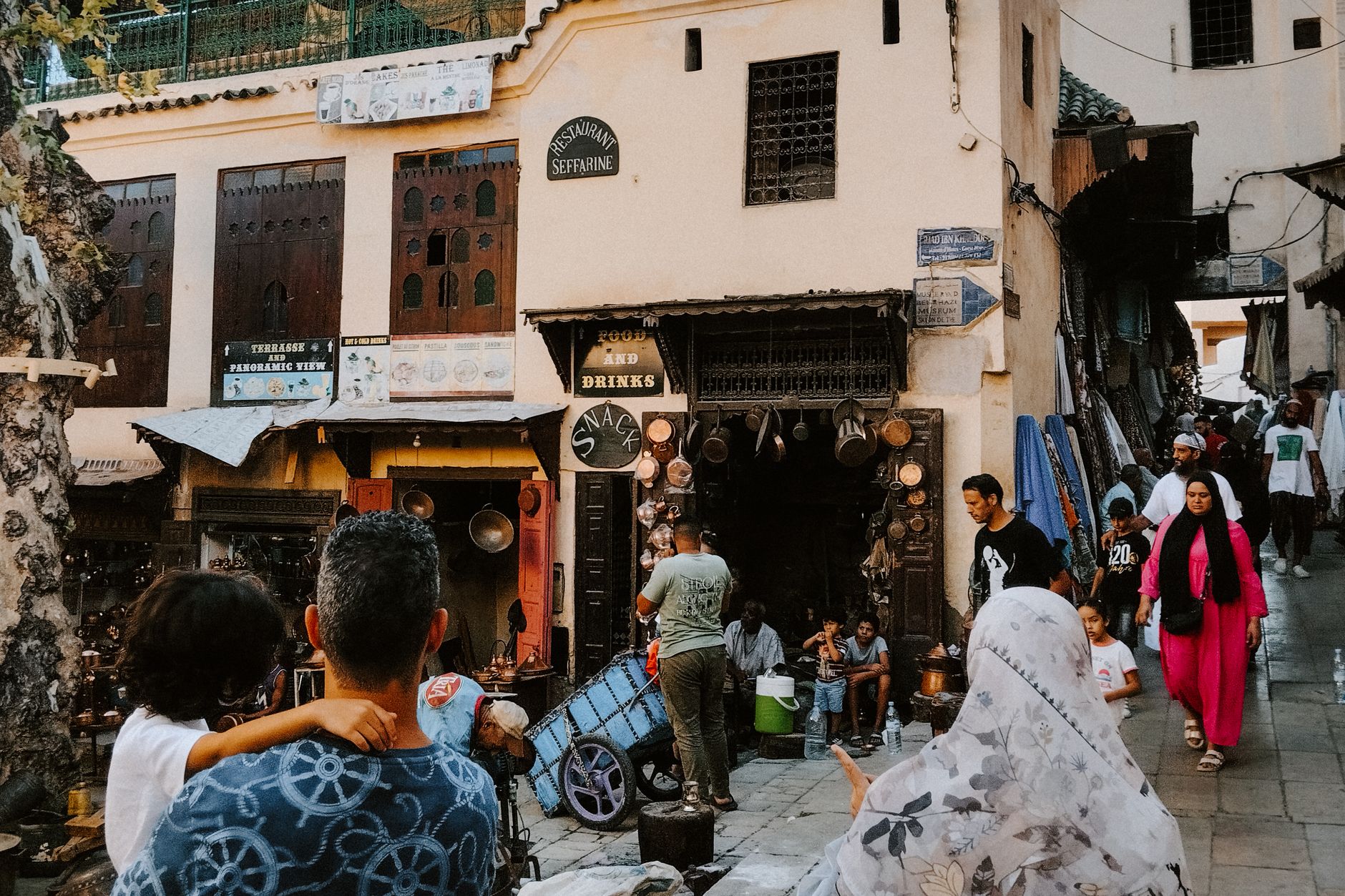

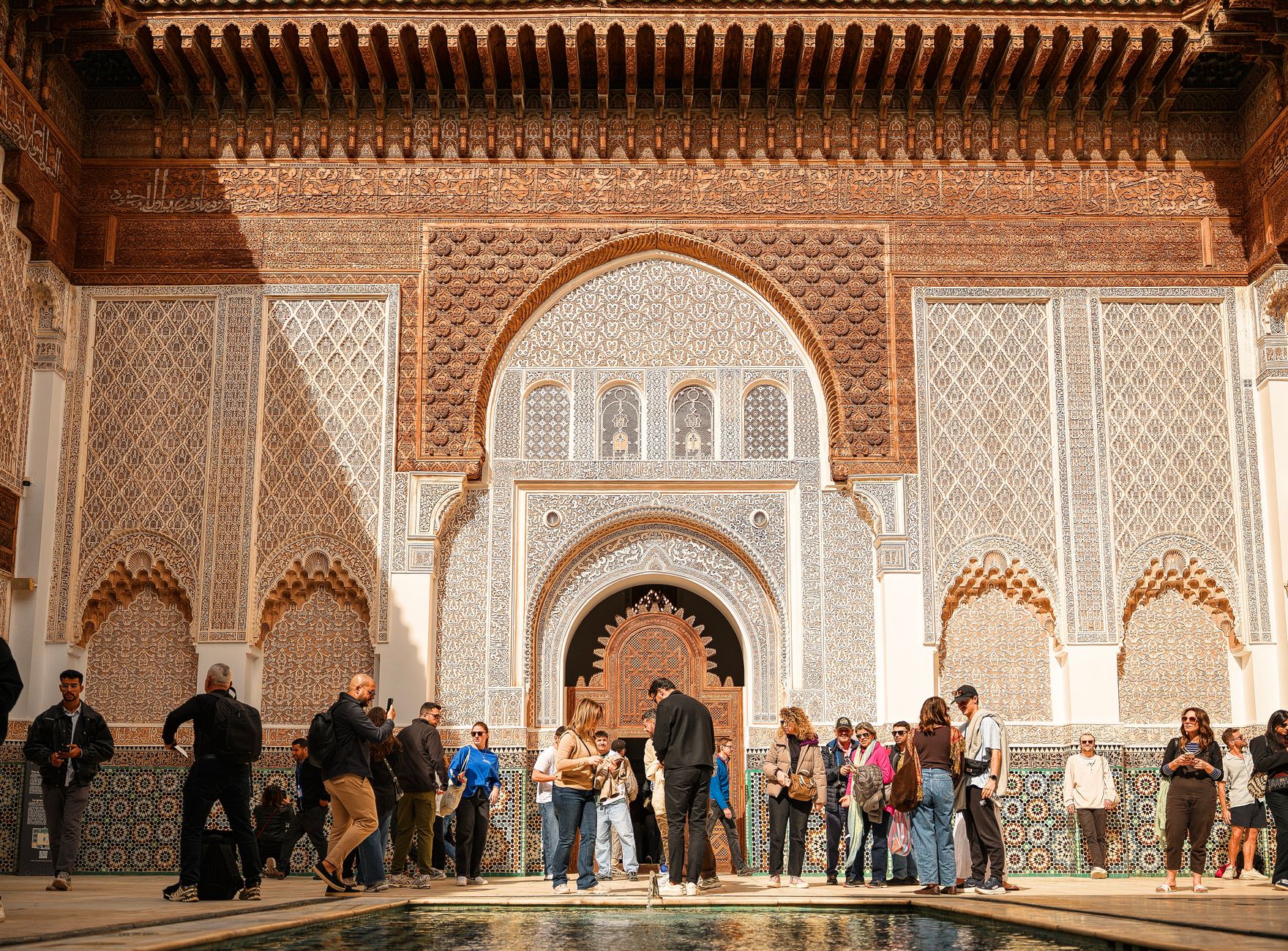
Mouassine is the part of the medina where the lanes suddenly widen and the walls get taller. A 16th-century mosque anchors one end; a fountain that was heavily reworked in 1867 but still holds carved cedar from the Saadian era anchors another. Between them, riads built by aristocratic families in the 1560s sit behind unmarked doors, and Hammam Mouassine has been taking in the neighbourhood's residents for centuries.
The quarter rewards slow walking. Dar Cherifa, Le Jardin Secret, and the Mouassine Museum — a Sharifian house from the 1560s that became a museum of Moroccan music in 2019 — each pull you off the main drag and into courtyards where the city's noise drops away.
💛 What travellers fall for
People who return to Mouassine tend to time a visit around the Mouassine Museum's concert evenings — Monday, Wednesday and Friday at 18:00, entry runs 40–70 MAD. The light in the courtyard at that hour is worth the trip alone. Children under 15 get in free, which changes the maths for families.
How Mouassine Quarter came to be
Before 1557, Mouassine was largely a Jewish residential quarter, home to a significant concentration of the community. When the Saadian sultan Abdallah al-Ghalib came to power, he reorganised Marrakech as a statement of authority, relocating the Jewish community to the newly created Mellah and opening Mouassine to redevelopment. Bourgeois and aristocratic Sharifian families moved in, commissioning the riad houses still standing today.
The centrepiece of this reshaping was the Mouassine Mosque, built on al-Ghalib's commission between 1562 and 1573. It arrived as part of a coherent civic complex: a madrasa, library, hammam, ablutions house, animal trough and public fountain — the kind of infrastructure that turns a neighbourhood into a neighbourhood.
Who and what shaped it
People who shaped it
Landmark buildings
Plan your visit
On the map
When to go
April, early June and September sit in the sweet spot — warm and mostly dry without the punishing heat of July and August, when afternoon temperatures regularly reach 37°C. Winter (December to February) averages around 13°C and brings occasional rain, so a layer and a compact umbrella are sensible.
Right now
Background & history adapted from Wikipedia (CC BY-SA) · specs from Wikidata (CC0) · weather from Open-Meteo · map data © OpenStreetMap contributors · photos from Wikimedia Commons / Unsplash with per-image credit. No third-party reviews or social posts reproduced.