
Mosquée de Paris
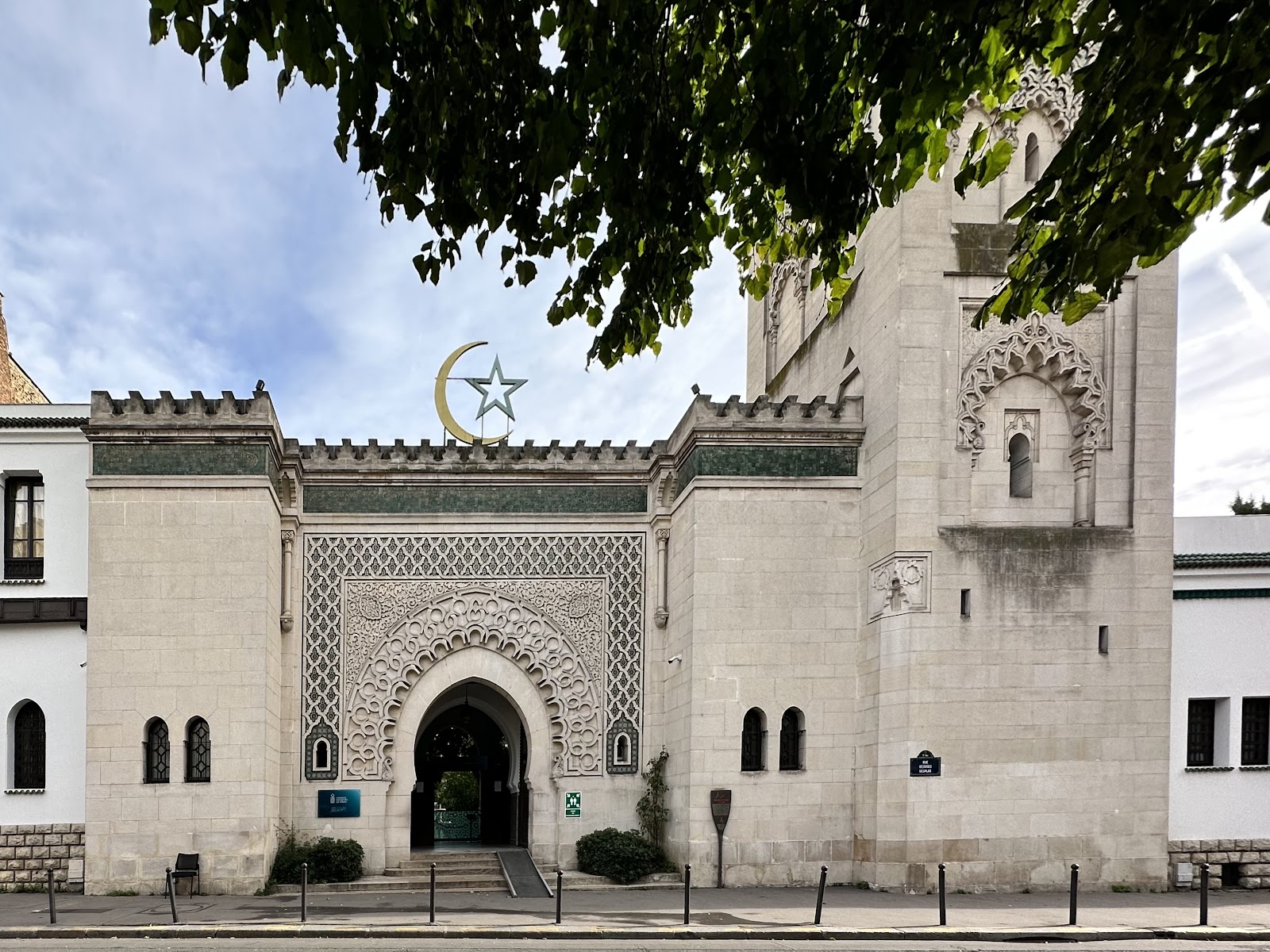
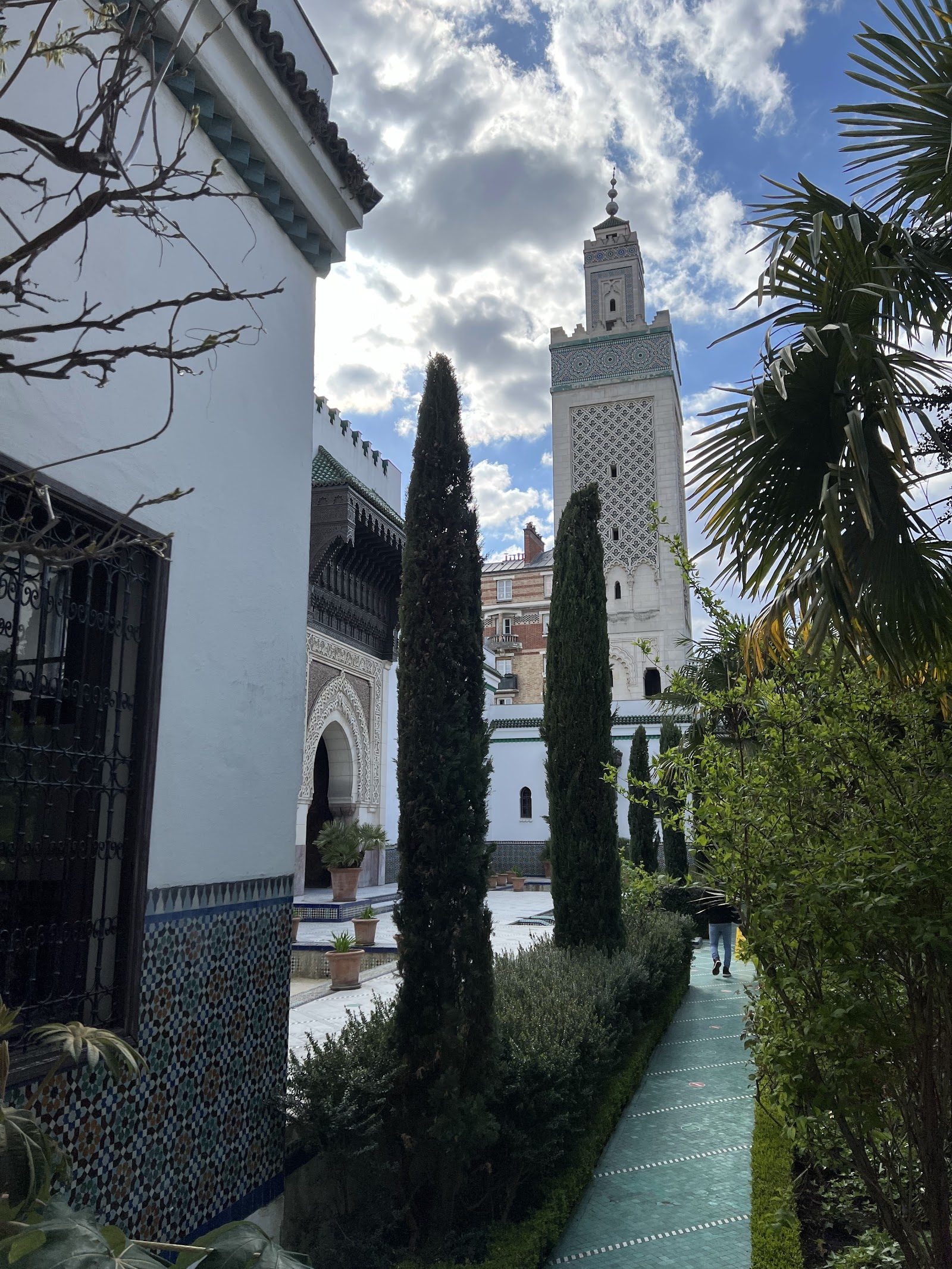
The entrance is on a quiet square renamed in 2015 for an imam who sheltered people during the Occupation. Step through and the city shifts: a marble courtyard tiled in zellige mosaic, stucco screens filtering the light, a 33-metre minaret modelled on the one at Al-Zaytuna in Tunis.
The mosque opened in 1926, and the tea room has been pouring mint tea in long arcing streams ever since — into small glasses, alongside honey-soaked pastries, under painted woodwork. The prayer rooms are not open to visitors, but the courtyard, gardens, library, and hammam are reason enough to come.
💛 What travellers fall for
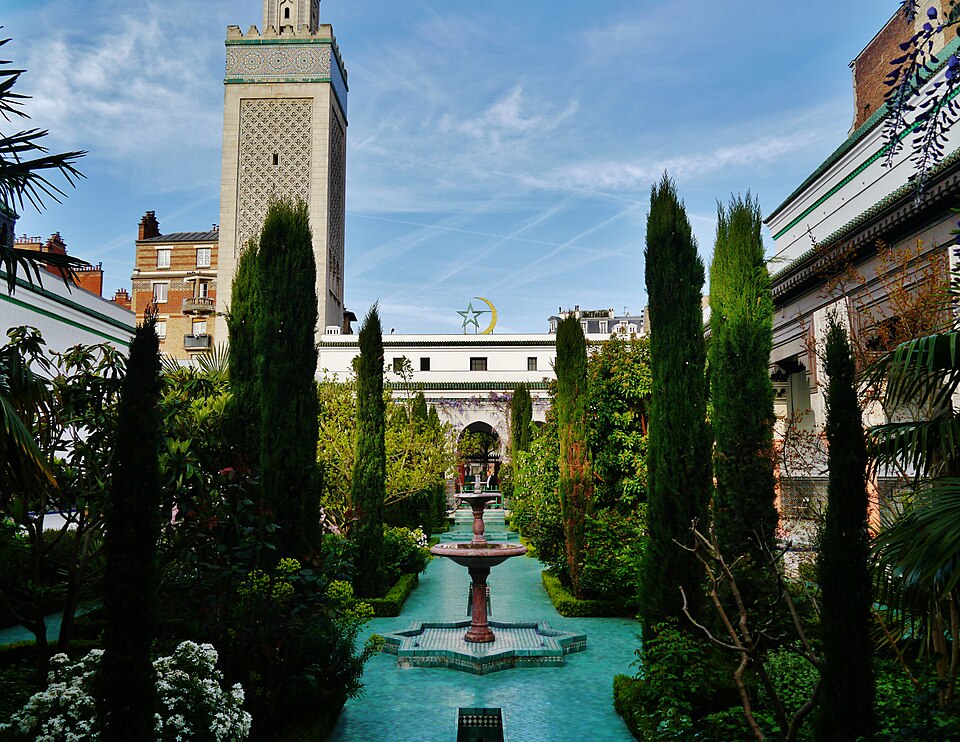
People who come back tend to time it for a weekday morning in late April, when the wisteria is at its peak and the photographers haven't yet arrived. The tea room fills fast after noon; arrive early and you'll get a table under the trees. The hammam (women only, closed Tuesdays) books up — worth checking ahead.
The story behind Mosquée de Paris
The mosque was conceived as a gesture of recognition: France had lost tens of thousands of Muslim soldiers in World War I, and in 1920 the government approved plans for a mosque in Paris to mark that debt. The first stones were laid in 1922; the building was inaugurated in 1926 with President Gaston Doumergue and Sultan Yusef of Morocco in attendance. The first communal prayer was led by Ahmad al-Alawi, an Algerian Sufi master. The driving force behind it all was Si Kaddour Benghabrit, who became the mosque's first rector and directed it until his death in 1954 — his tomb is in the eastern gallery, near memorial plaques for Muslim soldiers of both World Wars.
The design, by Maurice Tranchant de Lunel with construction overseen by Robert Fournez, Maurice Montout, and Charles Heubès, drew directly from Moroccan and Tunisian models: the great courtyard echoes the mosque of al-Qarawiyyin in Fez, and the minbar was a gift from King Fuad I of Egypt in 1929. A major renovation in 1992 brought the complex back to its original detail.
Good to know
Take Line 7 to Place Monge or Censier–Daubenton. Entry is €3, €2 for students. Closed Fridays and Muslim holidays; summer hours run until 7pm. Cover shoulders and knees — scarves are available at the door. Budget around 90 minutes.
Late April to mid-May is wisteria season in the gardens — striking, and busy with photographers. Spring and early summer mornings are the most comfortable time to linger in the courtyard.
Where is Mosquée de Paris?
Location
- In Paris 5th Arrondissement
- 48.8447, 2.3554
- Open in Google Maps
Rating
4.5 ★ · 16,438 Google reviews
More tickets & tours for Mosquée de Paris
Book directly at the provider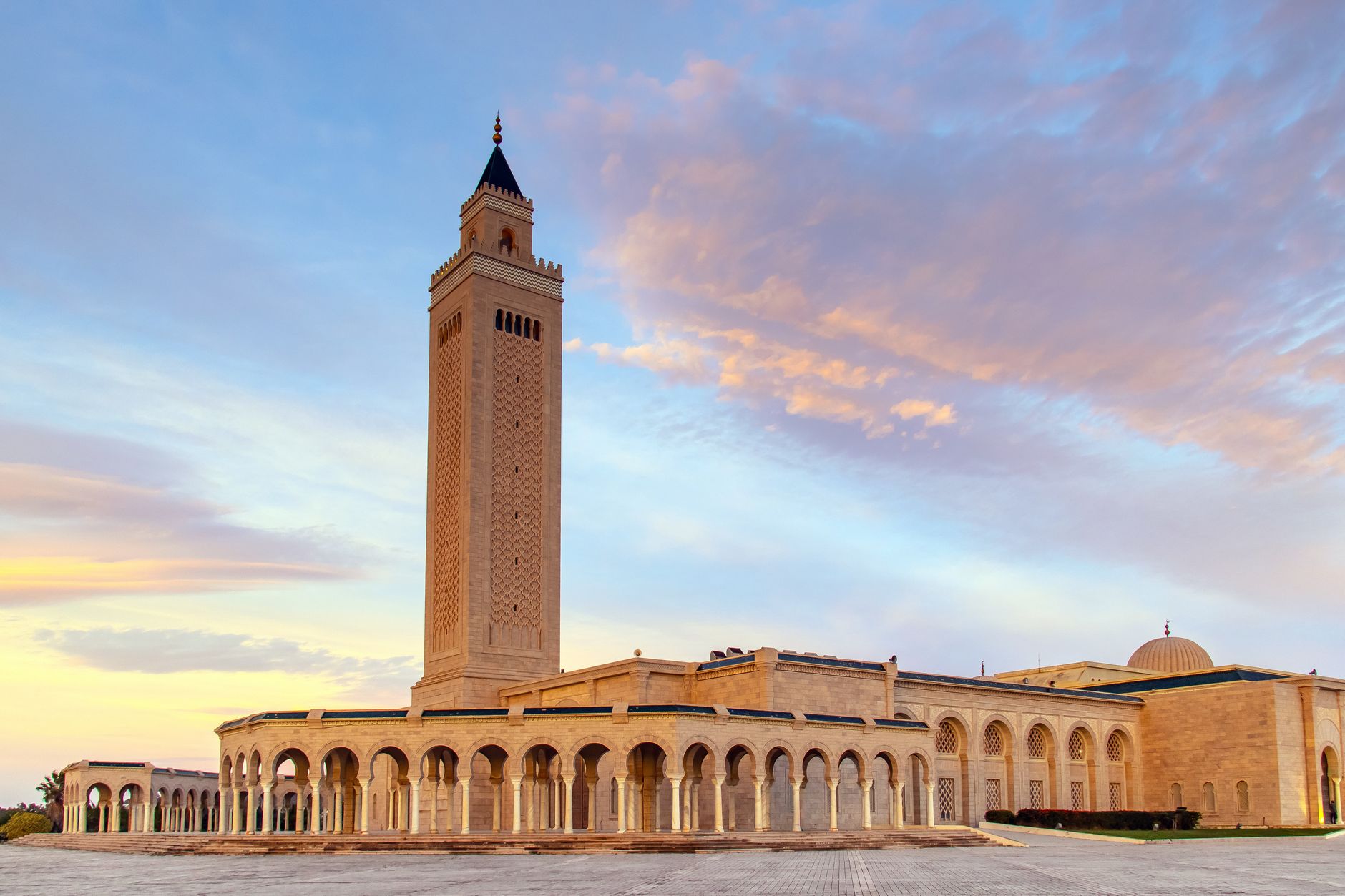
What travellers say about Mosquée de Paris
An unforgettable experience in Paris! La Mosquée Restaurant is much more than a place to eat it’s a journey into Moroccan culture, flavours, and hospitality. The atmosphere is beautiful, peaceful, and authentic, with stunning décor that makes you feel as if you’ve stepped into Marrakech. The food was absolutely delicious: fresh ingredients, perfectly seasoned dishes, generous portions, and traditional flavors that truly stand out. Every plate was prepared with care and passion. What impressed me the most was the warm welcome and exceptional service. The staff were kind, attentive, and made us feel genuinely appreciated. If you’re visiting Paris and want something unique beyond the typical tourist restaurants, this place is a hidden gem. I would gladly return again and again. Highly recommended - 5 stars without hesitation!
The mosque itself is beautiful, the garden was lovely and much like many Islamic spaces there is a peacefulness to it. However, the bathrooms were not clean which really ruined my time there. And as a mosque these spaces should be especially clean for the Muslims to comfortably be able to perform wudhu. I was very concerned about this. I’d recommend going only if you DO NOT need to go to the bathroom
I visited the Grande Mosquée de Paris on Eid, and it was a very memorable experience. The atmosphere was peaceful, welcoming, and full of joy as people gathered to celebrate together. The architecture is beautiful, with stunning details and a serene courtyard that offers a calm escape from the busy city. Despite the large number of visitors, the organization was good and everyone was respectful. It was wonderful to experience such a meaningful day in this historic place.
Lovely place clean and well kept, a small part of Morocco in Paris, if you are interested in Morroccan architecture its a great place to visit and even relax since they have a nice hammam and also restaurant, the mint tea is very addictive and helps with sore throat. The food is good too although too sweet but there are savory options. I go there maybe 3 times a month for at least a glass of tea.
Peaceful, spiritual place in the heart of Paris The Grand Mosque of Paris is one of the most beautiful and historic mosques in Europe. Built in the 1920s, it represents Islamic culture and architecture with stunning design, peaceful gardens, and a calm atmosphere that feels very different from the busy city outside. When I visited this mosque, my heart felt peaceful and happy. The environment is very calming and spiritual, making it a perfect place for reflection and inner peace. The mosque is well maintained, clean, and very respectful. Non-Muslim visitors are welcome, but they must buy a ticket to visit certain areas of the mosque, which helps maintain the place properly. Overall, it is a must-visit place in Paris for anyone interested in culture, history, and spirituality. Highly recommended.
More of Paris 5th Arrondissement
Discover where to stay, what to do and the best deals for your trip.
Explore Paris 5th Arrondissement →More attractions in Paris 5th Arrondissement
All of Paris 5th Arrondissement →

Background adapted from Wikipedia (CC BY-SA) · map data © OpenStreetMap contributors · ratings & place photos via Google · other photos with per-image credit. Ticket links may earn us a commission at no extra cost to you.