
Medersa Ben Youssef
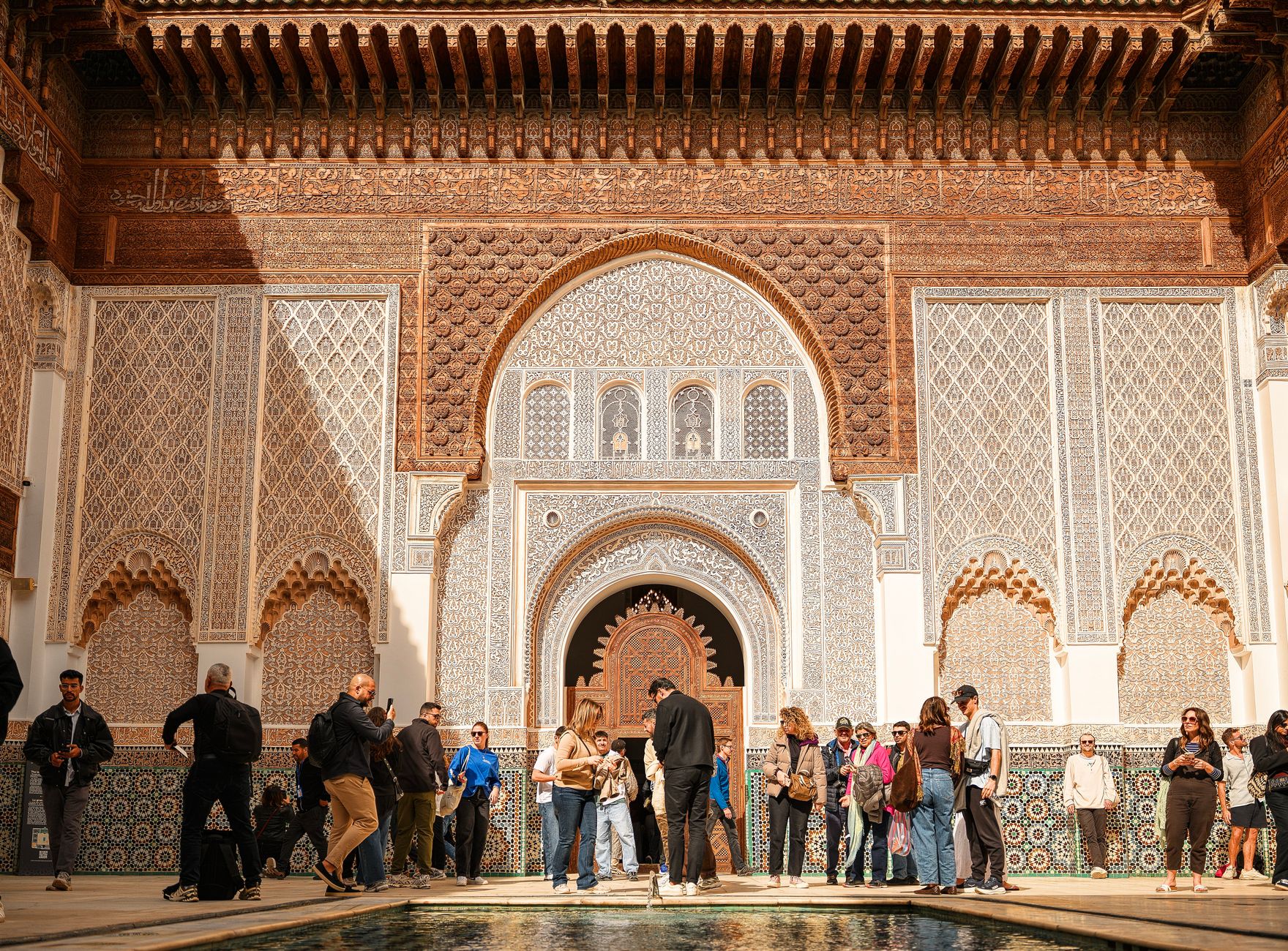

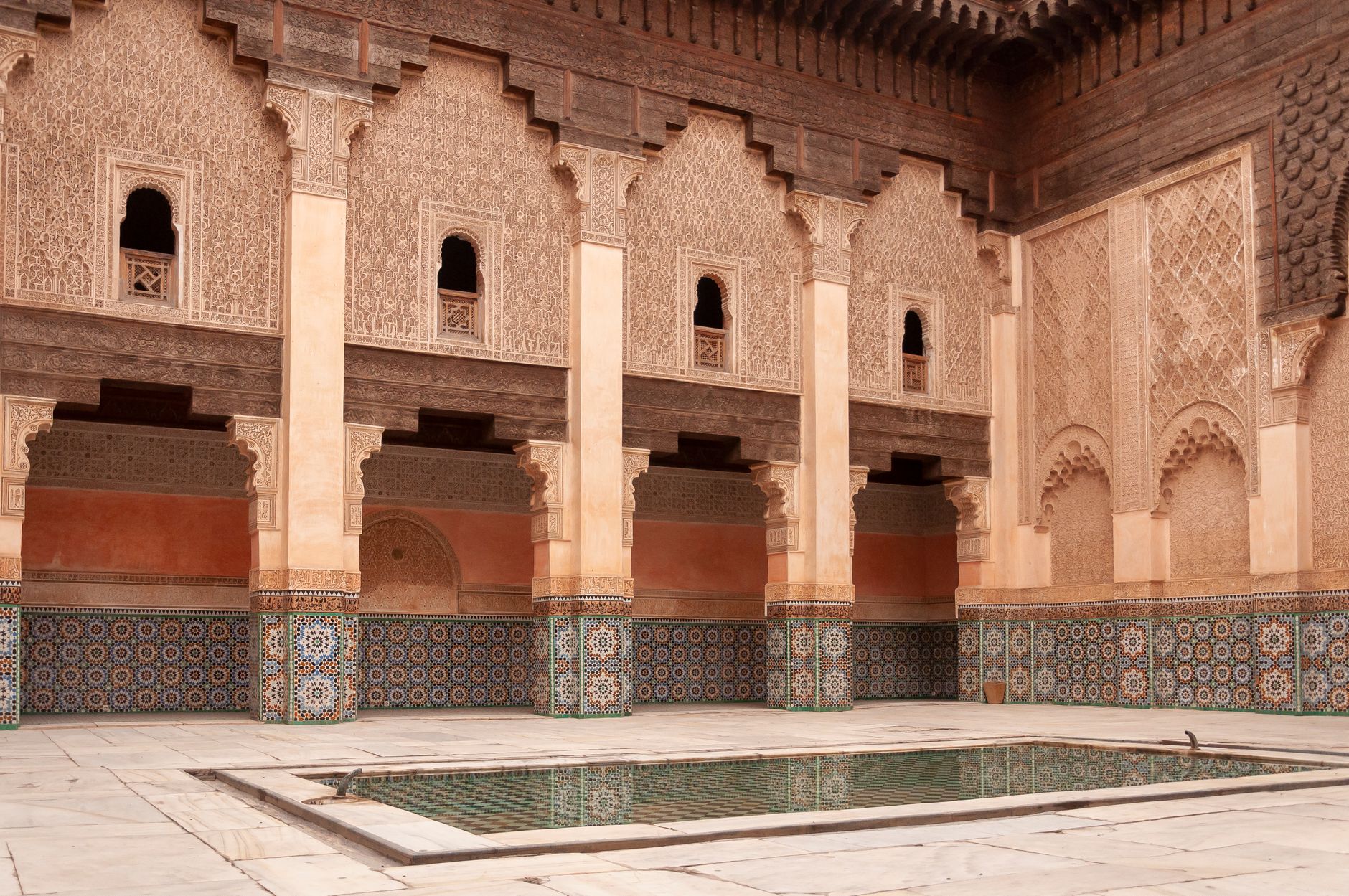
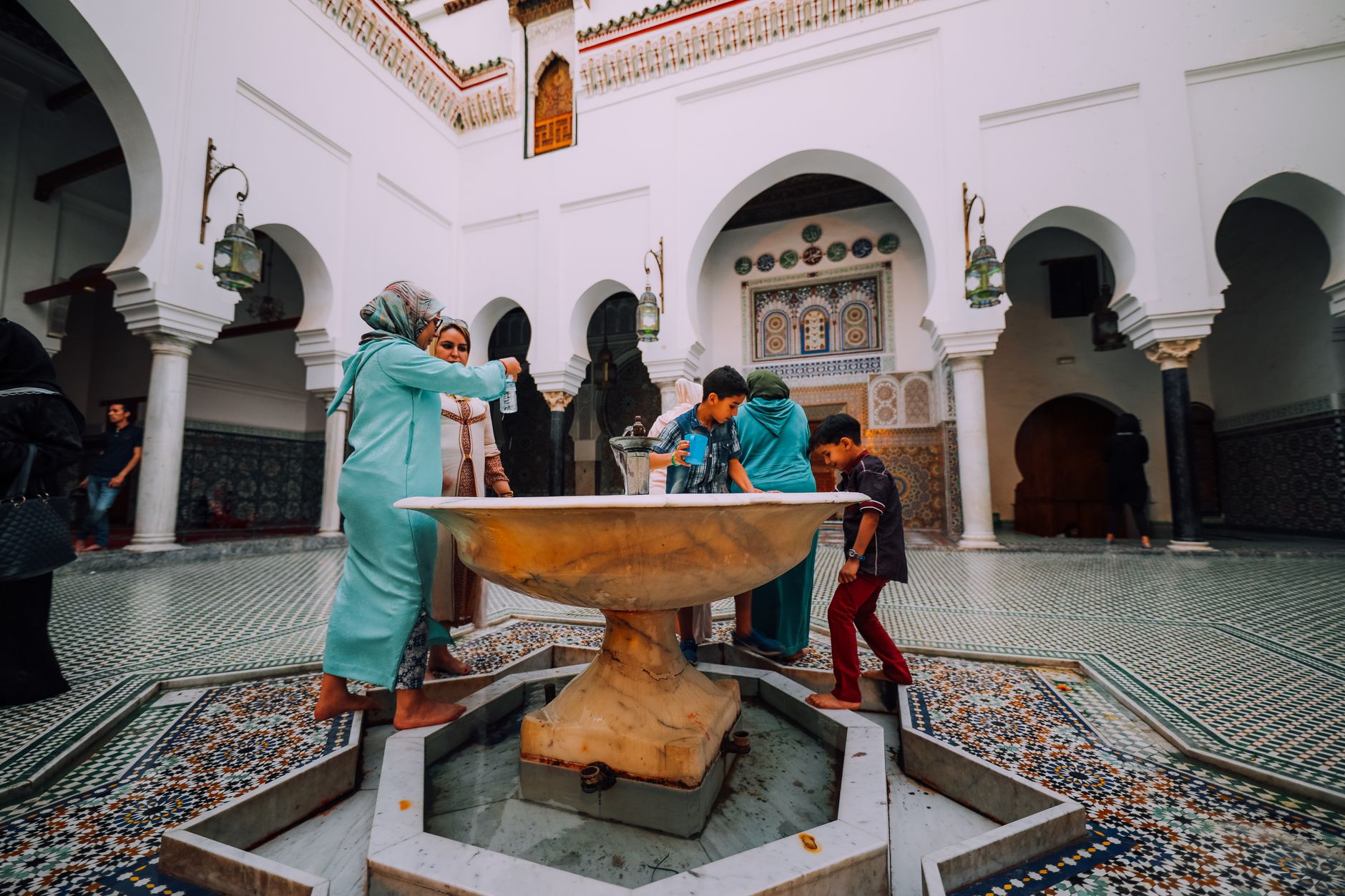
Step through the dark entrance corridor — a narrow passage of coloured tiles that feels almost theatrical in its contrast — and the Ben Youssef Madrasa opens into a courtyard that stops you mid-stride. A shallow rectangular pool, jade-tiled, mirrors the carved cedar screens and horseshoe arches above it. The city noise, which felt so insistent in the alleys outside, simply disappears behind the soaring walls.
Built in the sixteenth century to house up to 800 students of Islamic theology and law, this was once the largest madrasa in the Maghreb. The 130 dormitory cells stacked around the courtyard give it a monastic quality — you can stand in a doorway and understand, without much imagination, what it meant to study here.
💛 What travellers fall for
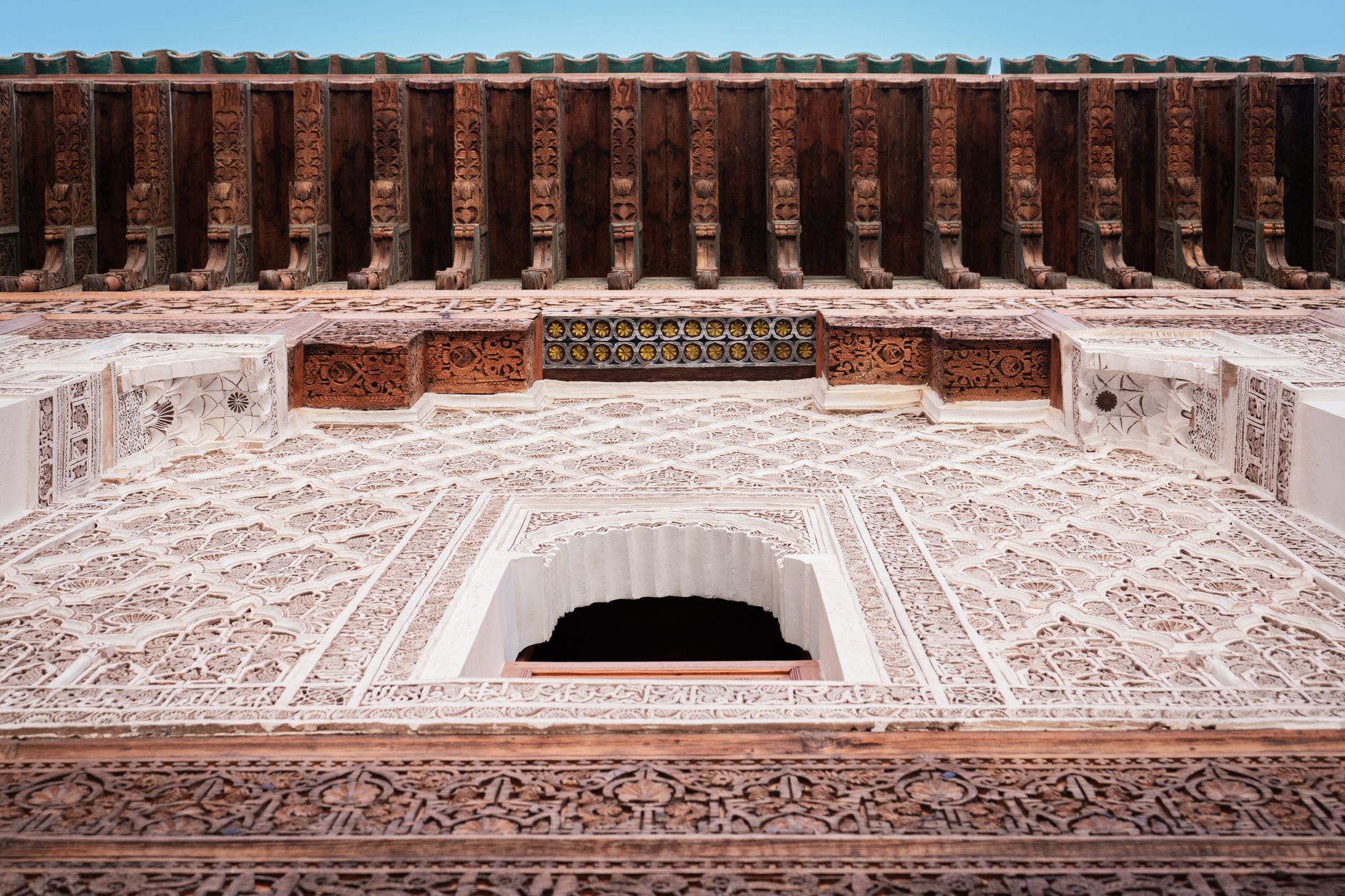
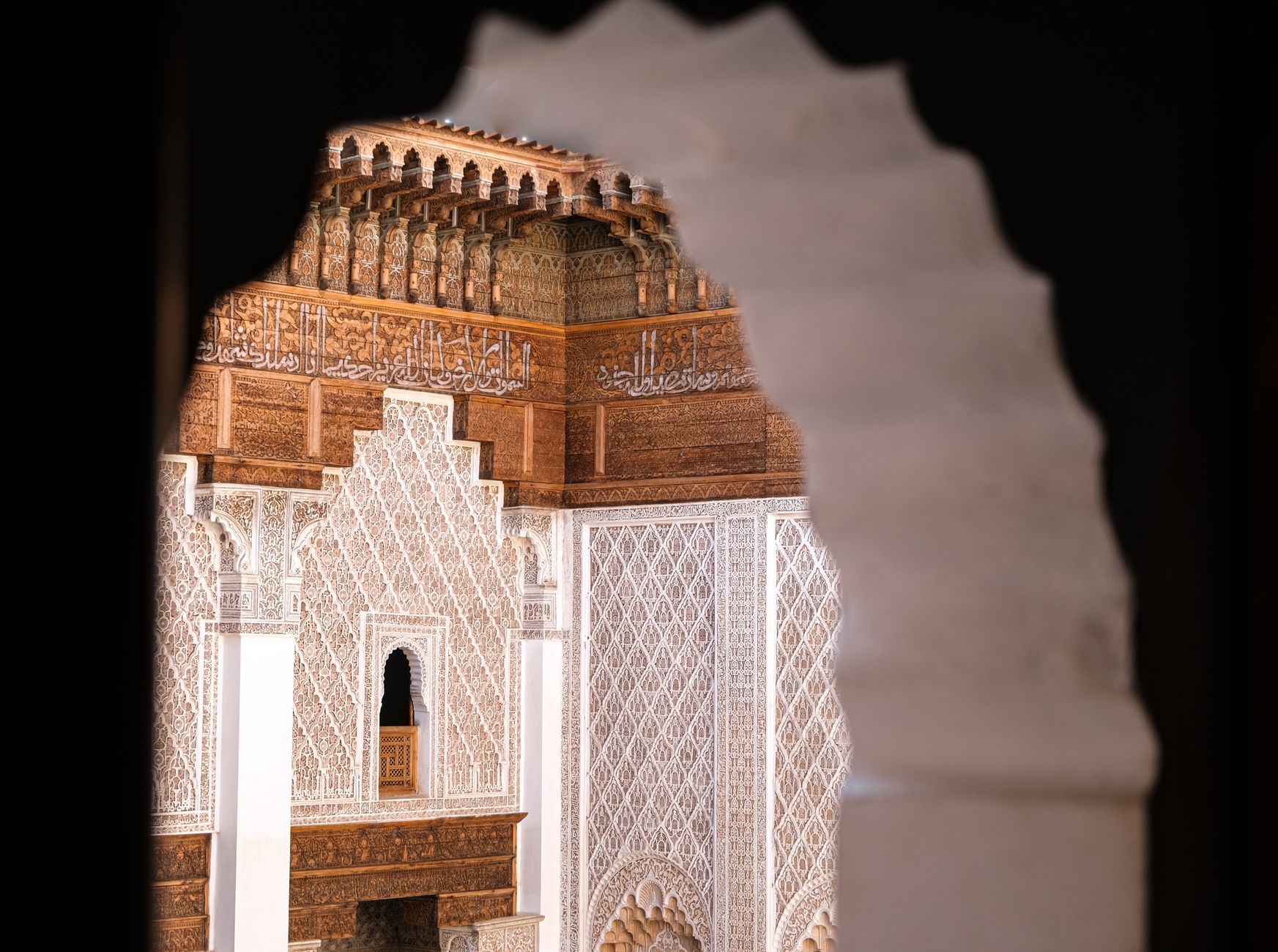
People who come back tend to arrive just after opening, around nine, when the courtyard light is low and the pool still. They note the detail on the carved stucco — bands of calligraphy above zellij tilework above cedar latticework, each layer distinct — and say it only reads properly when the crowds thin. The souk Anaal just outside is worth a slow look on the way out.
How Medersa Ben Youssef came to be
The site's first madrasa was commissioned by the Marinid sultan Abu al-Hasan in the fourteenth century, part of a wider Marinid programme of building religious schools across Morocco. That structure is gone. What stands today was raised by the Saadian sultan Abdallah al-Ghalib, completed in 1564–1565, and named for the adjacent Ben Youssef Mosque — itself founded centuries earlier by the Almoravid ruler Ali ibn Yusuf.
The madrasa functioned as a place of study and residence until 1960, when it closed. Restored and reopened to visitors in 1982, it underwent a second, more thorough restoration between 2018 and 2022. The cedar used in the screens came from the Atlas Mountains; the marble underfoot is Italian Carrara.
Who and what shaped it
People who shaped it
Landmark buildings
Plan your visit
On the map
When to go
Spring (March to April) and autumn (late September through October) offer the most comfortable conditions for moving slowly around an open courtyard — warm without the intensity of summer, when midday temperatures regularly reach 36°C or above. Winter visits are cooler and sometimes rainy, but the madrasa itself is largely sheltered.
Background & history adapted from Wikipedia (CC BY-SA) · specs from Wikidata (CC0) · weather from Open-Meteo · map data © OpenStreetMap contributors · photos from Wikimedia Commons / Unsplash with per-image credit. No third-party reviews or social posts reproduced.