
Marrakech Plaza
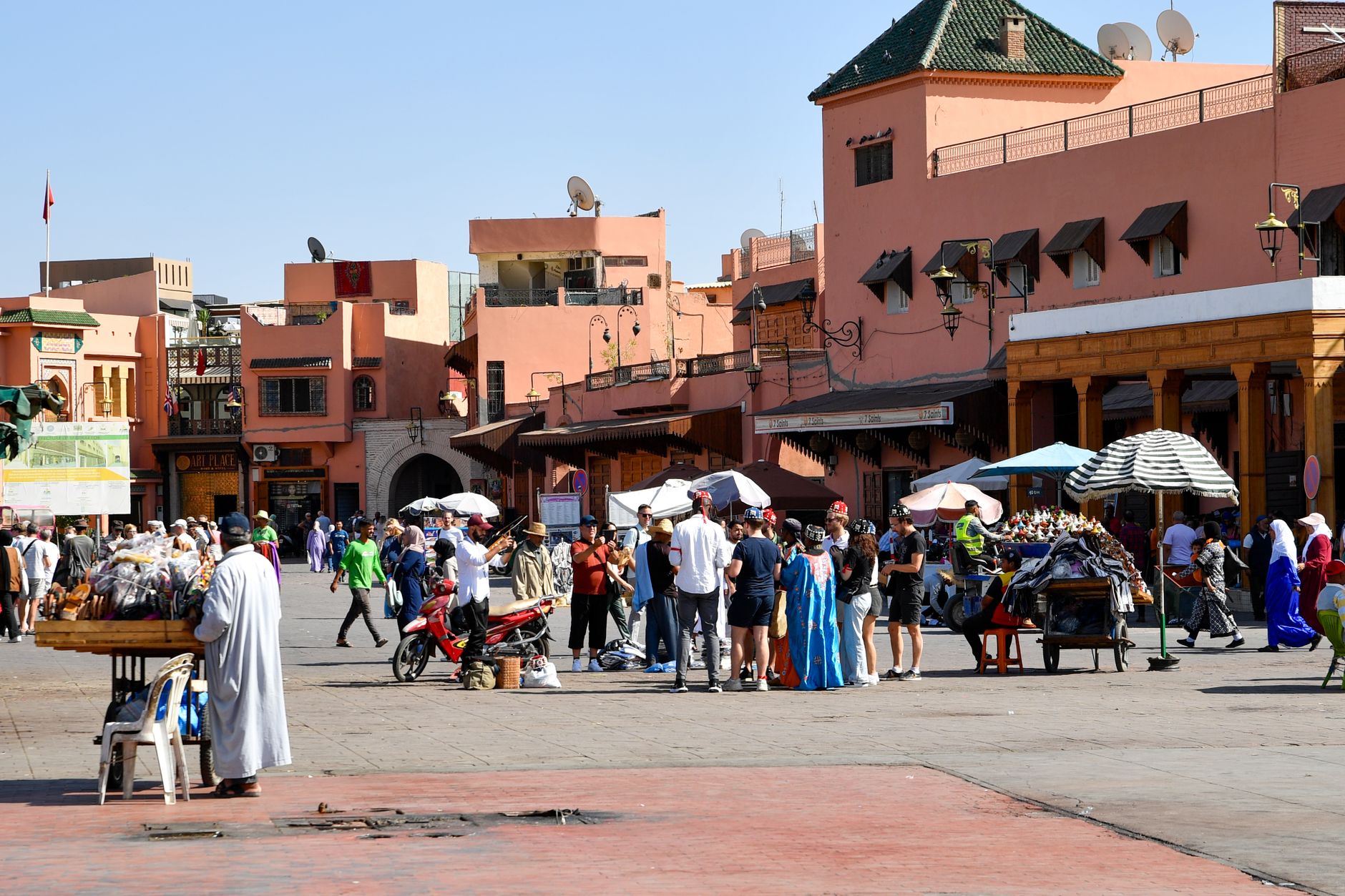
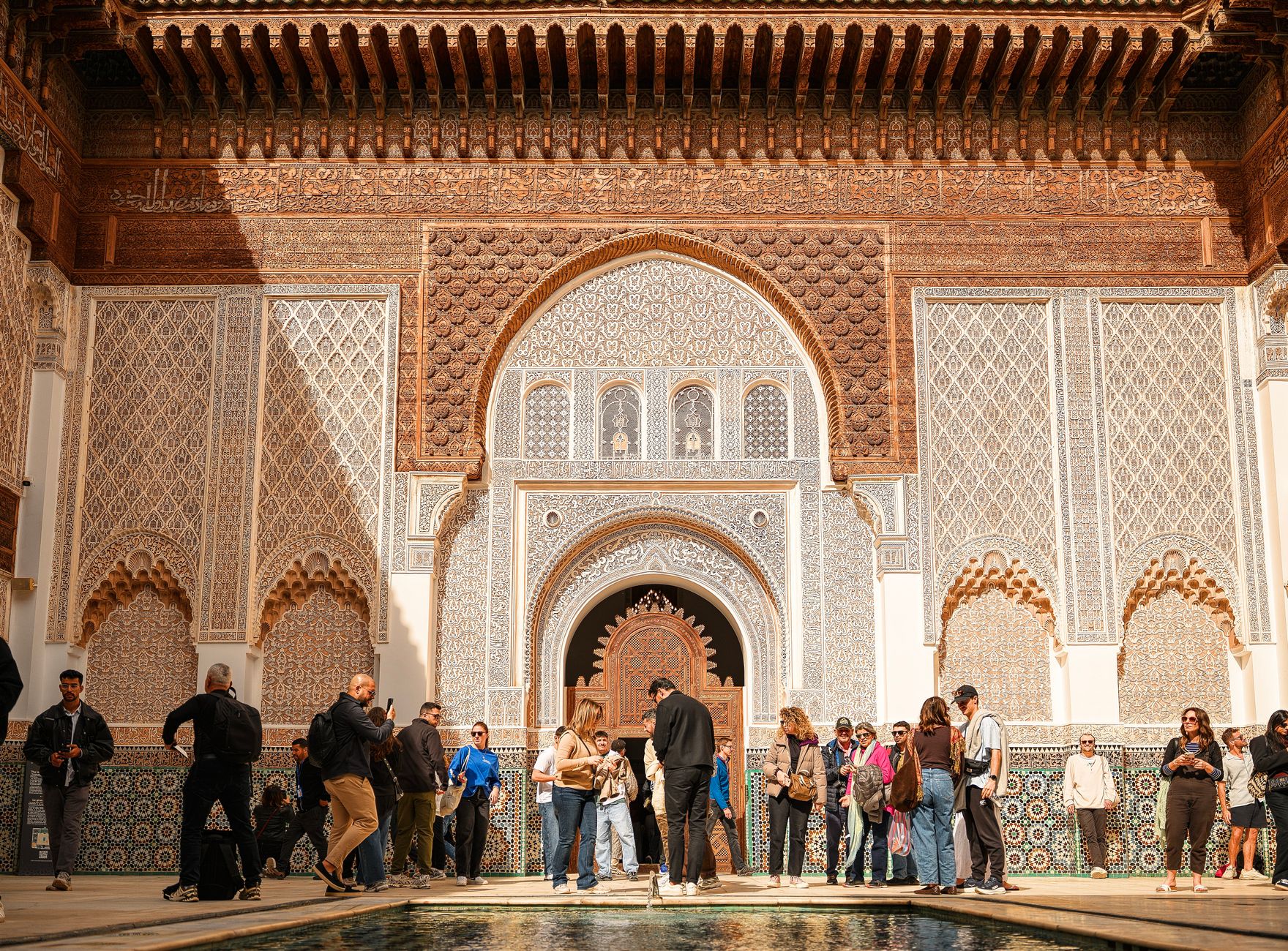
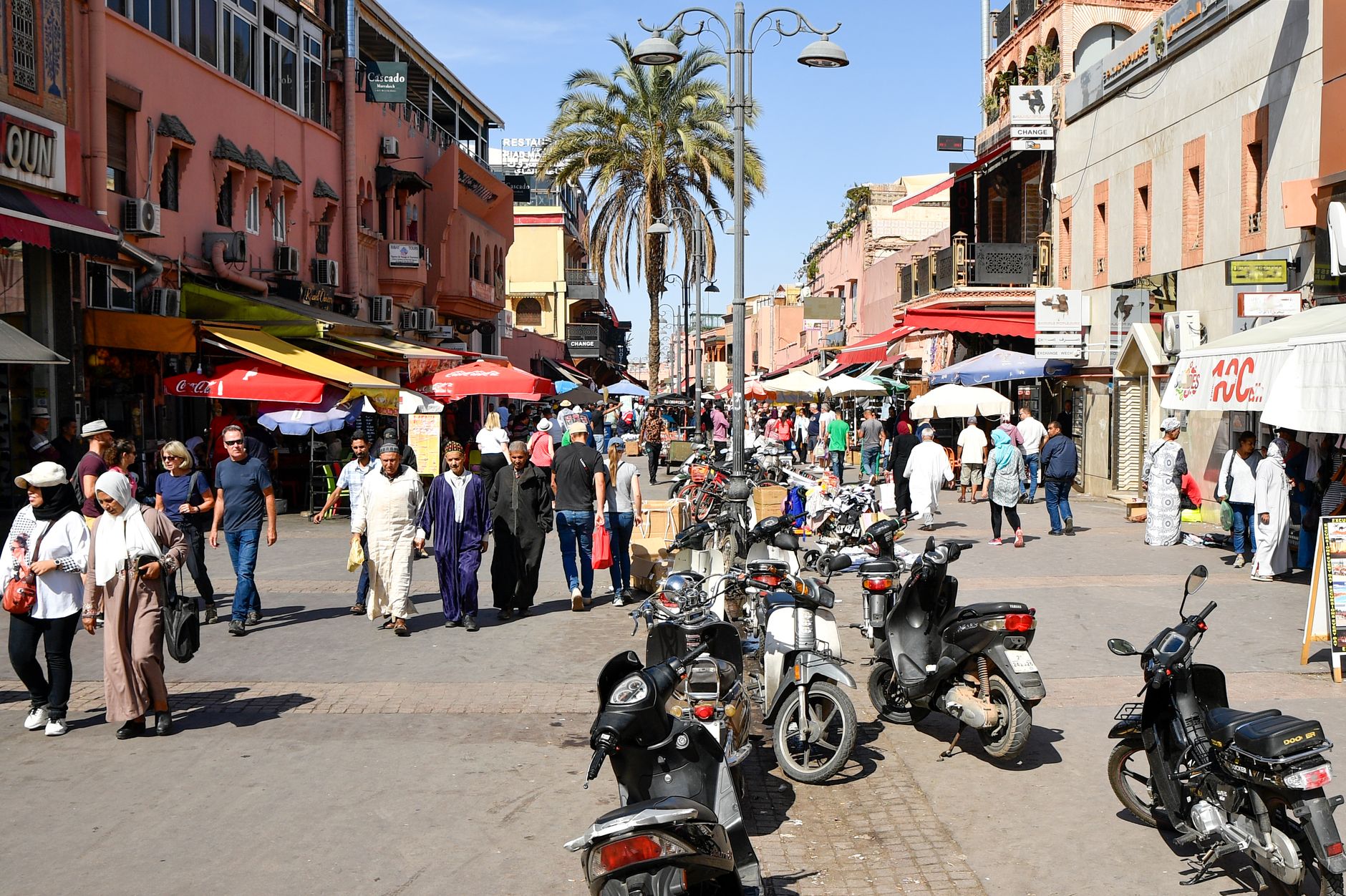
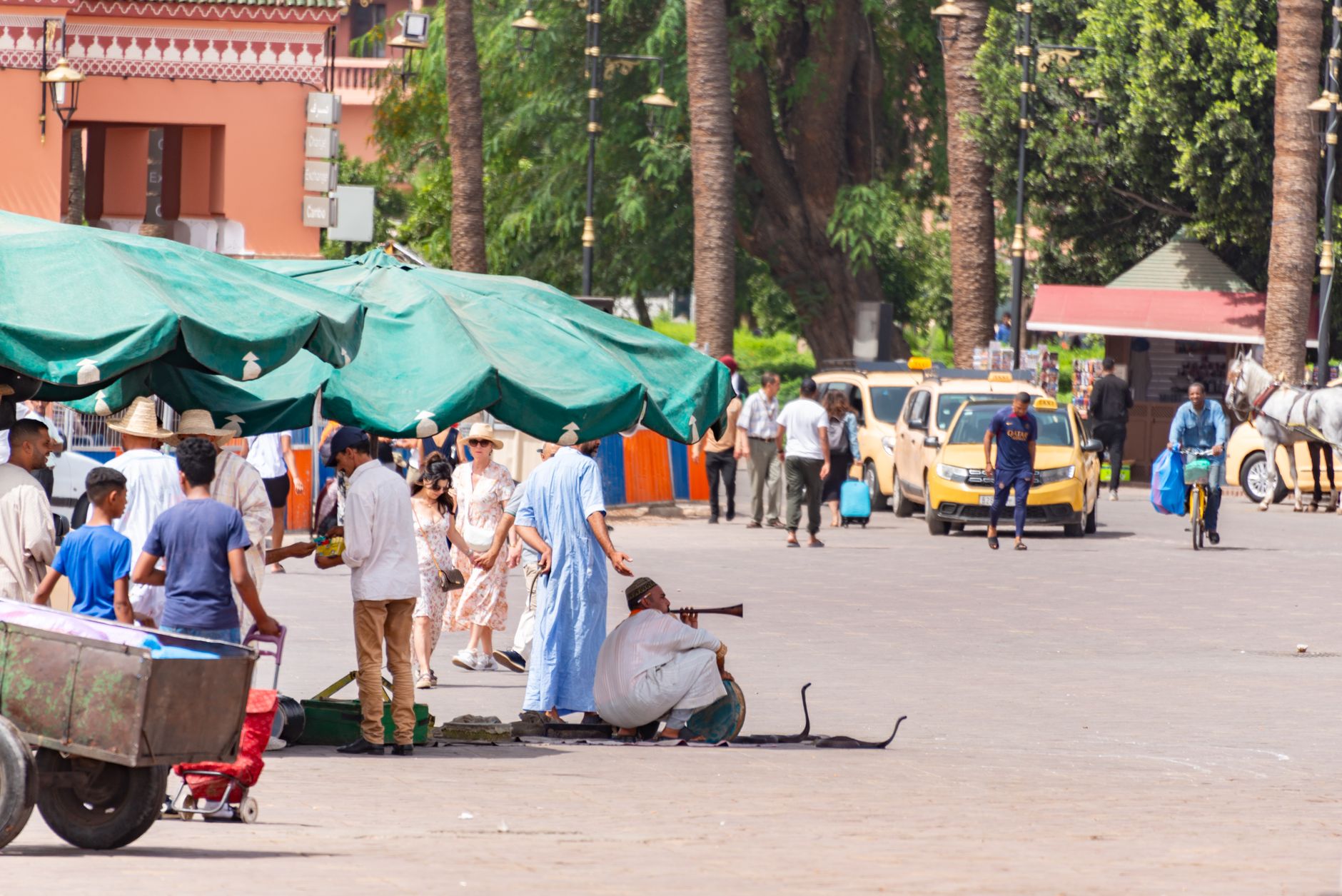
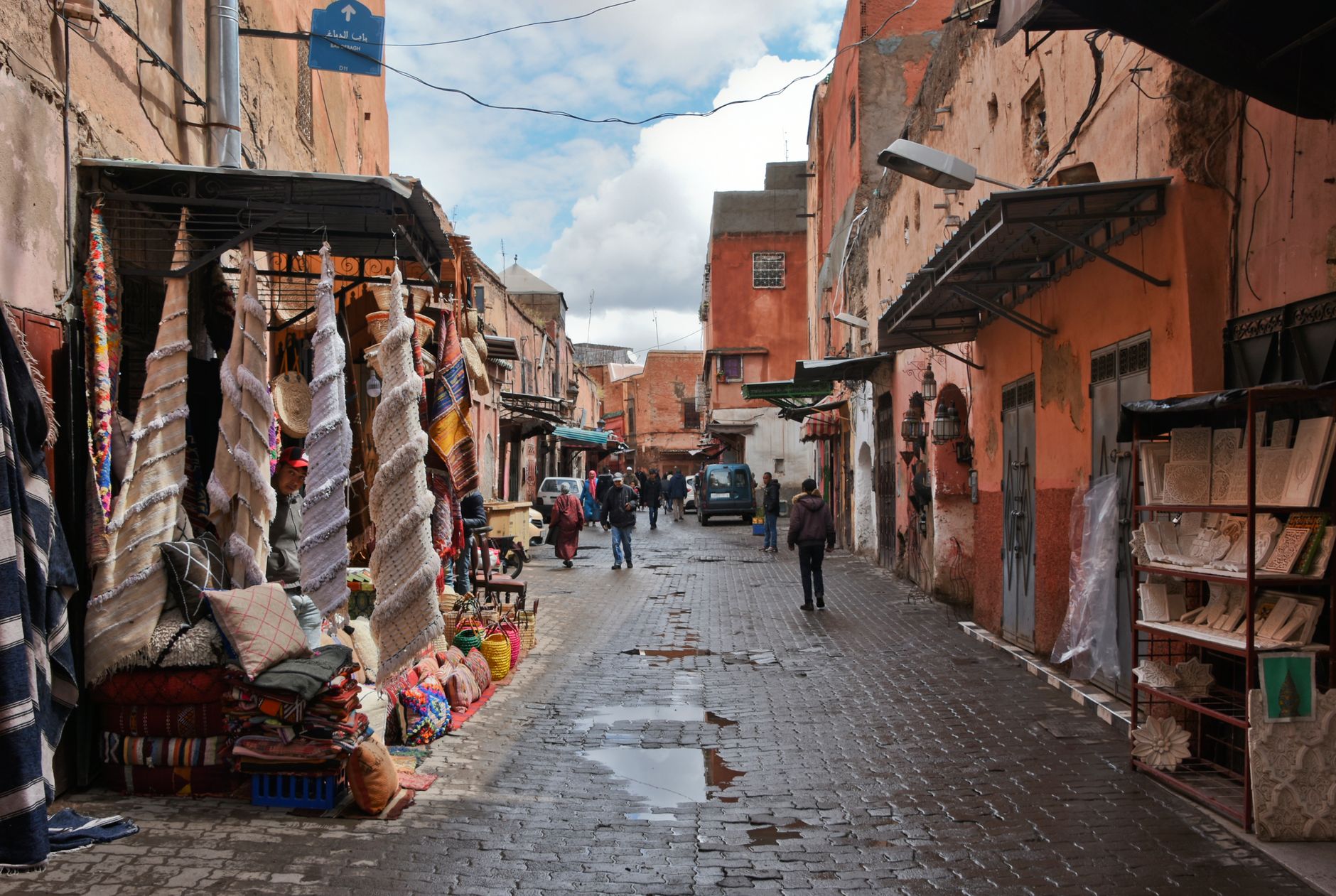
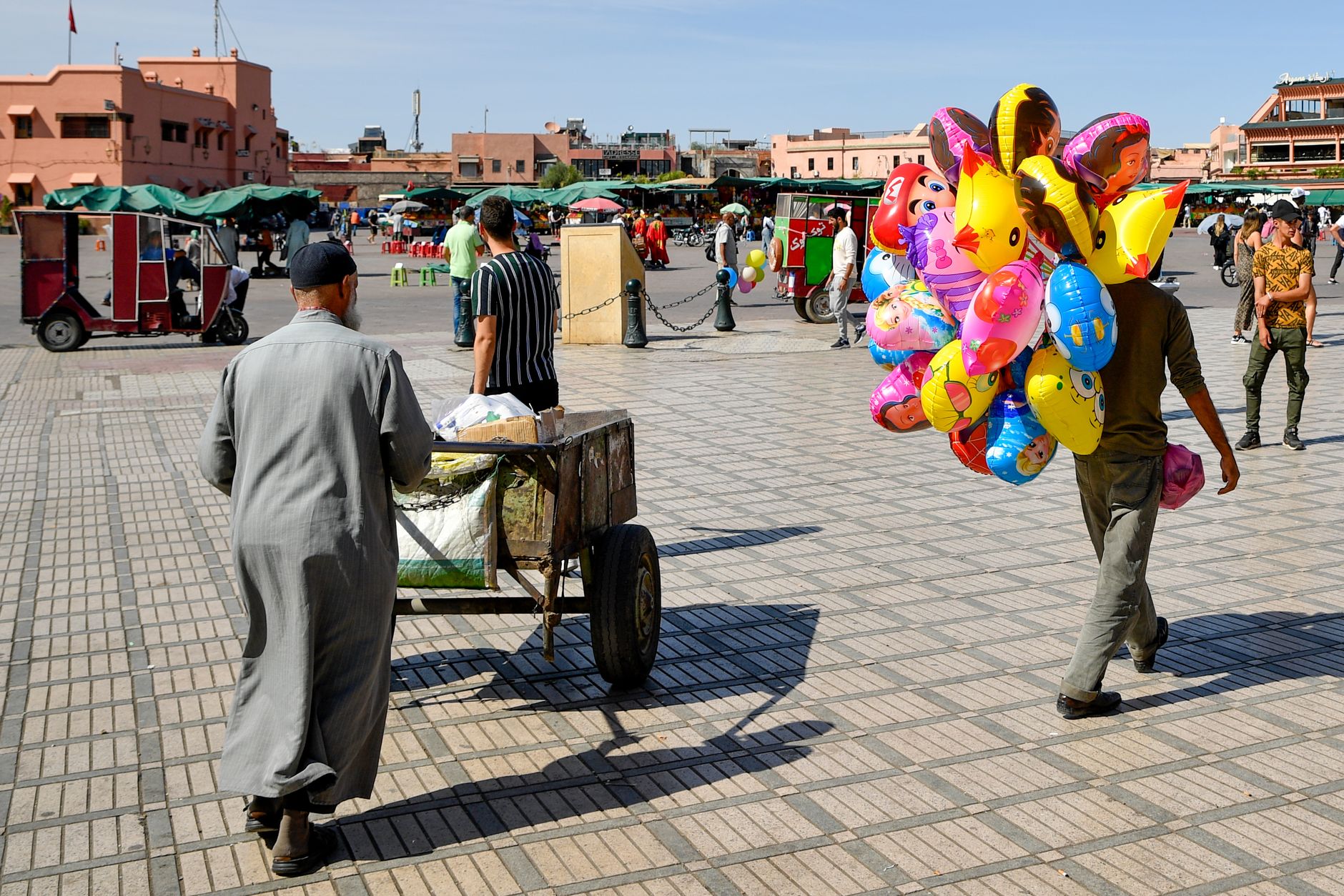
The first thing you notice, walking west from the Medina, is the width of the street. Boulevard Mohammed V opens up where the alleys close, and suddenly there is sky, shade, and pavement wide enough to breathe. Marrakech Plaza sits at the centre of Gueliz, the French-planned quarter that grew up outside the old walls, with fountains, upmarket shops, and the kind of terraces where a long lunch can dissolve an afternoon.
Behind the plaza, the Marché Central draws the city's expat cooks hunting for produce that doesn't appear in the souks. Le Colisée cinema and the Comptoir des Mines gallery — an Art Deco building from the 1930s showing contemporary Moroccan work — give the area a texture that sits somewhere between European boulevard and thoroughly Moroccan afternoon.
💛 What travellers fall for
People who come back to Gueliz tend to anchor themselves here before spreading out. The shaded terrace cafes along Boulevard Mohammed V, under trees that have had a century to grow into Prost's grid, are the consistent recommendation — order something cold, watch the city move at its own pace, and treat the plaza as a base rather than a destination.
How Marrakech Plaza came to be
Gueliz was drawn on paper before it existed on the ground. In 1912, French architect Henri Prost laid out the plan for a European quarter west of the Medina walls, commissioned by Marshal Lyautey, the French colonial administrator who wanted to modernise Marrakech without dismantling the old city. The name Gueliz is thought to derive from the French word for church, a nod to the Catholic church built near its centre.
By 1931, the quarter had taken enough shape to function as a parallel city — wide boulevards, ordered blocks, and the beginnings of the shade canopy that now defines its character. The plaza at its heart has shifted over the decades from colonial civic space to a commercial and social centre that belongs, unmistakably, to contemporary Marrakech.
Who and what shaped it
People who shaped it
Landmark buildings
Plan your visit
On the map
When to go
Spring (March to May) and autumn (late September to November) are the most comfortable seasons, with daytime temperatures between 20°C and the low 30s. Summer pushes regularly past 35°C, which makes the shaded terraces less a luxury and more a necessity; winters are mild by day but can drop close to freezing after dark.
Right now
Background & history adapted from Wikipedia (CC BY-SA) · specs from Wikidata (CC0) · weather from Open-Meteo · map data © OpenStreetMap contributors · photos from Wikimedia Commons / Unsplash with per-image credit. No third-party reviews or social posts reproduced.