
Majorelle Blue Pergola
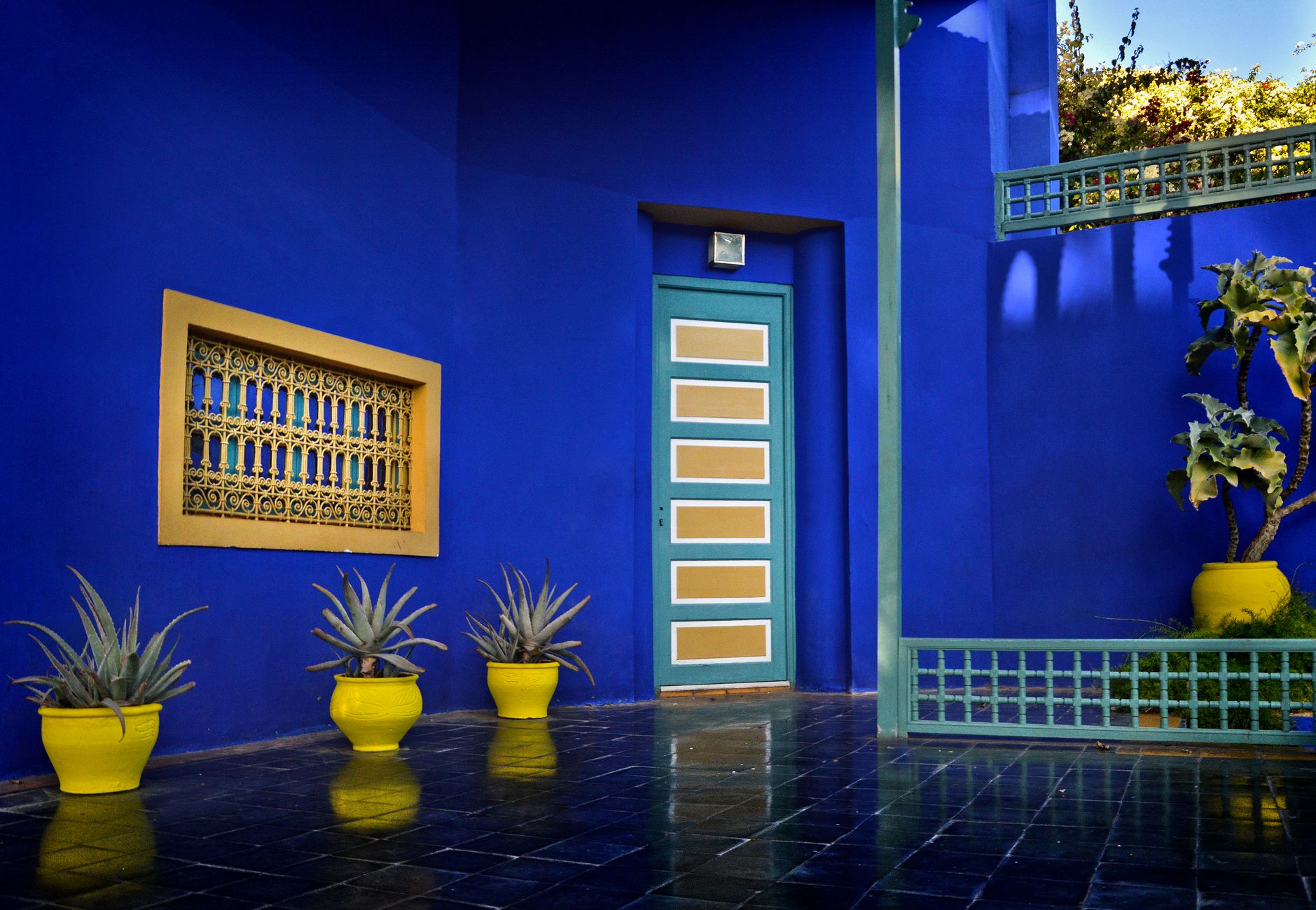
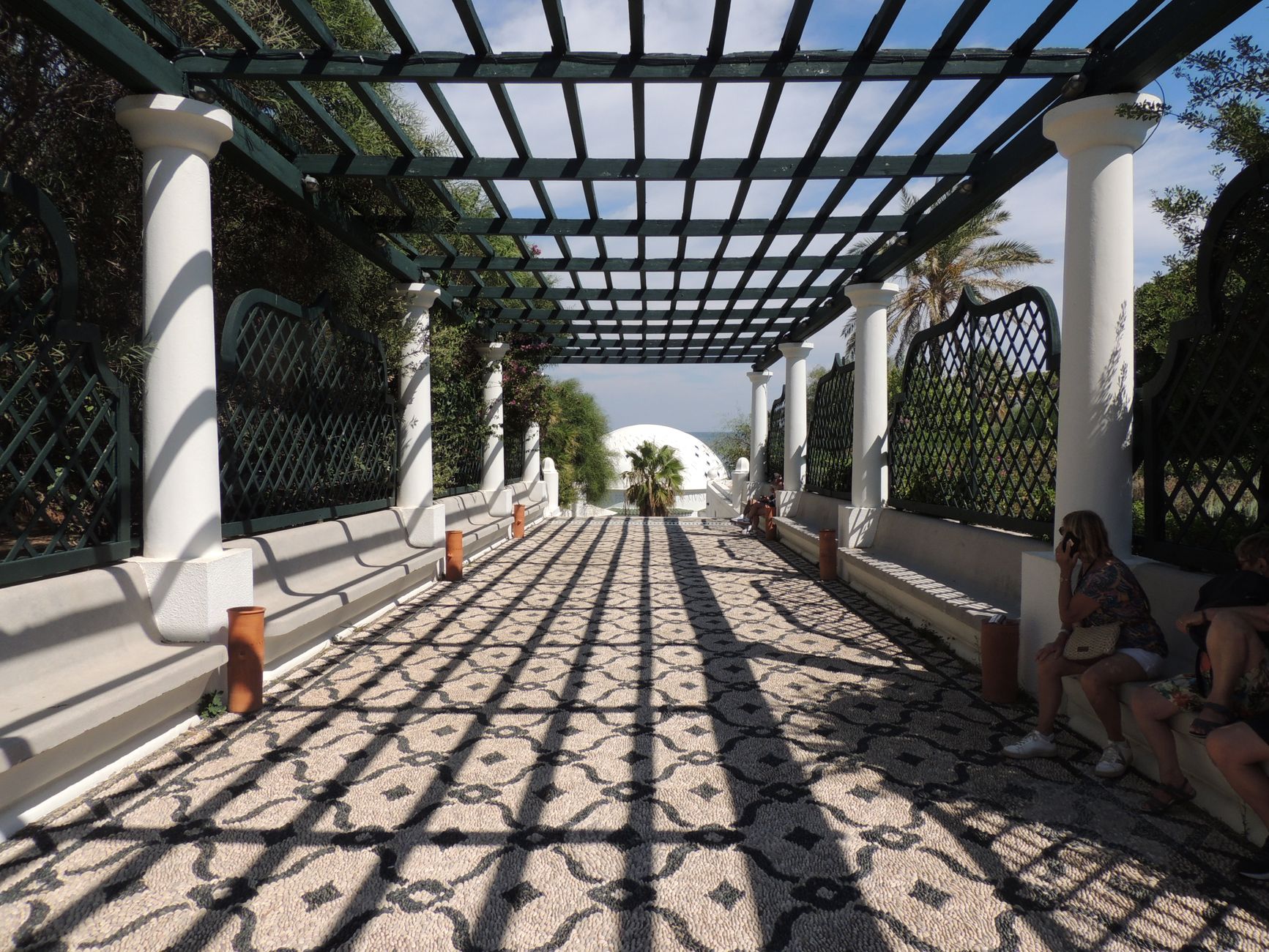
The pergola Jacques Majorelle added to his cubist villa in 1933 is a small thing by garden standards — an Arabic-arched structure that looks out over a water basin — but it concentrates everything the garden does well. The blue here is exact: 37.6% red, 31.4% green, 86.3% blue, a shade Majorelle patented before his death and that seems to deepen rather than fade under Marrakech light.
Stand here long enough and you understand why this corner keeps pulling people back. The water sits still below. The villa rises behind. It is not a grand viewpoint so much as a place where the garden pauses and lets you look.
💛 What travellers fall for
People who return tend to make straight for the pergola at opening time, before the tour groups find their rhythm. The low morning light hits the blue at an angle you won't get at noon, and the water basin reflects it cleanly. A few minutes here before moving on toward the lily pond is the quiet version of this garden.
How Majorelle Blue Pergola came to be
Jacques Majorelle began shaping this land in the early 1920s, but the pergola itself came later. In 1933, working with the cubist villa that architect Paul Sinoir had completed two years earlier, Majorelle added balconies and the Arabic pergola — and painted the whole structure in a blue he'd drawn from the waters of Lake Tasgah in the Atlas mountains. He opened the garden to the public in 1947.
When Majorelle died in 1962 the garden fell into neglect. Yves Saint Laurent and Pierre Bergé bought it in 1980, restored it, and kept it open. After Saint Laurent's death in 2008, his ashes were scattered here. The pergola has stood through all of it.
Who and what shaped it
People who shaped it
Landmark buildings
Plan your visit
On the map
When to go
Spring and autumn give the most comfortable visits — warm without the punishing midday heat of July and August, when the garden is best seen before 9:30 a.m. Winter days are often sunny and mild, though nights can drop close to freezing.
Right now
Background & history adapted from Wikipedia (CC BY-SA) · specs from Wikidata (CC0) · weather from Open-Meteo · map data © OpenStreetMap contributors · photos from Wikimedia Commons / Unsplash with per-image credit. No third-party reviews or social posts reproduced.