
Lüftlmalerei Häuser (Painted Facades of Mittenwald)
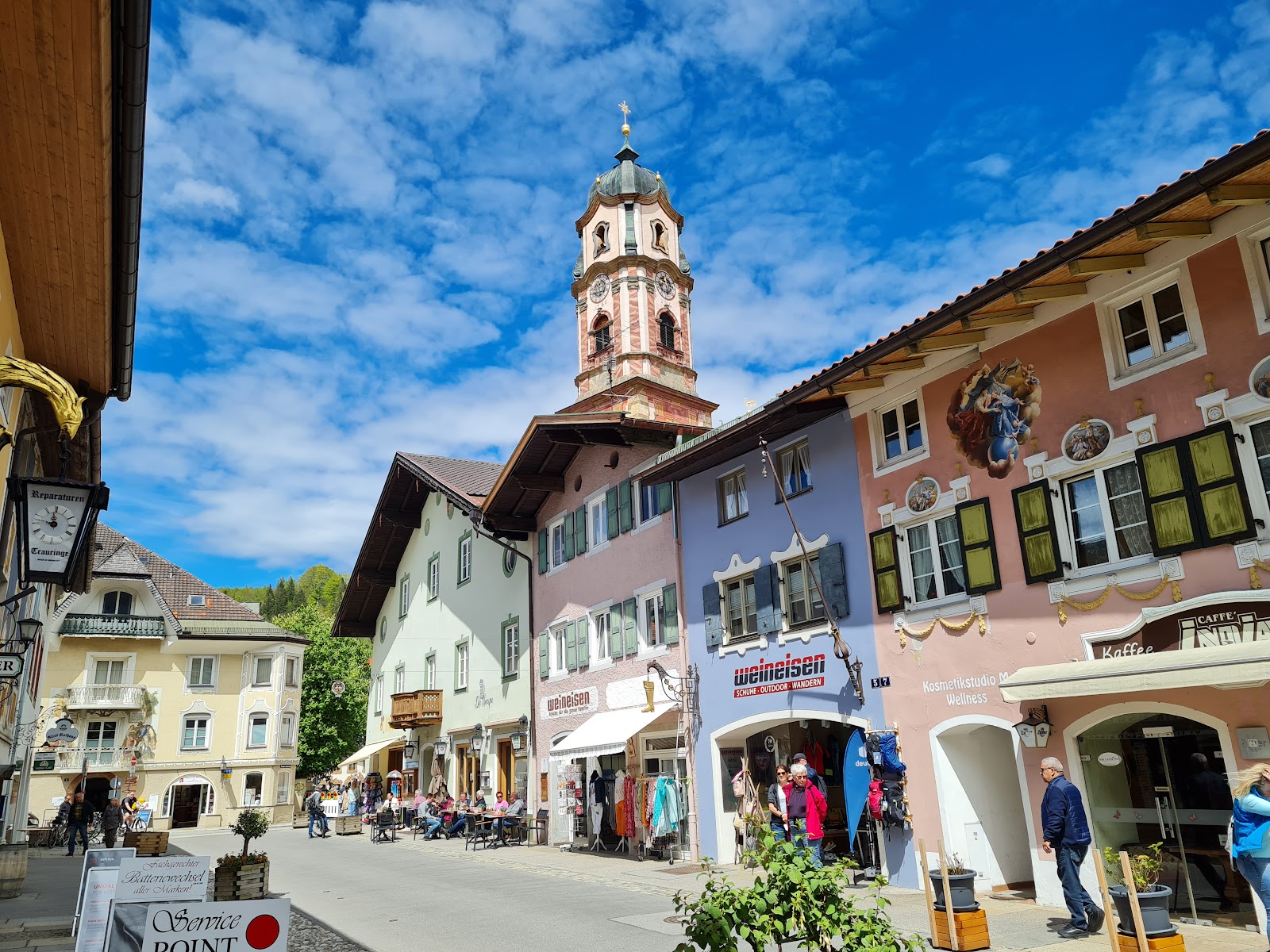
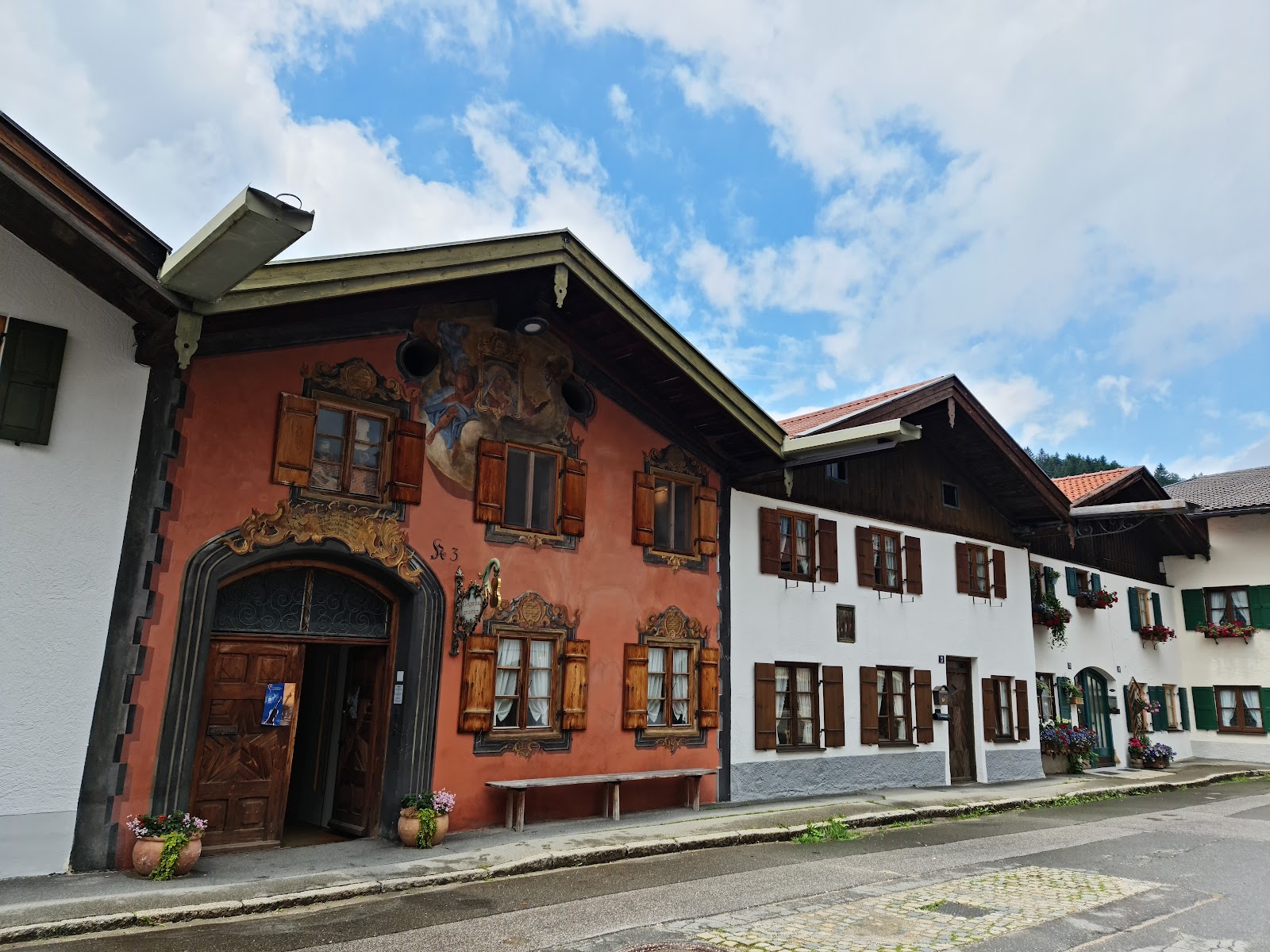
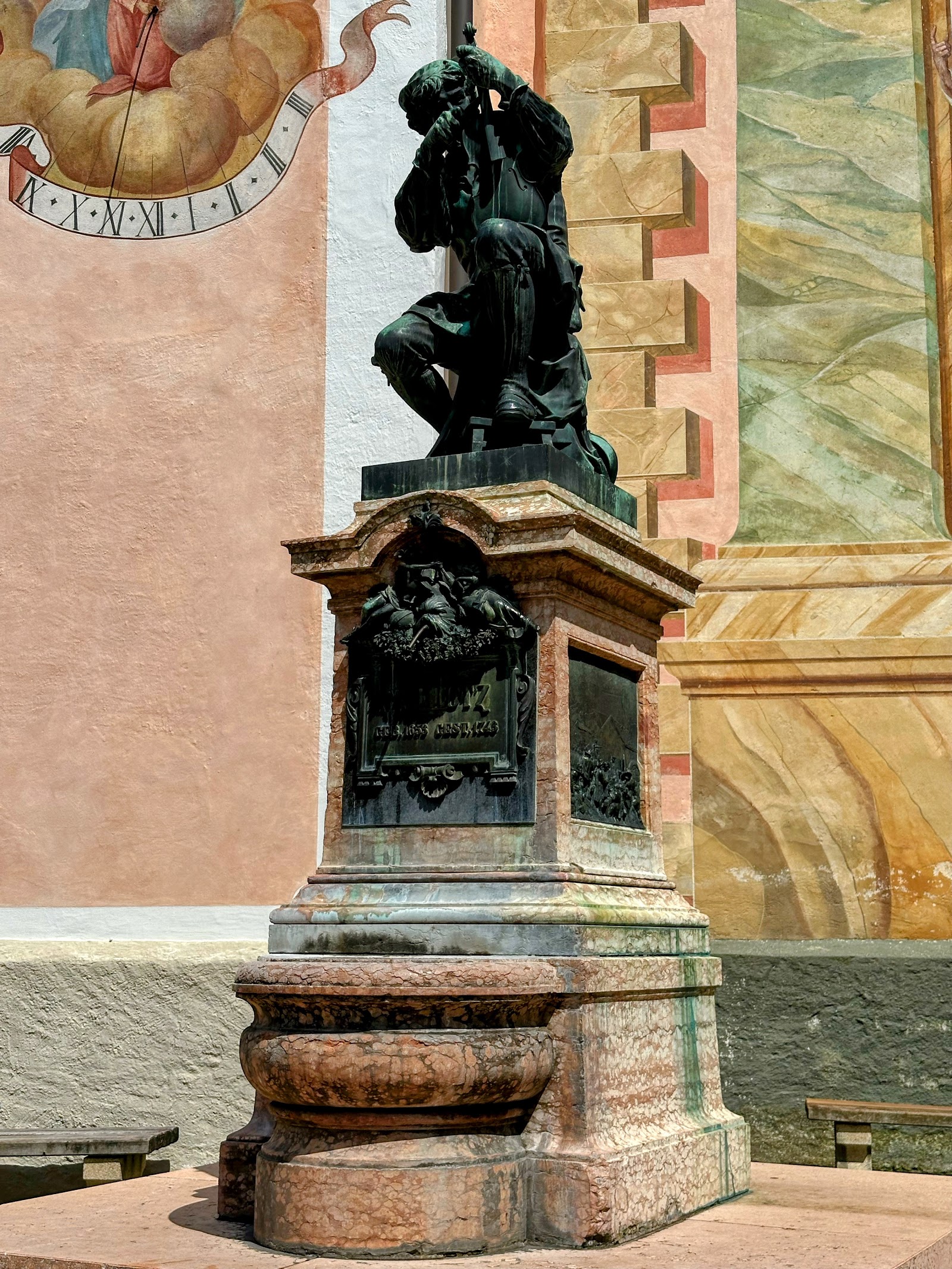
Walk along Obermarkt or turn down Griesstraße and you'll notice that the walls themselves are doing the talking. Mittenwald's painted house facades — Lüftlmalerei, literally "air painting" — cover entire exterior walls in lime-set frescoes: biblical scenes, alpine customs, fairy-tale figures, and the violin-making lore the town is built on.
The technique is older than it looks. Pigment applied to fresh lime plaster undergoes a chemical reaction as it dries, bonding colour to stone at a molecular level. That's why paintings from the 18th century still hold their clarity in a place that receives nearly 1,800 mm of rain and snow a year.

💛 What travellers fall for
People who come back tend to slow down on Griesstraße rather than Obermarkt — fewer crowds, and the biblical scenes there reward a closer look. The Hansel and Gretel house on Ettaler Strasse (no. 41) is easy to miss if you're moving fast. Thursday mornings, Regine Ronge leads a guided fresco walk at 10 a.m. — worth it for the detail she catches that you'd walk straight past.
The story behind Lüftlmalerei Häuser (Painted Facades of Mittenwald)
Lüftlmalerei took hold across the Bavarian Alps in the 18th century, when wealthy merchants, farmers, and craftsmen began commissioning exterior frescoes as a legible sign of prosperity. Mittenwald's Gries district preserves some of the earliest surviving examples. Matthäus Günther (1705–1788), one of the leading rococo painters in Germany, was among the first to bring the form to the town; Franz Karner (1737–1817) continued the tradition locally.
The name of the technique may derive from the home of Oberammergau artist Franz Seraph Zwinck (1748–1792), whose house was known as "Zum Lüftl" — though this etymology remains unconfirmed. The tradition didn't freeze in the 18th century: Sebastian Pfeffer, born 1936, painted an alpine mural at house no. 15 as recently as 2006, and Max Strauss of Munich added the Hansel and Gretel scenes on Ettaler Strasse in the 1920s.

Good to know
The facades cost nothing to see and are always accessible. Mittenwald station is a short walk from the centre; trains run hourly from Munich (about 90 minutes). July through September is the most reliable weather window. Guided fresco tours run Thursdays at 10 a.m. — ask at Tourist-Information on Dammkarstrasse.
Summer (July–September) gives you the best light for reading the facades — warm days around 19°C, though June through August brings the heaviest rain, sometimes in fast-moving afternoon storms. Winter is cold and snowy, with January temperatures regularly dropping below -9°C overnight; the frescoes endure it, but you may not linger as long.
Where is Lüftlmalerei Häuser (Painted Facades of Mittenwald)?
More tickets & tours for Lüftlmalerei Häuser (Painted Facades of Mittenwald)
Book directly at the provider
What travellers say about Lüftlmalerei Häuser (Painted Facades of Mittenwald)
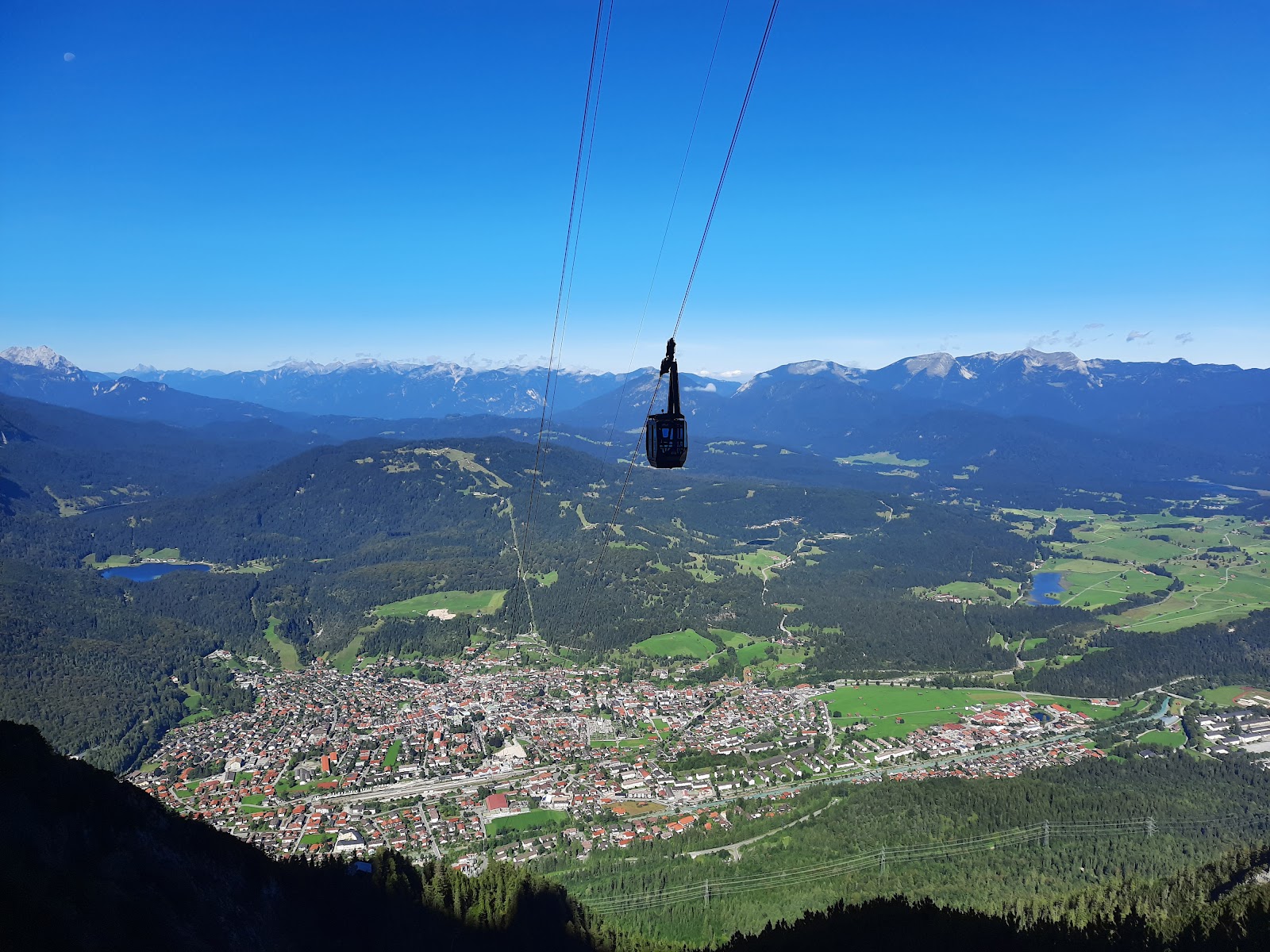
Mittenwald is a beautiful mountain town in southern Germany near the Alps.It is famous for its colorful painted houses and traditional Bavarian culture. You can reach there by car or by train. It is a peaceful and perfect place for a relaxing holiday with family. Mittenwald is also known for violin making, which has been part of the town for centuries. The local people still celebrate Bavarian traditions with music, festivals, and traditional clothes. One of the most famous attractions is the Leutasch Gorge with waterfalls and wooden walking bridges.The gorge is very beautiful and great for both adults and children.If you want an amazing view then the Karwendelbahn cable is a must.The food here is delicious, especially salmon, schnitzel, and Bavarian desserts. Overall, Mittenwald is a wonderful place to enjoy nature, culture, and the beauty of the Alps in different seasons.
We stopped here for a few nights and walked all around the old town, absolutely stunning place with great food and drinks, zugspitze is only around 30 minutes away by car but there is a train station here also, highly recommend a visit.
Mittenwald is a picturesque resort town in the southernmost part of Germany, nestled in the Bavarian Alps, just 5 kilometers from the Austrian border at the foot of the majestic Karwendel mountain range. Goethe once called this town "a living picture book."
Coloured timber houses, painting on the facade and calm atmosphere. Lovely small old town.
Very pretty and very lively. It feels more like an authentic place than some of these Alpine villages that appeal to tourists.
More of Mittenwald
Discover where to stay, what to do and the best deals for your trip.
Explore Mittenwald →More attractions in Mittenwald
All of Mittenwald →
Background adapted from Wikipedia (CC BY-SA) · map data © OpenStreetMap contributors · ratings & place photos via Google · other photos with per-image credit. Ticket links may earn us a commission at no extra cost to you.