
Louvre
From a royal palace to the world's most-visited museum.
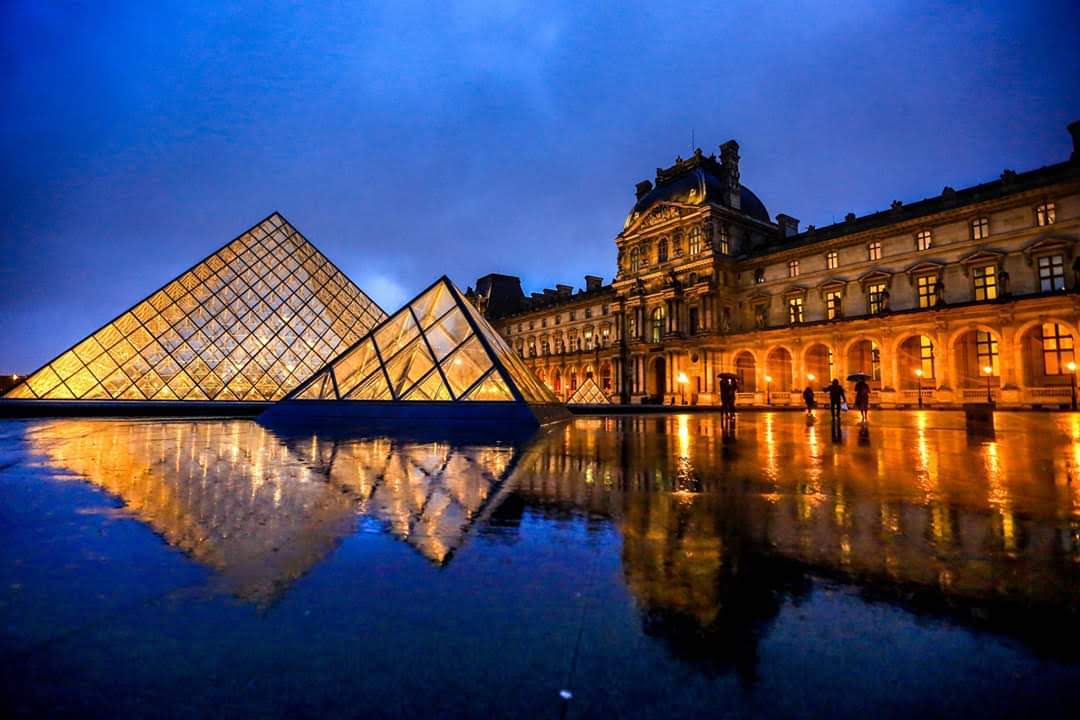
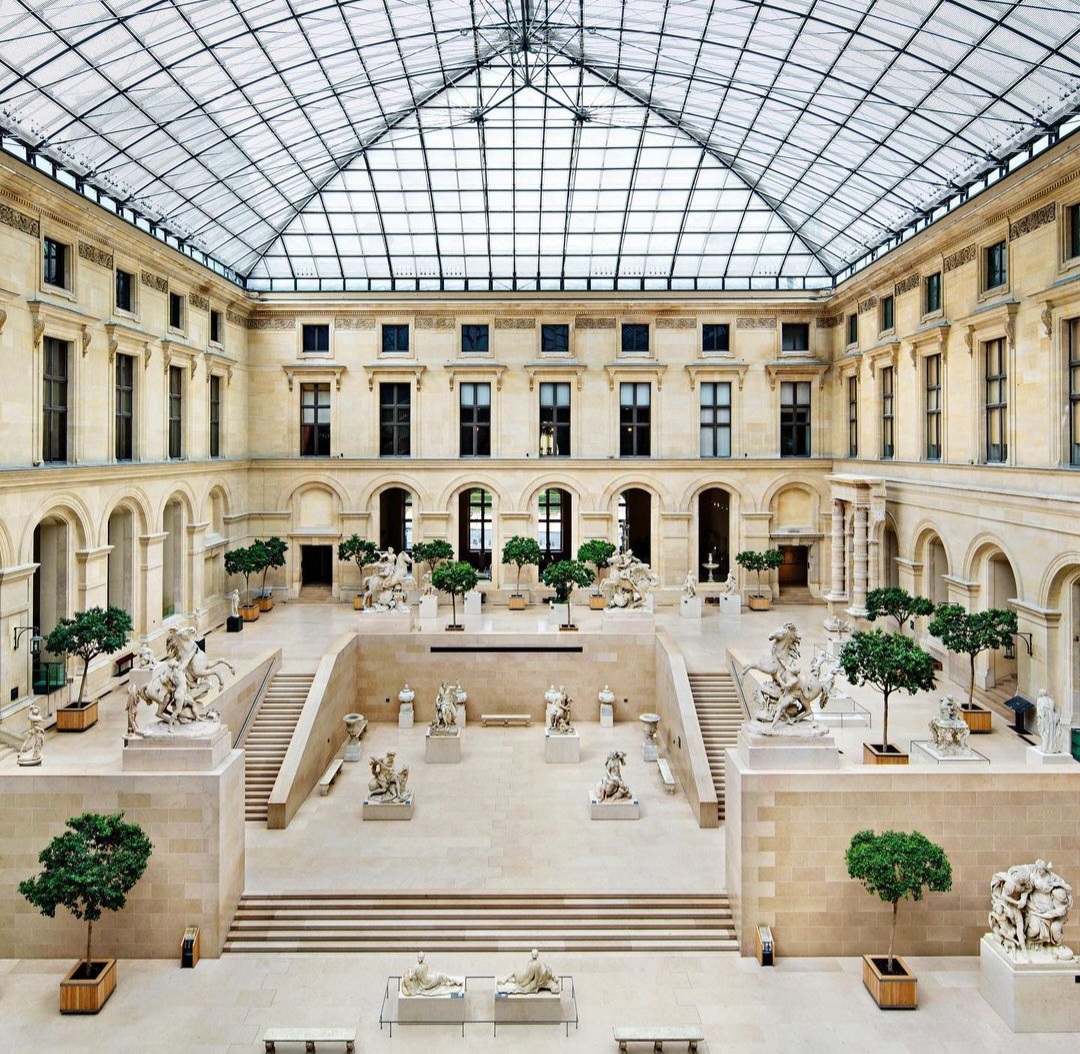
The glass pyramid in the Cour Napoléon catches light differently depending on where you stand — pale silver at dawn, almost invisible at midday, gold-lit after dark. It is the entrance to a building that was already ancient when the pyramid arrived in 1989. Inside, the galleries run for kilometres: Greek antiquities give way to Dutch masters, Egyptian sarcophagi sit a short walk from the Winged Victory of Samothrace poised at the top of a marble staircase.
The Louvre holds somewhere around 35,000 works on display at any one time, drawn from a collection ten times that size. No one sees it all in a day, and no one should try.
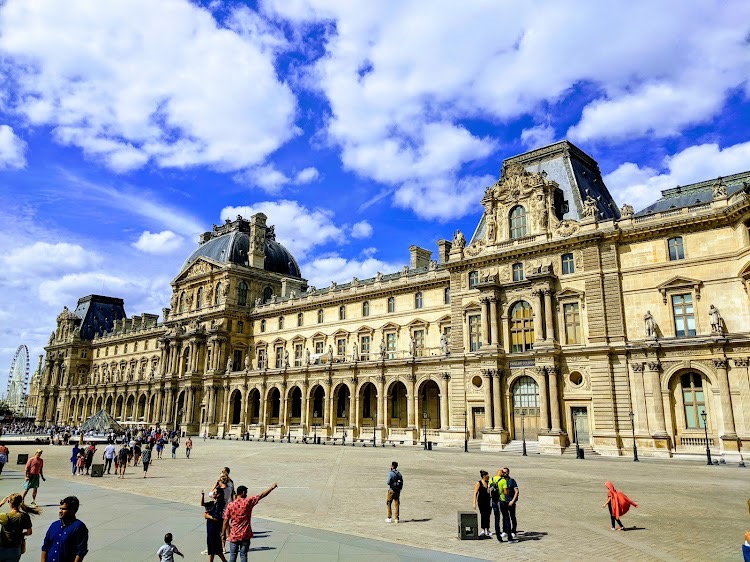
💛 What travellers fall for
People who come back tend to pick a single wing and go slow. The Richelieu Wing on a weekday morning is quieter than the Denon, and the Mesopotamian reliefs there stop most visitors cold. Booking a timed entry online is not optional in high season — the queue without one can swallow an entire morning.
The story behind Louvre
The site began as a medieval fortress built by Philippe II around 1190, its keep designed to anchor the western edge of Paris's city walls. Over the following centuries French kings transformed it into a royal residence, adding wings, courtyards and façades until François I and later Henri IV and Louis XIV each left their architectural mark. Louis XIV eventually moved the court to Versailles in 1682, leaving the Louvre to artists and academics.
The Revolutionary government opened it as a public museum in 1793, the first time the royal collections were made available to ordinary citizens. I. M. Pei's glass pyramid, commissioned under President Mitterrand and completed in 1989, reorganised the main entrance and became, against early Parisian scepticism, one of the more recognised silhouettes in the city.
Good to know
Take Métro line 1 to Palais Royal–Musée du Louvre. Book timed tickets online to skip the pyramid queue. Wednesday and Friday evenings the museum stays open until 21:45 — attendance drops noticeably after 18:00. The permanent collection is free for visitors under 18 and EU residents under 26.
Where is Louvre?
More tickets & tours for Louvre
Book directly at the provider
What travellers say about Louvre
First time visiting Paris, and the Louvre Museum was a must-see. The museum is absolutely massive, with incredible art and history around every corner. Seeing the Mona Lisa in person was a memorable experience. Be prepared for large crowds, especially in June. The lines can be long, and many of the popular exhibits are packed with visitors. Buying tickets in advance is highly recommended to save time. Even with the crowds, the Louvre is one of those places you have to visit at least once when in Paris. Plan several hours for your visit, wear comfortable shoes, and enjoy one of the world’s greatest museums.
An unforgettable, bucket-list experience in Paris! Visiting the Louvre was an absolute highlight of my trip to Paris! The sheer scale of the museum is mind-blowing, and the building itself a stunning former royal palace is just as much a masterpiece as the art inside. Looking up at the incredibly ornate, gilded ceilings and walking through the grand galleries felt surreal. Of course, seeing Leonardo da Vinci’s Mona Lisa in person was an unforgettable moment. Yes, the room is busy, but the line moves quickly and it is completely worth it. Beyond that, the Winged Victory of Samothrace standing tall at the top of the grand staircase and the beautiful Venus de Milo were absolutely breathtaking. My top tips for anyone visiting: 1. Book your tickets online well in advance to secure your time slot and bypass the massive ticket lines. 2. Wear your most comfortable walking shoes because the museum is massive and you will easily clock in thousands of steps. 3. Pick a few must-see pieces before you go, or you will get easily overwhelmed It is an absolute 5-star experience that you cannot miss when in Paris. Truly a journey through history and art!
I recommend buying tickets in advance and getting an early time slot, especially if you are coming during the summer. I got the audio guide and it was kind of nice but I really struggled to find the room number codes and therefore did not get much use out of it. I really enjoyed the artwork, especially the painting exhibits, but it is REALLY easy to get lost. We ended up doing a lot of walking in circles. Also sometimes you can only go in one direction, like in the room with the Mona Lisa.
Louvre Museum needs no reviews. Visiting the Louvre Museum was an amazing experience! 🤩 Seeing all the stunning architecture and incredible paintings from renowned artists, some over 500 years old, was truly magical. ✨ It's great that entry is free, just remember to book your tickets in advance. Highly recommend! 🏛️
The Louvre is not only an incredible museum but also a very large and impressive area to explore. Even outside the museum itself, you can easily spend half a day walking around the beautiful courtyards, the famous glass pyramid, and the surrounding architecture. The entire complex is stunning and offers many great spots for photos and to simply enjoy the atmosphere of Paris. A must-visit place, even if you don’t plan to go inside the museum.
More of Paris
Discover where to stay, what to do and the best deals for your trip.
Explore Paris →More attractions in Paris
All of Paris →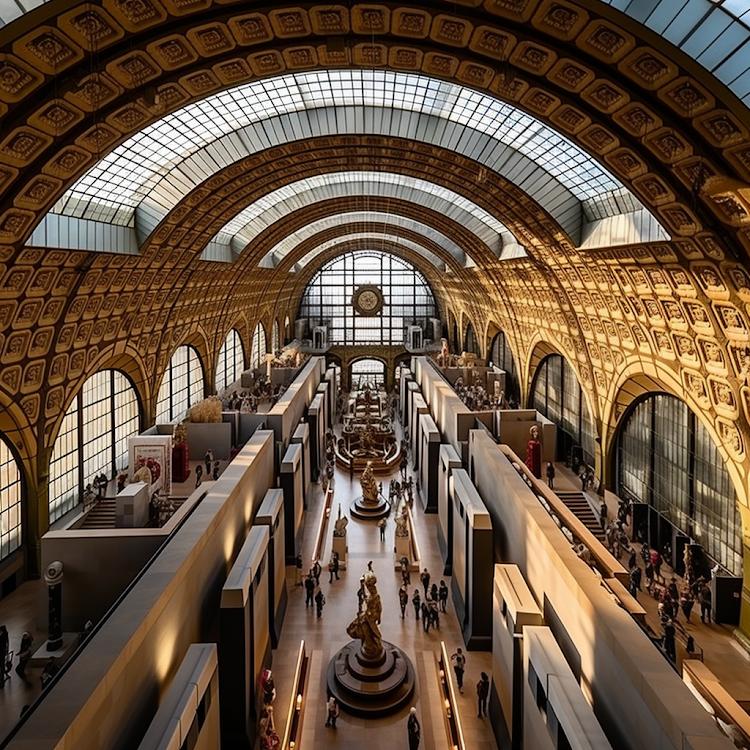
Background adapted from Wikipedia (CC BY-SA) · map data © OpenStreetMap contributors · ratings & place photos via Google · other photos with per-image credit. Ticket links may earn us a commission at no extra cost to you.